
A book review by Paul Cudenec, who reads it here
“Every word that comes from your speaking hole is a lie in some form”. [1]
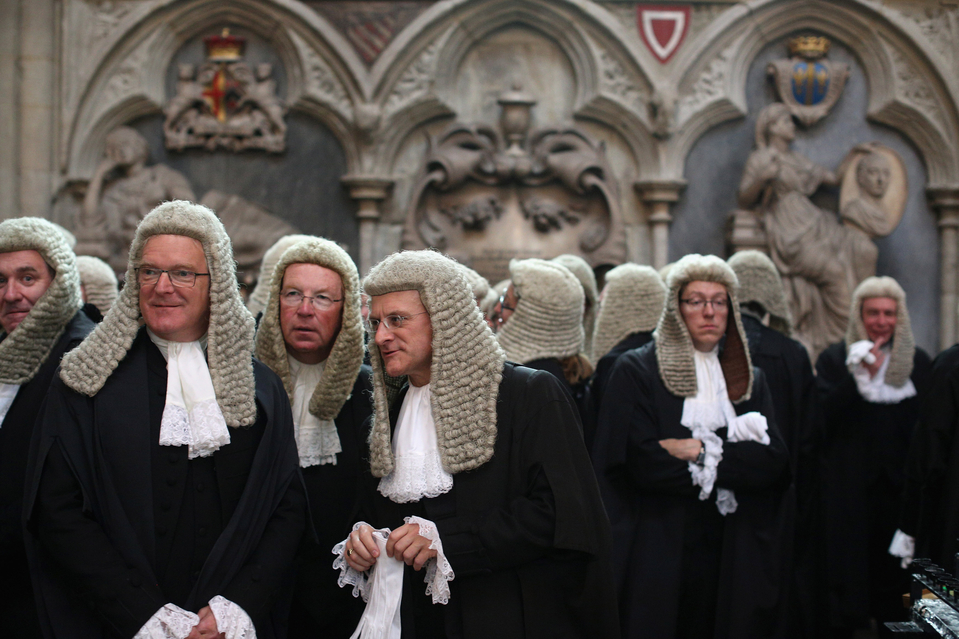
“You, the self-designated Elite of this planet, brought to your position moreso by your own lack of what is understood in most places as morality and your willingness over millennia to steal and cheat and perform the most barbaric crimes… have betrayed your trust about as fully as any trust could be betrayed”. [2]
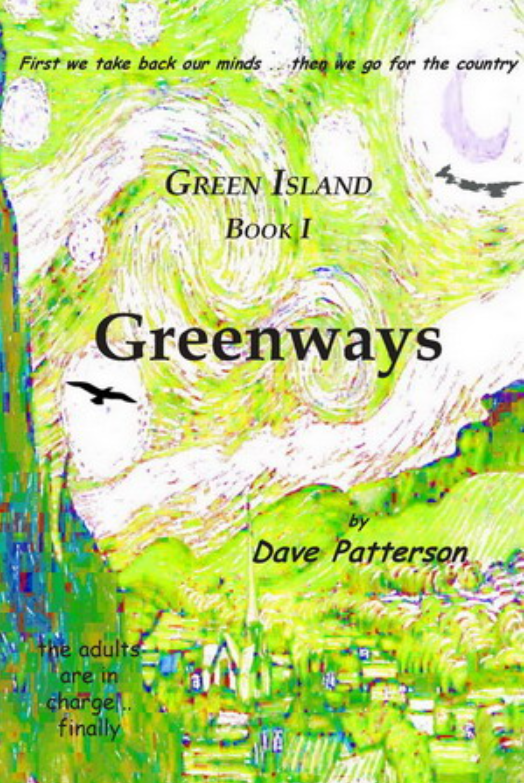
Dave Patterson does not mince his words in Greenways – the first of two “Green Island” books – which although a work of fiction features a large amount of truth.
The basis of the novel is that Prince Edward Island in eastern Canada has partly broken away from the rest of the country after a surprise election result that ended the old two-party hold on power.
It has renamed itself Green Island and started organising society in a very different way to the previous status quo.
Now, the description of a stable and mainly happy society (not quite a Utopia, but heading that way) could have been as dull as ditchwater over the nearly 600 pages of Patterson’s work.
But he does a great job in making the book a lively read. For a start, his style (or styles, because he adopts many different registers according to who is speaking or writing) is one of anything but terse concision – ebullient eloquence would be nearer the mark and there is plenty of humour as well.
Neither is Patterson of the social realist school, as evidenced by the way that the island attracts the interest and presence of Henry David Thoreau, [3] Thomas More, Thomas Paine and Che Guevera and that the trial of the global elite featured in the opening citations is conducted by a divine presence called The One, accompanied by the blindfolded figure of Justice herself.
There are several distinct threads advancing through the pages, including chapters consisting of fragments and thought-provoking quotations from famous thinkers.
I will share a few of the latter to give you a flavour:
“Do not go where the path may lead; go instead where there is no path and leave a trail”. Ralph Waldo Emerson. [4]
“Whatever you do will seem insignificant, but it is very important to do it”. Mohandas Gandhi. [5]
“Justice is conscience, not a personal conscience but the conscience of the whole of humanity. Those who clearly recognize the voice of their own conscience usually recognize also the voice of justice”. Alexander Solzhenitsyn. [6]
“The trade of governing has always been monopolised by the most ignorant and the most rascally individuals of mankind”. Thomas Paine. [7]
“When plunder becomes a way of life for a group of men living in society, they create for themselves, in the course of time, a legal system that authorizes it and a moral code that glorifies it”. Frédéric Bastiat. [8]
But there is also plenty of wisdom in Greenways to be found coming from the mouths, pens and keyboards of its various characters, all of which can of course be regarded as Dave Patterson quotations. Here are some of them:
“Strength guided by a reptilian mind is not conducive to advanced civilization”. [9]
“At all times the power of a tiny point of Light is such that it will dissipate darkness all around, but the power of a tiny point of darkness in a place where there is Light is insignificant”. [10]
“I remember still when we had plenty and freedom in our village here, and happiness and security and a good life in our families, and no ruler… It was a simpler life, to be sure, but one I know most would joyfully return to, rather than what we have now”. [11]
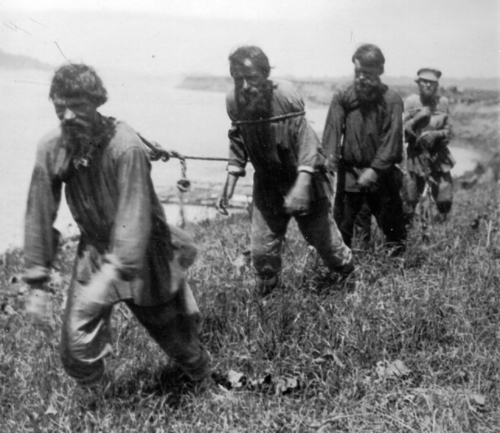
“After a certain period of training, the people embrace their chains, they love their chains, they hate those who try to free them!” [12]
That last one reminds me of the multiple occasions when I would be using a day off work (Saturdays, usually) to make a stand for freedom, only for some chain-loving passer-by to angrily call out: “Getta job!“.
Only five years into their new era, the islanders’ world is still not too different from our own, although they are proud to be “turning back some of the less pleasant aspects of modern industrial society”. [13]
Traffic has been reduced because of “a good reliable public transport system” [14] and they enjoy permaculture and organic market gardens. [15]
Since Green Island is a real democracy I find myself hoping that they will reverse themselves yet further out of the industrial dead-end and collectively decide that their airport, solar panels and wind turbines are not compatible with the restoration of natural harmony.
They are making a healthy start, anyway: “The people are coming from the cocoons and boxes in droves, turning off the sedating tvs and abandoning the meds and malls to finally start living lives of optimism and trust and honesty that come naturally to most people”. [16]
“It’s really quite amazing the amount of energy and ideas out there, that have been stifled for so long. We’re really like a wonderful flower – or strong tree, perhaps! – whose seed has been buried somewhere and not allowed to germinate, and now with the sunlight springing up almost overnight, joyously full of life”. [17]
“We’ve let the people out of a dark dungeon into the true light for the first time in their lives, and there is no way they are going back”. [18]

There is a strong sense of social justice in the imagined breakaway society, which Patterson uses to expose the lack of it in the world we inhabit.
“On Green Island, for instance, you will never find, anymore, a situation of a common factory employee making barely enough money in a full week of hard work to pay for the cheapest food and substandard housing, while the exalted CEO takes home a million or two dollars per week, plus a bonus of tens of millions at the end of the year and a golden parachute of hundreds of millions after a couple of years of driving the business into the ground – such things are common in Canada or the US, but really they’re signs of a severely dysfunctional system, a system based on various kinds of elitism and fraud and lies and corruption and rule by your secretive uber-elite, which we have basically managed to get rid of here, through the open we-the-people government system”. [19]
The whole point of the novel is to simultaneously condemn contemporary society and propose a sane alternative, so the author often uses the same device.
He says, for example: “The aesthetics of living pleasurably were always considered by the people who planned things on Green Island, unlike the previous systems where the efficient acquistion of money was the driving force, and little attention paid at all to making things pleasant for the people”. [20]
He has an elderly resident declare: “It’s altogether a new idea, you know, making our own decisions as a community and actually having the government do what we want rather than having them politicians sitting on the stage and telling us what they’re going to do whether or not we much approve”. [21]
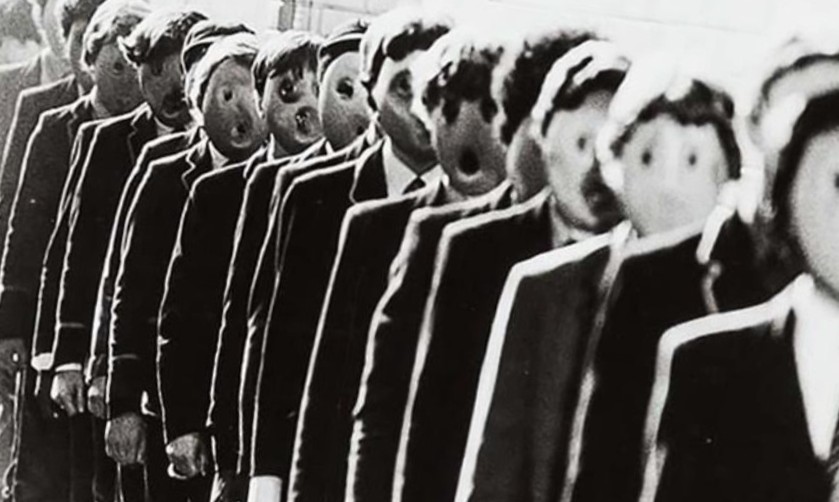
And on the issue of education, he says the “old” system was “the human equivalent of dog obedience school, where children were, and still are in most places, taught primarily one thing – to go somewhere every day in the morning and do what they are told to do all day, without asking questions”. [22]
More broadly, we learn: “What we have done here, the huge accomplishment, is that we have removed (or mostly removed, there are still some lingering pockets of illness) the ‘uber-layer’ as someone called it, that great invisible sucking vacuum above us all that used to suck half of everything we did or produced straight into the bank accounts of a gang of bankers and ‘investors’ (read ‘crooks’, from my perspective) – imagine if you had some big parasite on your back, taking half your blood every day, half your food, half your energy, imagine how you’d feeel if that lump was removed, and that’s what we have done for Green Island – and it’s fabulous”. [23]
As will be apparent from the above passage, the “golden goose treadmill” [24] of the bankster class is an evil which Patterson rightly identifies as a crucially important one – “the greatest scam in all of human history”. [25]
He adds: “And the same people who own the banks, and some other wealthy ‘investors’, own the newspapers so the newspapers won’t talk about it, and they bribe the politicians so the politicians don’t talk about it”. [26]
Patterson asks: “Do you think that if the government is short of money it should allow commercial banks to create the money and then borrow it from them at prime rates of interest which you will pay for with your taxes, or that the government might better create that money itself?”. [27]
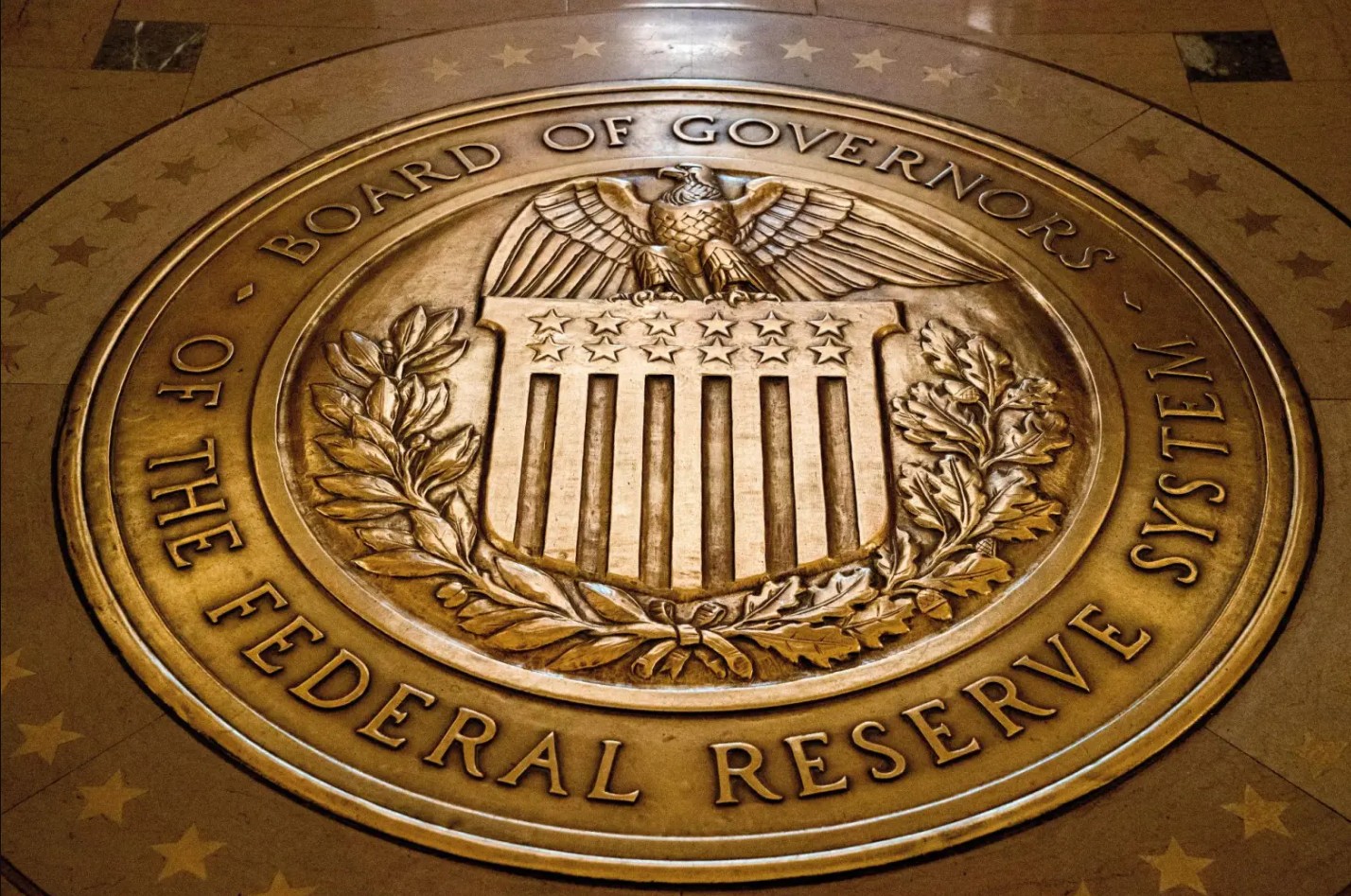
One Green Islander tells a young visitor: “Last count I saw – get a grip on something here, boy, this is a biggie – the Canadian banks had collected over a TRILLION dollars in interest on just the so-called Canadian National Debt just during the last 25 years or so, a trillion dollars of the tax money paid by your folks and every other Canadian taxpayer, a trillion dollars your folks should NOT have paid, it was really stolen”. [28]
And Patterson explains the sinister and pernicious effect of the interest attached to the money circulating in our society, which amounts to a deliberate long-term dispossession by usury.
“When banks create 98% (give or take!) of your money supply, and demand collateral and interest – well, where does the interest come from?
“They create the principal, but not the interest. Time comes to pay interest, and although all the players shuffle around the money, eventually, like a big game of musical chairs, someone cannot find interest, and collateral goes to banks.
“Every year, a lot of people cannot find interest and collateral goes to banks. Every year interest, every year collateral to banks. Over time – well, you can see where it is heading, I am sure. The slow, but ever faster, turning over of all property in your society to the banks – or, more correctly of course, the ‘investors’ who own the banks”. [29]
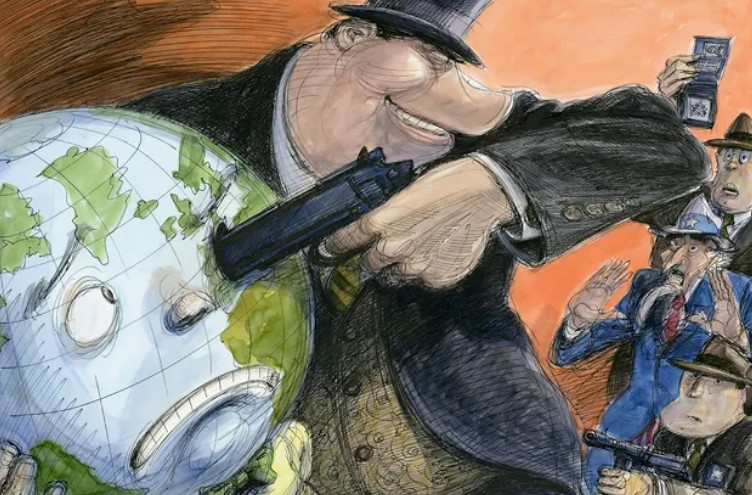
Finally, I was delighted to read how divine justice is meted out to a leading figure in this usurious criminal enterprise, the head of certain notorious banking dynasty by the name of Shield, who admits to having led humanity along the path “to the New World Order we have implemented today”. [30]
The One thunders angrily in the courtroom: “What would you have to say about that, Banker? About the many, nay the countless!, dreams, great and small, you have destroyed cruelly over the years, as your ancestors gathered their gold, and spread their lies, and turned the pure dreams of the people into the darkness and pain of the satanic mill in the name of this gold, into the endless slaughter of the battlefield in the pursuit of this gold, into the destruction of this endlessly beautiful planet its very self, all in the name of the pursuit of this gold?!!”. [31]
Recommended further reading: Enemies of the People: The Rothschilds and their corrupt global empire. [32]

[1] Dave Patterson, Greenways (Green Island Book 1), (Green Island Books, 2026. Original edition 2009), p. 284, https://www.rudemacedon.ca/greenisland.html All subsequent page references are to this work.
[2] p. 151.
[3] https://orgrad.wordpress.com/a-z-of-thinkers/henry-david-thoreau/
[4] p. 493.
[5] p. 97. https://orgrad.wordpress.com/a-z-of-thinkers/mohandas-gandhi/
[6] p. 147.
[7] pp. 205-06.
[8] p. 331.
[9] p. 74.
[10] p. 285.
[11] p. 279.
[12] p. 283.
[13] p. 27.
[14] p. 29.
[15] p. 89.
[16] p. 132.
[17] p. 339.
[18] p. 350.
[19] pp. 551-52.
[20] p. 301.
[21] p. 93.
[22] p. 473.
[23] p. 106.
[24] p. 544.
[25] p. 313.
[26] Ibid.
[27] p. 104.
[28] p. 312.
[29] pp. 543-44.
[30] p. 513.
[31] p. 516.
[32] Paul Cudenec, Enemies of the People: The Rothschilds and their corrupt global empire (2022), https://winteroak.org.uk/wp-content/uploads/2024/09/enemiesofthepeopleol.pdf

