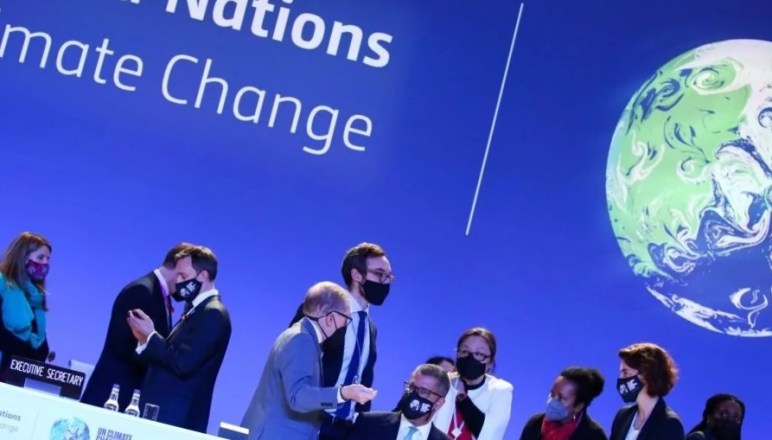
A book review by Paul Cudenec, who reads it here
For some years now I have been warning that much of the “green” movement is not what it pretends to be – indeed, you can still access a veritable online library that I put together on the subject, featuring more than 100 links. [1]
So I wasted no time in getting hold of the latest book from dissident publishing house La Lenteur, [2] entitled Deux écologies irréconciliables – ‘Two irreconcilable ecologies’. [3]
Author Thomas Jodarewski explains that the “ecological” label is, bizarrely, applied to two entirely different entities: “One denounces technocracy while the other strengthens it”. [4]
“On one side is autonomy, free living and nature and on the other planning, technocracy and even eco-fascism. Through what historical fraud has the same word come to designate two ideas so opposed to each other?” [5]
He suggests that it is not really a question of authentic environmentalism having been hijacked and turned around by a fake version, because the other kind has a long history of its own.
The boundaries are blurred when the technocratic version deliberately does so, in order to steer environmentalists away from any real and radical questioning of, and opposition to, the totalitarian industrial system it seeks to usher in with its climate alarmism and fake-green posturing.

Jodarewksi concedes that there is plenty of room for debate on the issue of where and when the authentic environmentalist movement first emerged.
I would point to a number of possibilities set out on the organic radicals site – Ludwig Klages (1872-1956) could certainly be seen as a founder of a deep ecology movement in Germany, as perhaps could Leo Tolstoy (1828-1910) in Russia and Henry David Thoreau (1817-1862) in the USA. [6]
Life-rooted thinking [7] obviously goes even further back – not only can it be seen in the work of Friedrich Schelling (1775-1854), Novalis (1772-1801), Paracelsus (1493-1541), Hildegard von Bingen (1098-1179) and even Chuang Tzu (369-286 BC) [8], but, I would argue, it is also deeply embedded in the healthy human soul.
However, for the purposes of the particular story he is telling in his book, Jodarewski chooses to begin with another organic radical inspiration, the French philosopher Jacques Ellul (1912-1994). [9]
He says that Ellul and his colleague Bernard Charbonneau took a line which was highly unusual at the time, being “anti-capitalist, anti-fascist and anti-communist”. [10]
Ellul’s assault on the phenomenon he termed Technik [11] was a call for freedom against “the Plan” that seeks to control our entire lives using economic statistics, propaganda and management, he adds.

Ellul himself explained: “It is a system that set itself up as a mediator between nature and humankind, but this mediator has developed to the point where the human being has lost all contact with the natural framework and only has a relationship with this mediator…
“Locked inside this artificial creation, the human has no exit door; he cannot break out of it to rediscover the previous environment to which he has been adapted for so many thousands of centuries”. [12]
Ellul’s work was largely ignored or sneered at in France – including, of course, by the technocratic “left” – but was noticed by English organic radical inspiration Aldous Huxley (1894-1963), who spent the latter part of his life in the USA. [13]
Huxley instigated an English translation of La Technique ou l’enjeu du siècle (1954), although he had died by the time it was published as The Technological Society in 1964.
The book struck a chord with Americans, not least organic radical thinker Theodore Roszak (1933-2011), [14] and was discussed in university journals, the New York Review of Books and the magazine The Nation. [15]
It was the perfect match for the emerging 1960s alternative Zeitgeist of opposition to war, consumerism and industrial pollution.
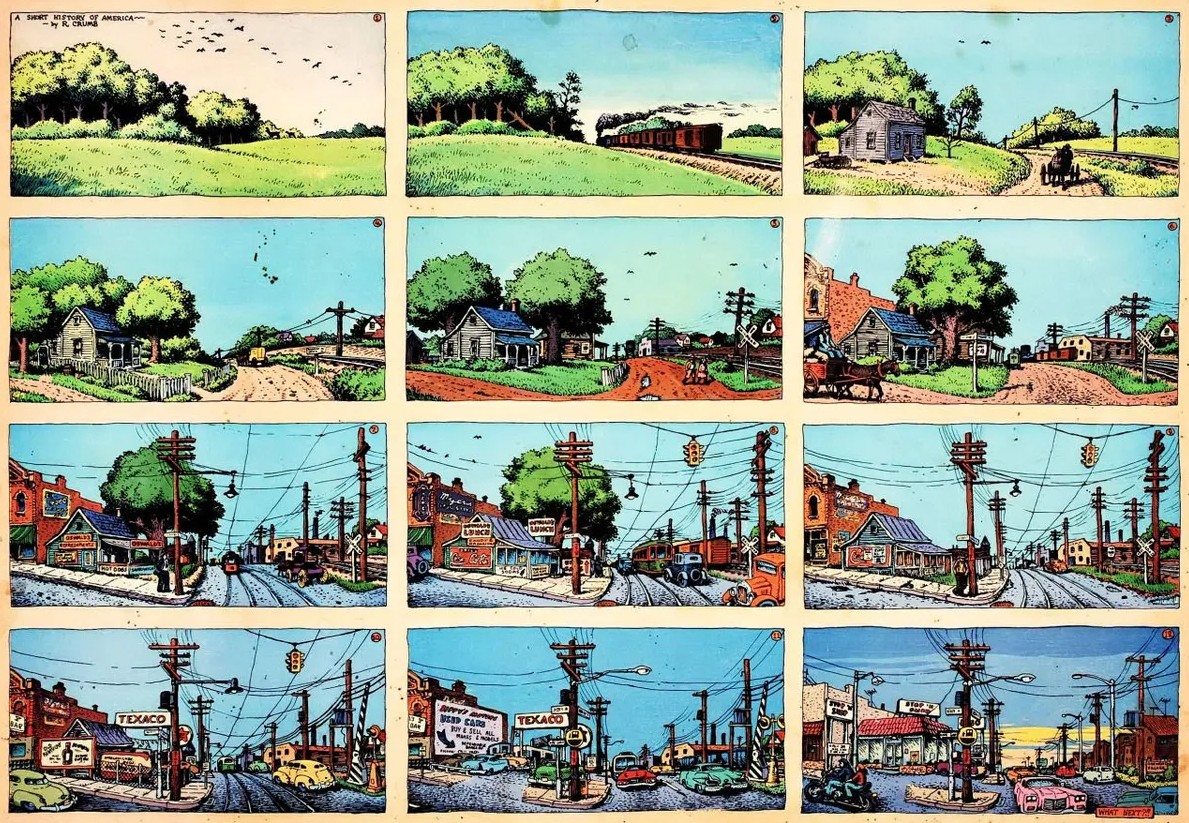
Jodarewski writes about the key role played in this movement by the charismatic artwork of Robert Crumb (1943-), noting that the artist has long since lived in France (not far from me) and that “he expressed, in 2021, his suspicions of industrial manipulation around Covid-19”. [16]
I think I may have helped in that realisation, by the way, as in February of that year Crumb got in touch with me in response to a leaflet about resisting the “Fourth Industrial Repression” that I had dropped into his letter box and I was able to email him digital copies of Klaus Schwab’s very revealing books Shaping the Future of the Fourth Industrial Revolution and Covid-19: The Great Reset. [17]
Despite all the repression and recuperation that it encountered, the real environmentalist movement lived on in the USA in the form of the green anarchism promoted by the likes of John Zerzan (1943-) [18] (whose understanding of the Covid manoeuvre was less astute [19]) and generally in the massive anti-globalisation movement that was only tamed by 9/11 and its authoritarian aftermath.
Meanwhile, France also saw the emergence of a pro-nature counter-culture following the 1968 street revolt and in 1972 Charlie Hebdo journalist Pierre Fournier (1937-1973) founded the magazine La Gueule ouverte (‘The open mouth’).
Explains Jodarewski: “Why a green journal? Because it was no longer enough to slip columns about ‘environmental problems’ into the mainstream press and there was now the need to build a new way of thinking that attacked environmental evil at its industrial root”. [20]

“The first issue of La Gueule Ouverte came out in 1972. 48 pages with no advertising, with a print run of 70,000… At news stands across France, readers had access to a journal of the ‘ecological revolution'”. [21] Tragically, Fournier died of a heart attack after only four issues, but the paper kept going until 1980.
After a period in which real environmentalism was barely visible, it then burst back on the scene and in recent decades there has been a vigorous protest movement – notably, but by no means uniquely, around the ZAD at Notre-Dame-des-Landes [22] – and there is also La Décroissance newspaper and publishing houses like La Lenteur and L’Echappée.
While the aim of that movement is to defend nature – or, rather, as the well-known slogan has it, “we are nature defending itself” – the other kind of ecology examined by Jodarewski is concerned with studying nature.
Despite the mania for listing and classifying species that arose in the 18th century, Jodarewski identifies the first modern-style “ecologist” as Ernst Haeckel (1834-1919).
He describes how the German scientist promoted Charles Darwin’s evolutionary theory, which echoed the industrial agenda with its notion of constant “progress” and improvement. [23]
“Haeckel’s career ran alongside the industrialisation of Germany. The steel industry and railways spread everywhere as agriculture enjoyed chemical progress…
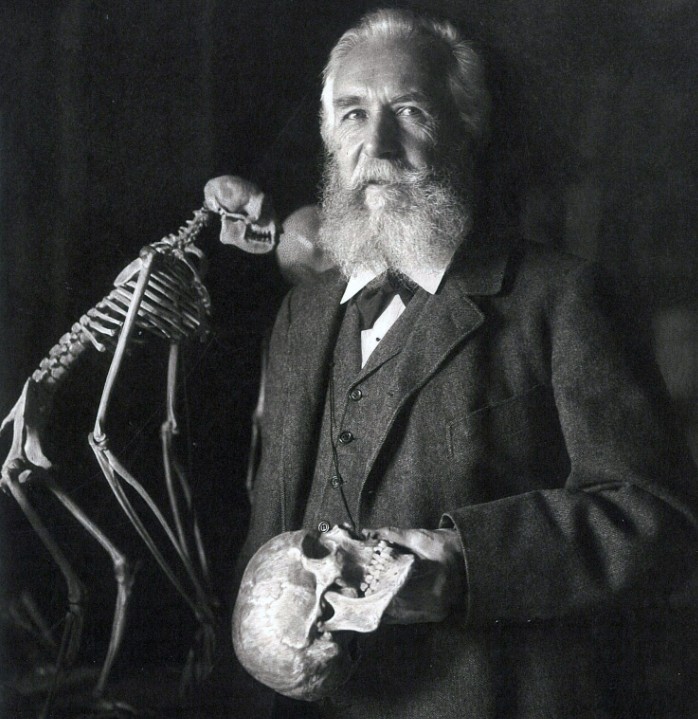
“The University of Jena, where Haeckel (pictured) was a professor, had been the German centre of modern ideas since its creation in the 16th century. It was the first university of Protestant theology; in the 19th century it was the university of Hegel, Schopenhauer and Marx; the centre for spreading Darwin’s ideas; the avant-garde of scientific and industrial philosophy”. [24]
Jodarewski explains that Jena’s reputation was closely linked to the business success of the scientific instrument manufacturer Carl Zeiss (1816-1888), who financed the university in general and Haeckel in particular. On a purely practical level, it was Zeiss’s microscopes that enabled Haeckel’s famous studies of tiny sea creatures. [25]
He adds that, despite having invented the term “ecology”, Haeckel had “fervent industrialist convictions” [26] and the Protestant scientist also subscribed to a particular kind of scientific racism, placing what he called the “noble and refined Jews” at the top of the biological scale. [27]
Behind the introduction of the term “ecosystem” was Arthur Tansley (1871-1955), who Jodarewski describes as coming from “a family of rich London entrepreneurs”. [28]
In 1904 he created the Central Committee for the Survey and Study of British Vegetation, later renamed the British Ecological Society, acting as its first president and founding editor of the Journal of Ecology.
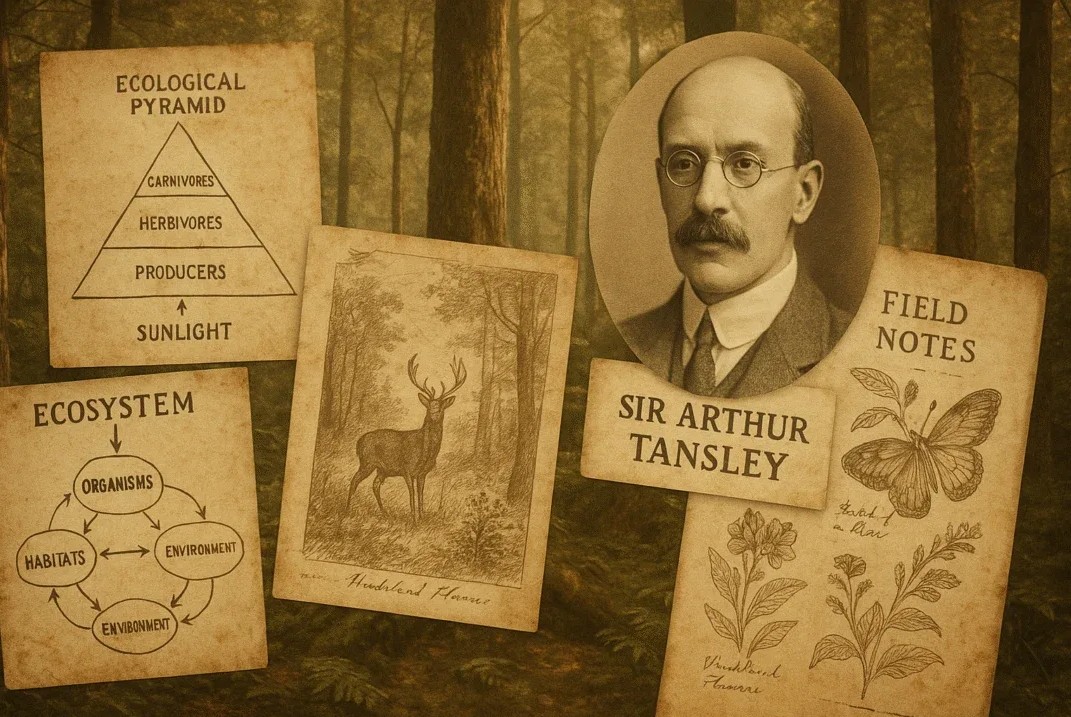
Jodarewski writes: “This committee of nine experts gave itself the exorbitant task of mapping the vegetation of the British isles. Why go to so much trouble? Simply a scientific obsession with listing, classifying and systematising? Or was somebody giving both orders and funding? The answer is not completely clear…” [29]
The matter will no doubt remain a mystery, but I will point out in passing that more recently the presidency of Tansley’s British Ecological Society was held by the Miriam Rothschild Professor of Conservation Biology at Cambridge University. [30]
I further note from Wikipedia that Tansley took a strange break from botany to study psychology with Sigmund Freud: “In 1922 Tansley spent three months with Freud, and the following year he moved his family to Vienna for a year. Although he later returned to botanical pursuits, Tansley remained in contact with Freud and wrote his obituary”. [31]
The direction in which Haeckel and then Tansley had taken society was to regard the living world as merely a system that behaved in the same way as a machine.
Life could be tampered with, “improved” in any way that suited the agenda of scientific and industrial “progress”.
Why was I not surprised to learn from Jodarewski that the eugenicist research carried out by the notorious Nazi Josef Mengele (1911-1979), pictured, was financed by the Rockefeller Foundation? [32]

When you have identified with certainty both the Foundation and the Nazi regime as fronts for ZIM, the zio-satanic imperialist mafia, [33] this collaboration of course makes perfect sense.
The Rockefeller Foundation also financed “ecological” American scientist Howard Odum (1924-2002) in his experiments on Puerto Rico’s tropical forest.
He was keen to find out how it would react to a “massive influx of energy” and the Atomic Energy Commission chipped in $360,000 to allow him to irradiate the forest for three months. [34]
His brother Eugene Odum (1913-2002) insisted in his 1971 book Fundamentals of Ecology: “Man’s opportunity to learn more about environmental processes through the use of radioactive tracers balances to some extent the troubles he is having with environmental contamination”. [35]
What a career – deliberately causing damage to the natural world and getting paid to study the effects.
Jodarewski remarks that Eugene Odum (pictured) is often hailed as “the father of modern ecology” but never more accurately described as the father of green technocracy. [36]
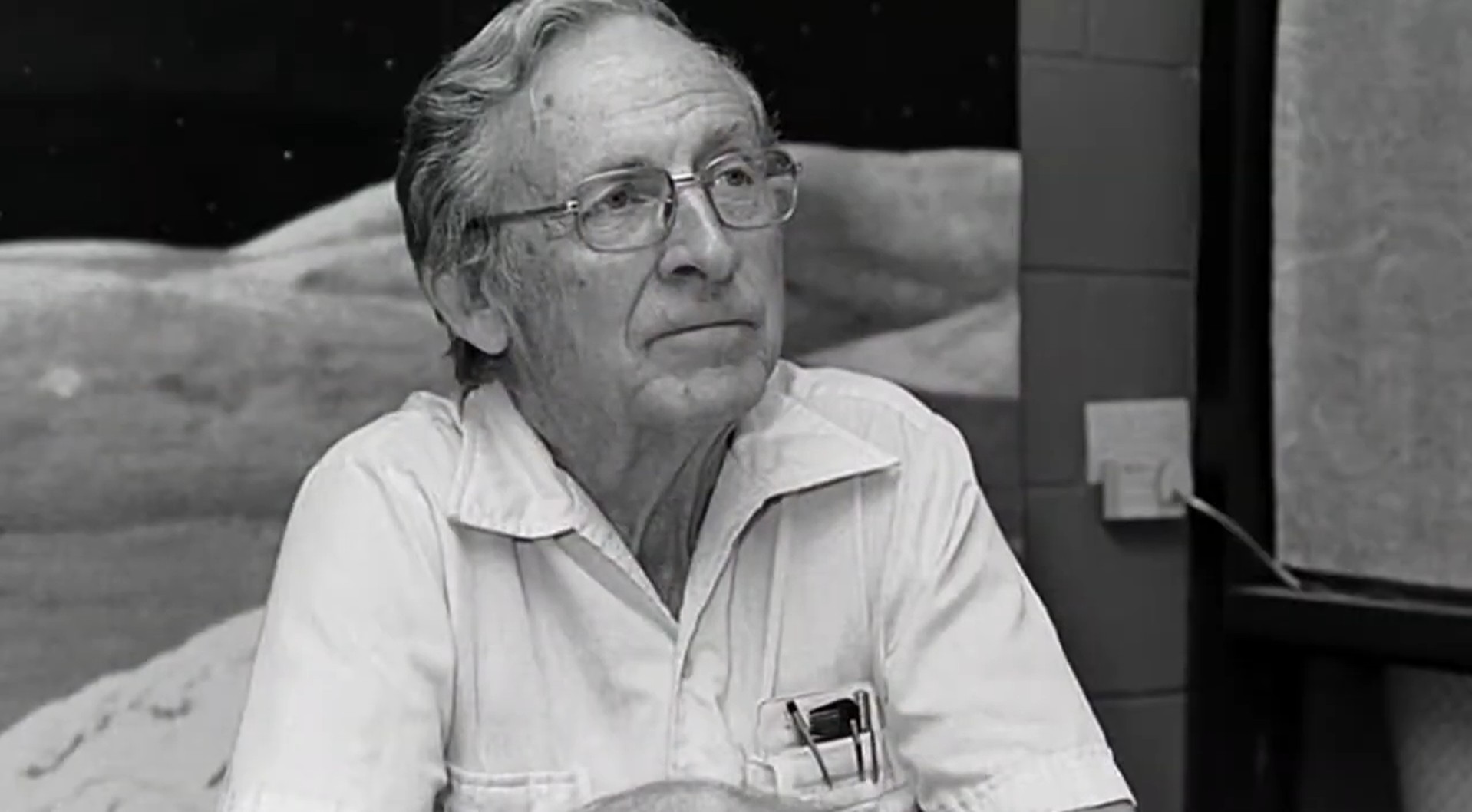
The Odums saw nature as nothing more than a giant machine in which we live, he says, and he sees the same mindset in the futurist designer Richard Buckminster Fuller (1895-1983), who built geodesic domes and wrote a 1969 book called Operating Manual for Spaceship Earth. [37]
The author then looks at an “environmentalist” guru whose real position I discussed in Antibodies, an essay that I first published as a booklet in 2010.
This man is James Ephraim Lovelock (1919-2022), still revered by the naïve for his superficially nature-friendly Gaia theory.
In reality, he came up with statements such as this: “To grass, beetles, and even farmers, the cow’s dung is not pollution but a valued gift. In a sensible world, industrial waste would not be banned but put to good use. The negative, unconstructive response of prohibition by law seems as idiotic as legislating against the emission of dung from cows”. [38]
As I commented in the booklet: “Again and again, Lovelock takes the view that Gaia will sort out any problems, even man-made ones, and we don’t need to lift a finger to do anything about it”. [39] Lovelock was ignoring the fact that it is through us humans that Gaia can defend herself!
In 2016, I wrote a piece for The Acorn condemning him as “an enemy of Gaia” [40], following an interview he gave to The Guardian [41] expressing his support for fracking and his general contempt for environmentalists.
Jodarewski remarks: “Contrary to his reputation, Lovelock was a hard-core ‘anti-green’, remaining faithful to his clients in heavy industry”. [42]
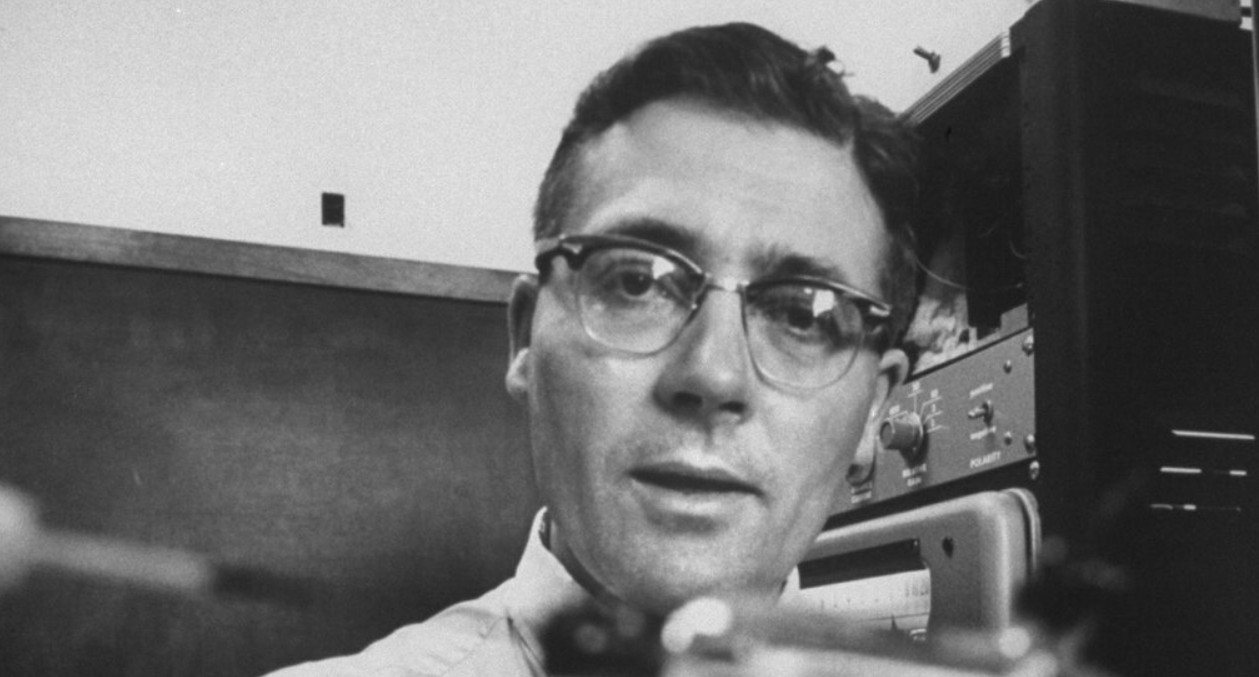
This is no doubt related to the fact that Lovelock (pictured) was close to the Rothschilds, those godfathers of industrialism. In particular he enjoyed what Ann Skea describes as an “interesting and worrying” relationship with Victor Rothschild (1910-1990), who headed the oil giant Shell for which he carried out work. [43]
As the blogger Escapekey [44] has established, Rothschild was involved in the research on climate that produced the so-called “environmental” framework now embedded in banking regulation. [45]
But that is not all we need to know about Lovelock – like his pal Rothschild, whose nefarious activities I detailed in ‘A deep state of denial‘, [46] the former NASA scientist also worked for many years for the British intelligence agency MI5.
After his death, his friend Brian Appleyard of The Sunday Times felt able to reveal that Lovelock had, in fact, been high up in that sinister outfit, describing him as “the real-life Q from James Bond”. [47]
Jodarewski points to an interview with The Guardian in 2010 in which Lovelock expressed the authoritarianism you would expect from an important agent of the Rothschildian mafia which brought the world Soviet communism [48] as well as Nazism.
Here he said that democracy was acting as an “obstruction” to the “meaningful action” that he claimed was necessary to halt the “climate” threat. He declared: “Even the best democracies agree that when a major war approaches, democracy must be put on hold for the time being. I have a feeling that climate change may be an issue as severe as a war. It may be necessary to put democracy on hold for a while”. [49]

Much the same was said in 2019 by Dennis Meadows (1942-), principal author of the Club of Rome’s 1972 The Limits to Growth report, when he warned in a newspaper interview that individual freedoms would have to be “reduced” because of the climate threat. [50]
What is really happening is, of course, that “climate change” is being used by ZIM as the pretext under which any remaining semblance of democracy can be dropped, plunging us into grim techno-totalitarian slavery.
As Escapekey’s work has shown, the Rothschilds’ fingerprints are all over the multi-faceted scam, as they are all over global racketeering as a whole – and it was not just Victor.
Edmund de Rothschild (1916-2009) gave a speech at the first World Wilderness Congress in 1977 leading to the concept of a World Conservation Bank, which evolved into the Global Environment Facility, using “ecosystem management” as a new form of financial imperialism.
Jacob Rothschild (1936-2024) hosted the family’s Waddesdon Manor forums between 2014 and 2018, at which the framework for “climate-related financial risk” was developed, Emma Rothschild (1948-), a Harvard historian, has spent recent years constructing “evidence” for the “climate” narrative and David Mayer de Rothschild (1978-) heads the Voice for Nature campaign and has been hailed by CNN as a navigator of “Spaceship Earth”. [51]

There is a general and obvious lack of sincerity in the “environmentalist” concerns that Jodarewski describes being expressed by organisations and individuals that are really part of the pollution, not the solution.
He tells how the Rockefeller Foundation worked with the Organisation for Economic Co-operation and Development (based at the Chateau de la Muette in Paris, a former Rothschild residence [52]) to stage an international conference on “Long-Range Forecasting and Planning” in Bellagio, Italy, in 1968, bringing together researchers from the Massachusetts Institute of Technology, high-ranking civil servants and industrialists from the likes of General Electric, Rand Corporation and Olivetti. [53]
Jodarewski explains how The Rockefeller Foundation and the Ford Foundation – the latter also being a ZIM front, as I have explained [54] – funded “green” NGOs and United Nations conferences on “the environment” [55] and how Earth Day was adopted by the US government and the UN as part of the attempted “neutralisation” [56] of the real environmentalist movement.
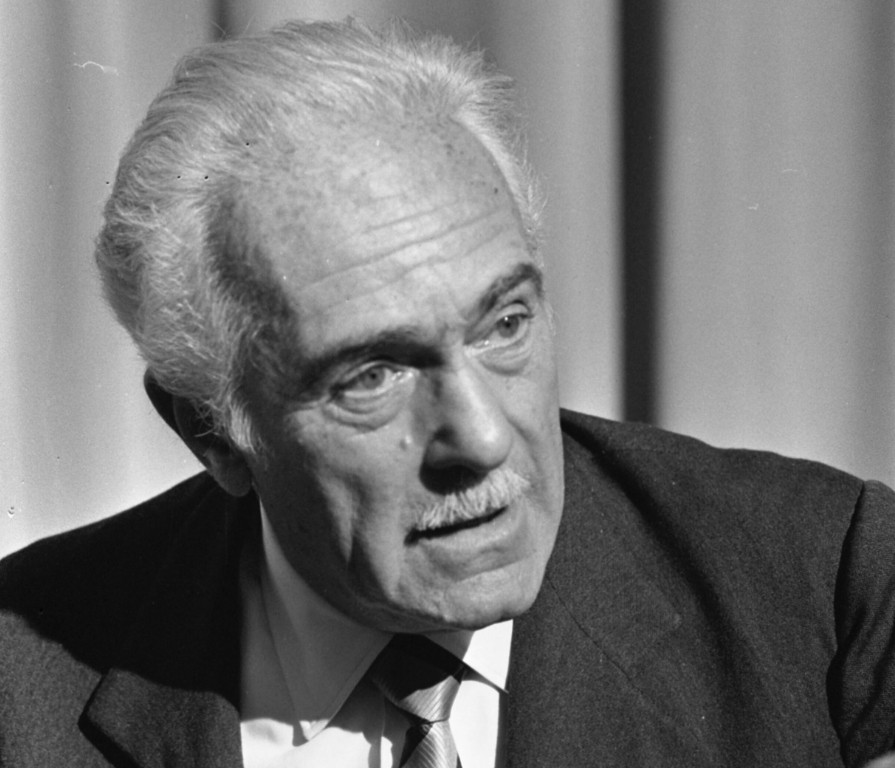
The Limits to Growth sparked a wave of unlikely “conversions” to a supposedly green position, not least that of the Club of Rome’s co-founder Aurelio Peccei (1908-1984), pictured, an Italian industrialist who attended several Bilderberg conferences in the 1960s and gave a speech on the Club’s famous report at the 1973 gathering of the zio-globalist World Economic Forum. [57]
Another notable born-again environmentalist was Sicco Mansholt (1908-1995), a socialist politician remembered as the great “moderniser” of post-war Dutch agriculture, the fourth president of the European Commission and the architect of the European “Agriculture 80” plan that aimed to cut the number of European farmers in half through the increased use of machines and chemicals.
He apparently “saw the light” thanks to The Limits of Growth and said all the right things about the environment, but the real take-away for him was the need for “strongly centralised planning” – the usual authoritarian globalist agenda. [58]
I think the likelihood of Mansholt having genuinely been converted to a green position is perfectly summed up by this picture of him, on the right, at Schiphol Airport in 1946 with US ambassador to the Netherlands Stanley Hornbeck (1883-1966), on the left, and former US president Herbert Hoover (1874-1964), a business associate of the Rothschilds described by authors Jim Macgregor and Gerry Docherty as “a confidence trickster and a crook”. [59]
We are dealing with an actual mafia here – and it shows.

Industrial authoritarianism is little concerned what political flag it sails under, as witnessed by the career of René Dumont (1904-2001), a French agricultural “expert” who advised the “left-wing” Front populaire government in 1936, wrote articles praising the industrialisation [60] of farming by the fascist Vichy regime and was then recruited by Jean Monnet for the agricultural aspect of the post-war modernisation (pillage) of France that I described in some detail in January 2025.
I will remind readers that Monnet said that the French “ought to adopt the ‘American psychology’, meaning ‘in a frame of mind for constant change’”. [61]
In 1972 Dumont was supporting Mansholt’s assault on European farmers, declaring: “Since 1935, and especially since 1945, I have tried to explain to French farmers that the reduction of their numbers was an essential corollary to industrial development”.
And he did not forget to include the world-control element, insisting on the need for “an economy that is intelligently planned on a global scale”. [62]
This enthusiast for global industrial development then suddenly became an “environmentalist” because of the Club of Rome and in 1974 became the first green candidate in the French presidential elections (he got a paltry 1.32% of the vote).
I see from Wikipedia that Dumont was a Freemason, but no doubt that had absolutely no influence on his career. [63]
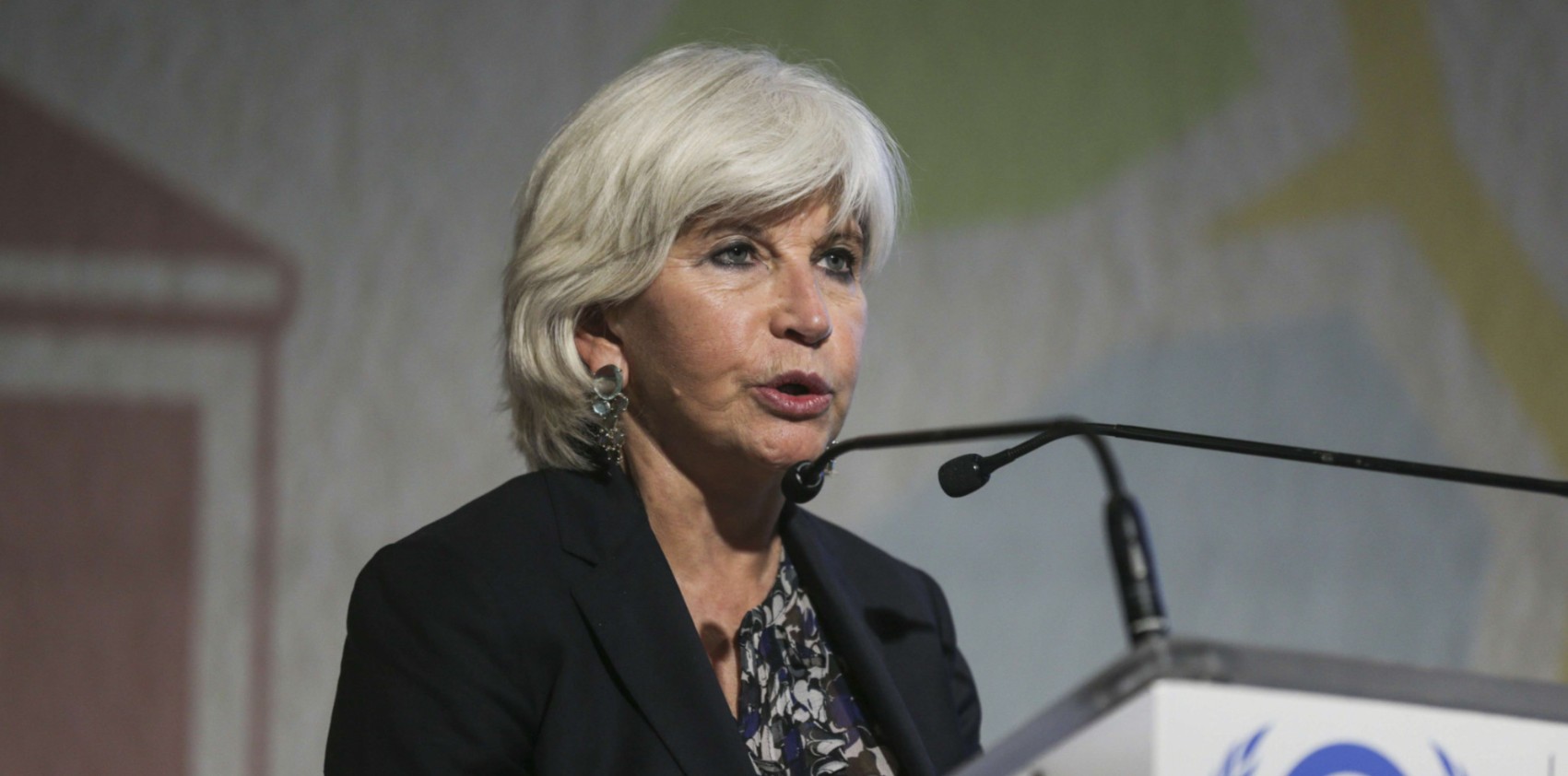
A key figure in recent years has been Laurence Tubiana (1951-), pictured, who is regarded as the key architect of the Paris Agreement that resulted from the 2015 Climate Change Conference and is now CEO of the European Climate Foundation. [64]
She co-founded the Paris-based Institute of Sustainable Development and International Relations, chaired the Board of Directors of the French Development Agency (AFD) and has long been a member of the China Council for International Cooperation on Environment and Development.
Jodarewski says: “Tubliana was the facilitating agent for French industrialists at international summits”. [65] Her background is interesting, involving a Jewish father and a period of youthful activism with the Ligue communiste révolutionnaire. [66]
The author tells us that the fake-green Fonds Bruno Latour (‘Bruno Latour Fund’), which finances research on “environmental transformations”, is subsidised not only by the French state but by construction giant Vinci, BNP Paribas (a Rothschild-owned bank) and, indeed, by the Fondation Rothschild itself. [67]
The “climate movement” is a ridiculously obvious tool of global capital, especially for anyone who knows what real anti-system campaigning looks like.
As Jodarewski puts it: “While the anti-globalist movement fought against the very existence of summits involving heads of state (G7, WTO, NATO etc), the climate movement generally hopes that they will result in ‘ambitious agreements’ bearing the stamp of the ‘energy transition’ – in other words agreements for international public financing of renewable – even nuclear – energy, of electric vehicles and other ‘resilience’ measures”. [68]
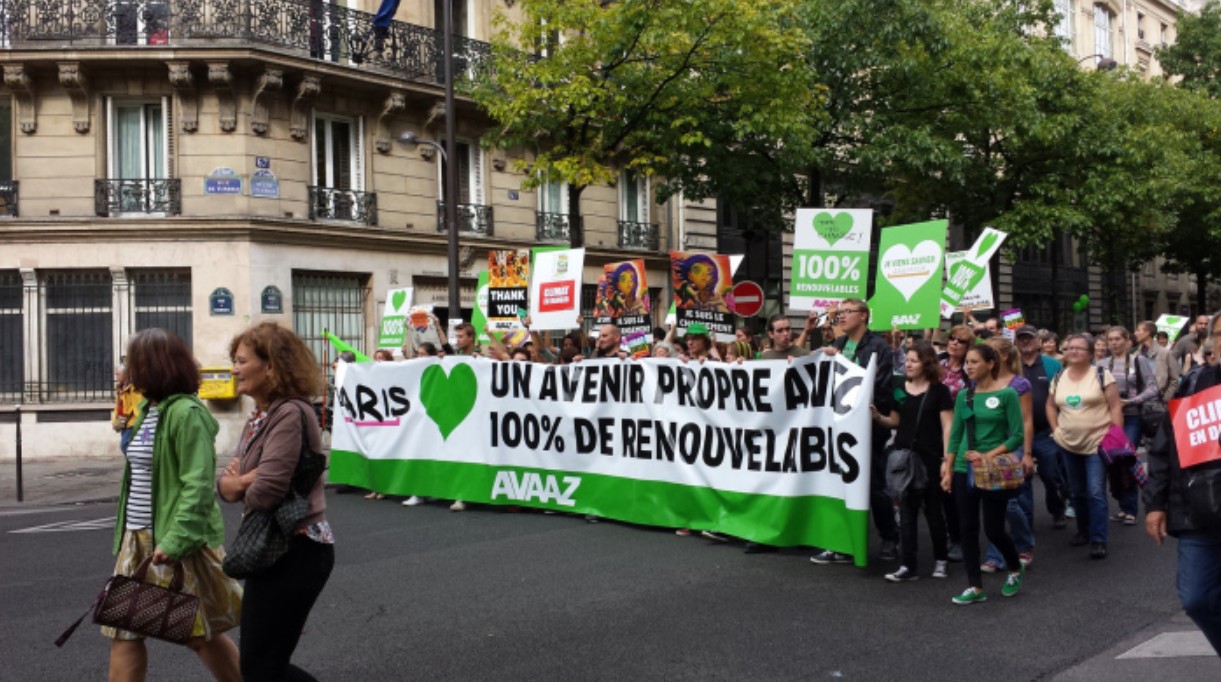
“You have to admit that their success has been brilliant. The industrialists of the motor industry, the nuclear industry, of renewable energy, of decarbonized steel and of mineral extraction are now receiving subsidies of an unprecedented size with the unprecedented support of supposedly radical environmentalist movements”. [69]
When ZIM manufactures a fake version of any given ideology, in order to advance its own industrial-authoritarian agenda in a disguised form, the entity in question also plays a secondary long-term role of discrediting the original ideology that might have presented a threat to its Plan.
Thus, thanks to its USSR, many people now regard “socialism” as necessarily being statist and authoritarian, whereas it could just as easily take a libertarian form.
Likewise anything that appears a little “nationalist” – even if it is really anti-imperialist or anti-globalist – is tainted by association with ZIM’s Nazi golem, especially if this is combined with “left-wing” ideological elements that would literally make it “national socialist”.
And thanks to the kind of “environmentalists” we are learning about here, many people understandably consider anything “green” to be a threat to their individual freedom – whereas, of course, that does not have to be the case.
Leaving nothing to chance, ZIM also infiltrates any authentic movement that arises, aiming to contain its thinking and guide it away from the full-out opposition to its industrial empire that is its greatest fear.

I suspect that one such agent was Murray Bookchin (1921-2006), pictured, who before becoming an “anarchist” and “social ecologist” had been a member of the Young Communist League and the Socialist Workers Party and who met his wife-to-be Beatrice Applestein while speaking to a Zionist youth organization at City College, New York. [70]
Jodarewski makes no such claim, but he does cite Bookchin’s 1971 book Post-Scarcity Anarchism, which is remarkably enthusiastic about industrialism for a work classified by the Anarchist Library website under “eco-anarchy” and “Green anarchism”.
Bookchin writes: “By adding sensing devices to automatic machinery we could easily remove the worker not only from the large, productive mines needed by the economy, but also from forms of agricultural activity patterned on modern industry…
“We could operate almost any machine, from a giant shovel in an open-strip mine to a grain harvester in the Great Plains, either by cybernated sensing devices or by remote control with television cameras. The effort needed to operate these devices and machines at a safe distance, in comfortable quarters, would be minimal, assuming that a human operator were required at all”. [71]
Jodarewski says Bookchin blew with the wind and dropped his original pro-nuclear stance, “but without ever withdrawing his early praise of cybernetics – Bookchin always sought to distance himself from the systematic critique conducted by Ellul and Huxley”. [72]
Bookchin, who officially stopped calling himself an “anarchist” in 1999 – becoming a “communalist” – opposed anti-industrialism and claimed that deep ecology amounted to “ecofascism”.

This approach was also taken by Janet Biehl (1953-), pictured, who from 1987 was “his companion, editor, and advocate, as well as (after his death) his biographer and archivist”. [73]
In ‘Ecofascism: Lessons from the German Experience‘, an essay co-written with Peter Staudenmaier, she identified “a chilling currency within contemporary ecological discourse” in ideas she linked to Nazism, such as “nature mysticism”, “pseudo-scientific ecology”, “natural order” and “a return to the land”. [74]
I dissected this kind of absurd back-to-front pro-industrial propaganda in my 2018 article ‘Organic radicalism: bringing down the fascist machine‘, [75] so I will not cover all that same ground here.
In France too, attempts were made to absorb and contain the environmental awareness unleashed in the early 1970s and, on the back of the Club of Rome’s report, Le Nouvel Observateur brought out a “spécial écologie” edition in the summer of 1972, with the shock front page headline announcing “The Earth’s last chance”. [76]
This was a peculiar change of direction for its owner Claude Perdriel (1926-) an industrialist from a business-orientated family.
We learn from French Wikipedia: “From the age of four, he was raised by his maternal grandmother and within the Jewish family of his mother’s godmother — a family that, according to Gaël Tchakaloff, ‘remains to this day his true lineage: the one that chose him, and that he chose for himself'”. [77]
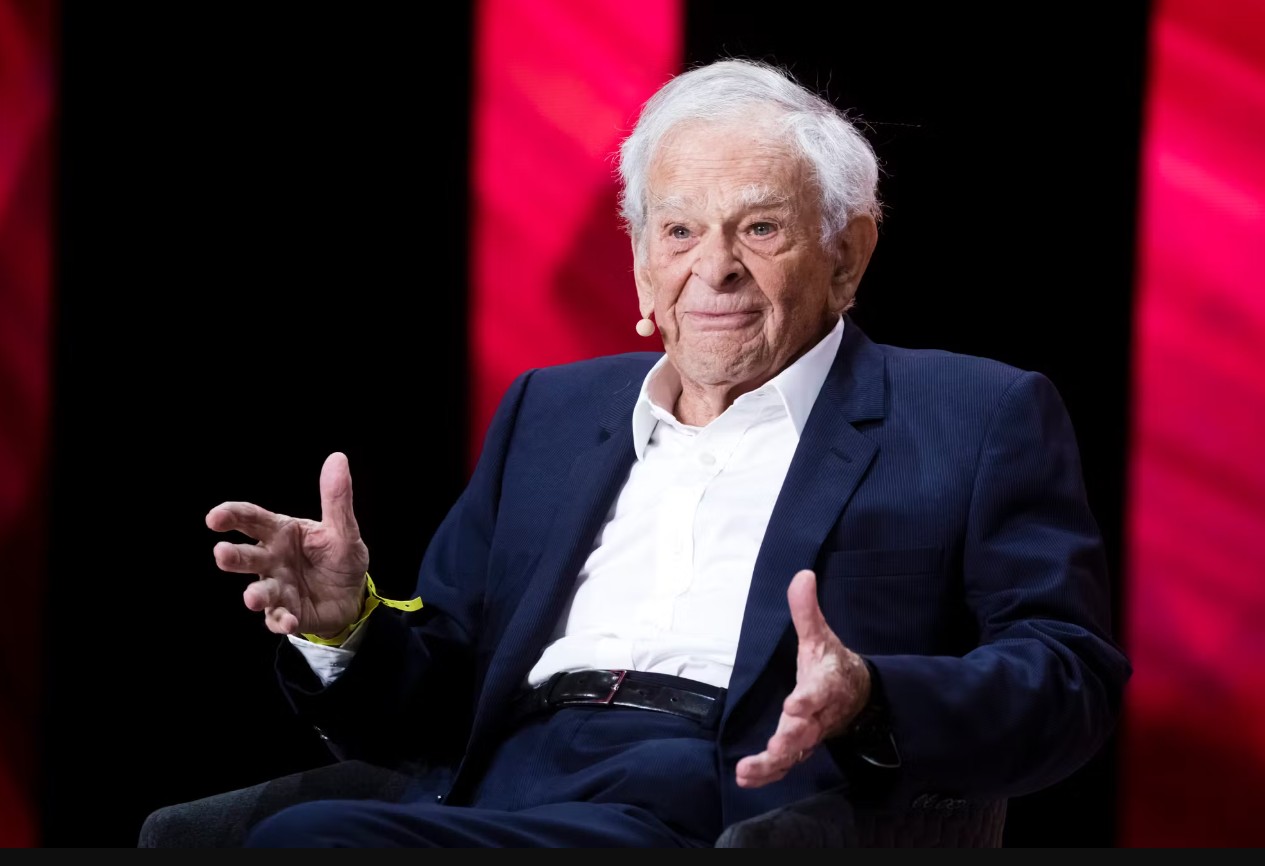
In related news, Jodarewski notes (and Wikipedia confirms) that Perdriel (pictured) was at one stage a business associate of ZIM’s Edmond de Rothschild (1926-1997). [78]
He adds that when he bought the left-wing journal France Observateur and turned it into Le Nouvel Observateur in 1964 “the boss Perdriel created with the reporter Jean Daniel (1920-2020), a famous anti-colonial Sephardic Jew, an American-style news magazine, like Newsweek“. [79]
The “ecological” special which Perdriel and Daniel brought out in 1972 included an interview with the ex-communist philosopher Edgar Morin (1921-2026) in which he described the very notion of nature as “scientifically moronic” and insisted that we should instead think in terms of a planetary ecosystem. [80]
After the real-green La Gueule ouverte hit the scene, Perdriel ramped up his fake-green efforts by bringing out a journal called Le Sauvage, a wink to an anarchist review from the start of the 20th century.
But this glossy product was far from being wild or anarchist, with the first issue in 1973 immediately alienating anti-nuclear environmentalists by taking a strictly neutral line on the question. [81]
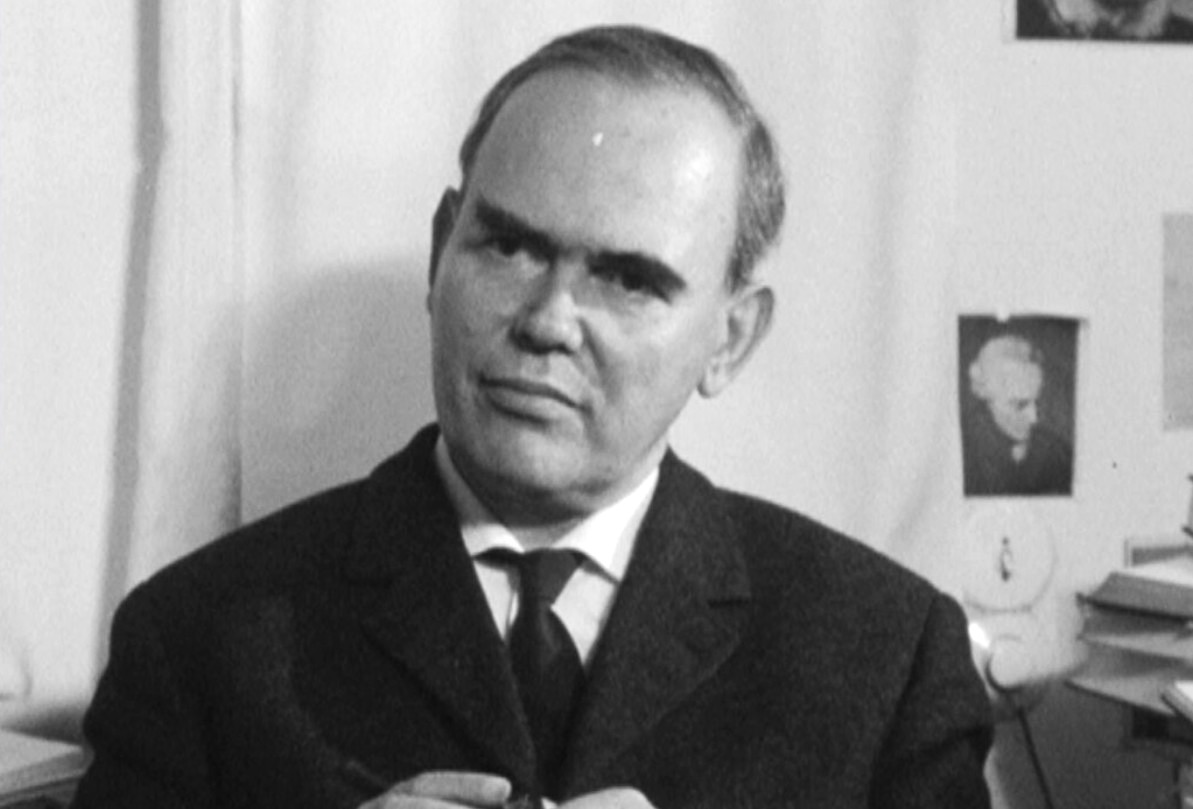
It also included a contribution from German philosopher Georg Picht (1913-1982), pictured, an adviser to socialist Chancellor Willy Brandt who had just published a book called Prognose, Utopie, Planung (‘Forecasting, Utopia, Planning’).
Picht, in the best pseudo-environmentalist tradition, suggested the need for “a new system of supranational authorities” to solve global-level problems.
He also said: “I wrote, for example, that ‘the regressive side of a certain youth culture, going back to the land and withdrawing into neo-primitive communities, are not realistic solutions to our most serious problems’.
“I maintain that position. Ecology is the analysis of our biological system as a whole, it is realist by definition. An ecology which has not got its feet on the ground and gives in to ideological fantasies is longer ecological. Knowledge is therefore the only antidote to this pseudo-ecological ‘hippy’ hysteria which is currently on the rise”. [82]
Le Sauvage was still batting for industrialism five years later, in February 1978, when it called for “green growth obtained by the development of information, computers and communication tools”. [83]
A paper of the same pseudo-green ilk was Le Courrier de la Baleine, which proudly published a special feature on “clean technologies” in 1985. [84] It quoted “green” politician Brice Lalonde (1946-) as saying: “For an environmentalist, the promised land is biotechnology”. [85]
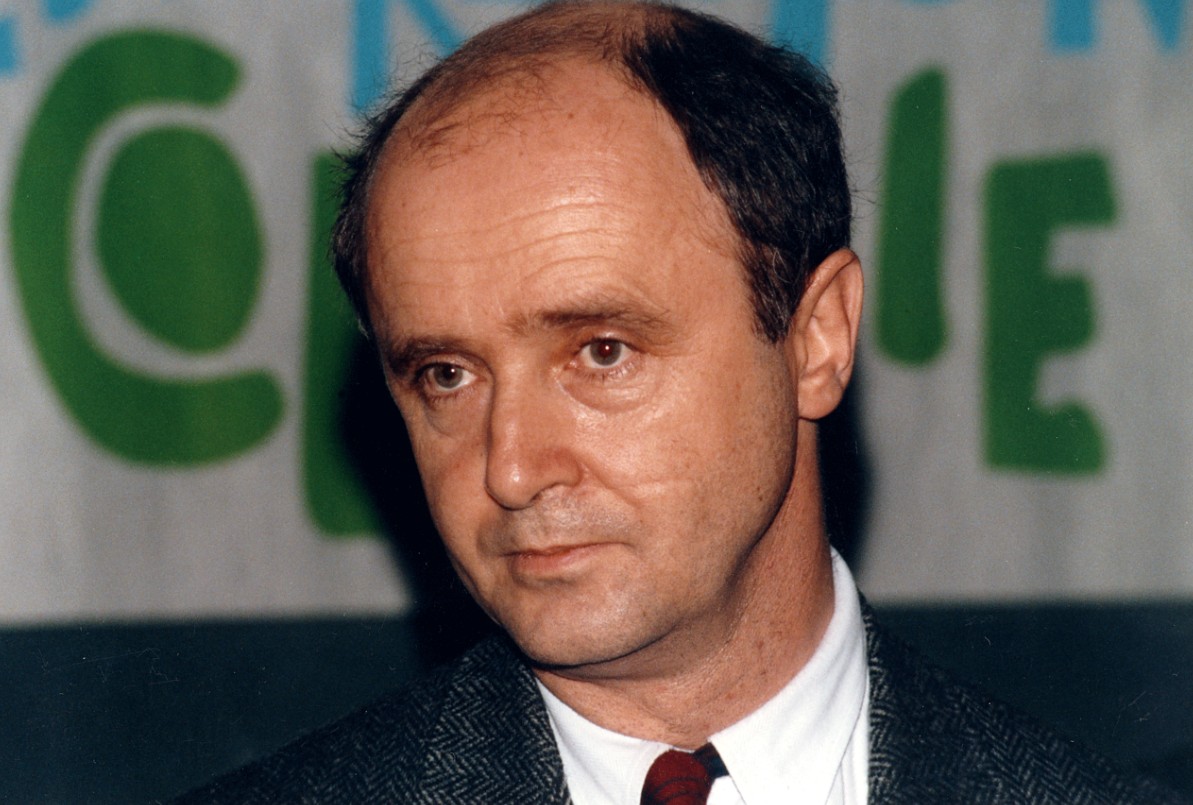
The co-founder of the Génération écologie political party, Lalonde (pictured) has been involved in the UN’s “sustainable development” project for global control. [86]
His father Alain-Gauthier Lalonde was originally called Alain-Gauthier Lévy, until the Jewish family from Alsace changed its name after WW2. [87]
La Baleine also adopted the Bookchin/Biehl strategy of a brutal and inaccurate smearing of anyone who dared oppose the technocratic agenda.
Says Jodarewski: “At a time when significant sections of the feminist movement were working on an international call to oppose ‘the new technologies of reproduction’, La Baleine was, already in 1987, playing the game of discrediting opponents of the world of genetics by associating them with the far right”. [88]
This kind of dishonest shaming is still happening today, as I reported earlier this year in an article which, in fact, quotes Jodarewski under his nickname Tomjo. [89]
In his book, the author also mentions the 2022 assault launched against critics of biotechnology, eugenics, transhumanism and artificial reproduction by “environmentalists” who, I discovered, all worked for think tanks and business schools close to the French state and the EU. [90]

Again, they made a point of insinuating a (non-existent) connection between opposition to industrialist techno-science and “the rise of the extreme right”.
I myself have been attacked in this way, such as in 2023 when, because I had dared to criticise the Rothschilds and challenge the transhumanist/transgender industry, Montreal Counter Information declared me guilty of “propagating far-right conspiracy theories about Jewish bankers and trans people”. [91]
This happened again later that year, this time in French, when an anonymous booklet aimed at left/anarchist circles announced ‘The reactionary shipwreck of the anti-industrial movement‘ (‘Le naufrage réactionnaire du mouvement anti-industriel‘). [92]
The triumphant piece of evidence that they produced to justify their smear that I was “anti-semitic” (as well as “transphobic” and, for some reason, “anti-feminist”) was that I had written the booklet Enemies of the People: The Rothschilds and their corrupt global empire in which I detail how “over the last 200 years the Rothschilds have systematically gained control of much of the infrastructure of the modern industrial world”. [93]
Their message was, in short, that anti-industrialism is now totally discredited and finished because somebody within that movement is openly stating who and what lies behind industrialism.
They were completely wrong, of course. We are only just getting started!

[1] https://winteroak.org.uk/the-climate-scam/
[2] https://winteroak.org.uk/2026/06/19/the-acorn-111/#4
[3] https://librairie-quilombo.org/deux-ecologies-irreconciliables
[4] Thomas Jodarewski, Deux écologies irréconciliables: Accompagner le développement industriel ou le combattre? (Editions La Lenteur, 2026), p. 201. All translations are my own and all subsequent page references are to this work, unless otherwise stated.
[5] p. 10.
[6] https://orgrad.wordpress.com/a-z-of-thinkers/ludwig-klages/
https://orgrad.wordpress.com/a-z-of-thinkers/leo-tolstoy/
https://orgrad.wordpress.com/a-z-of-thinkers/henry-david-thoreau/
[7] Paul Cudenec, ‘Life-rooted thinking’, https://winteroak.org.uk/2026/06/26/life-rooted-thinking/
[8] https://orgrad.wordpress.com/a-z-of-thinkers/friedrich-schelling/
https://orgrad.wordpress.com/a-z-of-thinkers/paracelsus/
https://orgrad.wordpress.com/a-z-of-thinkers/hildegard-von-bingen/
https://orgrad.wordpress.com/a-z-of-thinkers/chuang-tzu/
[9] https://orgrad.wordpress.com/a-z-of-thinkers/jacques-ellul/
[10] p. 61.
[11] Technique in French but I feel the German word captures the meaning better for English speakers.
[12] Jacques Ellul, La Technique ou l’enjeu du siècle (Paris: Economica, 1990), postface, cit. p. 64.
[13] https://orgrad.wordpress.com/a-z-of-thinkers/aldous-huxley/
[14] https://orgrad.wordpress.com/a-z-of-thinkers/theodore-roszak/
[15] p. 67.
[16] p. 85.
[17] Paul Cudenec, ‘Resist the forth industrial repression!’, https://winteroak.org.uk/2020/04/17/resist-the-fourth-industrial-repression/
Paul Cudenec, ‘Klaus Schwab and his great fascist reset’, https://winteroak.org.uk/2020/10/05/klaus-schwab-and-his-great-fascist-reset/
[18] https://orgrad.wordpress.com/a-z-of-thinkers/john-zerzan/
[19] See Darren Allen, ‘I Remember a Pandemic’, https://expressiveegg.substack.com/p/i-remember-a-pandemic#footnote-16
[20] p. 143.
[21] pp. 143-44.
[22] https://winteroak.org.uk/2016/03/04/the-acorn-22/#6
[23] pp. 21-22.
[24] p. 21.
[25] p. 22.
[26] Ibid.
[27] Ernst Haeckel in a 1894 letter quoted by Ariane Debourdeau in ‘Aux origines de la pensée écologique: Ernst Haeckel, du naturalisme à la philosophie de l’Oikos’, Revue française d’histoire des idées politiques, no 44, 2016, cit. p. 20.
[28] p. 25.
[29] Ibid.
[30] https://www.wiley.com/en-us/shop/general-introductory-life-sciences/conservation-science-and-action-p-9780865427624
[31] https://en.wikipedia.org/wiki/Arthur_Tansley
[32] pp. 32-33. Jodarewski refers us to André Pichot’s La société pure: De Darwin à Hitler (Paris: Flammarion, 2009).
[33] Paul Cudenec, The Single Global Mafia: The Rockefeller Foundation’s multiple links to Zionism and military-industrial-financial neo-imperialism*, https://winteroak.org.uk/wp-content/uploads/2025/01/cudenec-the-single-global-mafia.pdf
Paul Cudenec, Adolf Hitler and zio-imperialist mafia’, https://winteroak.org.uk/2025/05/08/adolf-hitler-and-the-zio-imperialist-mafia/
Paul Cudenec, ‘The Nazi regime was a Zionist golem’, https://winteroak.org.uk/2026/01/08/the-acorn-108/#2
[34] p. 39.
[35] Eugene Odum, Fundamentals of Ecology (Philadelphia, Saunders, 1971), p. 460, https://archive.org/details/fundamentalsofec0000odum/page/460/mode/2up?q=contamination, cit. p. 40.
[36] p. 44.
[37] p. 47.
[38] James Lovelock, Gaia – A New Look at Life on Earth, (Oxford: Oxford University Press, 2000), p. 26.
[39] Paul Cudenec, Antibodies, Anarchangels and Other Essays (2013), p. 42, https://winteroak.org.uk/wp-content/uploads/2021/04/antibodies-and-anarchangelsweb.pdf
[40] https://winteroak.org.uk/2016/10/20/the-acorn-28/
[41] https://web.archive.org/web/20160930162649/https://www.theguardian.com/environment/2016/sep/30/james-lovelock-interview-by-end-of-century-robots-will-have-taken-over
[42] p. 50.
[43] https://www.eclectica.org/v29n2/skea_watts.html
[44] https://escapekey.substack.com/
[45] Paul Cudenec, ‘How the Rothschilds spin their web of global control’, https://winteroak.org.uk/2026/04/20/how-the-rothschilds-spin-their-web-of-global-control/
[46] Paul Cudenec, ‘A deep state of denial’, https://winteroak.org.uk/2025/06/10/a-deep-state-of-denial/
[47] Brian Appleyard, ‘Writing Gaia review: what my friend James Lovelock’s letters reveal’, The Sunday Times, August 21 2022, https://web.archive.org/web/20220823005946/https://www.thetimes.co.uk/article/writing-gaia-review-what-my-friend-james-lovelocks-letters-reveal-7dwmmsrhm
[48] Paul Cudenec, The False Red Flag, https://winteroak.org.uk/wp-content/uploads/2024/03/the-false-red-flag–1.pdf
[49] ‘James Lovelock: Humans are too stupid to prevent climate change’, The Guardian, March 29 2010, https://web.archive.org/web/20260626015919/https://www.theguardian.com/science/2010/mar/29/james-lovelock-climate-change, cit. p. 53.
[50] Libération, July 29 2019, cit. p. 183.
[51] Cudenec, ‘How the Rothschilds spin their web of global control’.
[52] Paul Cudenec, ‘A developing evil: the malignant historical force behind the Great Reset’, https://winteroak.org.uk/2022/08/02/a-developing-evil-the-malignant-historical-force-behind-the-great-reset/
[53] pp. 128-9.
[54] Paul Cudenec, ‘The Ford Foundation; a fork-tongued global mafia front’, https://winteroak.org.uk/2025/09/01/the-ford-foundation-a-fork-tongued-global-mafia-front/
[55] p. 113.
[56] p. 111.
[57] https://wikispooks.com/wiki/Aurelio_Peccei
Paul Cudenec, ‘The truth about Davos’, https://winteroak.org.uk/2025/01/17/the-truth-about-davos/
[58] p. 127.
[59] Jim Macgregor and Gerry Docherty, Prolonging the Agony: How the Anglo-American Establishment Deliberately Extended WWI by Three-and-a-Half Years (Walterville, OR: Trine Day, 2018), p. 204, cit. Paul Cudenec, ‘A crime against humanity: The Great Reset of 1914-1918’, https://winteroak.org.uk/2022/10/14/a-crime-against-humanity-the-great-reset-of-1914-1918/
[60] Paul Cudenec, ‘Totalitarian industrial slavery: the modernisation weapon’, https://winteroak.org.uk/2026/02/25/totalitarian-industrial-slavery-the-modernisation-weapon/
[61] Pierre Rimbert, Libération de Sartre à Rothschild (Paris: Editions Raisons d’Agir, 2005), p. 85, cit. Paul Cudenec, ‘Modernisation means pillage and profit’, https://winteroak.org.uk/2025/01/31/modernisation-means-pillage-and-profit/
[62] René Dumont, Paysanneries aux abois (Paris: Le Seuil, 1972), extracts from Le Monde, June 27 1972, cit. p. 148.
[63] https://fr.wikipedia.org/wiki/Ren%C3%A9_Dumont
[64] https://en.wikipedia.org/wiki/Laurence_Tubiana
[65] p. 193.
[66] https://fr.wikipedia.org/wiki/Laurence_Tubiana
[67] p. 180.
[68] p. 192.
[69] p. 193.
[70] https://en.wikipedia.org/wiki/Murray_Bookchin
[71] https://theanarchistlibrary.org/library/murray-bookchin-post-scarcity-anarchism-book
[72] p. 106.
[73] https://en.wikipedia.org/wiki/Murray_Bookchin
[74] Janet Biehl and Peter Staudenmaier, ‘Ecofascism: Lessons from the German Experience’, https://theanarchistlibrary.org/library/janet-biehl-and-peter-staudenmaier-ecofascism-lessons-from-the-german-experience
[75 Paul Cudenec, ‘Organic radicalism: bringing down the fascist machine’, https://winteroak.org.uk/2018/07/10/organic-radicalism-bringing-down-the-fascist-machine/
[76] https://archive.org/details/nouvel-observateur-1972/mode/2up
[77] https://fr.wikipedia.org/wiki/Claude_Perdriel
[78] p. 136.
[79] p. 137.
[80] p. 138.
[81] p. 145.
[82] Le Sauvage, no 1, April 1973, cit. p. 146.
[83] p. 158.
[84] p. 159.
[85] Ibid.
[86] https://fr.wikipedia.org/wiki/Brice_Lalonde
See Najm Al-Dīn, ‘The Green Party – a trojan horse for a global restructure?’, https://winteroak.org.uk/2026/05/06/the-green-party-a-trojan-horse-for-a-global-restructure/
[87] https://fr.wikipedia.org/wiki/Brice_Lalonde
[88] p. 161.
[89] Paul Cudenec, ‘The demented drive to industrial lies’,
https://winteroak.org.uk/2026/03/11/the-demented-drive-to-industrial-lies/
[90] Paul Cudenec, ‘The voice of the system’, https://winteroak.org.uk/2023/01/01/the-acorn-79/#2
[91] Paul Cudenec, ‘The money behind the smears’, https://winteroak.org.uk/2023/07/05/the-acorn-84/
[92] Paul Cudenec, ‘Targeted and smeared by the fake-left thought police’, https://winteroak.org.uk/2023/12/02/targeted-and-smeared-by-the-fake-left-thought-police/
[93] Paul Cudenec, Enemies of the People: The Rothschilds and their corrupt global empire (2022), p. 23, https://winteroak.org.uk/wp-content/uploads/2024/09/enemiesofthepeopleol.pdf


Talk about exposing fake Green globalist, here’s another article I found on Global Research in case anyone is interested.
“The Deep State is Trying to Consolidate the Entire World into a One-World Government. Dr. Meryl Nass
https://www.globalresearch.ca/remarks-feds-4-freedom-symposium-july-1/5932485?pdf=5932485
LikeLiked by 1 person