A book review by Paul Cudenec, who reads it here
Giusti Zuccato (1957-2025) was someone I knew a little bit – he ran an alternative bookshop in Sauve, not far from where I live.
I have browsed the shelves and attended events at Alterlivres [1] on many occasions since it opened in 2014 and Giusti was kind enough to stock some of my books a few years back – although nobody ever bought any!
Sadly, he died in September and my latest visit to the venue was for a presentation of his posthumously-published De la révolution à l’exil (‘From revolution to exile’), in which he tells of his personal political journey.
Contributing alongside the editor from the Libertalia publishing house, and Giusti’s partner Elsy, were two Italian friends of his who took part in the youthful adventures about which he writes.
Before diving into that remarkable story, I would like to say something about an important word in the book’s title – “revolution”.
This has acquired something of a dubious reputation. We now know that revolutions tend not to be what they pretend to be and, specifically, have been used by the globalist mafia to destroy previous power structures and impose their own control – cynically harnessing genuine idealistic energy to do so. [2]
But what about when the global mafia already controls a society – which is the case virtually everywhere today and was already the case in Italy in the 1970s?
What would we call the successful overthrowal of their criminocracy if not a revolution?
I don’t think we should reject ideas and words simply because they have been misused in the past and, personally, my intent has always been revolutionary in the authentic sense.
The second objection that might be raised to the presence of this word in the book’s title is that there was in fact no revolution in Italy half a century ago.
This is obviously true, but not only were Giusti and his friends trying to bring one about but they also got a lot closer to succeeding than most of us could imagine today and the system was forced to turn to extreme measures to thwart their efforts.
For instance, in the spring of 1977 a massive revolt broke out in the city of Bologna after a young activist was shot dead by the police, leading the state to send in three thousand cops accompanied by military tanks in order to regain possession. [3]
At the same time, in Rome a demo against repression attracted nearly 100,000 people and “the capital was in a state of siege”. [4]
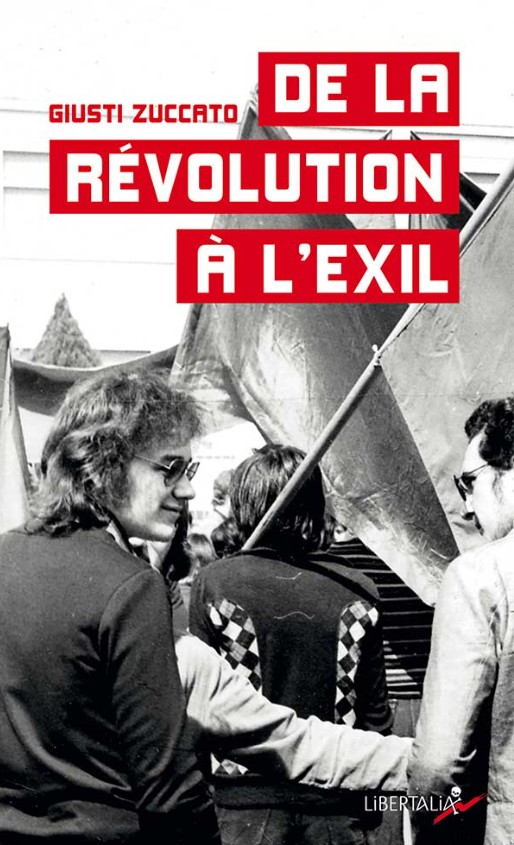
Writes Giusti (pictured, left) : “Other than those who lived through them, few people have any idea about what happened during those years.
“Regarding Italy, talk is generally of the Years of Lead and the Red Brigades’ kidnapping and assassination of Aldo Moro, one of the most important politicians of the time.
“This decade is rarely described as that of a broad and powerful social movement that affected every part of society.
“People do not know that the country saw far-left demonstrations of tens of thousands of protesters or that more than 12,000 people received prison sentences in excess of two years for acts of political violence related to these struggles.
“In those years, a new generation erupted onto the political and social scene which rejected work and productivist [production-oriented] values – a youth which did not want to wait for a hypothetical better world but wanted to put it in place straight away”. [5]
This was a deeply-felt revolt against the slavery of the industrial system – “the dictatorship of waged work and money”. [6]
Giusti says he and his friends were motivated by a “refusal to be condemned to a life of dehumanising or uninteresting labour and the desire to decide ourselves how we should live”. [7]

They did not want to remain in “a society where the ideology of work is the guiding ethical principle and money earned the just reward”. [8]
He adds: “Vogliamo tutto e subito (‘we want it all and we want it now’) was the slogan on the lips and in the heads of all the young rebels, me included.
“This desire meant seeking confrontation, destroying all mediation, refusing compromise, casting aside claims and consensus and simply taking that to which we believed we had a legitimate right”. [9]
He woke up to the unacceptable nature of industrial “normality” [10] when he was still a boy.
“When I went to High School, three quarters of my pals already had to go and work in the factory. Their families could not afford to wait five years before they brought some money into the house.
“Like my friends, I found this unbearable, inconceivable. It was obvious that we needed to come up with some ideas and invent something to make our lives different from what they were trying to impose on us”. [11]
At the age of 15 he supported a school strike against the Vietnam War led by a teacher who was part of Il Manifesto, a left-wing faction that had split from the Italian Communist Party (PCI) and he then quickly became politically active.
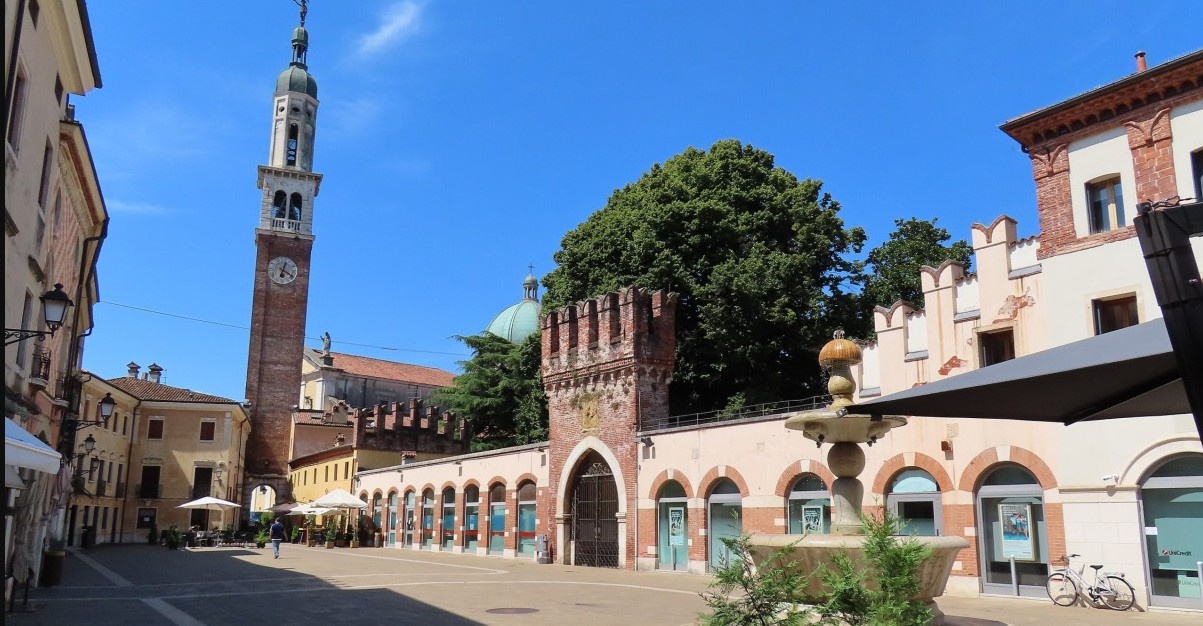
Giusti describes a weekly left-wing film and discussion night in the north-eastern Italian town of Thiene (pictured), which attracted an astonishing average of 500 people.
“Three or four of us from the student collective ran a stall at the entrance which stocked not only local leaflets and publications but also all the newspapers and fanzines from elsewhere that we could get our hands on.
“We weren’t sectarian – there was room for everything to the left of the PCI or counter-cultural”. [12]
Despite his involvement with various political groups, this non-dogmatic approach was an important feature of Giusti’s outlook.
He writes of his youth: “We were a bunch of friends of a fricchettone variety (anything-goes anti-system ideas, spliffs, music and lots of dreaming), who loved the graphic novels of Munoz, Pratt and Moebius, were heavily into progressive rock and Zappa, discovering Coltrane and Davis, reading Kerouac and Castaneda and German-speaking writers like Hermann Hesse and Joseph Roth, dreaming of initiatory journeys to Mexico, to Srinagar in Kashmir or on the roads between the Middle East and India”. [13]
In addition to Hesse, he was also influenced by the thinking of two other organic radical inspirations – Guy Debord and Jacques Camatte. [14]
When he and his friends set up Collettivi Politici Veneti (CPV), a regional network for Veneto, “the choice of the name was significant – we were not communist, revolutionary or proletarian collectives, but collectives of a named and defined territory”. [15]
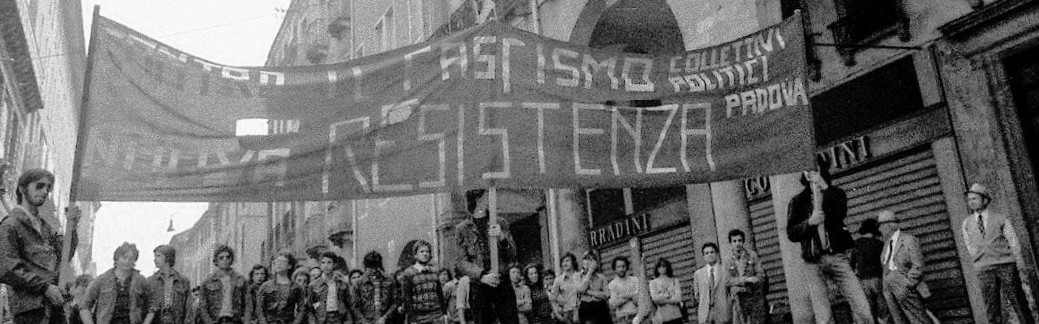
“Reformist or revolutionary? Tute Bianche or Black Bloc? Communist or anarchist? Environmentalist or Gilet Jaune? Autonomist or situationist? These are questions to which I can reply differently depending on who is asking them or on what situation I find myself in.
“Why? Because I am all of that at the same time. Because I am convinced that these are reductive labels and cages”. [16]
The scale and ferocity of the revolt that was spreading across Italy in Giusti’s youth is difficult to imagine today.
He describes the 1974 uprising that broke out in San Basilio, a working-class suburb of Rome: “For four days, residents resisted attempts to evict 150 families who had been occupying two blocks of flats for 11 months.
“From the start, the clashes had been particularly tough but, with the help of activists from other areas, the residents held firm. On the fourth day, the police fired live ammunition. Fabrizio Ceruso, a 19-year-old activist from the Volsci autonomist collectives in Rome, was killed.
“All the residents of San Basilio immediately took to the streets and physically pushed back the thousand police that were present, forcing them to retreat to a local football pitch”. [17]
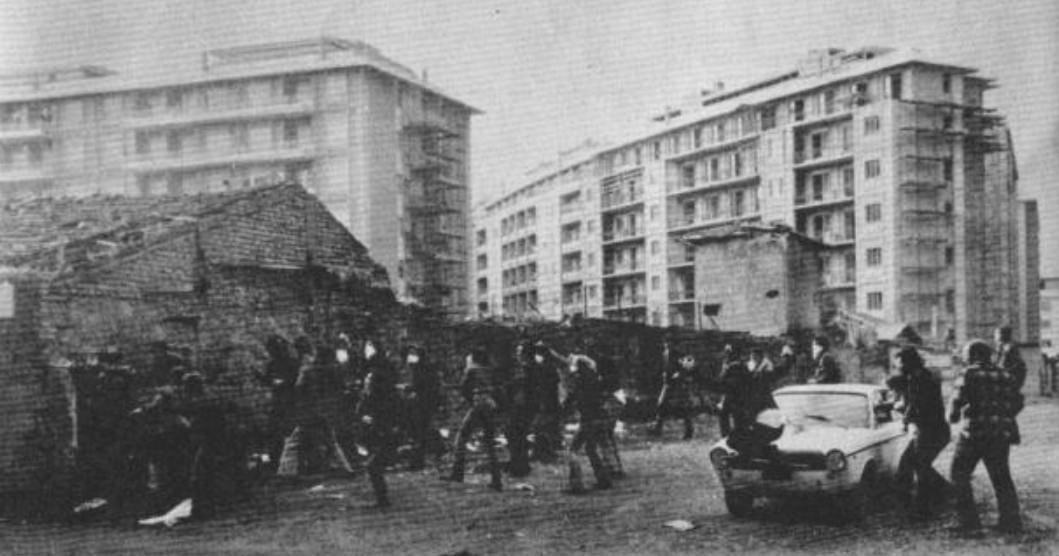
While the immediate reaction of the Italian government was to order the police to clear the neighbourhood, two weeks later the authorities gave in and made all the families concerned official occupants of the flats.
It was in the basement of one of these blocks that Giusti later encountered the limits of Lotta Continua, an “ultra-left” [18] group with which he had become involved.
He committed the terrible sin of disagreeing with a speaker discussing class struggle in the USA.
“I praised the incredible strength and creativity shown by American workers who, in the absence of recognisable political leadership, invented forms of struggle little practised in Europe, such as slowdown strikes and sabotage… The speaker did not hold back from labelling me a spontaneity-centred idealist extremist”. [19]
The question of political violence is a tricky one. Faced with a brutally violent system which has never hesitated to unleash war, terror and repression to impose its rule, using force against it is obviously ethically justifiable, but this does not necessarily mean that it is advisable.
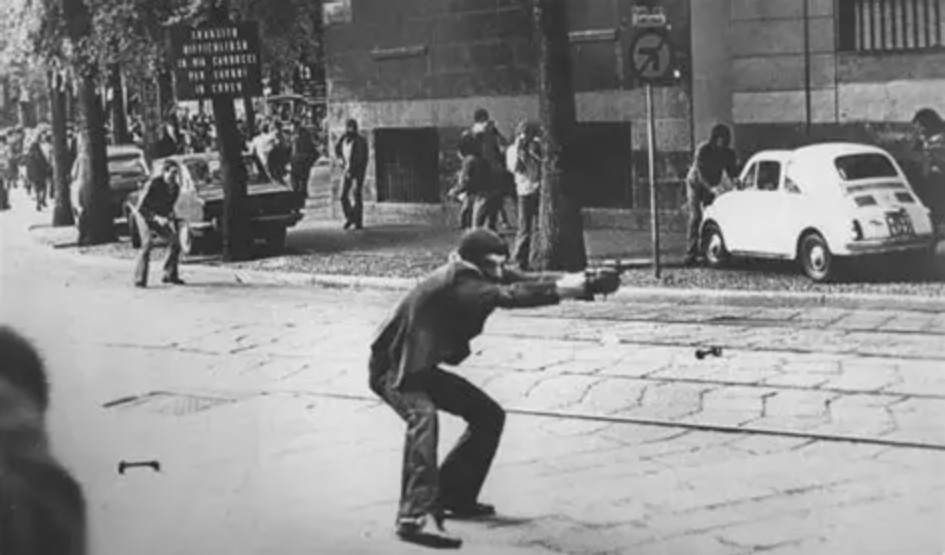
Giusti writes that, at that time of much political violence in Italy, the question he asked himself was not so much whether he agreed with it or not as to how one might usefully go about it.
“How can you avoid the traps of a direct struggle against a power which is a thousand times stronger than you?
“Even if, right from the start, I was perhaps one of the rare comrades to say to himself that we were going to get ourselves killed, I thought more about how to stop this happening too quickly and how to minimise the damage to ourselves”. [20]
He argues that this approach made the activities of the CPV a real success.
“For five years, in Veneto, a large number of struggles were won. The reasoned use of force and the refusal to practise political homicide pretty much prevented the drift into militarism that wreaked havoc in the rest of Italy”. [21]
“The hundreds of autonomists who thought only of armed struggle and joined the fighting groups ruined their lives and those of thousands of others by believing that attacks on people – politicians or magistrates – would weaken the state and that, the example having been given, the proletarian masses would follow their lead”. [22]
“The primary lesson to draw from the cycle of struggles in the 1970s is certainly that direct confrontation with the state is a trap – once you fall into this dynamic, it is impossible to get out of it.
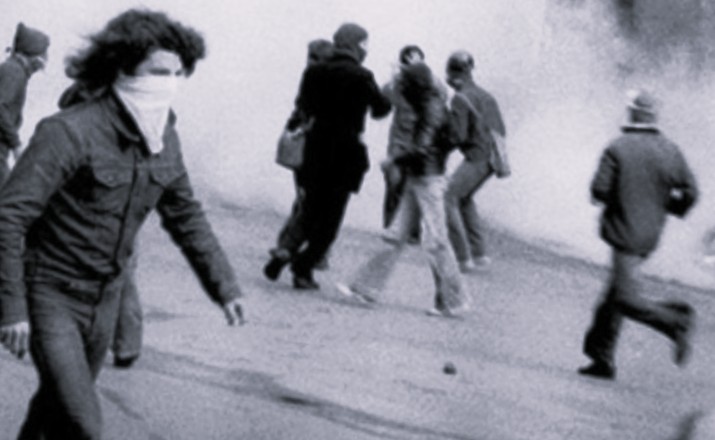
“So what should you do? Reject all illegality or violent behaviour? Certainly not. But put some good sense into it, yes. This is necessary if you don’t want to very quickly ruin your life and spend the rest of your days licking your wounds.
“And above all, you should not make it your principal and permanent activity. Learn how to sidestep. Prioritise forms of struggle that are less tiring and costly. Find approaches that create a bit of a buzz”. [23]
Giusti says we should favour “creativity and the art of making do… thinking with your hands”. [24]
His use of direct action began at the age of 16, when he and others lay on the ground to block buses, after a rise in the fare for their journey to school – the revolt spread across the region and they secured victory. [25]
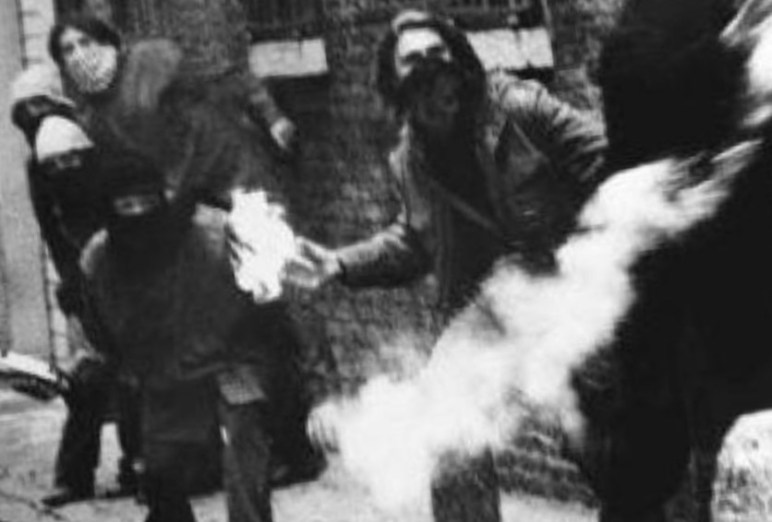
Later, in 1975, he and his comrades wanted to go and see the English rock band Soft Machine (pictured) play in Vicenza but were angry at the cost of entry.
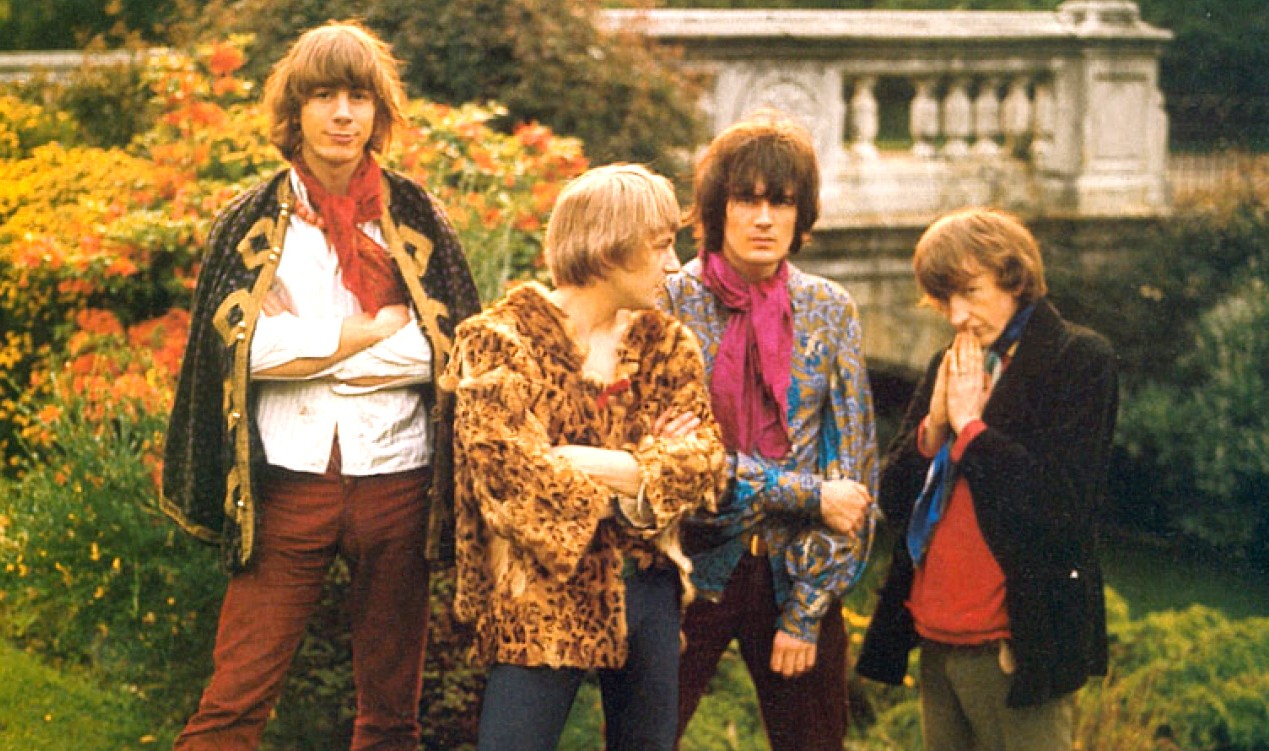
“There were a good hundred of us demanding a reduction in the price of the ticket. In the face of the organisers’ categorical refusal, two Molotov cocktails and a hail of large stones broke the windows at the venue’s entrance and 200 people got into the gig for free”. [26]
The CPV’s aim was to constitute “a territorial counter-power” and it favoured “tactical intelligence and creativity” in all its struggles, whether against state repression, fascism or in “appropriating” goods from supermarkets to distribute them in the poorest working-class areas. [27].
Between 1977 and 1979 it staged what the press called notti dei fuochi (nights of fire) which were “a series of explosive attacks – I think we managed as many as 25 – all carried out in our region on the same night and on the same theme”. [28]
Giusti’s life changed dramatically in 1977 when police discovered his role in a bank robbery carried out to raise funds for the cause, using WW2 guns that were still in circulation in Italy at the time, [29] and he was forced to go into hiding.
He watched with increasing dismay as, in the face of the state’s ramped-up repression, many young rebels took the disastrous route of direct confrontation.
By the start of 1979 he was already thinking about leaving Italy, as the hope that had kept up his spirits while he was on the run was rapidly evaporating.
Then disaster struck – on April 11 three comrades died in an explosion in a house at Thiene, with a fourth, whose girlfriend was killed, later committing suicide in jail.
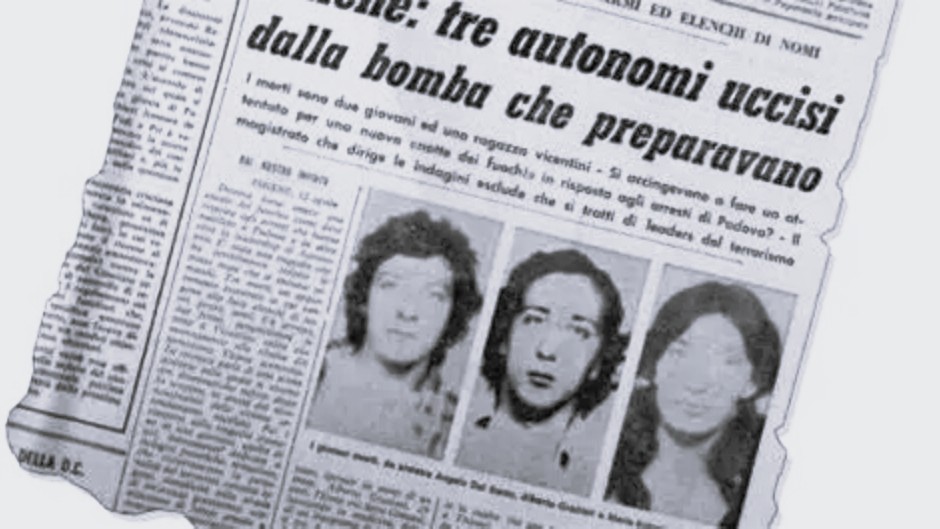
Giusti writes: “Almost half a century has passed, but the Thiene tragedy is still present, it is a wound that will not heal.
“Every year, April 11 is a sad day for me, a day which brings back a sense of guilt… Why them? Why not me? There were dozens of us handling explosives and it could have happened to any of us…
“And, without exaggerating my own importance, it was me that initiated this strategy in our area and who encouraged rebels to reject political activism in favour of ‘mass’ illegality. There are no two ways about it, I bear the burden of that responsibility”. [30]
He finally left Italy in 1981 in a state of some despair, but three years later had managed to open his first bookshop in Paris and lived in France from then on.
The eventual defeat of the Italian uprising must have been due to a number of factors, including its own mistakes.
But I suspect an important role was played by the Gladio false-flag terror network that Giusti mentions in his book.
Its Strategy of Tension, or Strategy of Terror as Giusti more accurately calls it, set out to thwart any radicalisation of Italian society by paralysing the population with fear and opening the door to massive repression – I wrote an essay about it years ago if you want to know more. [31]
I first became intrigued by this network and its activities more than 30 years ago, after watching a remarkable 1992 documentary series from the BBC’s Timewatch – it can still be found online and I very much recommend it. [32]
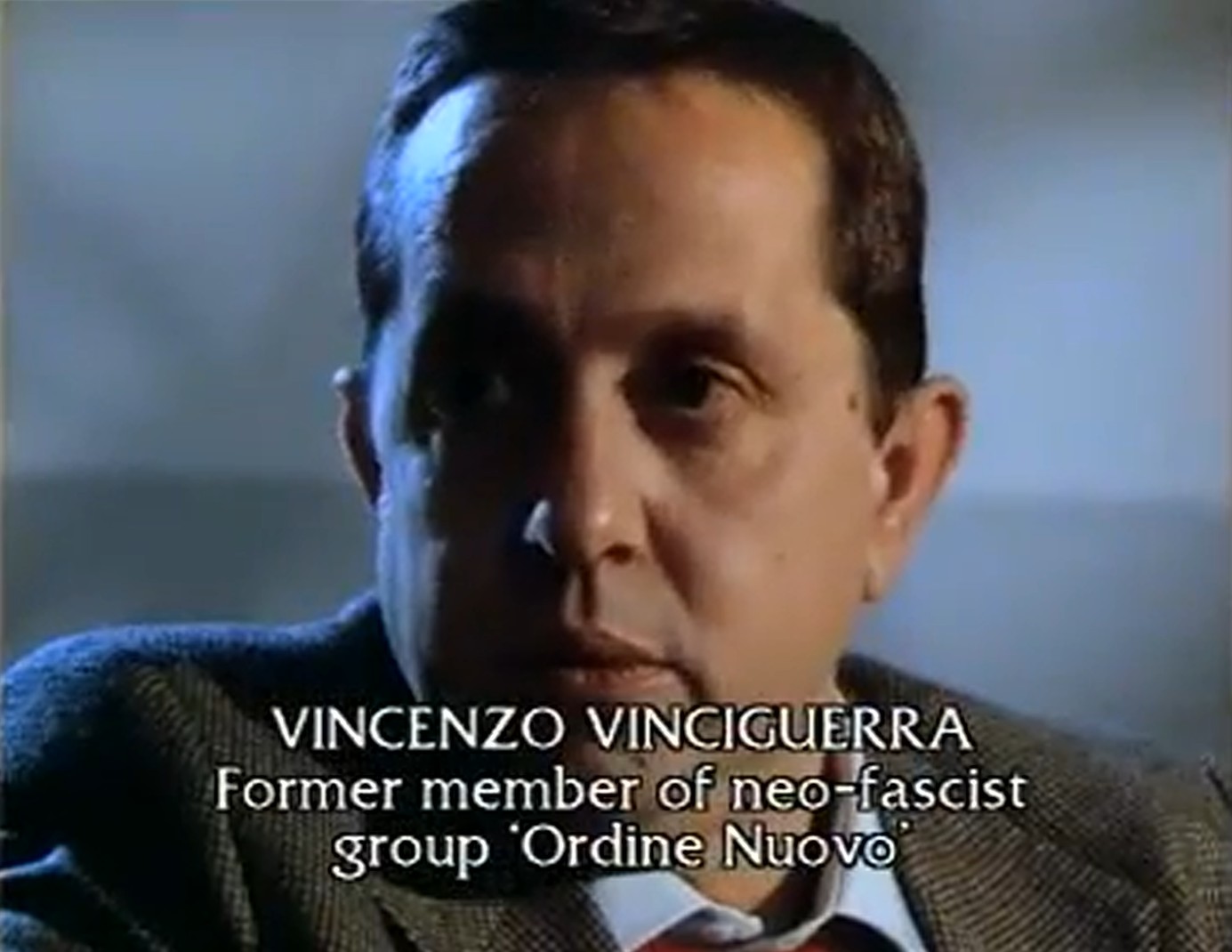
Here Vincenzo Vinciguerra, a jailed neo-fascist bomber, says the “parallel structures” involving the intelligence forces were “an invisible army that is not poised for battle against a hypothetical invader, but rather one meant to be used internally”.
This view is backed up by others interviewed for the documentary, who say that questions were asked internally about the real agenda, given that Gladio was supposedly set up to counter Soviet influence, as part of what I have called the “old binary bounce routine“. [33]
Vinciguerra explains: “You had to attack civilians, the people, women, children, innocent people far removed from any political game. The reason was quite simple. They [the terror attacks] were supposed to force these people, the Italian public, to turn to the State to ask for greater security. This is the political logic that lies behind all the massacres and bombings which remain unpunished, because the state cannot convict itself or declare itself responsible for what happened”.
He says of the 1980 bombing at Bologna’s rail station: “The massacre at Bologna responds, as do all the other massacres, to the logic of a state which, no longer knowing how to confront a political enemy, resorts to extreme measures of violence, attributable to extremists, on the left or the right, in order to justify its own actions. That is the only truth about Bologna”.
Giusti describes Gladio as a creation of NATO and mentions its links to the P2 masonic lodge in Italy, [34] but I can now see that there is a still bigger and more sinister picture, which was confirmed by links I detailed in ‘A shadowy shaper of global tyranny‘. [35]
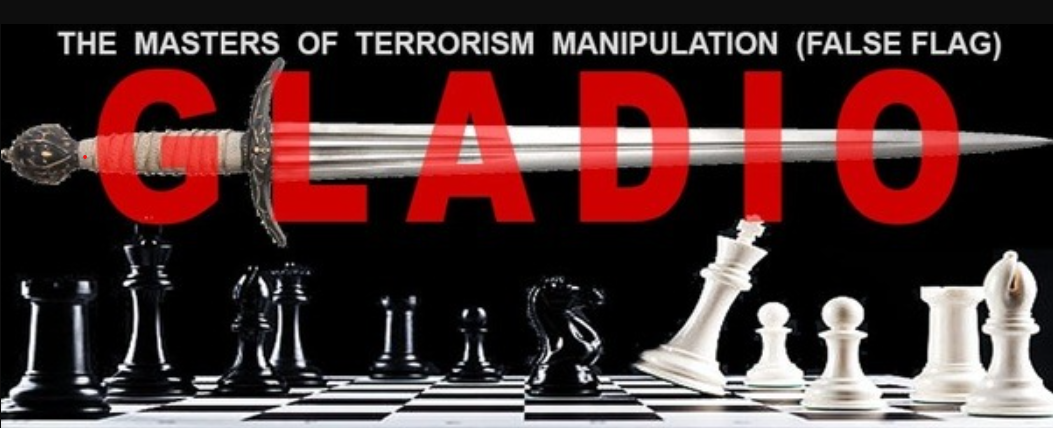
Gladio was clearly a tool of ZIM, the zio-satanic imperialist mafia that runs NATO, the CIA and British intelligence, controls freemasonry and has a bloodthirsty record of using false-flag terrorism to advance its agenda all over the world.
It was that same mafia that was profiting from the exploitation of the Italians doomed to waste their lives in factories and so any mass revolt against that industrial slavery system had to be crushed in any way possible.
I think that an understanding of this grim reality, breaking through all the intimidation and gaslighting that tries to hide it from us, will be the necessary foundation of the future resistance movement everywhere.
What marked me most in Giusti’s account was the enormous wave of energy that rose up in Italy at that time through the young generation, with a fresh flood of vitality pushing the population to try to break the chains of industrial servility and the rule of money.
He says that, from 1975, new radical groups started popping up everywhere: “The institutional parties and groups of the left and far left no longer amounted to very much in the face of this horde of young rebels whom they did not know how to direct or govern”. [36]
One such group known as the Metropolitan Indians specialised in painting their faces in bright colours and reciting ironic slogans such as “Power to the bosses!” and “More work, less pay!”. [37]
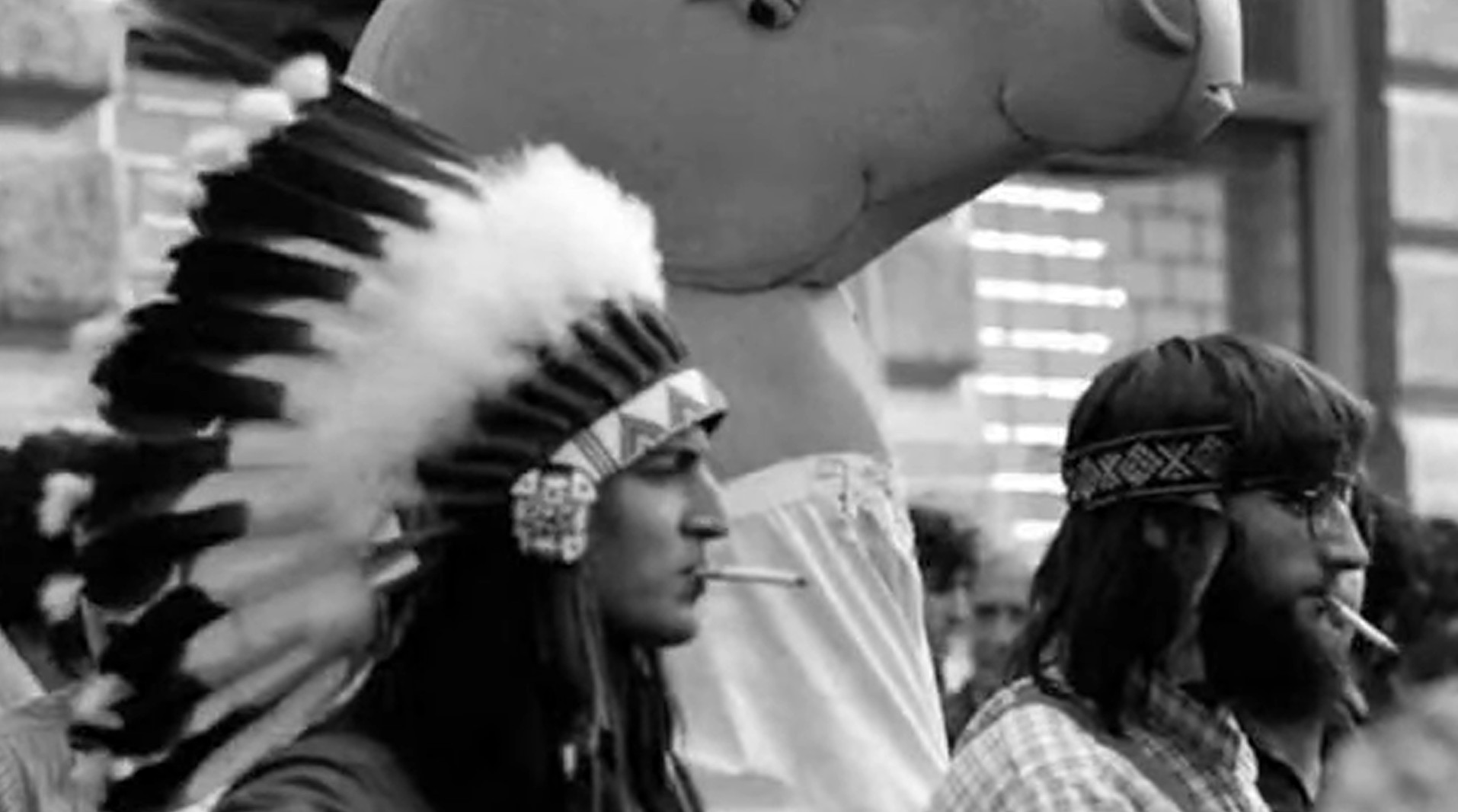
“A whole bunch of political newspapers of a new style appeared – they were no longer sad and austere, as previously, but full of garish colours.
“They talked of struggles but also of self-awareness. They used irony by turning around the usual slogans and took frames from popular graphic novels, replacing the wording…
“In no time at all, the combination of these dynamics changed the landscape of the Italian rebellion. It was a new beginning for numerous activists and the start of a movement that lay outside the box that power understood”. [38]
I can see a parallel here with the free-spirited rebellion that surged forth in the UK in the 1990s and of which I became part – this started off as the anti-roads movement, then broadened into the British wing of the anti-globalisation scene and later, in 2002 and 2003, constituted the radical part of the anti-war movement.
Like the phenomenon Giusti describes, it had managed to escape the control of the system – hence the desperate attempts by controlled-left groups like Globalise Resistance to hijack its cause and the raft of police spies sent into its ranks. [39]
Unfortunately, that once-inspiring anarchic milieu then largely degenerated into woke posturing and thought-policing, culminating in its abject collaboration with Operation Covid in 2020. [40]
But I still have many fond memories of the struggles in which I was involved – the wildcat protests we called and took part in, the police lines we broke through, the roads we blocked, the buildings we occupied, the celebrations we enjoyed together.
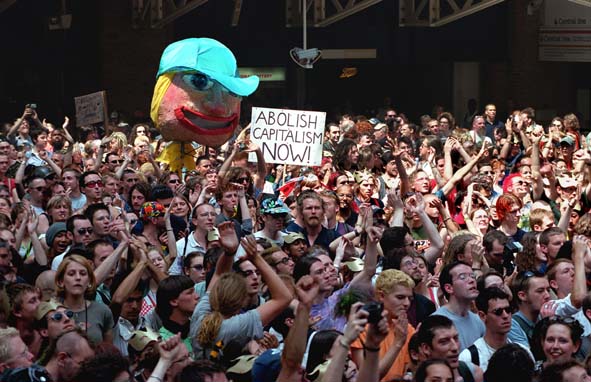
It was adrenaline-pumping, joyful, inspiring – I can still picture the thousands of us in the streets of the City of London for the Carnival Against Capital in June 1999 (pictured), dancing and dreaming of the end of the century and the fall of the system.
I can only agree with Giusti when he writes: “We live in a given moment and we cannot be content with simply watching it go by – we only have one life and we are only young for a certain period.
“In my view, to live is to be able to dive into all the contradictions, to have the courage to confront your own limits and those of the times, to take the risks that you have to take as soon as you catch a glimpse of the possibility of a breakdown of the existing world, as soon as you spot a spark that could become a fire…
“What counts are the moments when people find themselves living in a parallel time in which the hours and days of their daily life are transformed, those rare moments when the rules are no longer the same”. [41]
When another new generation arises with the fire of revolt in its belly, which it certainly will, its insurrection will take a different form from that of previous generations – using different language, inventing its own symbols and methods – and yet it will still essentially be the same rejection of the same toxic system by the same population.
This will happen organically, spontaneously, rather than under orders from self-appointed organisers, and it will be powered by the righteous rage at tyranny and the life-affirming love of freedom that flourish within so many good human hearts.
[1] https://www.alterlivres.com/librairie/
[2] Paul Cudenec, ‘Science, revolution and the globalist agenda’, https://winteroak.org.uk/2026/04/15/science-revolution-and-the-globalist-agenda/
Paul Cudenec, The False Red Flag (2024), https://winteroak.org.uk/wp-content/uploads/2024/03/the-false-red-flag–1.pdf
[3] Giusti Zuccato, De la révolution à l’exil (Montreuil: Libertalia, 2026), pp. 82-83. All subsequent page references are to this work, unless otherwise stated, and all translations are my own.
[4] p. 82.
[5] pp. 15-16.
[6] p. 146.
[7] p. 152.
[8] p. 60.
[9] p. 146
[10] Paul Cudenec, ‘Is this really normal?’, https://winteroak.org.uk/2026/04/02/the-acorn-110/
[11] p. 38.
[12] p. 42.
[13] pp. 47-48.
[14] pp. 149-50, https://orgrad.wordpress.com/a-z-of-thinkers/hermann-hesse/, https://orgrad.wordpress.com/a-z-of-thinkers/guy-debord/,
https://orgrad.wordpress.com/a-z-of-thinkers/jacques-camatte/
[15] pp. 62-63.
[16] p. 145.
[17] pp. 50-51.
[18] p. 181.
[19] p. 51.
[20] p. 147.
[21] p. 148.
[22] p. 149.
[23] p. 159.
[24] p. 100.
[25] p. 44.
[26] p. 59.
[27] p. 71.
[28] p. 72.
[29] p. 21.
[30] p. 111.
[31] Paul Cudenec, ‘The Politics of Fear’, Antibodies, Anarchangels and Other Essays (Sussex: Winter Oak, 2013), https://winteroak.org.uk/wp-content/uploads/2021/04/antibodies-and-anarchangelsweb.pdf
[32] https://www.youtube.com/watch?v=j48ieINPUYU&t
https://www.youtube.com/watch?v=FwbfX_VzEmE
https://www.youtube.com/watch?v=LhATun4DpFo
[33] https://winteroak.org.uk/2025/06/13/the-old-binary-bounce-routine/
[34] p. 65.
[35] https://winteroak.org.uk/2026/03/24/a-shadowy-shaper-of-global-tyranny/
[36] p. 58.
[37] p. 180, p. 81.
[38] p. 58.
[39] https://libcom.org/article/monopolise-resistance-how-globalise-resistance-would-hijack-revolt-schnews
https://www.spycops.co.uk/
[40] Paul Cudenec, ‘Anarchists against freedom’, https://winteroak.org.uk/2020/04/26/anarchists-against-freedom/
[41] p. 151.


Hello, watch this, please. https://www.youtube.com/watch?v=EPuBWx9a4IE
Abigail Buitenkant
Sent with Proton Mail secure email.
LikeLike
Thank you and Happy May Day!
LikeLike
Cheers!
LikeLiked by 1 person
Thank you!
LikeLiked by 1 person