
by W.D James
We must continually remember our past and our stories.
Most societies have a recognized role for the person or people whose job it is to remember the clan or tribe’s story. As a student and teacher of Western philosophy, I often feel like that is a large part of my vocation.
To re-member literally means to bring together again. The one who re-members brings together the world again. That is, they select and arrange from the multitude of data the parts that hang together and form a narrative structure to help us remember who and what we are. In the debacle that is the modern world, this is an often neglected but even more essential function to perform.
Left to itself and shorn of its roots our life-world tends to fragment. Further, to re-member is also to re-mind ourselves of who we are: to reconstitute an integral identity and sense of purpose.
Lately I’ve been remembering R. H. Tawney (1880-1962). Tawney is largely forgotten today, but he himself was a laborer in the task of remembrance.
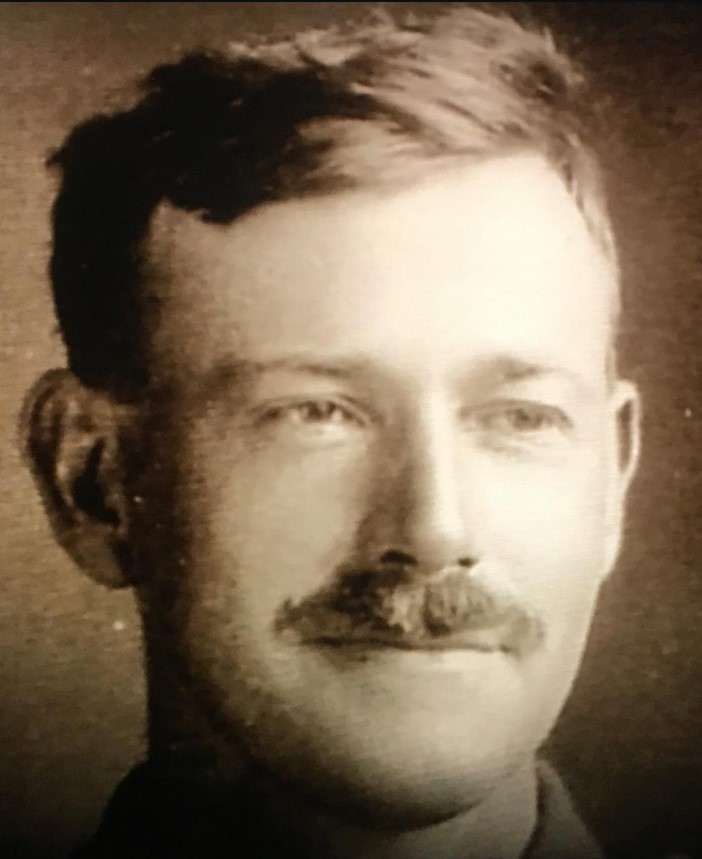
He was an active member in the British Labour Party from about the time of the First World War up through the 1930s and 40s. He was closely associated with the Fabian Society of Beatrice and Sidney Webb. He maintained a close relationship with them but departed from them in many ways. Whereas the Fabians tended to be technocratic and to advocate increasingly centralized paths to building socialism, Tawney remained committed to democratic means and to the insistence that socialism and freedom had to go together. Also, he was perceived as something of a living saint, rather than a political operative (though his commitment to Labour never faltered), within Fabian circles.
Tawney was an economic historian. He had the typical elite education of his day, studying at Rugby then Oxford. In his Oxford exit exams, he scored only a second-class degree in ‘Greats,’ the core of the classical Oxford curriculum. However, he managed to still go on to teach at Oxford and then for most of his career at the London School of Economics. He was also heavily invested in adult education for working-class people throughout his life: the English class system was especially anathema to him; he thought that a common culture was essential to a flourishing people.
He is often called a Christian Socialist or Gild Socialist. Theologically, Tawney can be seen as operating within the general parameters of both modern Catholic social teaching and within the Protestant Social Gospel tradition. However, what really characterizes his thought is that he formulated a primarily ethical critique of capitalism, drawing on traditional sources. He was directly influenced by the group of English thinkers who developed an ethical, aesthetic, and humanistic critique of industrialism, the reduction of social relationships to ‘the cash-nexus,’ and of modernity more broadly: Matthew Arnold, John Ruskin, and William Morris. More recently this line of thought has been termed ‘conservative socialism’ or ‘Tory socialism’ in that it combines an egalitarian economics with an appeal to traditional social and moral norms. It also favored a decentralized and incremental approach to socialism which brought it into contact with Distributism as well.
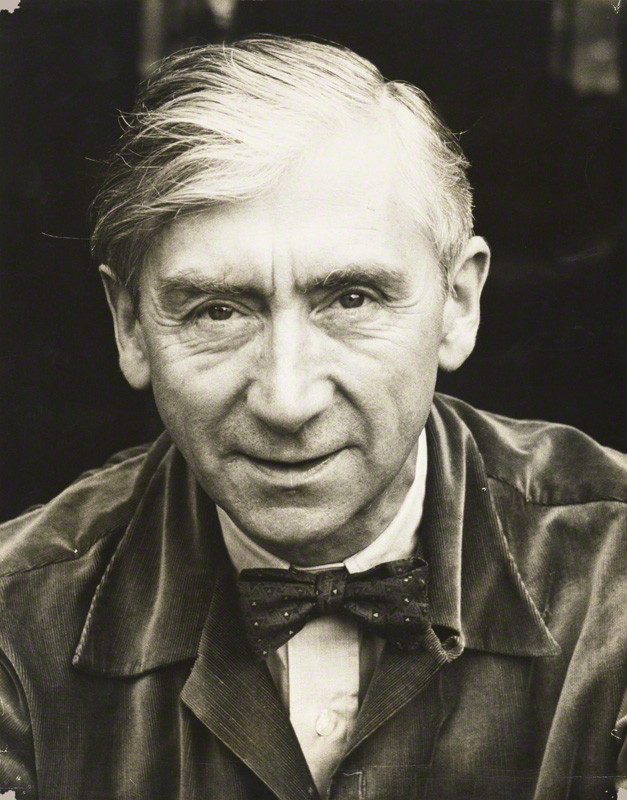
I see Tawney as the self-conscious bearer of this very English mode of critique, filling in the chronological gap between these 19th century representatives and the mid-20th century figure of Herbert Read (pictured).
What Tawney remembered were the three central facts of traditional and medieval social wisdom:
- What the fundamental moral principle is;
- What society is; and
- What economy is.
Further, he understood that these three things form an integrated whole: economy must be informed by sociality and that must be informed by ethics, versus the modern tendency to break things up into ‘autonomous spheres’ where, say, politics is to be understood separately from ethics and the laws of economy are conceived of as self-contained, subsumed neither under a conception of social function nor of ethical constraint.
Ethics
Tawney thought that to create a more human society out of modernity we would need to respiritualize our civilization. He worried that the task of creating socialism might first require a reconversion of England to Christianity.
He wrote:
“The essence of morality is this: to believe that every human being is of infinite importance, and therefore that no consideration of expediency can justify the oppression of one by another. But to believe this it is necessary to believe in God…. It is only when we realise that each individual soul is related to a power above other men, that we are able to regard each as an end in itself.”

And:
“In order to believe in human equality it is necessary to believe in God. It is only when one contemplates the infinitely great that human differences appear so infinitely small as to be negligible… What is wrong with the modern world is that having ceased to believe in the greatness of God, and therefore the infinite smallness (or greatness – the same thing!) of man, it has to invent or emphasise distinctions between men” (quoted in Wright, 1987, 19-20).
Tolstoy had expressed his ethical vision in very much the same terms a couple of decades earlier. In fact, given the similarity and the role that ‘the infinite’ plays in both deductions, I’m almost certain Tawney was borrowing from him.
I don’t believe we can overestimate the importance of this argument. We like to think that we like equality, dignity, and all that. It is in fact very difficult to defend human equality. Empirically we differ in infinite ways. We are not equally strong, equally beautiful, equally intelligent, equally socially or emotionally attuned, etc…. Hence, by whatever standard we would evaluate people, they will be arrayed along a spectrum ranging from low to high.
I only know of two convincing arguments, broadly speaking, for human equality. In Leviathan, Thomas Hobbes develops what we might term the negative argument:
“Nature hath made men so equal, in the faculties of the body, and mind; as that though there be found one man sometimes manifestly stronger in body, or of quicker mind than another; yet when all is reckoned together, the difference between man, and man, is not so considerable, as that one man can thereupon claim to himself any benefit, to which another may not pretend, as well as he. For as to the strength of body, the weakest has strength enough to kill the strongest, either by secret machination, or by confederacy with others, that are in the same danger as himself.”
That is, we’re equal enough to all be threats to one another. Ironically, human equality is the basis of Hobbes’ assertion that we will naturally all be at war with one another and, hence, live lives that are “solitary, poore, nasty, brutish, and short.” Well, ok, it is true though: we can all harm one another, so I accept the validity of the argument for equality (if not the consequences he draws from it).
The classic Christian argument is the other. From that perspective we are equal and possessed of equal dignity for several reasons. Mythologically, we are all equally ‘made in the image of God.’ Theologically, we are each infinitely loved by God. Ethically, we relate to one another through God (the basis of Tawney and Tolstoy’s argument). They used to call the 6-shooter revolver ‘the great equalizer.’ That perfects Hobbes’ argument. On the positive side, God is the great equalizer.
Tawney remembered the great ethical truth of human equality.
Society
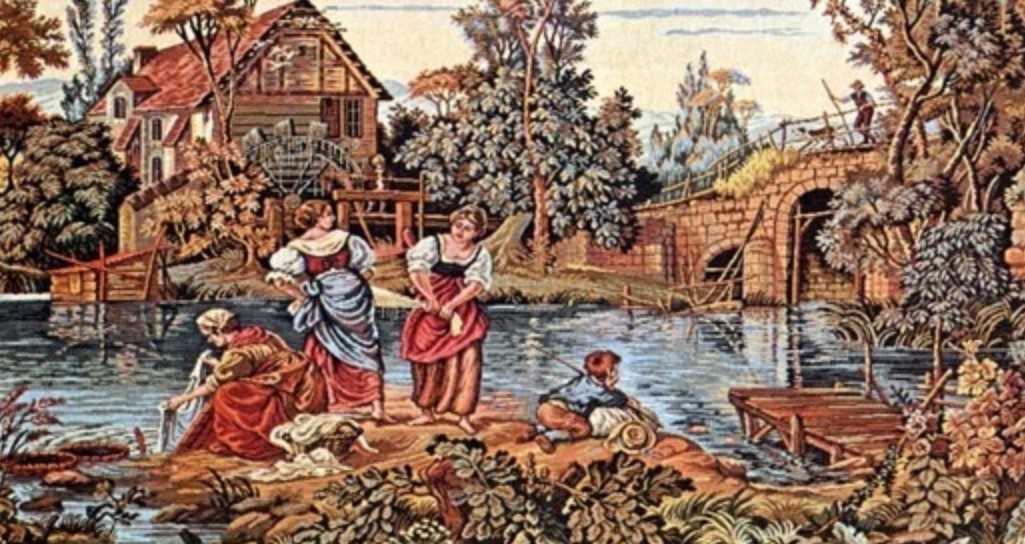
Tawney wanted to recapture an organic conception of society. This begins with the application of the above moral principle to social relations. He discerns that for the parts of society to relate to one another organically and harmoniously, the various members of society, individual and collective, must have some shared sense of the end society is to pursue. He notes:
“this end is the growth towards perfection of individual human beings” (quoted in Wright, 1987, 43).
That is one way of formulating ‘the common good’ that is in tune with the fundamental moral principle he identified. Tawney proceeds by developing a contrast between what he terms a mechanistic and a functional conception of society.
The hallmark of modern economic liberalism, capitalism, is that it ‘frees’ the individual from their social relationships, substituting the mechanisms of the market in their place. He continues:
“What it implies is, that the foundation of society is founded, not in functions, but in rights; that rights are not deducible from the discharge of functions, so that the acquisition of wealth and the enjoyment of property are contingent upon the performances of services, but that the individual enters the world equipped with rights to the free disposal of his property and the pursuit of his economic self-interest, and that these rights are anterior to, and independent of, any service which he may render” (Tawney 2022, 14).

Historically, this yields what he terms ‘the acquisitive society’; a society only interested in the individual pursuit of private gain. If social goods, or the good of society, is to be fostered at all, it is only as a side effect of individual competition and striving.
In contrast, he turns to the premodern economy of medieval Europe for an understanding of what a functional society would look like:
“Thus social institutions assume a character which may almost be called sacramental, for they are the outward and imperfect expression of a supreme spiritual reality. Ideally conceived, society is an organism of different grades, and human activities form a hierarchy of function, which differ in kind and in significance, but each of which is of value on its own plane, provided the end which is common to all” (Tawney, 1929, 34).
The basic structure of Tawney’s thought thus far runs: the overriding moral principle is the affirmation of the dignity and equal value of each individual; this means that a properly constituted society needs to reflect this by seeking the good of all as its overarching aim; this then entails an evaluation of how each institution, organization, or element of society contributes to this overarching aim (performs a function within the overall project).
Concretely, what he wants to be able to critique in existing arrangements are situations where the individual pursuits of wealth do not perform a valid social function, or are in fact harmful to society at large. He has in mind things like financial speculation, usury, the exploitation of others’ needs when they are desperate, sharp dealing, and any other relation that uses fellow human beings merely as means to one’s own success instead of as ends in themselves with their own lives to live.
Tawney remembered the ends toward which people form societies and hence what society is.
Economy
A huge part of Tawney’s task when it comes to economics is to defend the idea that ethics actually has a place. On the one hand his target is Marxists or other strictly ‘materialist’ socialists who only want to talk about the inexorable material laws of history and, on the other, modern liberals who would find the market economy natural or inevitable: both see little place for ethics in the structuring or regulation of economic life.
He describes the transition from the organic and, at least theoretically, morally regulated economy of the middle ages to the free market of modern capitalism thus:
“Between the conception of society as a community of unequal classes with varying functions, organized for a common end, and that which regards it as a mechanism adjusting itself through the play of economic motives to the supply of economic needs; between the idea that a man must not take advantage of his neighbor’s necessity, and the doctrine that ‘man’s self-love is God’s providence’; between the attitude which appeals to a religious standard to repress economic appetites, and that which regards expediency as the final criterion – there is a chasm which no theory can bridge…” (Tawney, 1926, 26).
The point he is driving at is that this does not seem like a ‘natural,’ inevitable, or smooth transition free from ethics. In fact, what mainly changed was the ejection of ethics from economic relationships. He doesn’t want to deny the material bases of economic change, but he does want to suggest that ideas matter as well (that is, they aren’t just ideology in the Marxist sense, especially ethical ideas can be true and therefore important). He says somewhere that “what is wrong with capitalism is that it is wrong;” that is, as a system, it is not concerned with the moral right.
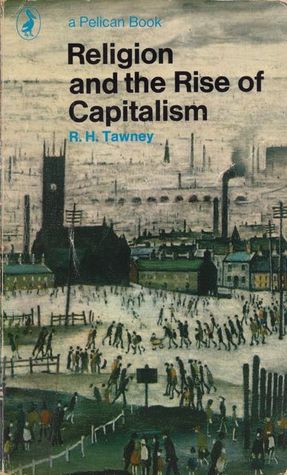
In Religion and the Rise of Capitalism, he has this to say about the role of ethics in medieval economics:
“’He who has enough to satisfy his wants,’ wrote a Schoolman of the fourteenth century, ‘and nevertheless ceaselessly labours to acquire riches, either in order to obtain a higher social position, or that subsequently he may have enough to live without labour, or that his sons may become men of wealth and importance – all such are incited by a damnable avarice, sensuality, or pride…’. The essence of the argument was that payment may properly be demanded by the craftsmen who make the goods, or by the merchants who transport them, for both labour in their vocation and serve common need. The unpardonable sin is that of the speculator or the middleman, who snatches private gain by the exploitation of public necessities. The true descendent of the doctrines of Aquinas is the labour theory of value. The last of the Schoolmen was Karl Marx” (Tawney, 1926, 48).
Of course, Tawney does not mean to simply reconstitute the medieval world; he just looks to it as an example of how an organic society looked and operated and the role of morality within it.
Nor does he present a utopian vision for how he thinks this should be reinstituted in the modern context. He is actually committed to democratic process, not top-down engineering (of the Leninist or Fabian varieties), so that must remain something of an open question.
Further, though a socialist, he has no problem with small scale private ownership (hence his affinity with Distributists), in fact he thinks it largely good and also necessary given the problems inherent in human nature (he still has some conception of the Christian notion of ‘sin’).
His overriding economic concerns are three. He takes it that the moral imperative of equality entails a good deal of actual social and economic equality (and he faults medieval society for being too hierarchical). Secondly, he understands that solidarity, working together for the common good, is the moral and dynamic core of society. Given the various property relationships (private ownership, cooperative ownership, collective ownership) he is wiling to entertain and support, ‘socialism’ for him means, I would argue, not really the collective ownership of the means of the production per se, but simply a society structured as to practically reflect and foster solidarity (the modern equivalent to the sacramental character he saw in medieval society). Finally, practically, this entails a functionalist conception of society such that the overarching aim of society is realized and so that economic reward goes to support those who actually contribute to the social good in a fairly (though not strictly) egalitarian way – at least each person must have the material means to live a decent life and not be subjected to economic domination (or political domination for that matter; freedom was the second value Tawney always championed, both politically and economically).
Tawney remembered what the economy is for.
Through his remembering, he helps reform our minds to recover how basic aspects of our existence as social (and moral and spiritual) animals are supposed to hang together as an integral whole.

Tawney, R. H., The Acquisitive Society, Writat 2022 (1920).
Tawney, R. H., Religion and the Rise of Capitalism, Penguin, 1926.
Wright, Anthony, R. H. Tawney, Manchester University Press, 1987.


Thank you for resurrecting the memory of Tawney, he was a great man and had a profound impact on the socialist movement in Britain in the 20th Century. And thank you for understanding what socialism was….. something which, particularly in America, has mind bogglingly come to mean it’s opposite.
LikeLike
What you remember saves you. To remember
Is not to rehearse, but to hear what never
Has fallen silent. So your learning is,
From the dead, order, and what sense of yourself
Is memorable, what passion may be heard
When there is nothing for you to say.
WS Merwin
LikeLike