by Paul Cudenec, who reads the article here
Two of the main thrusts of my writing over recent years have been to highlight the evils of industrial modernity and to warn against the menace of judeo-supremacist global control.
Sometimes these come together, as when I wrote about the judaic-inspired scientific “rationalism” promoted by the Invisible College before the Industrial Revolution, [1] or when I described Leviathan’s Law and the philosemitic outlook advanced by Thomas Hobbes and John Selden. [2]
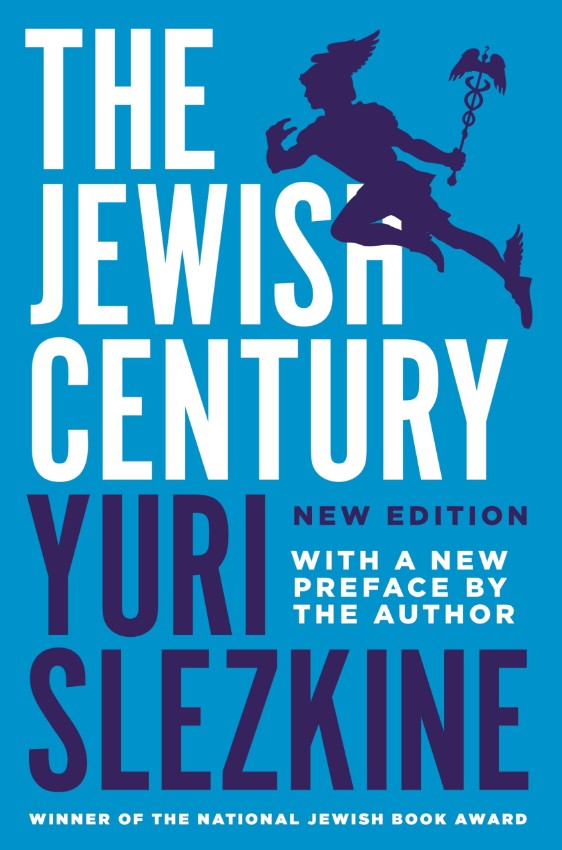
I suppose that some readers (or ex-readers!) may have considered this connection to be doubtful and my analysis to be straying into areas that are often termed “anti-semitic”. But the more books I read, the more I am convinced that I am on the right track and this was particularly the case with Yuri Slezkine’s The Jewish Century, originally published in 2004 and reissued in 2019.
Here is how he begins page one: “The modern age is the Jewish Age, and the twentieth century, in particular, is the Jewish Century. Modernization is about everyone becoming urban, mobile, literate, articulate, intellectually intricate, physically fastidious, and occupationally flexible.
“It is about learning how to cultivate people and symbols, not fields or herds. It is about pursuing wealth for the sake of learning, learning for the sake of wealth, and both wealth and learning for their own sake. It is about transforming peasants and princes into merchants and priests, replacing inherited privilege with acquired prestige, and dismantling social estates for the benefit of individuals, nuclear families, and book-reading tribes (nations). Modernization, in other words, is about everyone becoming Jewish”. [3]
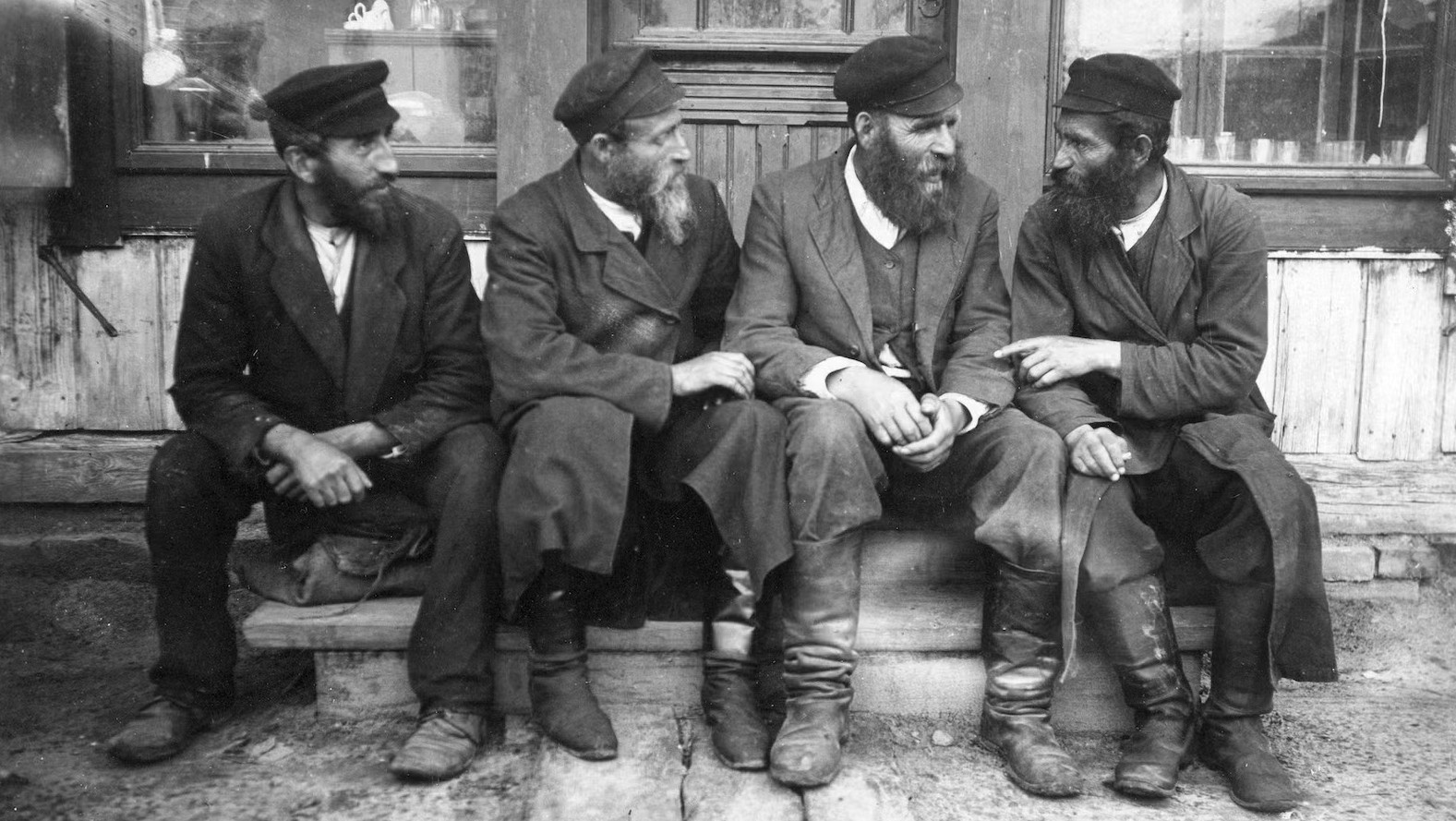
Slezkine points out that Jewish communities were already urban – including the shtetls, little cities, of rural Eastern Europe – at a time when most of Europe was still agricultural and over the course of the nineteenth century, most of the Jews of Central and Western Europe moved to large cities to participate in the rise of industrial capitalism. [4]
They brought with them the legalistic approach so central to their religion and “the replacement of sacred oaths and covenants by written contracts and constitutions transformed lawyers into indispensable guardians and interpreters of the new economic, social, and political order”. [5] The sudden “obsolescence of inherited wisdom” and other traditional values allowed them to become “powerful purveyors of knowledge and moral memory”. [6]
He quotes Anatoly Lunacharsky, in his 1929 book about anti-semitism, as writing: “Jews lived everywhere as strangers, but they introduced their urban commercial skills into the different countries of their diaspora and thus became the ferment of capitalist development in countries with lower, circumscribed, peasant culture. This is the reason why the Jews, according to the best students of human development, contributed to an extraordinary degree to progress, but this is also the reason why they drew upon themselves the terrible fury of, first, the lowly peasants, whom the Jews had exploited as traders, usurers, etc, and, second, of the bourgeoisie, which had emerged from the same peasantry”. [7]
Slezkine concludes that “everyone”, critics and admirers alike, agreed that “there was a peculiar kinship between Jews and the Modern Age, that the Jews, in some important sense, were the Modern Age”. [8]

The author himself has Russian-Jewish roots and sometimes his enthusiasm for the tale he is telling becomes rather boastful. He declares, for instance: “No one is better at being Jewish than the Jews themselves. In the age of capital, they are the most creative entrepreneurs; in the age of alienation, they are the most experienced exiles; and in the age of expertise they are the most proficient professionals.
“Some of the oldest Jewish specialties – commerce, law, medicine, textual interpretation, and cultural mediation – have become the most fundamental (and the most Jewish) of all modern pursuits. It is by being exemplary ancients that the Jews have become model moderns”. [9] Jews, he says, were always “very good at what they did”, [10] “successful” and “clever”, [11] “the best among equals”, [12] their language is “special” [13] and they “tend to possess a greater degree of kin solidarity and internal cohesion”. [14]
“A Jewish house in Ukraine did not resemble the peasant hut next door, not because it was Jewish in architecture (there was no such thing) but because it was never painted, mended, or decorated. It did not belong to the landscape; it was a dry husk that contained the real treasure – the children of Israel and their memory”. [15]
The hints of supremacism in Slezkine’s enthusiasm partly lie in the way in which he conceals the downsides of what he identifies as the Jewish character. When he is writing about Jewish achievements he is happy enough to specifically name them as such, but when it comes to more questionable aspects he muddies the waters by talking about “Mercurian” peoples in general – including gypsies, Armenians and Parsis – as opposed to the “Apollonian” rooted host populations. In this way he tries to turn “Mercurian” traits into laudable ones deployed by all those “who lived by their wit, craft, and art” [16] and who use “secret words”. [17]
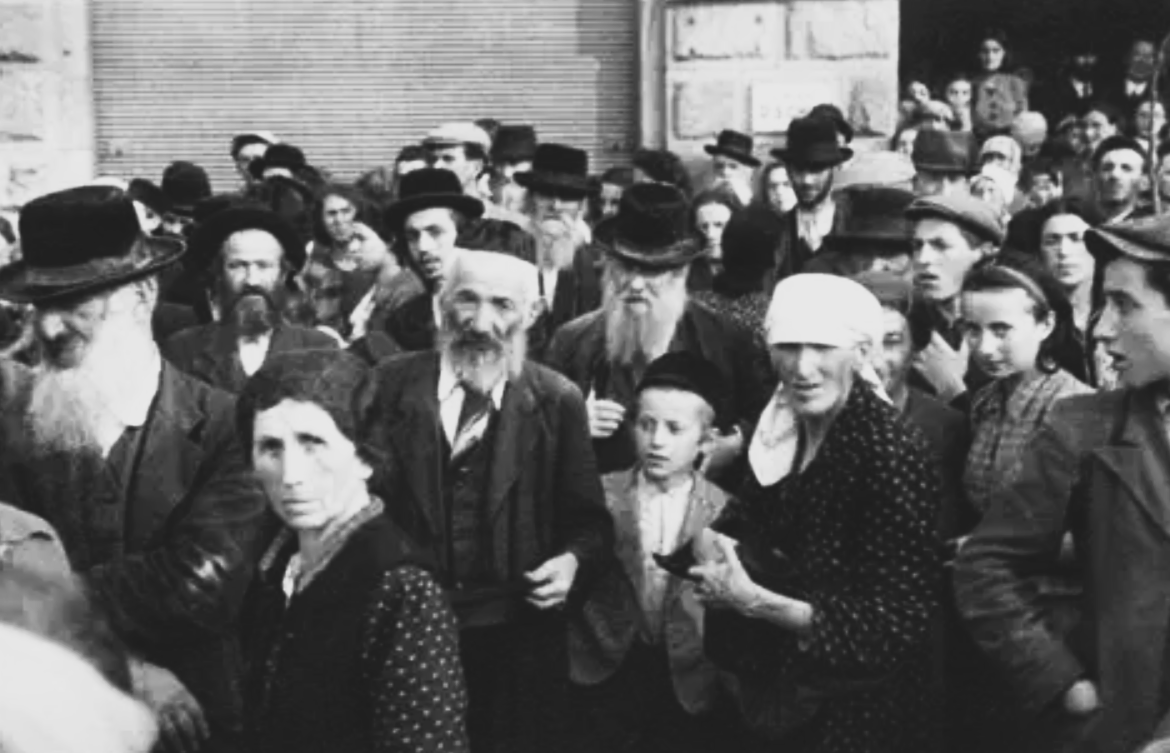
Slezkine notes that a common host stereotype of such people is that they are “devious, acquisitive, greedy, crafty, pushy and crude” and admits that this is “a statement of fact, in the sense that, for peasants, pastoralists, princes, and priests, any trader, moneylender, or artisan is in perpetual and deliberate violation of most norms of decency and decorum”. [18]
He does cite some critical voices, such as that of Vladimir Yokhelson, a student at the Vilna Rabbinical Seminary in 1918, who considered Yiddish artificial, Hebrew dead, Jewish tradition valueless, and Jews in general a “parasitical class”. [19] We are also presented with Fyodor Dostoevsky’s remarks in 1877 that the spirit of that century was “materialism, the blind, insatiable desire for personal material prosperity, the thirst for personal accumulation of money at all costs”. The Russian writer added: “In the very work the Jews do (the great majority of them, at any rate), in their very exploitation, there is something wrong and abnormal, something unnatural, something containing its own punishment”. [20]
And we are shown some of the responses to a questionnaire on the “Jewish question” sent out in 1915 by another writer, Maxim Gorky. The most common response was summarized by a reader from Kaluga: “The congenital, cruel and consistent egoism of the Jews is everywhere victorious over the good-natured, uncultured, trusting Russian peasant or merchant”. [21] A peasant identified only as “V” added: “Jews should undoubtedly receive equal rights, but gradually and with great caution, not right away, or before long half of the Russian land, if not all of it, along with the ignorant Russian people, will pass into Jewish slavery'”. [22]
But, in Slezkine’s disingenuous reframing of Jewish ethics regarding the rest of the world, “mobility and secrecy” become “traditional Mercurial skills”, [23] as used by the ancient “trickster” [24] god who also manifests as Hermes. “They have been seen as artful and shrewd ever since Hermes, on the day of his birth, invented the lyre, made himself some ‘unspeakable, unthinkable, marvelous’ sandals, and stole Apollo’s cattle”. [25]
Attitudes which would be regarded as discriminatory or racist in other peoples are magically transformed into admirable ones when held by Jews: “Clearly marked aliens are kept securely outside the community: ‘Unto a stranger thou mayest lend upon usury’. Clannishness is loyalty as seen by a stranger”. [26] Jews “worshiped themselves openly”, [27] says Slezkine, and reinforces this by stating: “‘They think they are better than everybody, they are so clever’. And of course they do, and they are. It is better to be chosen than not chosen, whatever the price one has to pay. ‘Blessed art thou, O Lord, King of the Universe, who hast not made me a Gentile’, says the Jewish prayer. ‘It is good that I am a descendant of Jacob, and not of Esau,’ wrote the great Yiddish writer, Sholem Aleichem”. [28]
The key to Jewish success, he says, is “the combination of internal cohesion and external strangeness: the greater the cohesion, the greater the strangeness, and the greater the strangeness, the greater the cohesion, whichever comes first. The best guarantee of both is an uncompromising and ideologized familism (tribalism), which may be either biological or adoptive and which can be reinforced – or indeed replaced – by a strong sense of divine election and cultural superiority”. [29] “Most Jewish wage laborers (a substantial minority in Poland) worked in small Jewish-owned shops, and most great Jewish banking houses, including the Rothschilds, Bleichröders, Todescos, Sterns, Oppenheims, and Seligmans, were family partnerships, with brothers and male cousins – often married to cousins – stationed in different parts of Europe”. [30]
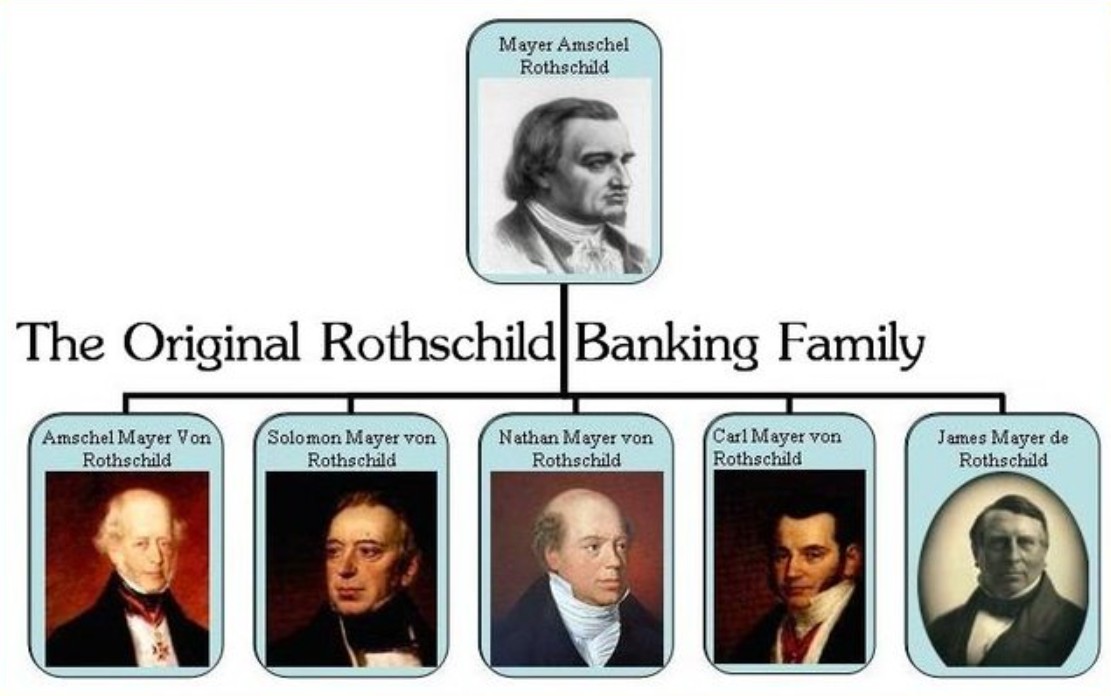
He uncritically cites a statement by Joseph Jacobs, who says of the Jews: “Claiming for themselves and their people the duty and obligations of a true aristocracy, they held forth to the peoples ideals of a true democracy founded on right and justice”. Jacobs, we learn, “attributes Jewish success to heredity, or ‘germ-plasm'”. [31]
Slezkine describes Jews’ traditional desire for separation from Gentiles, the “strict pollution taboos” and “the invisible but ritually all-important barrier that demarcated the Jew-Gentile border”. [32] “Largely unpersuaded by universalist rhetoric, they retained the traditional division of the world into two separate entities, one associated with purity (maintained through ritual observance), the other with pollution”. [33]
All Gentiles were seen as “one alien tribe”, the “Goyim”, [34] and anything associated with them was regarded as polluted, including words – and indeed even the Latin alphabet, as we saw in ‘The gangsters and the ghetto‘. [35] “According to M.S. Altman, when Jews of his shtetl referred to Gentiles’ eating, drinking, or sleeping, they used words normally reserved for animals. The Yiddish for the town of Bila Tserkva (‘White Church’) was Shvartse tume (‘Black filth’, the word tume generally denoting a non-Jewish place of worship)”. [36]
Slezkine notes: “It was not just the filthy and the sublime that uncleansed ‘Gentile’ words could not be allowed to express; it was charity, family, childbirth, death, and indeed most of life”. [37] “Words relating to the goyim and their religion were as unclean and potentially dangerous as the goyim themselves. M.S. Altman’s grandmother ‘never called Christ anything other than mamser, or the illegitimate one’. Once, when there was a Christian procession in the streets of Ulle [Belorussia], with people carrying crosses and icons, Grandma hurriedly covered me with her shawl, saying ‘May your clear eyes never see this filth”. [38]
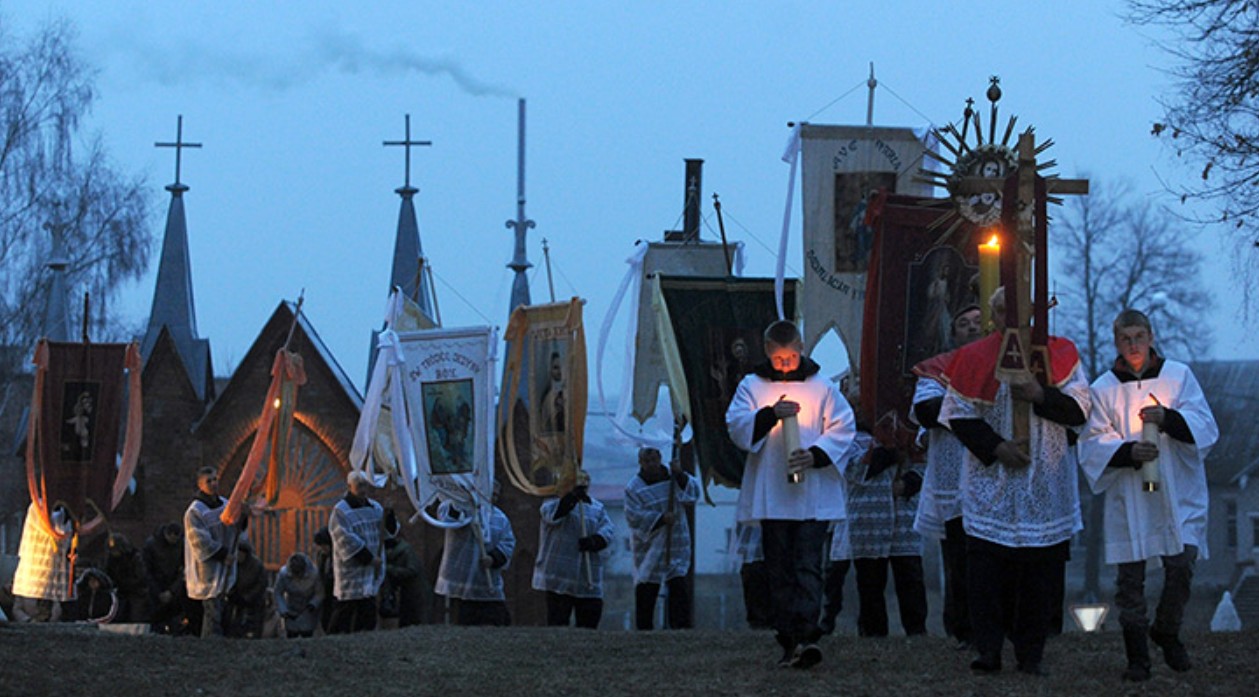
The notion that non-Jews are “unclean” is a deeply offensive one – shocking for most of the world – and we come across similar prejudice on several occasions in Slezkine’s book. He remarks, for instance: “Mercurians owe their survival to their sense of superiority, and when it comes to generalizations based on mutual perceptions, that superiority is seen to reside in the intellect. Jacob was too smart for the hairy Esau”. [39] He invokes, on several occasions, the racist Jewish stereotype of a Russian as “stupid Ivan” [40] and the typical indigenous inhabitant of their host country as a “thick-skulled peasant”. [41]
He chooses to include the following words from the aforementioned novelist Aleichem: “There is no getting around the fact that we Jews are the best and smartest people. Mi ke’amkho yisro’eyl goy ekhod, as the Prophet says – how can you even compare a goy and a Jew? Anybody can be a goy, but a Jew must be born one”. [42] And Slezkine himself gushes, on a note of what can only be described as judeo-triumphalism: “The rise of the Holocaust as a transcendental concept has led to the emergence of the Jews as the Chosen People for the new age”. [43]
In the face of all this, I have to admit that at one point I was inclined to put The Jewish Century to one side and seek out some less irritating reading! But I am glad I persevered as, through his boasting, the author confirms a lot of realities which, in another context, would no doubt be condemned as “anti-semitic tropes”.
These include the fact that Jews control “the international diamond trade”, [44] that Freemasonic lodges provided their first “corners of neutrality and equality” from which to advance into host societies [45] and that communism in general and the USSR in particular display a very Jewish character – I will look at this in a separate future essay. But, most importantly, Slezkine spells out the longstanding overrepresentation of Jews in finance and industry and the way in which they have effectively become a global upper class.

He writes: “In 1912, 20 per cent of all millionaires in Britain and Prussia (10 million marks and more in the Prussian case) were Jews. In 1908-11, in Germany as a whole, Jews made up 0.95% of the population and 31 percent of the richest families… In 1930, about 71 percent of the richest Hungarian taxpayers (with incomes exceeding 200,000 pengo) were Jews. And of course the Rothschilds, ‘the world’s bankers’, were, by a large margin, the wealthiest family of the nineteenth century”. [46]
“In Austria, of the 112 industrial directors who held more than seven simultaneous directorships in 1917, half were Jews associated with the great banks, and in interwar Hungary, more than half and perhaps as much as 90 percent of all industry was controlled by a few closely related Jewish banking families”. “In 1921 Budapest 87.8 percent of the stock exchange and 91 percent of the currency brokers association were Jews, many of them ennobled”. [47]
“The greatest German joint stock banks, including the Deutsche Bank and Dresdner Bank, were founded with the participation of Jewish financiers, as were the Rothschilds’ Creditanstalt in Austria and the Pereires’ Crédit Mobilier in France. (Of the remaining private – ie, non-joint stock – banks in Weimar Germany, almost half were owned by Jewish families). In fin de siècle Vienna, 40 per cent of the directors of public banks were Jews or of Jewish descent, and all banks but one were administered by Jews (some of them members of old banking clans) under the protection of duly titled and landed Paradegoyim“. [48]
Slezkine focuses particularly on the Russian empire and describes how in early 19th century Russia, “93.3 percent of the nonnoble industrial enterprises in Volynia (primarily wool and sugar mills) were owned by Jews”. [49] “By the late 1850s… Jewish entrepreneurs had been able to win lucrative government contracts by speeding up their operations, relying on international connections for credit, and organizing complex networks of trustworthy subcontractors”. [50] “The Russian industrialization of the late nineteenth century opened up new opportunities for Jewish businessmen and benefited tremendously from their financial backing”. [51]
Surely it was actually the Jewish businessmen who “benefited tremendously” from the industrialization of Russia?
“Among Russia’s greatest financiers were Evzel (Iossel) Gabrielovich Gintsburg, who had grown rich as a liquor-tax farmer [private tax collector] during the Crimean War; Abram Isaakovich Zak, who had begun his career as Gintsburg’s chief accountant; Anton Moiseevich Varshavsky, who had supplied the Russian army with the food; and the Poliakov brothers, who had started out as small-time contractors and tax farmers in Orsha, Mogilev province”. [52]
“Several Jewish financiers from Warsaw and Lodz formed the first joint-stock banks; Evzel and Horace Gintsburg founded the St. Petersburg Discount and Loan Bank, the Kiev Commercial Bank, and the Odessa Discount Bank; Iakov Solomonovich Poliakov launched the Don Land Bank, the Petersburg-Azov Bank, and the influential Azov Don Commercial Bank; and his brother Lazar was the main shareholder of the Moscow International Merchant Bank, the South Russia Industrial Bank, the Orel Commercial Bank, and the Moscow and Yaroslavl-Kostroma Land Banks”. [53] In 1900 half of Odessa’s guild merchants were Jews and, in 1910, 90 percent of all grain exports were handled by Jewish firms. “Most Odessa banks were run by Jews, as was much of Russia’s timber export industry”. [54]
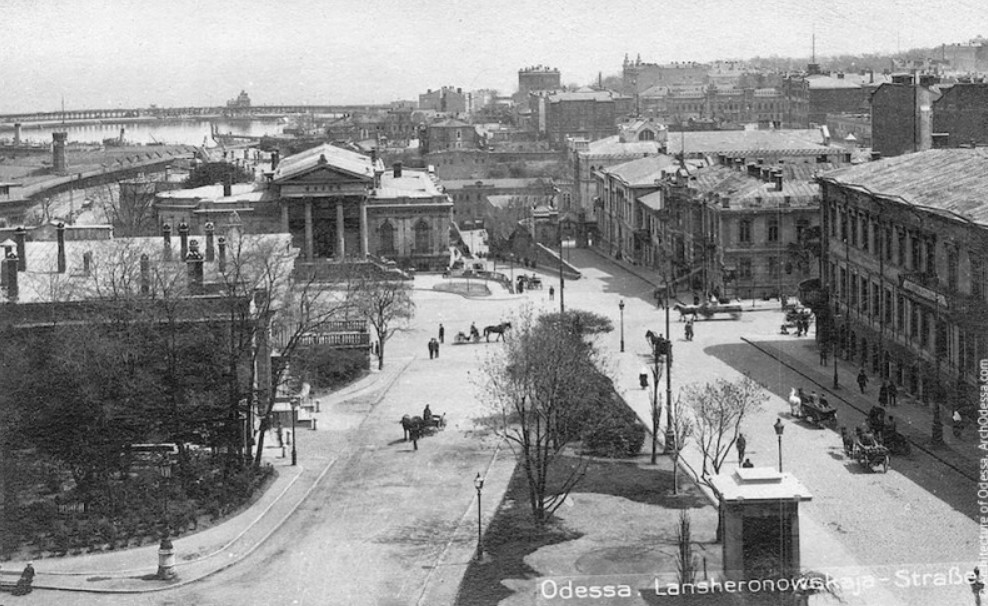
Jewish historian Arcadius Kahan tells how the scope of Jewish involvement in industrial and commercial activity in Russia at the start of the 20th century was enormous: “Apart from the manufacturing industries in the Pale of Settlement [Jewish zone], one could have encountered them at the oil wells of Baku, in the gold mines of Siberia, on the fisheries of the Volga or Amur, in the shipping lines on the Dnepr, in the forests of Briansk, on railroad construction sites anywhere in European or Asiatic Russia, on cotton plantations in Central Asia, and so forth”. [55]
The dark reality of this lucrative industrialization suddenly leaps out at us when Slezkine mentions (in brackets!) that the Gintsburgs, who controlled much of the Siberian gold mining industry, were forced to relinquish the important Lena goldfields in 1912 because of “a scandal following the massacre of striking miners”. [56] And the familiar globalist flavour of such endeavours is made plain when Slezkine notes that “in the Caucasus oil industry, Jewish entrepreneurs were central participants in the Mazut Company and the Batum Oil Association. The Rothschilds, who backed both enterprises, went on to absorb them into their Shell Corporation”. [57]
The same phenomenon can be observed with the building of the Russian railway infrastructure, which he hails as “the earliest, safest, most profitable and ultimately the most productive investment”. [58] He explains: “Benefiting from the example and direct financial backing of the Rothschilds, Pereires, Bleichröders, and Gomperzes (as well as the budgetary munificence of the imperial government, especially the War Ministry), some Russian-based Jewish bankers built large fortunes while connecting disparate Russian markets to each other and to the outside world.
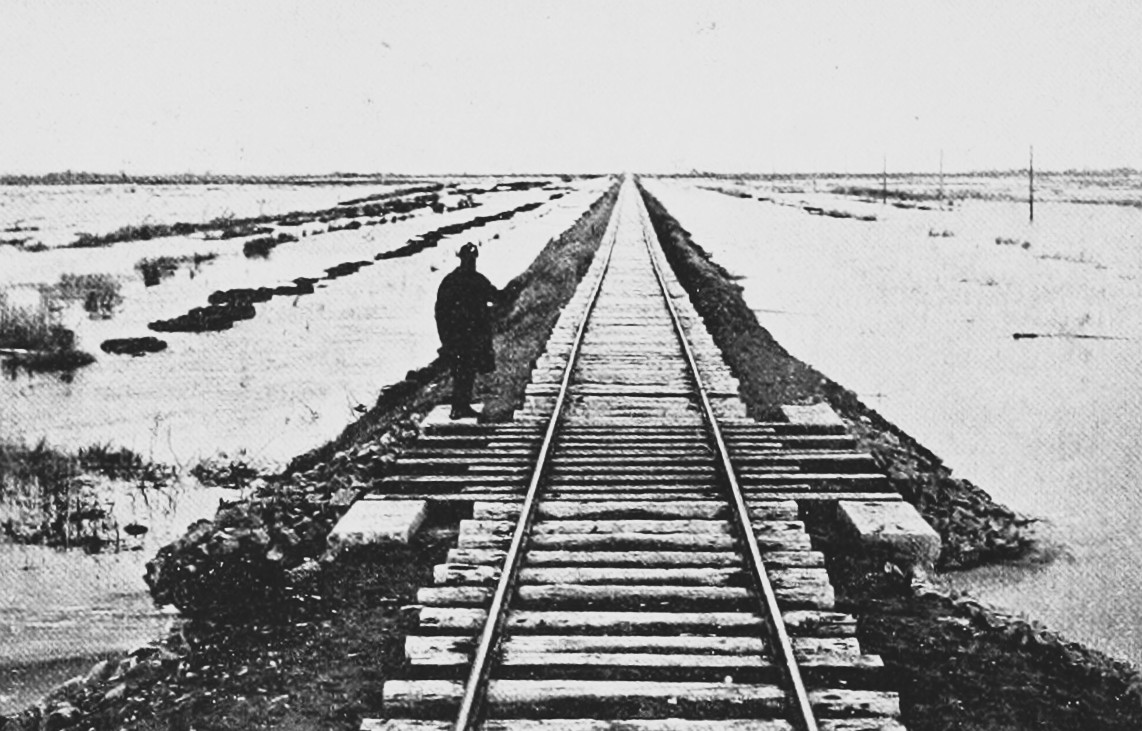
“Consortia of Jewish financiers and contractors built the Warsaw-Vienna, Moscow-Smolensk, Kiev-Brest, and Moscow-Brest lines (among many others), while the ‘railroad king’ Samuil Poliakov founded, constructed and eventually owned a number of private railroads, including the Kursk-Kharkov-Rostov and the Kozlov-Voronezh-Rostov lines”. [59] According to one source, says Slezkine, “it was the initiative of Jewish contractors that accounted for the construction of fully three-fourths of the Russian railroad system”. [60]
Behind all this is something he terms “the Jewish economy” which is based on “vertical integration”. He explains: “Jewish firms ‘fed’ each other within a particular line, sometimes covering the entire spectrum from the manufacturer to the consumer. Jewish craftsmen produced for Jewish industrialists, who sold to Jewish purchasing agents, who worked for Jewish wholesalers, who distributed to Jewish retail outlets, who employed Jewish traveling salesmen”. [61]
But he stresses that there is absolutely no conspiracy to be seen here, merely “a business community that both insiders and outsiders recognized as such… a network of people with similar backgrounds and similar challenges who could, under certain circumstances, count on mutual acknowledgement and cooperation… the kind of intragroup trust that assured the relative reliability of business partners, loan clients, and subcontractors”. He adds, somewhat undermining his point: “They tended to think of themselves as a chosen tribe consisting of chosen clans – and to act accordingly”. [62]
After the interlude of the (very Jewish) Soviet regime, Russia became officially “capitalist” again at the end of the 20th century and, says Slezkine from his 2004 perspective, “ethnic Jews are still heavily concentrated at the top of the professional and educational hierarchy… Moreover, after the introduction of a market economy, Jews quickly became overrepresented among private entrepreneurs, self-employed professionals, and those who claim to prefer career success to job security.

“Of the seven top ‘oligarchs’ who built huge financial empires on the ruins of the Soviet Union and went on to dominate the Russian economy and media in the Yeltsin era, one (Vladimir Potanin) is the son of a high-ranking Soviet foreign-trade official; the other six (Petr Aven, pictured on right, Boris Berezovsky, Mikhail Fridman, pictured on left, Vladimir Gusinsky, Mikhail Khodorkowky and Alexander Smolensky) are ethnic Jews who made their fortunes out of ‘thin air'”. [63]
Nobody can control a society without controlling its perception of reality and so the media and culture have always been an important element of the “vertical integration” of “the Jewish economy”. Writes Slezkine: “In early twentieth-century Germany, Austria and Hungary, most of the national newspapers that were not specifically Christian or anti-Semitic were owned, managed, edited and staffed by Jews (in fact, in Vienna even the Christian and anti-Semitic ones were sometimes produced by Jews). As Steven Beller put it [in Vienna and the Jews] ‘in an age when the press was the only mass medium, cultural or otherwise, the liberal press was largely a Jewish press'”. [64]
“Some particular opinions became ‘public opinion’, and Jews became important – and very public – opinion makers and opinion traders”. [65] Likewise in Russia, “the commercialisation of the entertainment market” helped to turn it into “an elite profession and a powerful tool of modern mythmaking”. [66]
Slezkine does not neglect to describe Jewish “success” in the USA, his adopted home. He writes: “The two postwar decades saw the emergence of the Jews as the most prosperous, educated, politically influential, and professionally accomplished ethnoreligious group in the United States”. [67] By 1969 Jews accounted for less than 3 percent of the population, but “in the seventeen most prestigious American universities, they accounted for 36 percent of law professors, 34 percent of sociologists, 28 percent of economists, 26 percent of physicists, 24 percent of political scientists, 22 percent of historians, 20 percent of philosophers and 20 percent of mathematicians”. [70]
He says they have the highest household incomes (72 percent higher than the national average) and the highest representation among the richest individual Americans. [71] And money and influence go hand in hand. He writes: “According to a 1970 study, 50 percent of the most influential American intellectuals (published and reviewed most widely in the top twenty intellectual journals) were Jews. Among the academic elite (identified in the same fashion), Jews made up 56 percent of those in the social sciences and 61 percent in the humanities. Of the twenty most influential American intellectuals, as ranked by other intellectuals, fifteen (75 percent) were Jews “. [72]
It seems clear to me that the reason why so many Jewish people are identified as “influential” is because those doing so belong to the same tribe – more of that “loyalty” and “kin solidarity” that Slezkine enthuses about!
The same is true in the cultural realm, with a survey showing that more than a third of the most “influential” critics of film, radio and television were of Jewish background, “as were almost half of the Hollywood producers of prime-time television shows and about two-thirds of the directors, writers and producers of the fifty top-grossing movies between 1965 and 1982”. [73]
And, furthermore, “the Jewish prominence in the American political elite began to grow perceptibly in the 1970s, during the ascendance of nonprofit organizations, political foundations; regulatory agencies, new information technologies, and public-interest law firms”. [74] “Jews are strongly overrepresented in both houses of Congress (three to four times their percentage of the general population), and they are extremely prominent among political consultants, staffers, funders and volunteers”. [75]
Slezkine seems to imagine that this full-spectrum supremacy is going to go on forever, declaring in his 2019 preface: “The Jewish Century has ended, but the Jewish Age has not”. [76]
Seven years on, I would say that we are now at the beginning of its end.
Its success has always depended on “artful and shrewd” deception and its imperialism is a necessarily invisible one that panics when people start to notice that it exists. Today, we “thick-skulled” goyim peasants are waking up. The horrors of the Gaza Genocide, the Epstein revelations and the blatant attempts to silence and criminalise all criticism of judeo-supremacism have finally whipped away its longstanding cloak of invisibility and it stands before us in all its murderous, racist, ugly nakedness.
People are now questioning everything they have been told and looking back with fresh insight into who exactly was behind Covid, 9/11 and other false-flag terrorism, the two world wars, Nazism, the Great Depression, industrial imperialism and the slave trade.
And once you have seen the truth, you can never unsee it.

[1] https://winteroak.org.uk/2025/08/11/the-invisible-college-and-the-plan-for-our-enslavement/
[2] https://winteroak.org.uk/2025/11/04/leviathans-law-and-the-occupation-of-our-lands/
[3] Yuri Slezkine, The Jewish Century (Princeton & Oxford: Princeton University Press, 2019), p. 1. All subsequent page references are to this work unless otherwise stated.
[4] pp. 46-47.
[5] p. 41.
[6] pp. 41-42.
[7] A Lunacharskii, Ob antisemitizme (Moscow: Gosizdat, 1929), p. 17, cit. p. 162.
[8] p. 60.
[9] p. 1.
[10] p. 40.
[11] p. 158.
[12] p. 165.
[13] p. 19.
[14] p. 24.
[15] p. 9
[16] p. 8.
[17] p. 20.
[18] p. 23.
[19] Vladimir Iokhel’son, ‘Dalekoe proshloe’, Byloe no 13 (July 1918), pp. 56-57, cit. p. 137.
[20] F.M. Doestoevsky, ‘Dnevnik pisatelia zq 1877 g’ in Taina Izrailia: “Evreiskii vopros” v russkoi religioznoi mysli kontsa XIX–pervoi poloviny XX v.v. (St. Petersburg: Sofiia, 1993), pp. 19-20, cit. p. 156.
[21] Maksim Gor’kii, Iz literaturnogo naslediia: Gor’kii i evreiskii vopros, ed. Mikhail Agurskii and Margarita Shklovskaia (Jerusalem: Hebrew University of Jerusalem, 1986), pp. 190–202, cit. p. 159.
[22] Ibid.
[23] p. 155.
[24] p. 8.
[25] p. 24.
[26] p. 26.
[27] p. 14.
[28] Quoted in Albert S. Lindemann, Esau’s Tears: Modern Anti-Semitism and the Rose of the Jews (Cambridge: Cambridge University Press, 1997), p. 5, cit. etc p. 26.
[29] p. 35.
[30] p. 47.
[31] Joseph Jacobs, Jewish Contributions to Civilization: An Estimate (Philadelphia: Jewish Publication Society in America, 1919), 10, pp. 56-57, cit. p. 53.
[32] p. 15
[33] p. 14.
[34] Ibid.
[35] https://winteroak.org.uk/2026/01/23/the-gangsters-and-the-ghetto/
[36] M.S. Al’tman, ‘Avtobiograficheskaia proza M.S. Al’tmana, Minuvshee 10 (1990), p. 208, cit. p. 108.
[37] pp. 19-20.
[38] Al’tman, p. 213, cit. etc pp. 108-09.
[39] p. 26.
[40] p. 27, p. 69.
[41] p. 69, p. 70.
[42] Sholem Aleichem, Tevye the Dairyman and the Railroad Stories, trans. Hillel Halin (New York: Schocken Books, 1987), p. 130, cit. p. 326.
[43] p. 370.
[44] p. 32.
[45] p. 51.
[46] p. 48.
[47] Ibid.
[48] p. 47.
[49] p. 118.
[50] pp. 118-19.
[51] p. 119.
[52] Ibid.
[53] Ibid.
[54] p. 122.
[55] Arcadius Kahan, ‘Notes on Jewish Entrepreneurship in Tsarist Russia’, in Entrepreneurship in Imperial Russia and the Soviet Union, ed. Gregory Guroff and Fred V. Carstensen (Princeton: Princeton University Press, 1983), p. 111, cit. p. 120.
[56] p. 120.
[57] p. 121.
[58] p. 120.
[59] Ibid.
[60] Ibid.
[61] pp. 122-23.
[62] p. 121.
[63] p. 362.
[64] pp. 50-51.
[65] p. 51.
[66] p. 125.
[67] p. 315.
[70] p. 318.
[71] pp. 367-68.
[72] p. 368.
[73] Ibid.
[74] p. 370.
[75] p. 369.
[76] p. ix.


Seven years on, I would say that we are now at the beginning of its end.
Its success has always depended on “artful and shrewd” deception and its imperialism is a necessarily invisible one that panics when people start to notice that it exists. Today, we “thick-skulled” goyim peasants are waking up. The horrors of the Gaza Genocide, the Epstein revelations and the blatant attempts to silence and criminalise all criticism of judeo-supremacism have finally whipped away its longstanding cloak of invisibility and it stands before us in all its murderous, racist, ugly nakedness.
People are now questioning everything they have been told and looking back with fresh insight into who exactly was behind Covid, 9/11 and other false-flag terrorism, the two world wars, Nazism, the Great Depression, industrial imperialism and the slave trade. >>
You and I may know these facts and both wish that “we are now at the beginning of its end” but that doesn’t make it so. Back in the real world they continue to amass and to exercise incredible power and many of those who see it remain silent from well-based fear and well as the inability to effective organize and mobilize–learned website essays like yours, whatever their virtues, cannot accomplish this end. I think that Putin fails to take a stronger stance against Israel from concern what his Jewish oligarchs and their kin within Russia will do. You would think that even the limited exposure of the sins of Epstein would bring the temple crashing down or generate focused effective political protest but it hasn’t and probably won’t. It was not inspiring to see Alex Jones and Nick Fuentes declare that now we must support the Democratic Party. For two interesting example of them not on the run See, e.g., https://www.ndtv.com/world-news/us-student-arrested-for-jokingly-asking-benjamin-netanyahu-to-drop-bombs-on-her-college-11384602 & Eric Fingerhut, Sarah Hurwitz, Dr Micah Goodman, and Richard Marceau 2025 Opening Plenary V2 (Hurwitz is the prize! And listen to the end.) https://www.youtube.com/watch?v=WZMxSJNQjJE as representative.
LikeLiked by 1 person