by Paul Cudenec, who reads the article here
Can we today picture a world in which human beings were truly alive, throbbing with innocent joy to the rhythms and resonances of nature?
I have already described the rural family-centred existence that was stolen from us by those behind the industrial “revolution”, [1] but here we are pointing to something much older, a veritable Golden Age in which all our ancestors enjoyed full withness to everything around them.
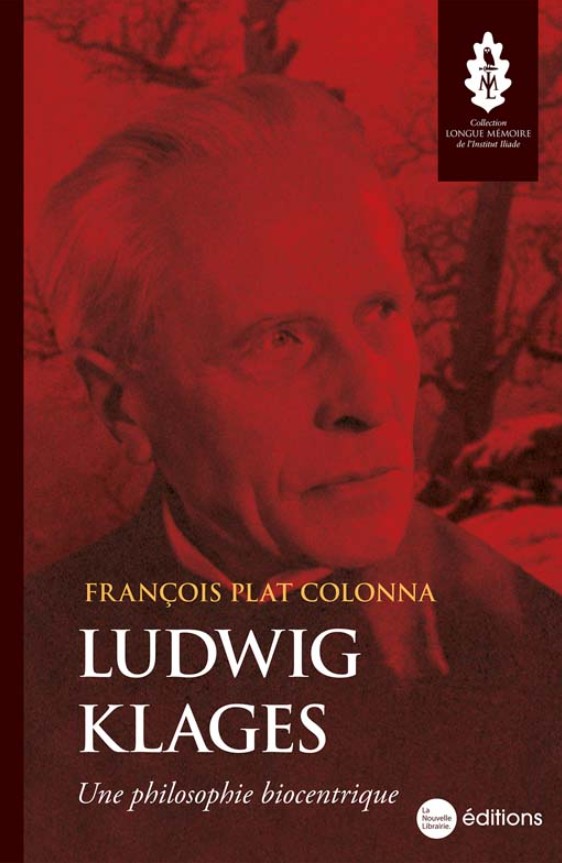
One of the very few modern thinkers to evoke this past (so distant for Europeans) was Ludwig Klages (1872-1956), whose ‘Life philosophy’ I explored in a trio of 2024 essays [2] and who is one of 90 or so inspirations featured on the organic radicals website. [3] Since I wrote those pieces a new book has been published about Klages here in France – Ludwig Klages: Une philosophie biocentrique by François Plat Colonna, [4] a slim volume which adds some useful insights into Klages’s worldview.
The reason why most people have never heard of Klages – he has been virtually removed from European cultural history – is that he countered the dominant narrative about our species. Writes Colonna: “While the thinkers of modern ideas, the champions of the idea of progress, consider that history is entirely one-way, ‘imagined as a long process of improvement in the human condition’, [5] Klages considers, on the contrary, that it constitutes a long decline, culminating in the destruction of life”. [6]
He says that Klages, with his negative view of industrial society, can be placed in the “technophobic” tradition characterised by English romantics (and fellow organic radical inspirations) like William Blake, [7] John Ruskin [8] and William Morris. [9] “However, in Mensch und Erde (‘Humankind and Earth’) this critique reveals itself as much more virulent than any that had previously been formulated. It is aimed not only at modernity, but at civilization as a whole”. [10] Klages was opposed to the whole mindset that dominates our world today, all the mathematics, science and the worship of “reason” and “progress”. [11]
I do not want to duplicate what I have already written about Klages and would refer anyone interested to my previous articles. But Colonna does help in understanding Klages’s unusual use of the term “spirit”, which in his language represents something artificial and alien, which is opposed to life and its natural soul-body polarity.
Klages saw the living world as amounting to a “great symphony of rhythms” [12] manifesting in everything from the turning of the seasons and the tides to our heartbeat and breathing. For him, spirit (and the will that it brings with it) separates human beings from that primal being, turns us into outside observers of something to which we are meant to belong.
He writes: “Once one is convinced that the substance of life is beyond the reach of spirit, one is obliged to consider that the conceptualisation of spirit, which can be found uniquely among humans, is a force which, in itself and for itself, does not belong to the cosmos”. [13] Colonna says that, for Klages, our history is thus one of separation and descent, of “the progressive victory of spirit over life, of will over instinct and of cold measurement over the rhythmicity of the living”. [14]
The German philosopher saw the Golden Age for humanity as having been the prehistorical period which began hundreds of thousands of years ago when our ancestors suddenly left behind the purely animal state, becoming conscious in the same way that we wake up after sleep in the morning. [15] Colonna explains: “While, for an animal, it was the phenomenon of ‘feeling’ (Empfinden) that predominated, for a prehistoric human it was sight and more precisely ‘the contemplation of the images of the world’ (Schauung der Bilder or der Urbilder). From then on, humanity had access to reality, it was in ‘mystic communication with the Cosmos through “ecstatic contemplation”‘”. [16]
In this primordial society, communities were organised around what Klages terms “natural law”, flowing from a pantheistic pagan vision that considered “animals, plants, stars, clouds and winds” to be divine and all the creatures of the visible universe to be “leaves on one single trunk and members of one single symbiotic association”. [17] He says this understanding led them to believe that “nobody has the right to set themselves up as a master, whether over animals, plants and the land, or over the people around them”. [18] Prehistoric humans also considered their ancestors to be present with them, influencing the world and protecting their descendants. They were not “dead” in the way we think of it today, but only “transformed”. [19]
People at this time were still aligned to the great rhythms of life and the cosmos and their dances formed the backbone of their culture. Colonna says: “Dance, for Klages, is the archetypal incarnation of non-spiritual action in which we can see no sign of will. ‘Rhythmically perfect’ dance is ‘a vibration without will’ and dancers are ‘carried by the flow of the event’ like leaves in the wind, or clouds, or the movement of the waves. They are thus united with cosmic rhythmicity”. [20]
Things started to go wrong around 10,000 years ago when spirit came between body and soul, the two poles of existence. Blind to the great cosmic images, it introduced the will that pushed humanity on to the linear historical path leading, in Colonna’s words, to “the progressive paralysis of the human rhythm and, among peoples who fell under its nefarious influence, to submission to rules or to the Law”. [21]
The domination of will and ego, says Klages himself, resulted in “the sense of acquisition, the lure of profit, the desire for recognition, ambition, the thirst for domination, the need to act and influence… the desire for vengeance, nastiness, cruelty, grudges, envy and so on”. [22] At the same time it led to “forms of self-mastery and self-organisation (control, moderation, restraint, firmness, self-denial, self-transcendence, the instinct for self-perfection, etc)”. [23] Worst of all was that primordial humanity started to fear the shadow of individual death in a way that it had not previously done, thus bringing to an end the happy and carefree enjoyment of life that had marked the Golden Age. [24]
The subsequent phase of human existence, characterised by self-consciousness, was still “biocentric” in that humans still felt great love and veneration for nature. But then came a further separation from authentic living, for which Klages partly blames Greek philosophy. For example, he says Plato’s ideals were quite different from the ancient images because they were intellectual concepts manufactured in the human mind. [25]
He also points a finger of blame at Stoics [26] who introduced into Europe the notion that an organising rationality ruled over the entire universe. [27] Colonna explains that these philosophers promoted submission to the law, to reason and to spirit and are thus seen as precursors of the mechanical thinking behind modernity and also of Christianity, especially in the way they regarded emotions as being ferocious beasts at war with the reasonable human self. From their point of view, conforming to natural and rational law meant reining in your impulses and submitting life to spirit. [28]
Klages also condemns the “Yahwism” of all the Abrahamic religions, which he describes as “the expression of a will to power and of a hatred of the ‘sacred character of the world’ which is regarded as ‘idolatry’; in concentrating all divinity in the monon of the will of the creator god, the world itself is desacralized”. [29] That is very much the theme of my 2025 book Our Sacred World, by the way. [30] Klages sees the rise of Christianity as an “infiltration of Yahwist Judaism” into the “oppressed layers of the Roman Empire”. [31] It carried with it a life-denying outlook which introduced to Europeans an entirely new notion of “sin” which could be committed by following natural instincts.
The rhythms of life had to be suppressed, says Klages, pointing out that no word appears more times in the Old Testament than “law”. Colonna remarks: “Yahwism thus perpetuates the Stoic idea of a demolition of the world under the yoke of a spirit seeking to regulate everything and heralds the arrival of modern science”. [32] Klages regards the Church as having waged a “campaign against the world” with its crusades, forced conversions of pagans, burnings of so-called witches and heretics, along with its massacres of Cathars, Templars, Spanish Moors and Peruvian Incas. [33]
The Jewish god Yahwe had announced in Genesis that humans had “dominion over the fish of the sea and over the birds of the heavens and over every living thing that moves on the earth” thus giving birth to an “anthropocentric megalomania” justifying any kind of sacrilege against life that benefited His personal favourites. [34] Colonna says Christianity “extended the Yahwist path and paved the way to the barbarity with regard to nature” that characterises the modern industrial world. [35]
Klages regards the next milestone in the decline of humankind as being the Renaissance, which opened the door to the modern scientific outlook. Rather than returning to nature, as is often stated, its scientists focused on facts, objects and mathematical explanations. [36] European myths and rural traditions were increasingly swept away by the advance of “rational” thinking, the preliminary phase of industrial enslavement – with the process later accelerated by the misnamed “Enlightenment”.

An element that I found particularly relevant in Colonna’s book is his account of the origins of this “scientific” modern phenomenon that led us into what Klages describes as “the era of the decline of the soul”. [37] He talks about the influence of Francis Bacon (1561-1626) and René Descartes (1596-1650), whose dubious careers I mentioned in Our Sacred World. [38]
Bacon’s ended in disgrace when he was accused of corruption and it is thought by some that he had been blackmailed with revelations of “sodomy”. Like Bacon, Descartes has been linked to both Freemasonry and the Rosicrucians and, although French, spent much of his working life in the Dutch Republic, the host of the judeo-supremacist imperialist entity before it moved to London.
The concept of redemption is an important part of the Judaic thinking behind the modern mindset [39] and its communist offshoot, [40] as Yuri Slezkine has pointed out. Colonna quotes Pierre André Taguieff’s remark that Descartes saw reason and technology as having a “redemptive role”, allowing a “divine curse” on humankind to be lifted. [41]
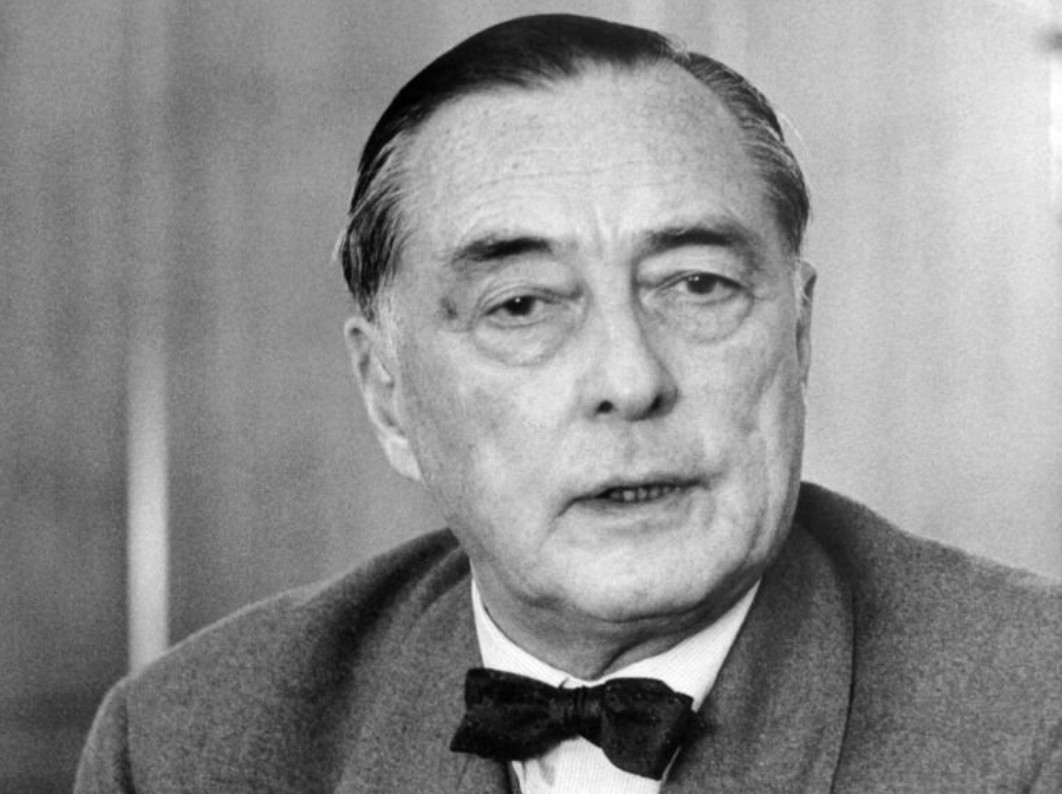
He also cites Richard von Coudenhove-Kalergi (pictured), a globalist who, as I recently reported, was one of only three European members of the American Committee on United Europe, alongside Rothschild pawn Winston Churchill and Jozef Retinger, that “shadowy shaper of global tyranny“. [42]
In his 1929 book Practical Idealism Coudenhove-Kalergi rejoices that, thanks to the marvels of progress, “a modern dollar millionaire can surround himself with all the luxuries, comforts, art and beauty that the earth offers… In many respects he is freer and more powerful than Napoleon and Caesar. They could only rule humans — but could not fly over oceans and speak across continents. He, on the other hand, is the master of nature. Forces of nature serve him as invisible, powerful servants and spirits… Technology has burst open the gates of paradise”. [43]
Writes Colonna: “For Klages, hidden behind this objectivist and rationalist will and scientific eagerness was in fact a deep ‘thirst for destruction’. The ensuing capitalism and modern science exploded on an unprecedented scale. The industrial revolution, the rural exodus and colonialism are all symptoms of this destructive spirit devouring the world and soon no longer facing any obstruction”. [44]
He adds that the “democracy” that was proclaimed from the 19th century onwards was, for Klages, nothing but a mask worn by the holders of Capital – the masses had “become marionettes of ‘public opinion’ manufactured by newspapers at the service […] of the ruling financial powers”. [45] Colonna says “it was thus now an alliance of Mammon and Leviathan that governed the peoples, with greed and the totalitarian state destroying the ancient symbiotic and organic associations”. [46]
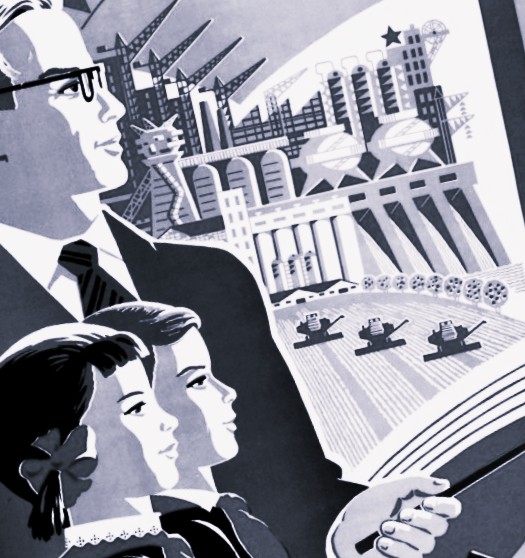
Colonna stresses that the philosopher’s opposition to capitalism and Mammonism did not, of course, represent an endorsement of “mechanical, totalitarian and technophile Marxism”. [47] Klages writes: “‘Capitalism’, ‘liberalism’, ‘Marxism’, ‘communism’ etc are stages on one and the same path towards the complete mechanisation of human associations and lead, as even the blind could have guessed, to a final overall state characterised by the insolent domination of a relatively small minority of parasites”. [48]
He sees this process as culminating in our “automation” into the “man-machine manufactured from numbers” [49] and, as this prediction becomes all too real in the 21st century, we can look to Klages for an indication of how we might possibly escape this grim fate. He says the only hope lies in people’s “sincere interior conversion” away from all the various modern dogmas of separation and back to our ancestors’ “veneration of Life”. [50]
And I very much agree!

[1] Paul Cudenec, ‘The world they stole from us’, https://winteroak.org.uk/2026/04/27/the-world-they-stole-from-us/
[2] Paul Cudenec, ‘Life philosophy: beyond left and right’, https://winteroak.org.uk/2024/10/14/life-philosophy-beyond-left-and-right/
Paul Cudenec, ‘Life philosophy: soul, rhythm, magic and love, https://winteroak.org.uk/2024/10/18/life-philosophy-soul-rhythm-magic-and-love/
Paul Cudenec, ‘Life philosophy: against the destructive will of Mammon’, https://winteroak.org.uk/2024/10/21/life-philosophy-against-the-destructive-will-of-mammon/
[3] https://orgrad.wordpress.com/a-z-of-thinkers/ludwig-klages/
[4] François Plat Colonna, Ludwig Klages: Une philosophie biocentrique (La Nouvelle Librairie, 2025). All subsequent page references are to this work and the translations from French are my own.
[5] Pierre André Taguieff, Le sens du progrès (Paris: Flammarion, 2004), p. 95, cit. p. 20.
[6] p. 20.
[7] https://orgrad.wordpress.com/a-z-of-thinkers/william-blake/
[8] https://orgrad.wordpress.com/a-z-of-thinkers/william-morris/
[9] https://orgrad.wordpress.com/a-z-of-thinkers/john-ruskin/
[10] p. 25.
[11] p. 83.
[12] p. 36.
[13] Ludwig Klages, ‘Über Wahrheit und Wirklichkeit’ (1931), cit. pp. 36-37.
[14] p. 38.
[15] p. 40.
[16] Ludwig Klages, Der Geist als Widersacher der Seele (Bonn: Bouvier Verlag Herbert Grundman 1981), p. 369, cit. etc. p. 41
[17] Klages, Der Geist als Widersacher der Seele, pp. 1355-56, cit. p. 46.
[18] Ibid.
[19] p. 47.
[20] pp. 50-51.
[21] p. 54.
[22] Klages, Der Geist als Widersacher der Seele, p. 74, cit. p. 56.
[23] Ibid.
[24] p. 57.
[25] p. 66.
[26] Ludwig Klages, Der Geist als Widersacher der Seele, p. 537, cit. p. 67.
[27] p. 67.
[28] pp. 67-68
[29] Ludwig Klages, L’homme et la Terre (Mensch und Erde) (La Murette: Editions Rouge et Noir, 2016), p. 32, pp. 69-70.
[30] https://winteroak.org.uk/wp-content/uploads/2026/04/our-sacred-worldonline-2.pdf
[31] Klages, Der Geist als Widersacher der Seele, p. 32, cit. p. 70.
[32] p. 71.
[33] p. 73.
[34] Ibid.
[35] p. 74.
[36] pp. 75-76.
[37] Klages, L’Homme et la terre, p. 47.
[38] pp. 21-22.
[39] Paul Cudenec, ‘Invisible imperialism’, https://winteroak.org.uk/2026/04/23/invisible-imperialism/
[40] Paul Cudenec, ‘Zionism, communism and terror’, https://winteroak.org.uk/2026/05/08/zionism-communism-and-terror/
[41] Taguieff, pp. 157-58, cit. p. 22.
[42] https://winteroak.org.uk/2026/03/24/a-shadowy-shaper-of-global-tyranny/
[43] Richard von Coudenhove-Kalergi, Praktischer Idealismus (Vienna-Leipzig: Pan-Europa Verlag, 1929), p. 91, cit. p. 23. I am using the 2024 German to English translation by Curtis White,
https://ia601304.us.archive.org/26/items/practical-idealism-english-ver-1-2/Practical_Idealism_English_Ver_1_2.pdf
[44] p. 78.
[45] Ludwig Klages; Ausdrucksbewegung und Gestaltungskraft (Munich: Deutscher Taschenbuch Verlag, 1968), p. 187, cit. p. 79.
[46] p. 79.
[47] Ibid.
[48] Ludwig Klages, Ausdrucksbewegung und Gestaltungskraft, p. 178, cit. p. 80.
[49] p. 80.
[50] Klages, L’homme et la Terre, p. 60, cit. p. 81.


Thank you, Paul, for un-picking the ‘delicacies’ of corruption across the centuries. The more I read the more the how’s and why’s sink in. Clarity is emerging, as is Klages’ “sincere interior conversion”. Strange thing is, I always ‘knew’ it.
LikeLike
Yes, a lot of us now realise that we sort of knew all along.
LikeLike
Thank you very much, Paul.
Wonderful to be as ancient as me and yet, I am still learning!
LikeLike
I find that the rate of my learning has accelerated with age! Or perhaps “understanding” would be a more accurate word.
LikeLiked by 1 person