by Paul Cudenec, who reads the article here
Even before WW2 had completely come to an end, the world was slipping into a new conflict, the “Cold War”, in which the binary division was no longer fascists versus anti-fascists but communists versus anti-communists.
As I explained in my last piece, some “left-wing” fascists decided that their natural place in this new divide was with the communists – and the Italian Communist Party (PCI) certainly made determined efforts to recruit them into its ranks.
But as a whole, and particularly within the Movimento Sociale Italiano (MSI), the political party founded in 1946, neofascism evolved into a fundamentally anti-communist force.
Giuseppe Parlato, in his book Fascisti senza Mussolini (‘Fascists without Mussolini’ or ‘Les fascistes sans Mussolini‘ in the French translation I am using) explains that many neofascists saw this new binary polarity as advantageous to their cause. [1]
For instance, Rivoluzione (‘Revolution’), the journal of FAR (Fasci di Azione Rivoluzionaria) declared in 1946: “In the end it’s a question of creating in the country an anti-communist psychosis so strong that it will push all the political parties into supporting fascism as the most dynamic of the anti-communist movements, in the same way as the communists created the anti-fascist psychosis which was able to mobilise all the anti-fascists”. [2]
However, neofascists certainly received much encouragement from certain directions to adopt this particular position.
Parlato notes that by the time the MSI was being set up in 1946, many of the key figures in the process “had already had contacts with circles connected to the American intelligence services and had for a long time been pushing to ensure that neofascism held a strongly anti-communist line”. [3]
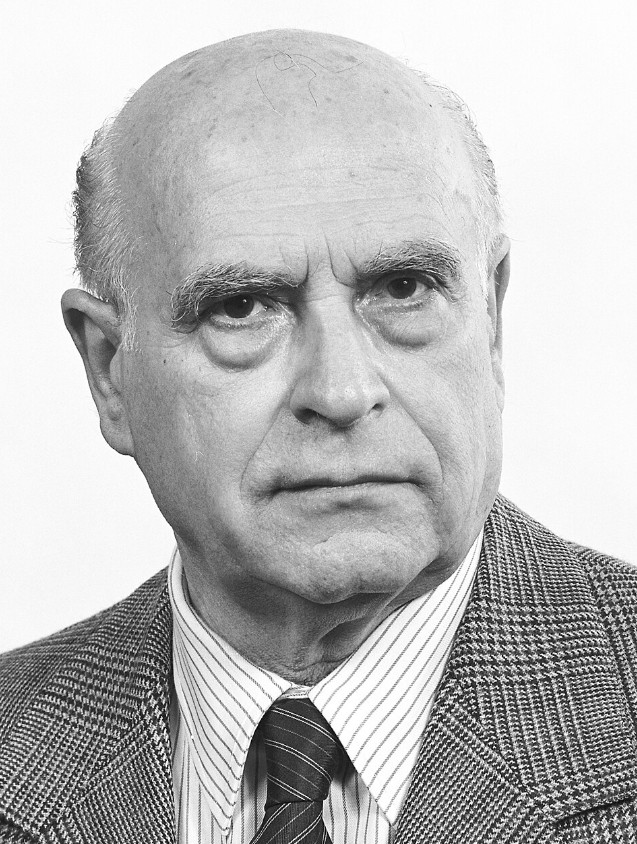
Pino Romualdi (1913-1988), pictured, who went on to be a member of the European parliament for the last four years of his life, had been an official of the Partito Fascista Repubblicano (PFR) under Mussolini’s last-stand Repubblica Sociale Italiana (RSI) at Salo.
Parlato says: “He was the most important fascist to have managed to survive the settling of scores in the immediate post-war period. He had been one of [PFR secretary Alessandro] Pavolini’s closest collaborators and had been followed by the legend claiming that he was an illegitimate son of Mussolini; because he was also from Predappio and vaguely looked like Il Duce“. [4]
He adds that Romualdi rapidly became the most important figure in building neofascism’s network of contacts, with these including anti-communists in the Church and in the US’s Office of Strategic Services (OSS, the forerunner of the CIA), whose agents he met via Italian military intelligence. [5]
Partly because of these connections, Romualdi was regarded with suspicion by some neofascists, reveals Parlato: “The accusation of treachery was also fed by the fact that Romualdi, like Vanni Teodorani, escaped being executed on April 27 [when other leading RSI/Salo fascists were killed], thanks to the presence of two agents linked to the secret services who protected him from the partisans”. [6]
Bruno Puccioni (1903-1990), says Parlato, “opened the way to an important agreement with the OSS at the side of Romualdi during the crucial days of the end of the RSI and il Duce, acting as the figurehead, the most significant and the most ‘discrete’ in the context of relations with the USA”. [7]
His later break with the MSI was due to the fact that “his objective, shared with Romualdi, was to forge a national force of the right, openly favourable to Atlanticism”. [8]
Although, from the outside, it certainly looks as if the party was heading that way, it was evidently not doing so to the extent, or at the speed, that his contacts would have preferred and Puccioni did not see eye to eye with the increasingly influential Giorgio Almirante, who had been minister of popular culture in Mussolini’s RSI.
Jacques Guiglia wrote to fellow MSI man Giorgio Pini in August 1947: “I saw Bruno this morning, who has come to Rome for two or three days… His friends across the Atlantic are furious and say that ‘it’s untenable'”. [9]
Nino Buttazzoni (1912-2009) was a paratrooper with the Decima MAS, a key part of Mussolini’s Navy, to which I will come back later.
Parlato stresses that he was never a fascist activist and was more interested in continuing the kind of “secret political and military activity” that he had been involved in at the end of the war, but now in a specifically anti-communist direction. [10]
“All of this happened under the benevolent and favourable gaze of the OSS”, he explains, and “in March and April 1946 Buttazzoni tried to impress on the Allies the need to regard fascists as forces that could be available for anti-communist activities”. [11]
An intriguing intermediary role was played here by Vincenzo Vacirca, a socialist politician who had been in exile in the USA during the fascist period. His daughter worked for the OSS as a secretary and established links with fascists including Buttazzoni on its behalf, with the offer of protection if they collaborated. [12] By the way, this information came to Parlato directly from Buttazzoni in a June 2005 interview. [13]
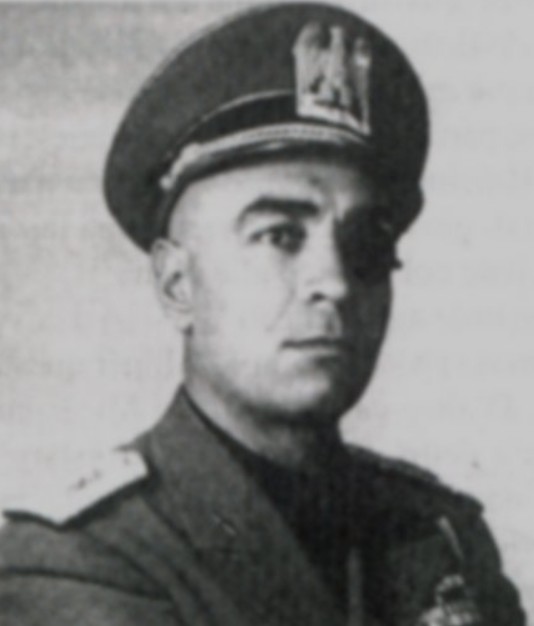
Prince Valerio Pignatelli di Cerchiara (1886-1965), pictured, was a southern Italian aristocrat enjoying “good relations with the Vatican, which proved very useful for the future development of his political activity”, says Parlato. [14]
He had established his anti-communist credentials by fighting with Baron Pyotr Wrangel, the “Black Baron”, in the “White” army opposing the Bolshevik take-over of Russia. [15]
(There is some peculiar chessboard-like binarity going on there!)
Parlato adds: “During the 1920s, so as to remain in the midst of wars and guerrillas, the prince headed to Mexico, where he found the time to have himself proclaimed emperor of some remote region, before going to the USA, where he made a fortune and married a millionaire’s daughter whom he promptly divorced”. [16]
Pignatelli later became a key figure in the fascist underground movement fighting the occupying Allied forces in the Italian South, liaising with Mussolini’s Repubblica Sociale Italiana in the North.
At the same time “Pignatelli received a message from his old British friend Peter Rodd, governor of Calabria, inviting him to collaborate with the Allies: an offer that the prince turned down but which he used to ask, and obtain, the freeing of the former fascist leaders in Catanzaro, who had been arrested by the British”. [17]
He and his wife, citing health reasons, set themselves up in a clinic in occupied Naples, which effectively became the HQ of the fascist underground movement. [18] There, says Parlato, they laid on receptions and meals for the most eminent members of the British and US military world in the city, including the heads of military intelligence. [19]
While this was obviously a good way of extracting information from these people on behalf of the fascist resistance, the Pignatellis’ ultimate loyalties were ambiguous.
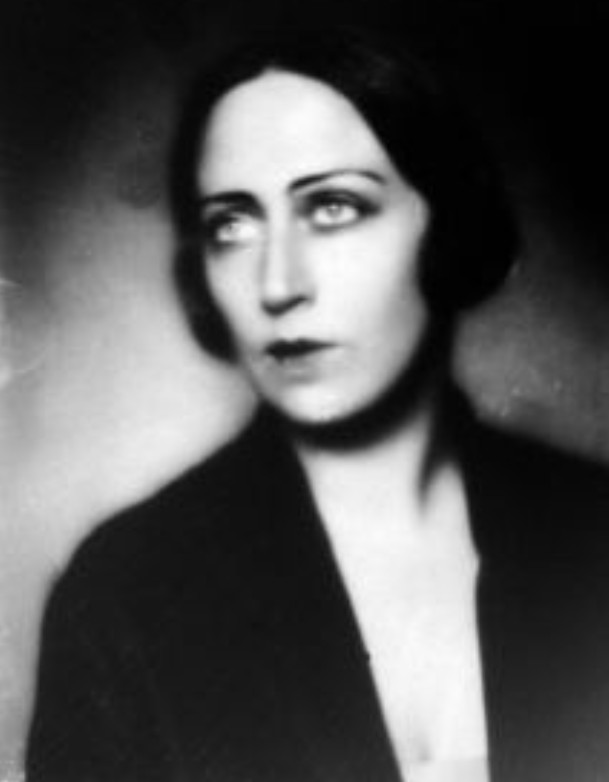
Princess Pignatelli, Maria Elia De Seta Pignatelli (1894-1968), pictured, was a central player in all this intrigue, although she was never directly involved in the MSI, rather in the neofascist women’s movement, Movimento italiano femminile.
Her daughter from her previous marriage, Bona de Seta, was a “great friend” of a certain Livingston Pomeroy, an agent of the OSS. Princess Pignatelli herself had family links and a personal relationship with Pomeroy’s sister Josephine, who had become Baroness Marincola di San Floro. [20]
Much mystery surrounds an occasion in April 1944 on which Princess Pignatelli was able to leave the Allied-occupied South on a mission to the Nazi-occupied North, where she met Mussolini. [21]
Parlato writes: “While war was still being waged, it seems astonishing that the wife of one of the known leaders of the southern fascist underground – who SIM [Italian military intelligence] had not given permission to cross to the North, for obvious military and political reasons – could have casually crossed the lines, where the Germans were waiting for her, and then returned to Naples with the logistical and moral aid of the OSS, having handed over military and political information”. [22]
“Another perplexing element was the role of the princess’s son, Emanuele De Seta, who was in Rome at that same period and collaborating with Peter Tompkins, a US intelligence agent posted in the occupied capital”. [23]
“All of this seems highly strange and, if we wish to reach a sufficiently complete explanation, we need to ditch traditional models and move on to different hypotheses, which of course involve the post-war period and the condition of the country after the end of the Allied occupation”. [24]
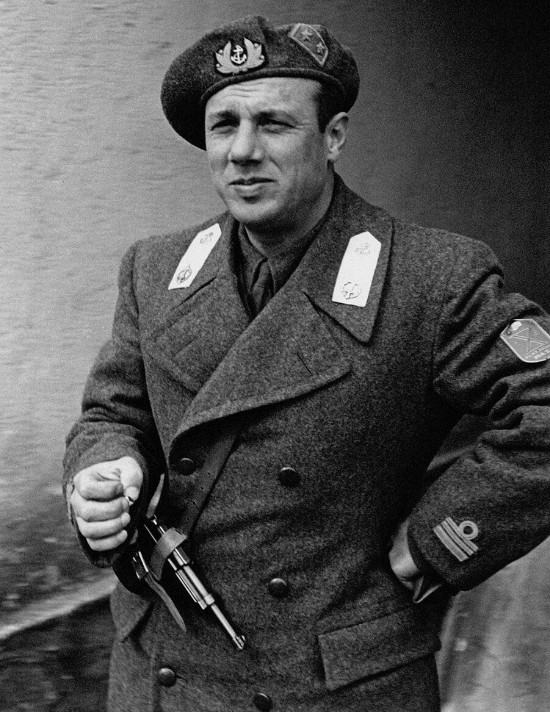
A key role was also played in Allied-backed anti-communism by X (Decima) Flottiglia MAS, the famed Tenth Flotilla of the RSI led by Junio Valerio Borghese (1906-1974), pictured, known as il Principe Nero, The Black Prince, and who was to become honorary president of the MSI.
Parlato says that although Borghese and his men sided with Mussolini’s Salo regime against the king’s pro-Allied government at the end of the war, this was not so much out of pro-fascism or anti-monarchism as from the idea of defending Italy’s military honour. [25]
“This allowed Borghese to be considered by his enemies [the Allies] as one of the many mediators to approach for contact – Borghese was a Roman prince, a soldier and a monarchist somewhat close to the royal court”. [26] The Decima MAS chief thus had “frequent dealings with Allied secret services at the end of the war”. [27]
Parlato describes “the mysterious Montecolino episode”, which took place five months before the final fall of the RSI/Salo Republic and for which the sole direct witness was Borghese’s secretary Pasca Piredda, with researcher Sergio Nesi later reconstructing events.
“On November 16 1944 a launch arrived at the Borghese couple’s Villa Beretta residence on the isle of San Paolo in Lake Iseo (pictured), to pick up the prince and his wife Daria. When questioned by the secretary, Daria Borghese revealed that she was going to an important meeting for which she was going to act as interpreter (Daria, née Olsoufieff, was Russian and spoke five languages).
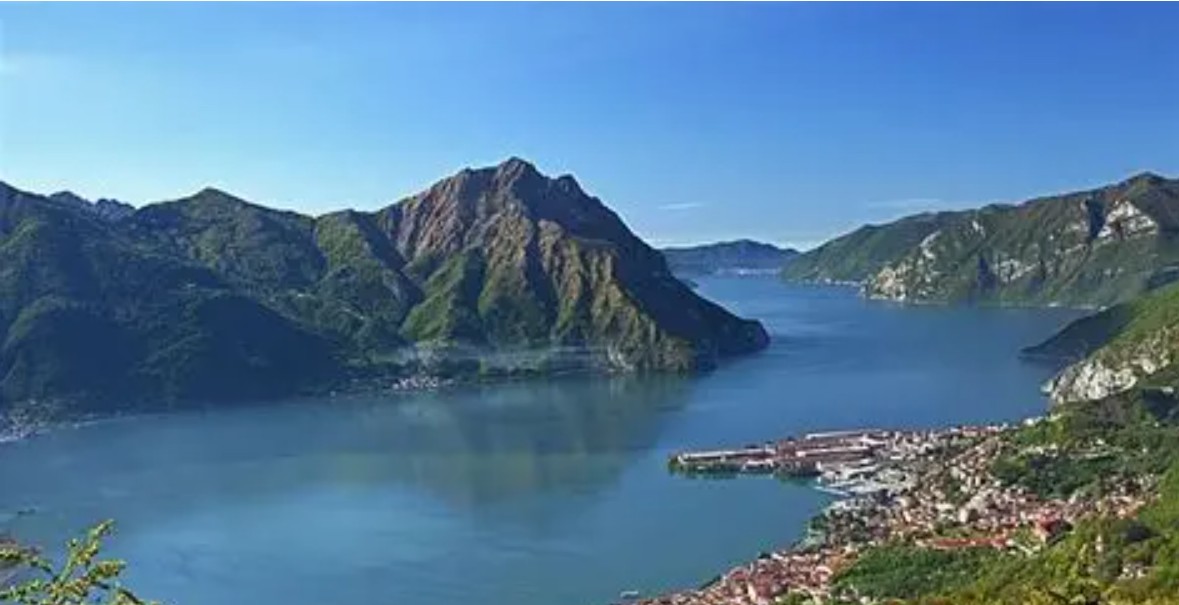
“The motorboat stopped at Montecolino, Decima’s base on Lake Iseo, and it is here that the Borgheses are said to have met with Francesco Maria Barracu, undersecretary to the presidency of the council under the RSI; the boat’s captain Fausto Sestini, who represented the Republican Navy; General Giuseppe Violante, commander of the Etna division of the GNR [the RSI’s Guardia Nazionale Repubblicana]; Karl Wolff, head of the SS in Italy; Rudolf Rahn, Nazi Germany’s ambassador to the RSI and British and American envoys.
“The aim of this meeting was to turn the page on the war by organising the conditions for a potential end to fighting on Italian soil: the theory drawn up by Nesi is of a possible separate peace with the Americans and British with a view to focusing war efforts on the USSR”. [28]
Parlato stresses the importance in this neofascist/anti-communist project of James J. Angleton (1917-1987), one of the heads of the OSS, whose posting to Italy was in part due to the fact that his father had been the president of the Italian-American Chamber of Commerce during the fascist era. [29]
“Between 1943 and 1945, according to the vivid portait painted by Federico Umberto D’Amato, Angleton managed to contact Guido Leto, former head of OVRA (the fascist secret police) and other representatives of the Salo police (such as Ciro Verdiani, who was subsequently appointed Quaestor of Rome by the socialist minister Romita)… D’Amato also worked in this recuperation of fascists”. [30]
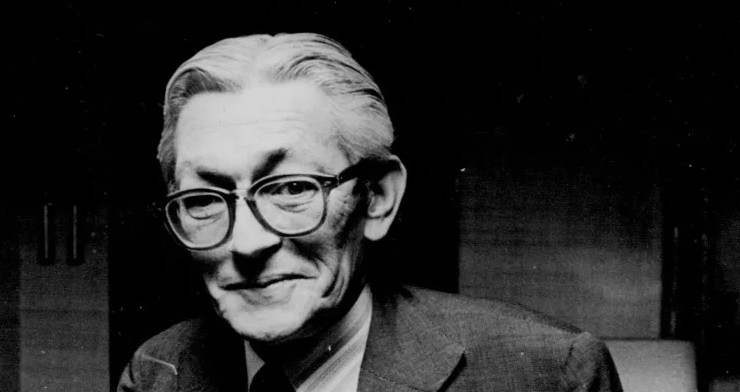
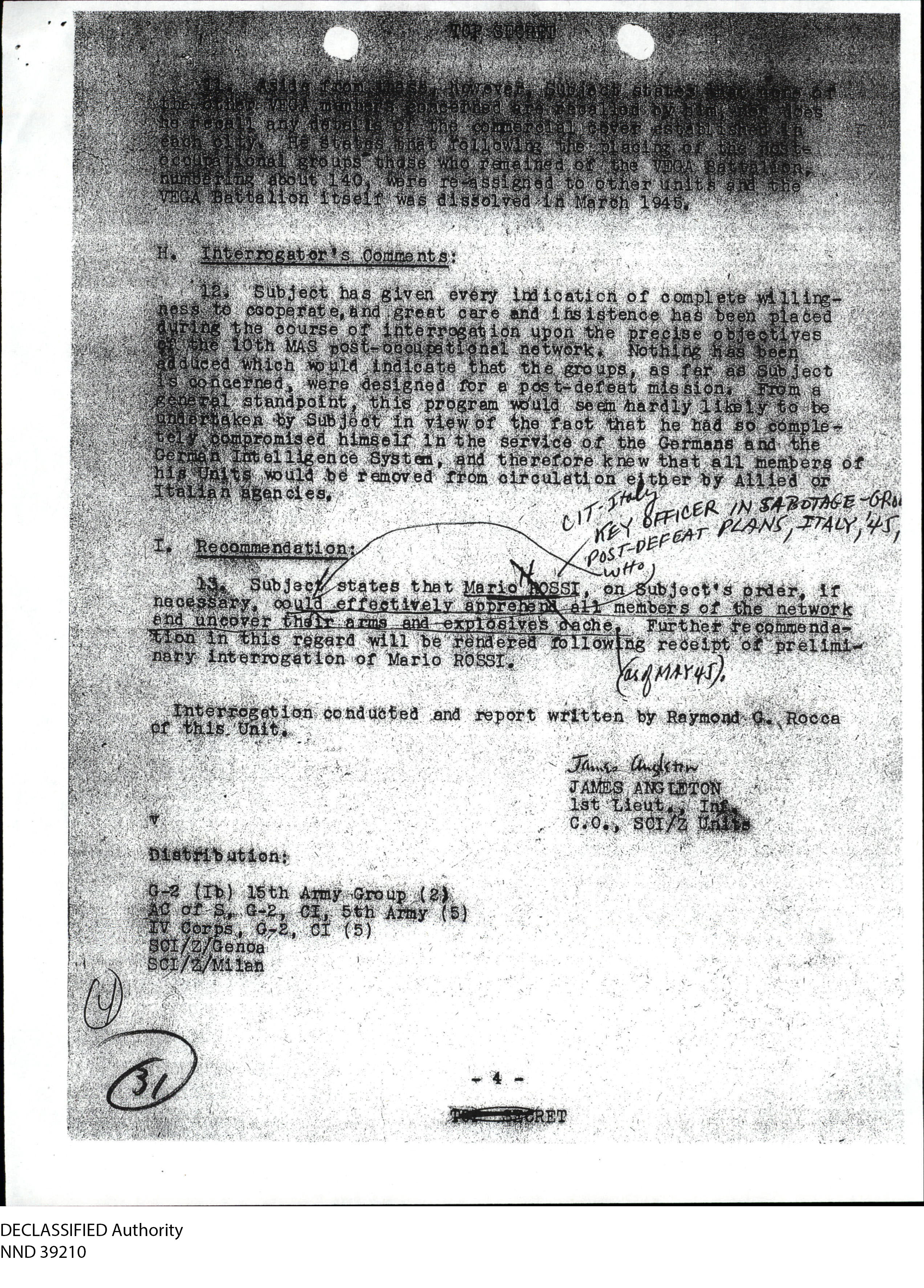
It was Angleton (pictured), and an Italian military intelligence officer, who went to Milan in May 1945 to rescue Borghese from likely execution by partisans and take him back to Rome with them.
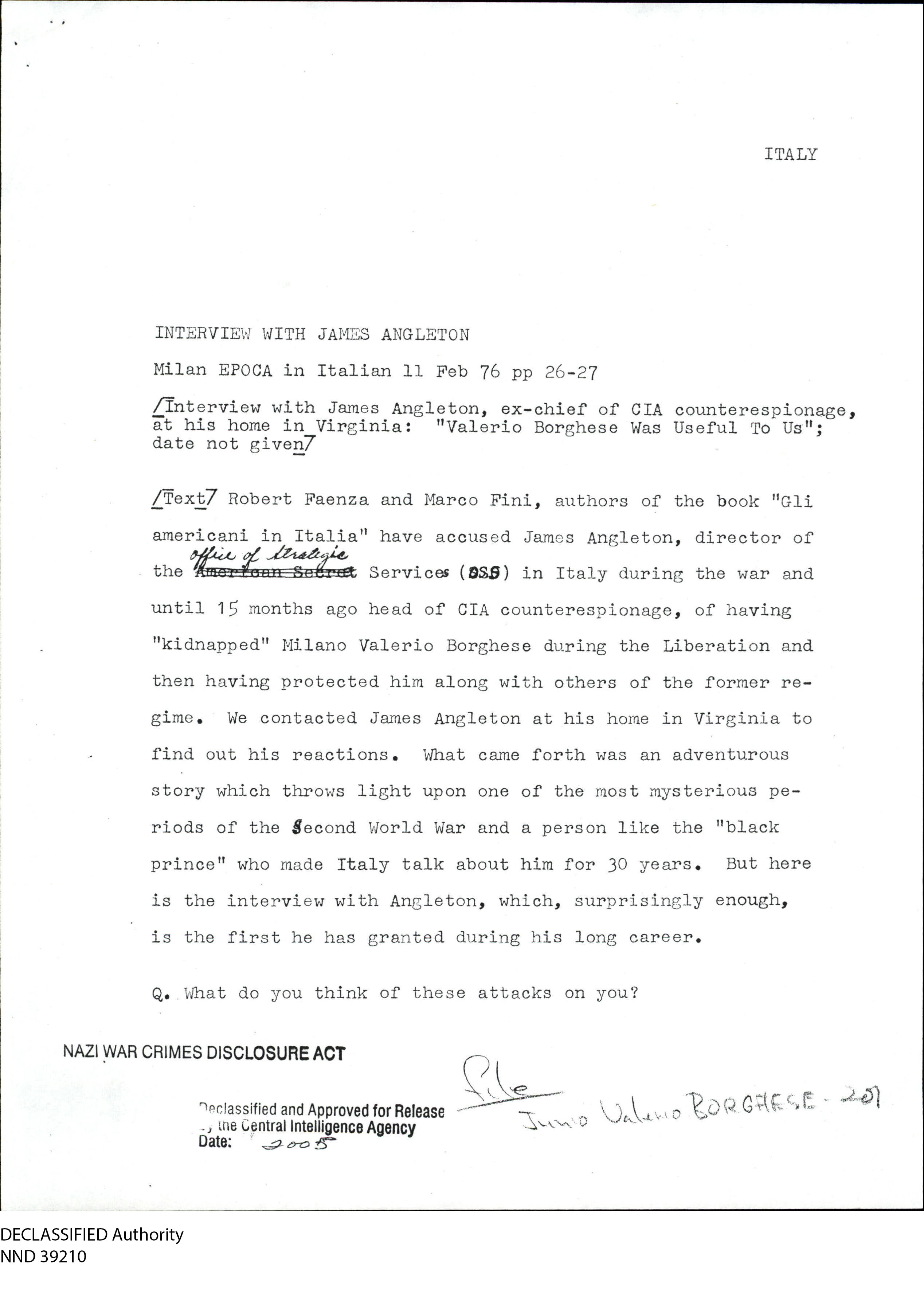
The OSS officer who interrogated Borghese noted: “Subject has given every indication of complete willingness to cooperate” [31] and a 1976 interview with Angleton in the Epoca magazine in Milan, which I found translated on the US National Archives site, is entitled “Valerio Borghese was useful to us”. [32]
Similar circumstances surround the most important underground neofascist entity in Rome, the Onore group. Parlato says that one of its two main leaders, Attilio Bianchi, was reported to have be in touch with Allied officers, including a British intelligence agent, and the other, Alessandro Ratti, did not enjoy the trust of other neofascists, who suspected him of having such links. [33]
He also points out a strange slip in Onore‘s language when it wrote of carrying out insurrectional activities across “liberated Italy” – this is not how fascists generally regarded the part of their country that had passed into the hands of their enemies! [34]
Furthermore, intelligence files show that Onore‘s number three man, Antonio Bigi, had asked a state informant to be put in touch with a representative of the American secret services so as to be able to agree on the group’s underground activities and keep them informed.
“Bigi stated that they would be prepared to inform US intelligence in advance of any action and they wanted to be guided, in a certain sense, by the will of the Americans in carrying out these actions”. [35]
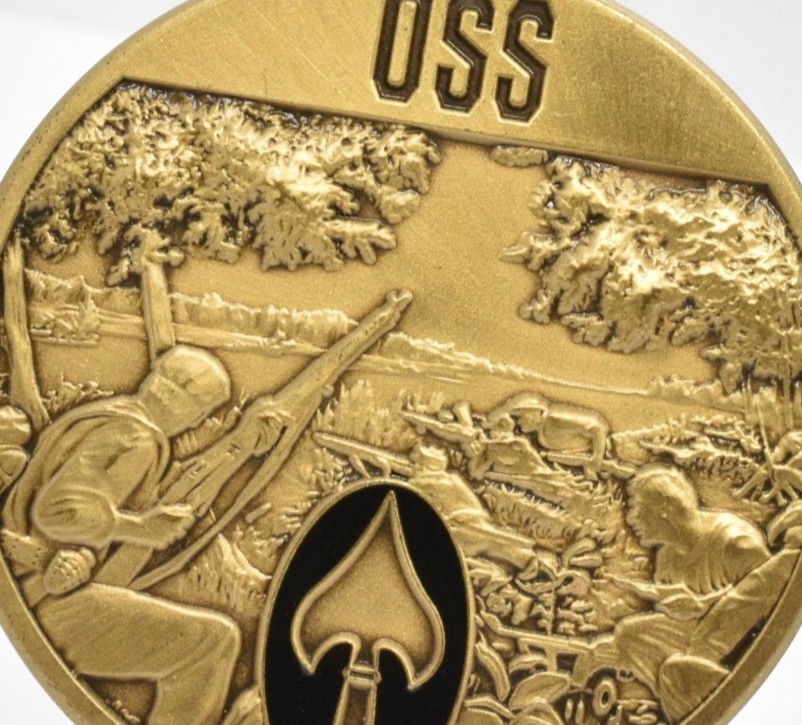
Because the Allies were keen to use neofascists for their own “anti-communist” purposes, they protected them from an Italian justice system which would have made them answer for crimes they had committed.
In 1946, the Quaestor of Rome complained: “After being interrogated, the persons arrested were put at the disposal of Allied command. In this way, they have been able to escape being tried for treason against Italian authority”. [36]
While conditions in the Allies’ concentration camps could be harsh, there was also a certain political laxity with regard to their new anti-communist partners – at the Padula camp, reveals Parlato, fascists were able to publish an irregular “cultural” magazine. [37]
Neofascists also profited financially from providing information to the Allies. Parlato describes a complex scheme in which they sold information from a former German Nazi intelligence agent to another former Nazi officer who was paid by the Americans to gather intelligence. [38]
Returning briefly to FAR, Fasci di Azione Rivoluzionaria, the group which declared the need to create an “anti-communist psychosis” like the anti-fascist one, Parlato tells how FAR activist Tullio Abelli, who was later to become an MSI member of parliament for Turin, was arrested in that same city in October 1946.
“It was discovered that Abelli was in possession of a document given to him by the local command of the Allied police, the 315 Field Security Section Intelligence Corps, certifying that he was acting as an informant for that entity”. [39]
And I will conclude this piece with a mention of Meridiano d’Italia, a publication which the Allied authorities kindly allowed fascist journalist Franco De Agazio to launch in Milan in January 1946. [40]
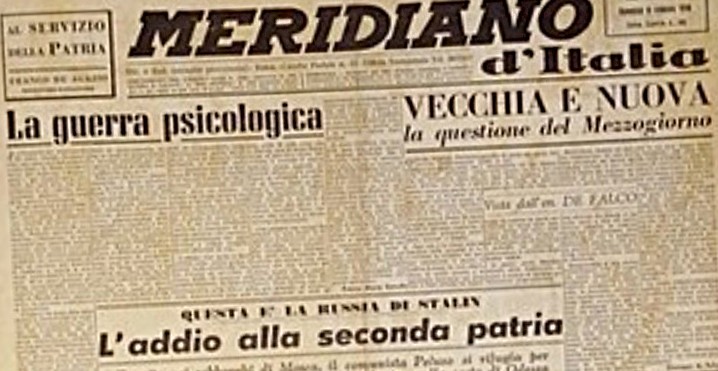
The following year its pages were graced with articles by two rather significant Americans, the first of whom was John F. Dulles – future US secretary of state under President Dwight D. Eisenhower and brother of Allen Dulles, who was to head the CIA during the early part of the Cold War. [41]
The second was George C. Marshall, the military man and diplomat who lent his name to the Marshall Plan, the post-war project to “modernise” (some would say colonise) Western Europe. [42]
In the next couple of articles I will looking first at the dark direction in which this deep-state/neofascist “anti-communism” was heading and then providing a glimpse of the even darker entity behind all this manipulation.
So stay tuned, as they say…
Other articles in this series:
Neofascists and communists: a love-hate relationship
Neofascism, industrialism, corruption and Israel
[1] Giuseppe Parlato, Les fascistes sans Mussolini: Les origines du néofascisme en Italie (1943-1948), trans. Istvan Leszno, (Château-Thébaud: Ars Magna, 2025), first published in 2006 then 2012 as Fascisti senza Mussolini: le origini del neofascismo in Italia (1943-1948). All subsequent page references are to this work, unless otherwise stated and translations from French are my own.
[2] p. 384.
[3] p. 393.
[4] p. 132.
[5] pp. 132-33
[6] p. 134.
[7] p. 287.
[8] p. 471.
[9] Archivio Centrale dello Stato, Rome, Pini papers, b. 35, fasc. 1947. August-October, letter from J. Guiglia to G. Pini of August 23 1947, cit. p. 471.
[10] p. 275.
[11] p. 276.
[12] pp. 276-77.
[13] p. 597.
[14] p. 66.
[15] p. 66, https://en.wikipedia.org/wiki/Pyotr_Wrangel
[16] p. 66.
[17] pp. 93-94.
[18] p. 100.
[19] p. 101.
[20] p. 105.
[21] p. 379.
[22] p. 110.
[23] p. 379.
[24] p. 110.
[25] pp. 141-42.
[26] p. 142.
[27] p. 143.
[28] pp. 143-44.
[29] p. 137.
[30] Ibid.
[31] https://s3.amazonaws.com/NARAprodstorage/lz/dc-metro/rg-263/640446/640446_Box15_Folder4/640446_Box15_Folder4-0032.jpg
[32] https://s3.amazonaws.com/NARAprodstorage/lz/dc-metro/rg-263/640446/640446_Box15_Folder4/640446_Box15_Folder4-0155.jpg
[33] p. 168.
[34] p. 169.
[35] National Archives and Records Administration, Record of the Office of Strategic Services – Research and Analysis Branch Division – Intelligence Reports (Regular series) 1941-1945, Rg. 226, e. 210, b. 369, f. 3, ‘Fascist activity, Appendix C, report on the meeting of OSS agent X with Bigi on the personalities of the fascist republican party, Rome’, cit. p. 170.
[36] Archivio Centrale dello Stato, Rome, Ministero dell’Interno, Consiglio dei Ministri (1944-1947), b. 196, ‘Questostorio di Roma‘, May 4 1946, cit. p. 572.
[37] p. 207.
[38] pp. 367.
[39] p. 386.
[40] pp. 281-82.
[41] J.F. Dulles, ‘Stato libero et Stato di polizia’, Meridiano d’Italia, June 29 1947, cit. p. 665.
[42] G.C. Marshall, ‘Noi e l’Europa’, Meridiano d’Italia, July 6 1947, cit. p. 665.


Note that the Dulles brothers, OSS founder Donovan, and War Secretary Stimson were long-time members of Rockefeller’s Council on Foreign Relations (CFR). Eisenhower was a CFR member during his terms as NATO commander and President.
The liberal-fascist CFR and its network of affiliates has controlled US policy since WW2. Nearly every CIA director from Dulles to Burns was a CFR member. Likewise for the secretaries of State, Treasury and Defense, Fed chair, NATO commander, UN ambassador, etc.
For more on Donovan and the OSS, see “The World Order” by Eustace Mullins (1984), chapter 5
LikeLiked by 2 people