
by Paul Cudenec, who reads the article here
For a long time now I have been insisting that, if we are to escape falling into the dehumanised and totalitarian hell lined up for us by the global slave-masters, we are going to have to embrace a completely different way of thinking.
In The Anarchist Revelation (2013) I warned that we are today “boxed in and cut off by the limits we construct around our thinking” [1] and in The Withway (2022) I specified that “depth of thinking is required; depth grown from eternal truths, rather than cobbled together from cheap slogans and passing fads”. [2]
One of the sources from which can draw the deep thinking that will bring us freedom is the great Celtic civilization that flourished in Europe two millennia ago.
For those of us who come from those lands, this is not so much a question of discovering as of remembering. As Jean Markale writes: “The inhabitants of France and western Europe have forgotten who they were”. [3] “There was another system of values, another understanding of reality, another way of thinking and feeling, another conception of spirit”. [4]
This old way of being, in which we could find our true identity, was buried – in France this was initially by “romanisation” [5] and then, everywhere, it came as the result of the domination of the Church followed by the anti-spiritual mindset of industrial modernity.
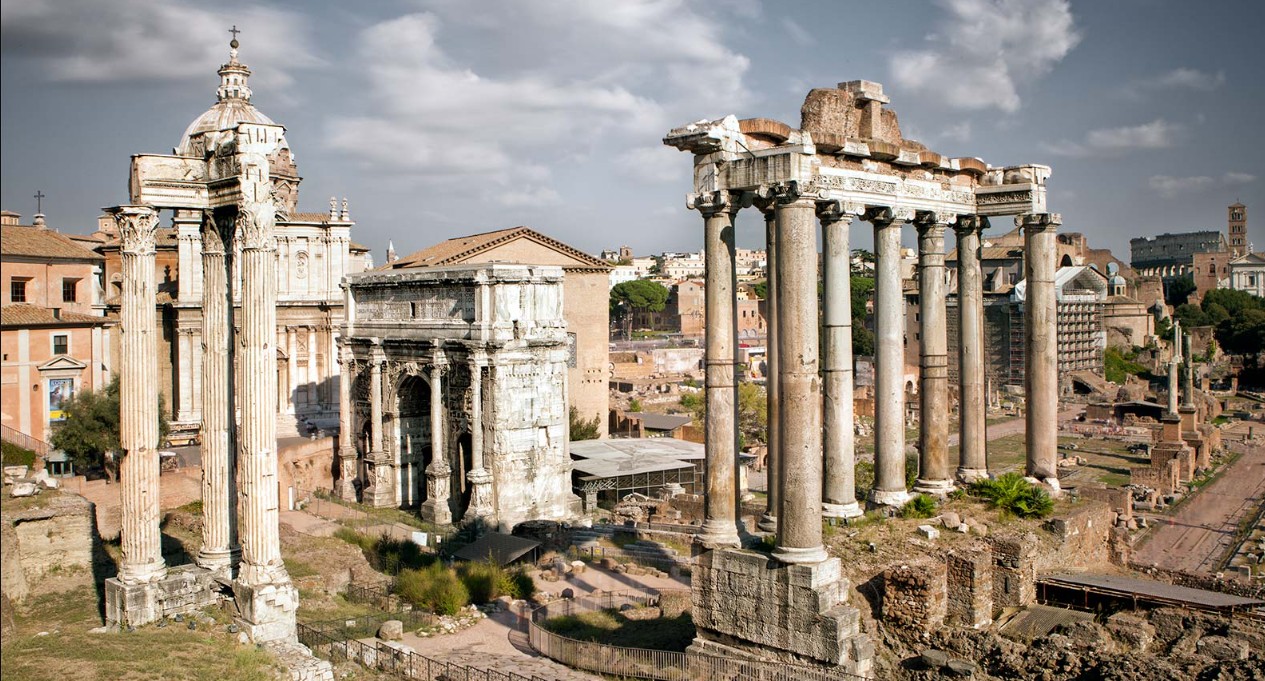
For the Greeks and Romans, druidism provided a glimpse into the soul of a people very different from them. Markale cites Etienne Renardet as stating: “For a Roman, the universe stopped at the borders of his country’s possessions. Outside this universe, there were just ignorant peoples who were there to be exploited as much as possible. These peoples had primitive religious ideas”. [6]
He himself says of the Mediterranean observers of Celtic culture: “In general, they expressed astonishment at the greatness and elevation of a way of thinking which did not belong to their world and which they could only classify as ‘barbarian’.
“This term basically applying to all Europeans neither yet brought under Roman domination nor influenced by Greek civilization, we have to recognise a certain ‘nordic’ character to this population, or rather this collection of populations, who were feared by the Romans but, despite everything, excited their imagination”. [7]
Empire always fears those who think and breathe outside of its boxes of control and Markale points out that one of the reasons why Julius Caesar invaded Britain in 55 BC was that the people of that island were “regarded with some justification as the real masters of the Celtic way of thinking which, being completely incompatible with the Roman system, represented a permanent danger”. [8]
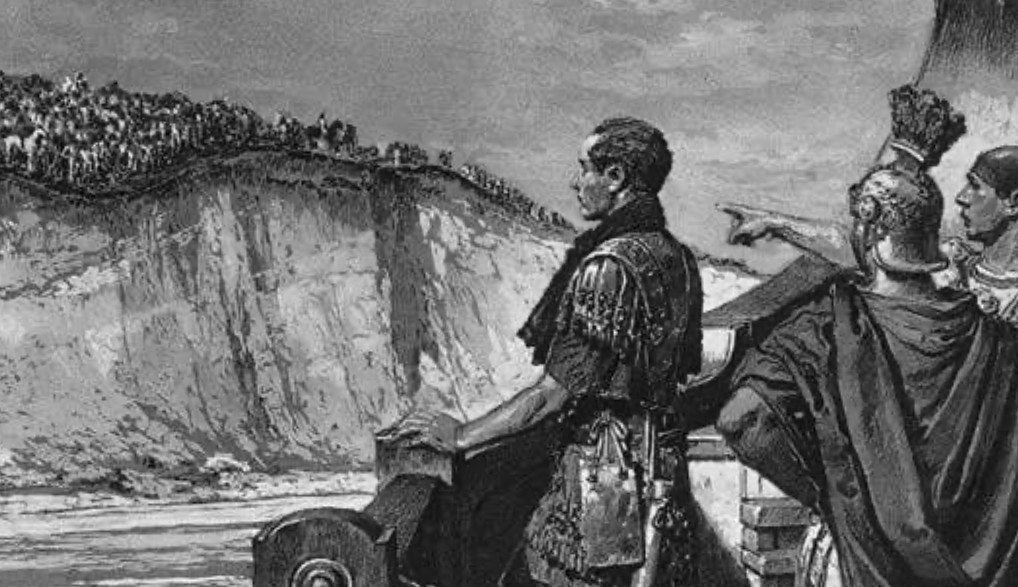
And this was presumably why, 100 years later, the druidic centre in Ynys Môn (Anglesey) was brutally attacked and destroyed by the imperial army, as we saw in a previous essay. [9] Markale adds that in Gaul/France, the Romans banned the druids from teaching, as their doctrine flew in the face of their own outlook and was thus considered “a threat to the social order that they wanted to impose”. [10]
Two millennia later it was those serving the new Industrial Empire who attacked the druids’ reputation – since they no longer presented any physical danger, this instead took the form of derision.
Any hint of “magic” is intolerable for the priests of the rationalist cult of sterility and science – Markale refers to the “indignant denunciation of druidic superstition” launched by famed French archaeologist Alexandre Bertrand in his lectures and in his 1896 book La Religion des Gaulois. [11]
One important feature of the Celts’ outlook was that they made no distinction between history and myth, as may have become apparent from various improbable accounts already cited in this series of articles.
“Unlike the Romans, the Celts thought their history mythically and, of course, they sometimes historicised their myths: thus the ambivalence of Celtic accounts”, [12] says Markale.
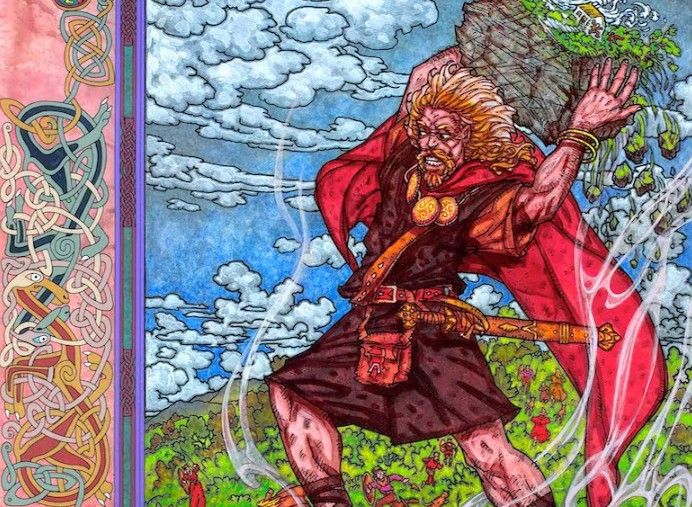
This left the more literal-minded Romans and Greeks somewhat baffled – “they seem to have experienced great difficulty in understanding the exact meaning of these legends, because of their completely different logic”. [13]
As we saw, the Celts did not build great ostentatious temples in order to worship their gods, but withdrew into the forests to be close to them in their sacred clearings, nemeta.
Markale writes: “They thought that there existed places, symbolic or real, where the world of humans could open into the world of the gods and vice versa. The nemeton is this place of sacred exchange…
“Each nemeton is the centre of the world. The notion of omphalos [navel of the world] coincides exactly with that of the sanctuary and it does not matter that these sanctuaries were very numerous: they were at one and the same time unique and multiple because, to take up the famous formula, divinity is a circle whose centre is everywhere and whose circumference is nowhere.
“The place where one makes contact with the invisible world, the divine world, is necessarily an absolute centre from which can radiate the forces brought into play”. [14]
The author says this vision of the nemeton reflected an awareness that the human individual is never alone in the world but in connection with “the great All that is divinity, whatever it is and whatever name we give to it”. [15]
On a conceptual level, I would say that Roman thinking was essentially square or rectangular – here I am picturing the Maison Carrée down the road from here, in Nîmes – and therefore associated with the number four.
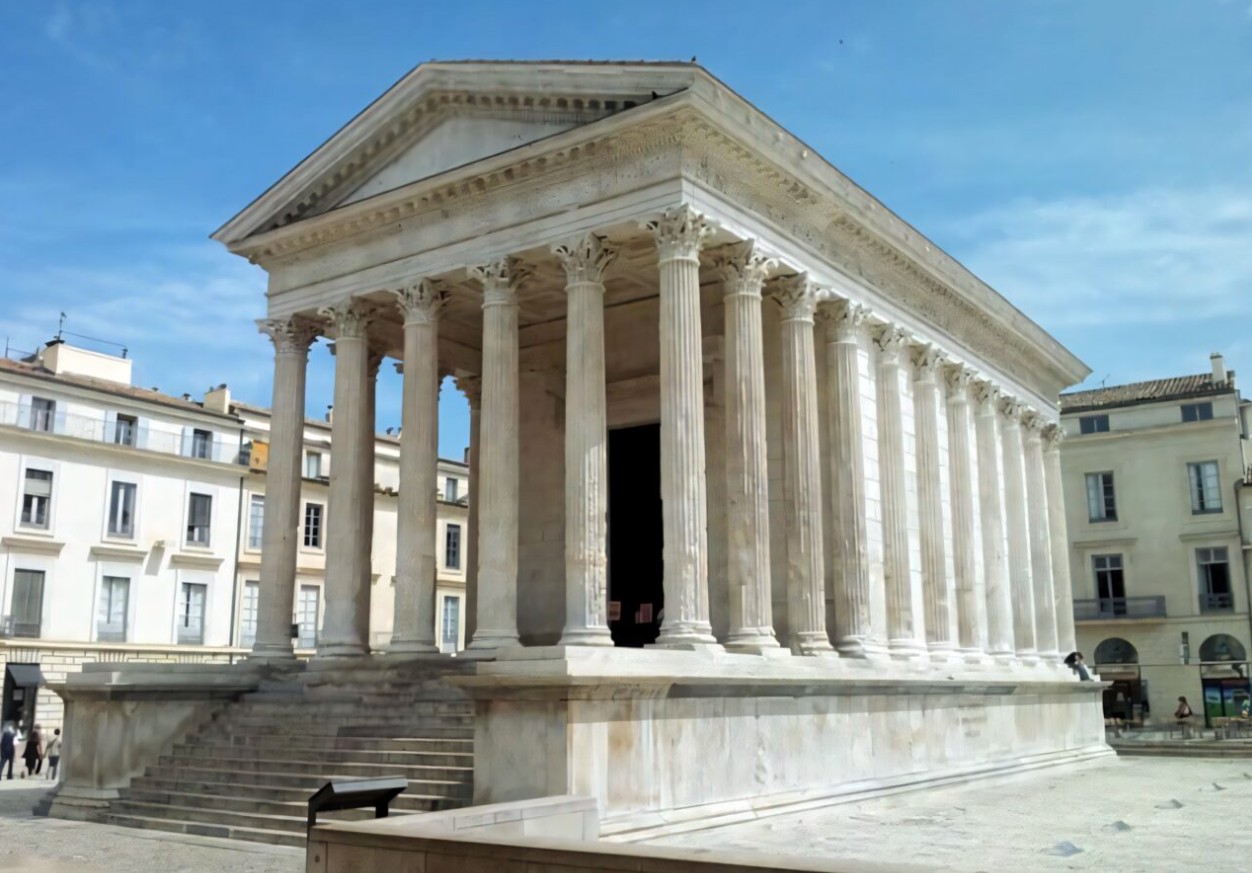
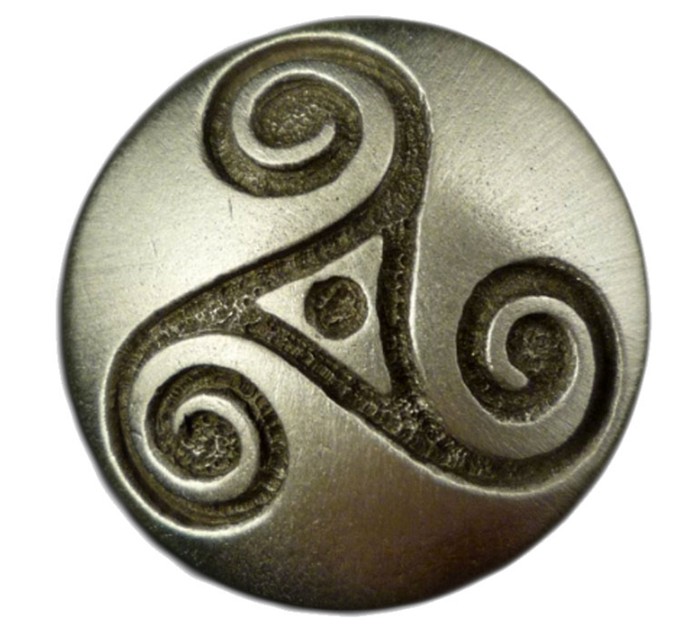
The fact that this was not the case with the Celts perhaps goes some way to understanding the underlying difference in the two outlooks. Markale explains: “The number three, which is symbolically the number of eternity and totality, was particularly favoured by the Celts. The ancient mythico-historical traditions of Wales are all presented in the form of triads (Trioedd Ynys Prydein, ‘Triads of the Island of Britain’), constituted by groups of three persons characterising different functions, three notable events or three principles.
“We must also consider the triskelion, a symbolic ornament that is not of Celtic origin, but which became to some extent the emblem of Celtic civilization, given its frequent appearance in the Welsh, and especially Irish, plastic arts”. [16]
According to Françoise Le Roux and Christian-Joseph Guyonvarc’h, in their book on the druids, triads in ancient Celtic culture amounted to “a manifestation of multiplicity as a notion subordinate to unity”. [17]
The Celts’ thinking was not square or linear, but spiralling and spiritual, capable of embracing paradox, of soaring beyond the rules of the material world.
Remarks Markale: “People will say that it was an irrational way of thinking. That does not make sense: the irrational does not exist, or rather it is only a mental structure that is not based on the same references as the contemporary and dominant reasoning of any given civilization”. [18]
It is high time we reassessed the Celts’ supposedly “irrational”, “superstitious” and “barbaric” way of thinking and living.
We should reflect on the fact that these insulting terms are always applied by imperialists to the peoples they want to conquer and crush.
And we should bear in mind that while the suppression of indigenous ways of thinking may be effective on the social surface, it is by no means permanent and complete.
Spiralled up inside our hearts is another way of seeing things, another way of existing, that is waiting for its chance to break free and burst forth, spinning with wild rage and joy, into this cruelly degraded world.
In the final part of this little series, we will be looking at nothing less than the meaning of our individual lives.
PS. My latest book, Welcome to the New Resistance!, is now available as a single audio file. It’s nearly 12 hours long, so ideal for a very long and otherwise boring car journey! It is, of course, also available as a free pdf and for sale as a physical book.
Also in this series:
For a future inspired by the past
Through nature we can touch the divine
Life: a sacred and heroic mission
[1] Paul Cudenec, The Anarchist Revelation: Being What We’re Meant To Be (2013), p. 106, https://winteroak.org.uk/wp-content/uploads/2021/05/the-anarchist-revelation-w.pdf
[2] Paul Cudenec, The Withway: calling us home (2022), p. 9 https://winteroak.org.uk/wp-content/uploads/2023/06/the-withway-paul-cudenec.pdf
[3] Jean Markale, Le druidisme: traditions et dieux des Celtes, (Paris: Payot, 1985), p. 7. All translations are my own and all subsequent page references are to this work, unless otherwise stated.
[4] p. 9.
[5] Ibid.
[6] Etienne Renardet, Vie et croyances des Gaulois avant la conquête romaine (Paris: Picard, 1975), p. 138, cit. p. 81.
[7] p. 67.
[8] p. 34.
[9] Paul Cudenec, ‘For a future inspired by the past’, https://winteroak.org.uk/2026/07/13/for-a-future-inspired-by-the-past/
[10] p. 35.
[11] p. 163 FN.
[12] p. 49.
[13] p. 50.
[14] pp. 158-59.
[15] p. 160.
[16] pp. 139-40.
[17] Françoise Le Roux and Christian-Joseph Guyonvarc’h, Les Druides (Rennes, 1978), p. 326, cit. p. 257.
[18] p. 276.


Love your writing Paul …..thank you …may we rise in Love and Sanity
LikeLiked by 1 person
Indeed, may we do that!
LikeLiked by 1 person