by Paul Cudenec, who reads the article here
There was more than one level to the big “anti-communist” project into which so many neofascists, in Italy [1] and elsewhere, were recruited at the end of WW2.
The initiative could obviously be justified by the reality that the USSR had taken over half of Europe, with communist Yugoslavia even sharing a border with Italy, and by the fear that more countries would fall under that totalitarian rule.
But, as I have pointed out on more than one occasion, [2] Soviet communism was in fact created and controlled by the same global mafia that was whipping up anti-communism. [2]
As was the case with fascism and anti-fascism in the 1930s, it was this binary opposition that it was using to advance its nefarious agenda of dispossession and control. [3]
One element of this plan was what is usually called the Strategy of Tension, but which others more accurately term the Strategy of Terror. [4]
This involved the use of false-flag terrorism, across non-communist Europe, and also in Turkey, carried out by agents of a highly secretive network known as Gladio, which was controlled by the global mafia’s intelligence services.
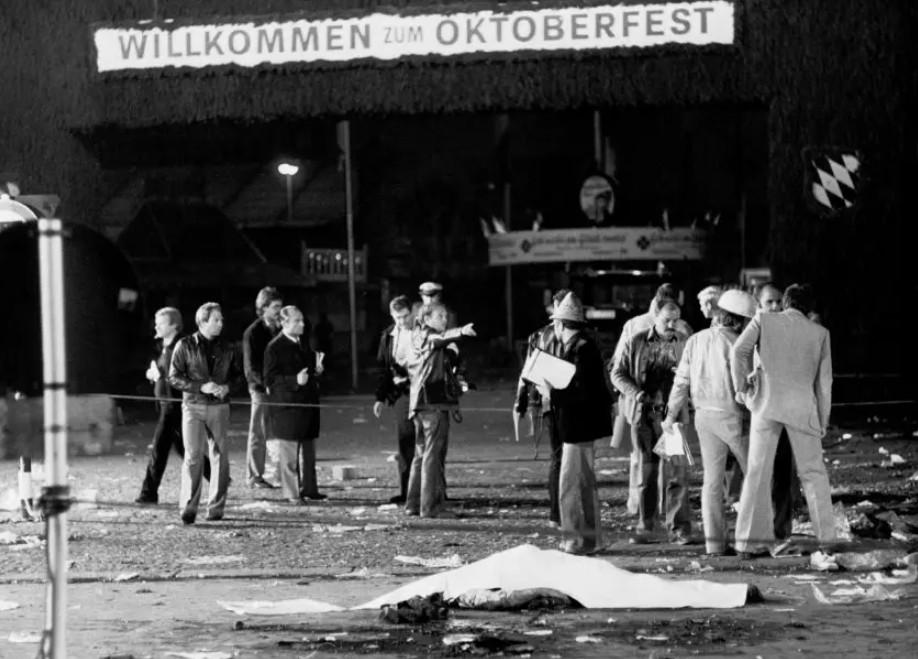
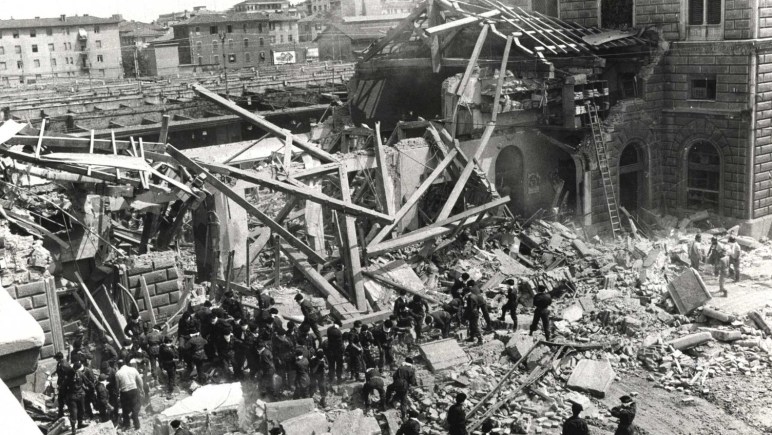
These atrocities included the bombing of the Munich Oktoberfest in Germany in 1980, the Brabant massacres in Belgium between 1983 and 1985 – into which I recently gained further insight [5] – and a string of attacks in Italy, starting with the Piazza Fontana bombing in Milan in December 1969, which killed 17 and injured 88, and, most notoriously, the Bologna station bomb which killed 85 people and wounded more than 200, pictured at the top of the article.
The aim of this psychopathic campaign of terror – whose existence was eventually exposed and confirmed, although mainstream media rarely mention it – was multi-faceted.
It discredited radical groups by associating them with terrorism, it frightened the public into seeking protection from a strong state with authoritarian powers and it essentially paralysed populations, traumatising and hypnotising people into a state of fear and disempowerment. [6]
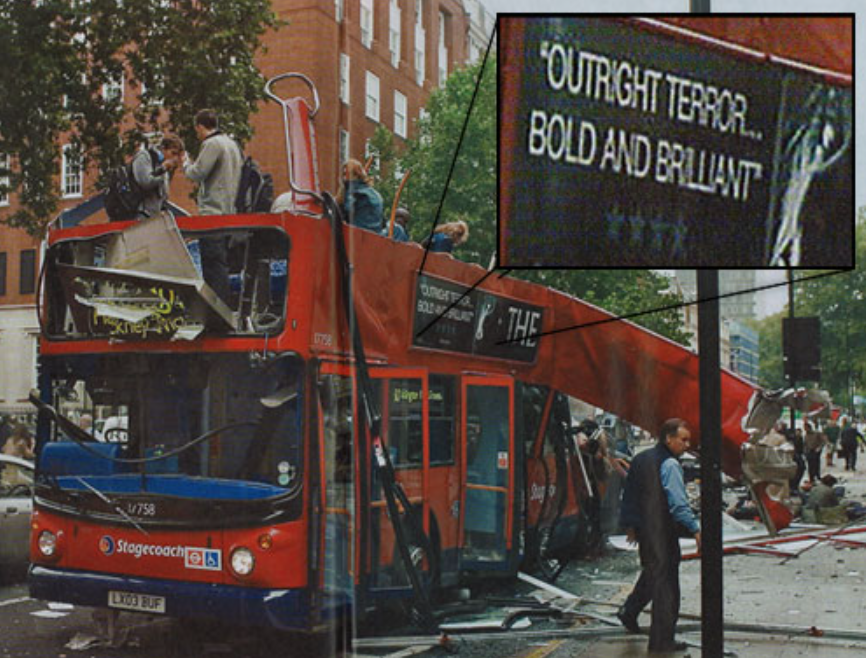
I am convinced that we saw the same approach being rolled out with all the “Muslim” terror attacks in the first two decades of this century and, in a slightly different way, with Operation Covid.
The idea of the Gladio paramilitary network was supposedly to set up “stay-behind” guerrilla units that would form a resistance movement in the case of Soviet invasion and, in Italy, it recruited fascist “stay-behind” elements trained to resist Allied occupation of their country and converted them into pro-Allied “anti-communist” agents.
Giuseppe Parlato’s book on the origins of neofascism reveals that even fascist students were supplied with weapons by the Italian military, with Lieutenant Pietro Capocasale telling police that this was to “defend Italy against the communists”. [7]
The Americans were interested in several fascist military outfits, such as the Gamma group from Mussolini’s last-stand Repubblica Sociale Italiana (RSI), which specialised in sabotage operations, and US occupation authorities therefore declared its members “exempt from all past responsibility”. [8]
Parlato says this was motivated by the fact that the Americans considered this group particularly “battle-hardened”, but also and above all because “rumours were circulating which suggested that the Gamma had secret weapons that only they knew how to use”. [9]
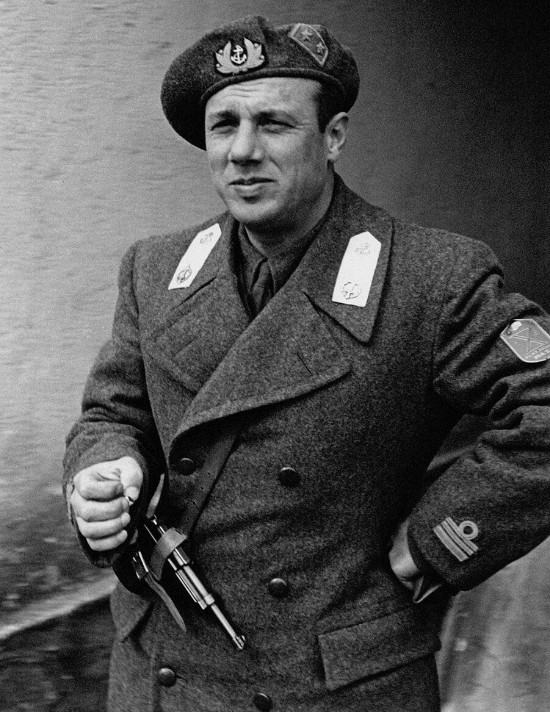
They also approached the Vega group, which was created in October 1944 at the instigation of Junio Valerio Borghese (pictured), head of X (Decima) Flottiglia MAS, whose connections to the Allies I mentioned in my last article. [10]
Vega had the aim of bringing together “all the elements tied to sabotage and espionage” and Parlato says that it was joined by paratroopers led by Nino Buttazzoni, whose links to the Allies I also referred to, but that “the war ended well before the group had started to operate”. [11]
Fortunately there was a new conflict, the Cold War, that these military groups could now get involved in.
Jailed neofascist bomber Vincenzo Vinciguerra speaks about Borghese in his interview for the excellent 1992 Timewatch documentary on Gladio.
He says: “Prince Valerio Borghese takes us right to the heart of the American Secret Services… The Decima MAS, the group that Valerio Borghese commanded, promised the Allies to take up arms in the event of a Soviet invasion”. [12]
Vinciguerra mentions that Borghese went on, in 1970, to stage an aborted coup against the Italian government and also stresses the astonishing extent to which the neofascist movement was infiltrated, and led, by state intelligence assets – to the extent that one would say it virtually did not exist of its own accord. [13]
This dovetails with what I discovered years ago, when trying to really understand fascism (and thus neofascism) – not so much in terms of its historical role, as of its soul.
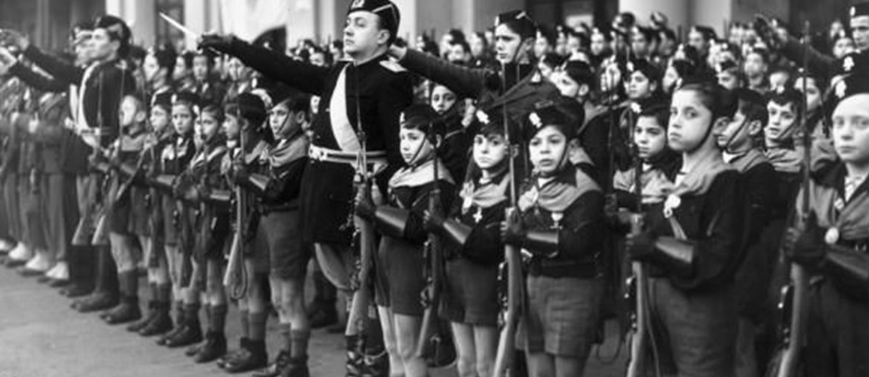
What I found, in reading fascist essays, was a strange vacuum: there was plenty of patriotic posturing and stirring rhetoric, but nothing that I could identify as a coherent vision or set of values.
I am not saying that individual fascists did not possess their own personal vision or values, simply that these were not necessarily shared by others giving themselves the same label.
I suspect that they projected their own values on to a movement that had really attracted them by its stated opposition to something they did not like (such as communism or liberalism) and by a certain aesthetics and tone that appealed to them.
Fascism was very much a brand that its followers were attached to by tribal loyalty, in the same way as sports fans are attached to everything about the club they support – the colours, the songs, the stadium.
Parlato says that the model behaviour for Italian fascists was of the soldier rather than the intellectual and that neofascism in particular was almost devoid of real ideological content. [14]
This essential emptiness, combined with the fanaticism of its followers, made and makes fascist organisations ideal tools through which to manipulate people, as exemplified by the use of Italian neofascists in Gladio.
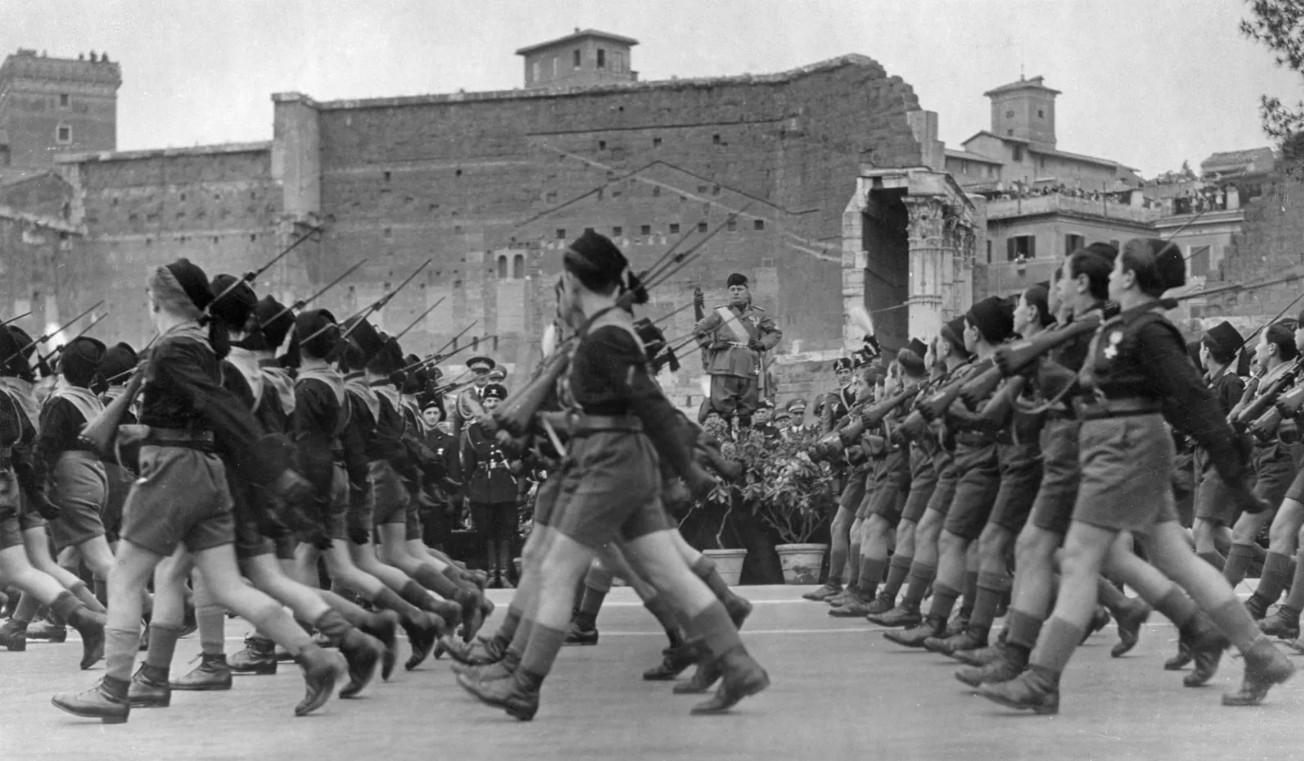
Parlato says: “We are looking effectively at a fascism that everyone created from their own experience: a movement in which you could find everything and its opposite, which Mussolini had created more with an eye to tactics than to ideological strategy”. [15]
He describes a fascism “which, because of its feeble ideological basis, could easily turn its coat and adapt itself to carrying out its ‘revenge’ no longer against the Western Allies, as in 1945, but at their side, ‘for the salvation of Western civilization’, as certain people quickly started to put it”. [16]
But what exactly were the forces manipulating these shadowy terror groups, who initially tried to blame their crimes on anarchists or communists and later infiltrated such groups so as to induce them to carry out violent attacks – the disastrous and self-destructive process described by Giusti Zuccato in the 2025 book I recently reviewed. [17]
Vinciguerra points a finger at Freemasonry and, in particular, the notorious P2 lodge.
He says: “After the war, international Masonry took on the task of participating in the battle against communism. Many army officials, particularly in the high ranks, are Masons. As are judges, high-ranking police officials and Carabinieri officers. Neofascism couldn’t stay outside this phenomenon”. [18]
“The P2 lodge wasn’t a centre of hidden power. It was a centre of real power, hidden from the public, but not from the state… I consider the P2 to be one of those parallel structures which were part of Gladio. It didn’t have a military role, but rather a role in internal subversion”. [19]
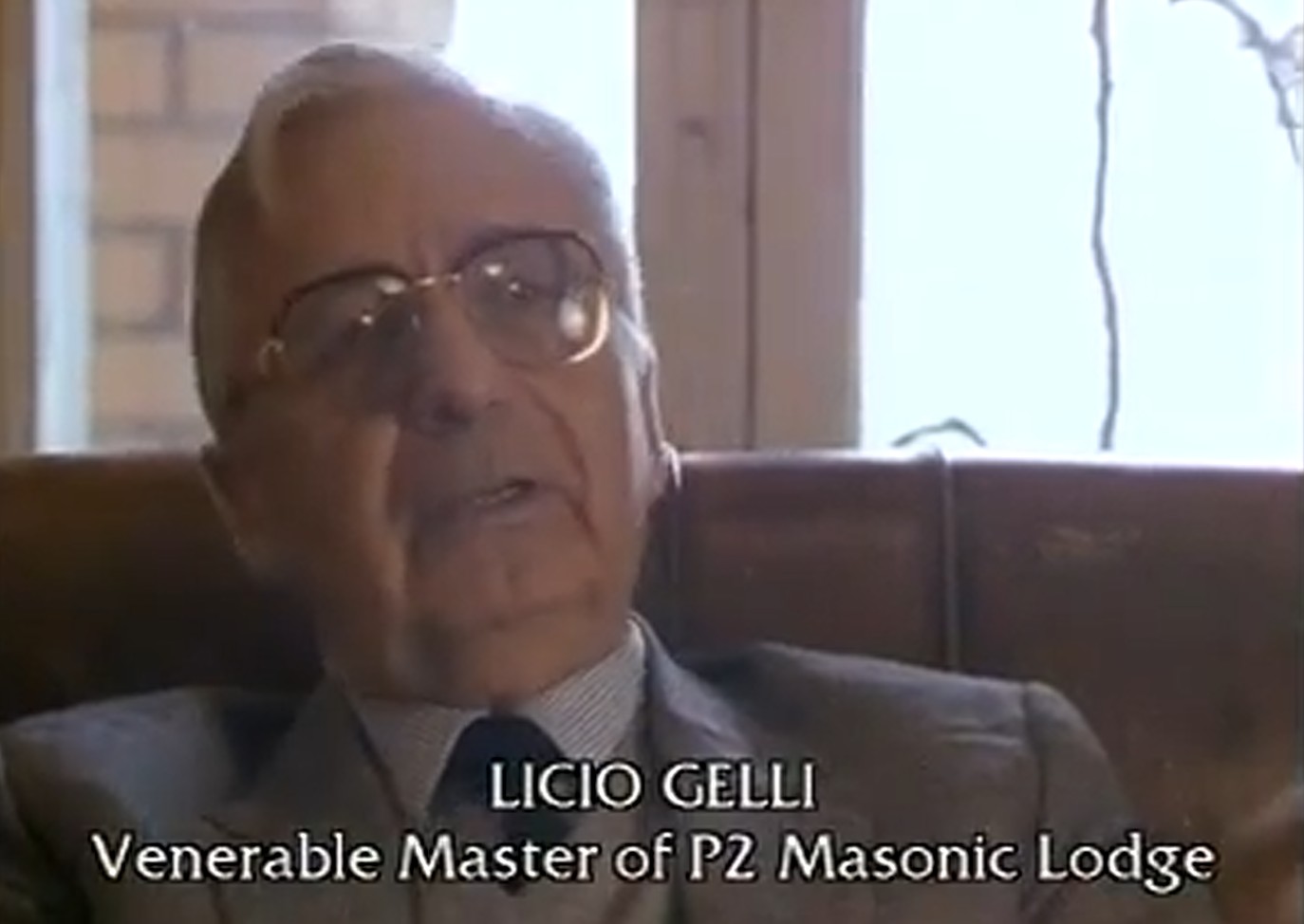
The Venerable Master of the P2 lodge, Licio Gelli (pictured) is himself interviewed in the documentary series and says: “Gladio was set up in 1948 and operational by the end of the year. It was formed with a very careful choice of personnel. Many were in the Spanish Civil War. Many came from the ranks of the Fascist Repubblica di Salo. People who could handle arms. They were in squads of nine people with two leaders, as someone had to know where the arms deposits, caches of supplies and money were located”. [20]
The Masonic link to neofascism is also raised in Parlato’s book. He includes an account by Giorgio Pini of the neofascist MSI (Movimento Sociale Italiano) stating that “lots of former fascists” were Freemasons, particularly in the “Scottish rite”. [21]
He also refers to the role played by the Church in Rome, sheltering neofascists in the Vatican zone of the Italian capital and generally being supportive of the broad “anti-communist” alliance that was emerging.
When you combine this with the understanding that Freemasonry is a key weapon of control used by ZIM, the zio-satanic imperialist mafia, [22] and that these networks are closely intermeshed with the Vatican, [23] a certain familiar pattern begins to emerge.
More on that in the final article in this short series.
Other articles in this series:
Neofascists and communists: a love-hate relationship
Divide and rule: the anti-communist psychosis
Neofascism, industrialism, corruption and Israel
[1] Paul Cudenec, ‘Divide and rule: the anti-communist psychosis’, https://winteroak.org.uk/2026/06/12/divide-and-rule-the-anti-communist-psychosis/
[2] Paul Cudenec, The False Red Flag (2024), https://winteroak.org.uk/wp-content/uploads/2024/03/the-false-red-flag–1.pdf
Paul Cudenec, ‘Zionism, communism and terror’, https://winteroak.org.uk/2026/05/08/zionism-communism-and-terror/
[3] Paul Cudenec, ‘Fake anti-communists: ZIM’s Cold War on our culture, Pt II’, https://winteroak.org.uk/2025/09/08/fake-anti-communists/
[4] Paul Cudenec, ‘Remembering the fires of revolt’, https://winteroak.org.uk/2026/05/01/remembering-the-fires-of-revolt/
[5] Paul Cudenec, ‘The reign of the beast’,
https://winteroak.org.uk/2025/10/24/the-reign-of-the-beast/
[6] Paul Cudenec, ‘The Politics of Fear: Terrorism and State Control’, Antibodies, Anarchangels and other Essays (Sussex: Winter Oak Press, 2013), pp. 73-98 and pp. 139-140.
[7] Giuseppe Parlato, Les fascistes sans Mussolini: Les origines du néofascisme en Italie (1943-1948), trans. Istvan Leszno, (Château-Thébaud: Ars Magna, 2025), first published in 2006 then 2012 as Fascisti senza Mussolini: le origini del neofascismo in Italia (1943-1948), p. 96. Translations are my own and all subsequent page references are to this book.
[8] p. 154.
[9] Ibid.
[10] Cudenec, ‘Divide and rule: the anti-communist psychosis’.
[11] p. 147.
[12] https://www.youtube.com/watch?v=j48ieINPUYU
[13] https://www.youtube.com/watch?v=FwbfX_VzEmE
[14] p. 263
[15] p. 409.
[16] p. 376.
[17] Paul Cudenec, ‘Remembering the fires of revolt’, https://winteroak.org.uk/2026/05/01/remembering-the-fires-of-revolt/
[18] See note 13.
[19] Ibid.
[20] See note 12.
[21] Archivio Centrale dello Stato, Rome, Pini Papers, b. 35, fasc. October-December 1946, cit. 721.
[22] Paul Cudenec, ‘Breaking the brainwashing’, https://winteroak.org.uk/2026/03/02/breaking-the-brainwashing/
[23] Paul Cudenec, ‘Vipers in the Vatican’, https://winteroak.org.uk/2026/03/20/vipers-in-the-vatican/


This writing makes the choice of “One Battle After Another” as Best Picture of the Year in the latest Academy Awards out to be the perfect choice.
One can only imagine how extensive is the on-the-shelf library of criminal deception operations available at all times for Fascists to implement anywhere on Earth.
LikeLike