by Paul Cudenec, who reads the article here
Imagine, if you possibly can, living in a country under foreign occupation, where the brutal power of the state is in cahoots with organised crime to keep you and your fellow citizens humiliated and controlled.
And then imagine, in the face of this intolerable situation, people from previously opposed political backgrounds coming together to fight for their freedom and self-determination.
This is what happened in Sicily during the Second World War, after it became clear that the Allies’ arrival there in July 1943 was to be anything other than a joyful “liberation”.
The historical context to the revolt is that, in September 1943, Italy signed an armistice, thus switching sides in the war and, in reaction, Nazi Germany occupied central and northern Italy.
Benito Mussolini, who had been deposed and imprisoned in July 1943, was freed by the Germans and set up as the leader of a new pro-Nazi state in the north – the Repubblica Sociale Italiana (RSI), also known as the Repubblica di Salò.
In Sicily, Giuseppe Parlato explains, the mood was heavy because of “the presence of a mafia supporting the Allies, the separatist insurgence of L’Esercito volontario per l’indipendenza della Sicilia (Volunteer Army for Sicilian Independence), the terrible food situation and the complex relationship between the population and the British and Americans”. [1]
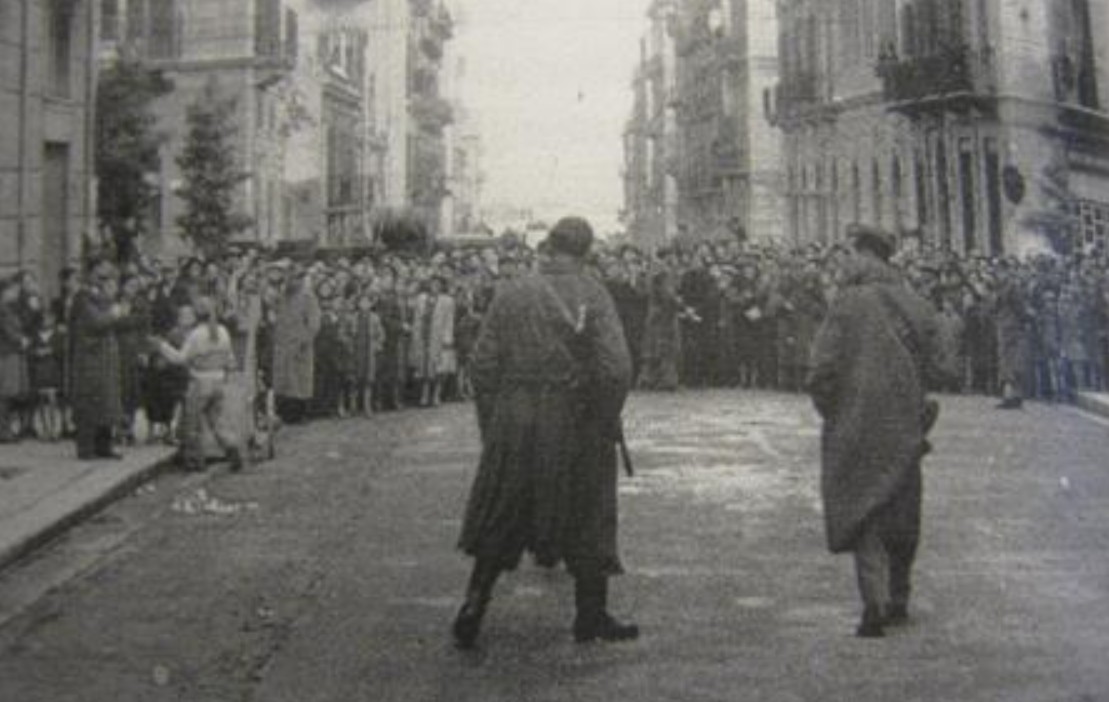
“There were reports from every region of protest actions… A vivid instance of this rebellion came in Palermo in October 1944, involving violent disorder between the population and the army and leading to repression involving numerous civilian casualties”. [2]
This was known as la strage del pane, the bread massacre, and I see from Italian Wikipedia that at least 24 people died and 158 were injured when Italian troops threw two hand grenades into, and opened fire at, “a crowd of civilians who were protesting, peacefully, about the lack of food and work and about the failure to rebuild the buildings destroyed in the previous two years by the French, British, German and especially American bombings”. [3]
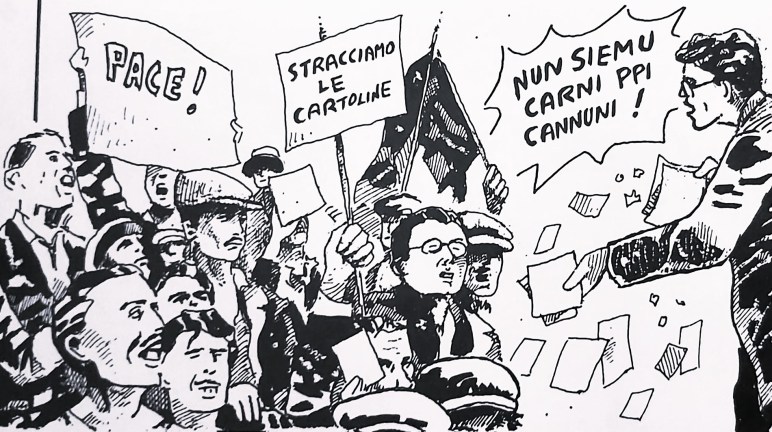
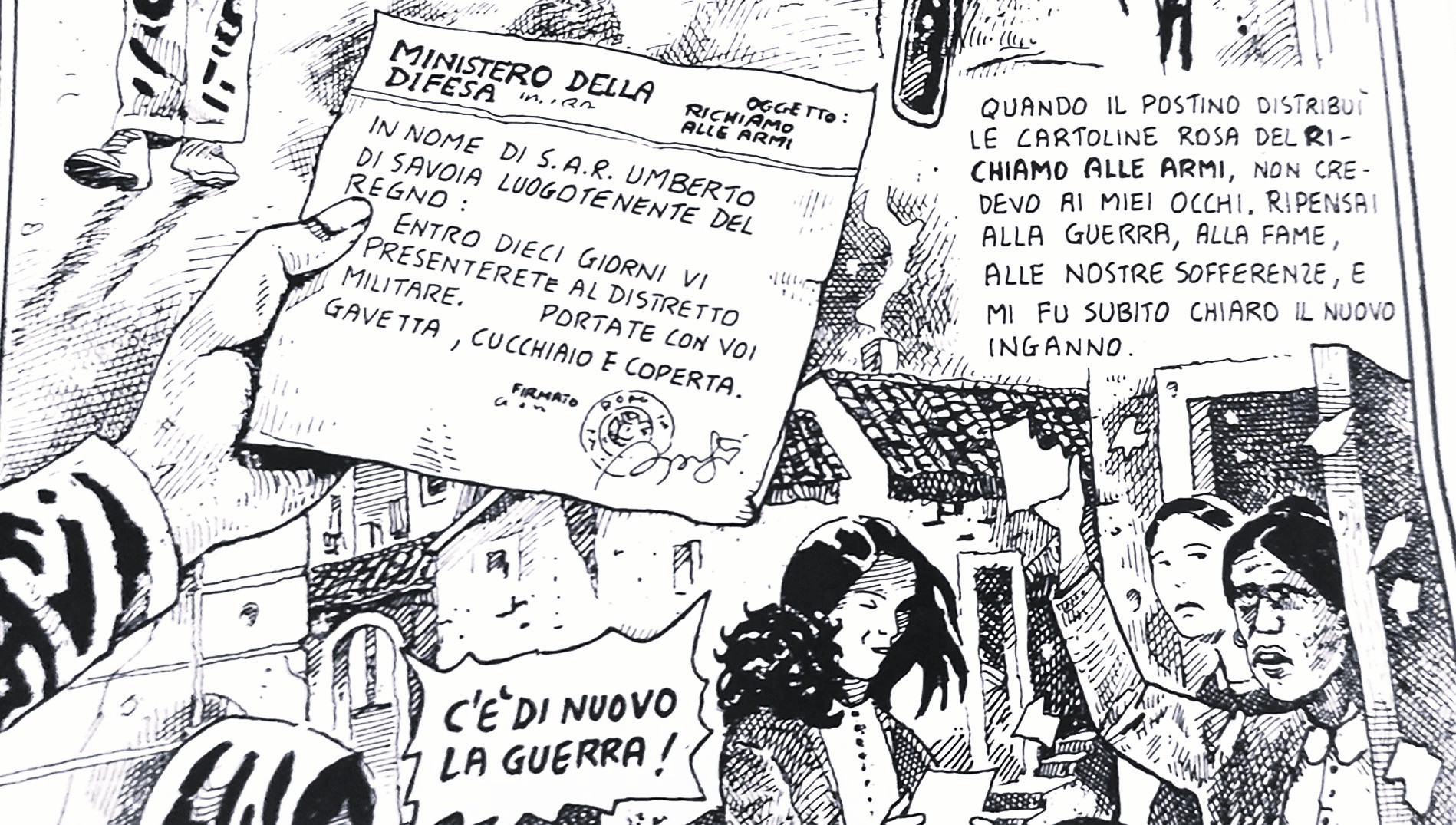
Things were made even worse when the pro-Allied Italian state in the South announced conscription for the ongoing war against Germany and Mussolini’s RSI. Parlato says: “The reaction on the streets was violent: on December 14 and 15, at Catania, there were reports of serious disorder culminating in crowds setting fire to the city hall, and smashing up the law courts and the Bank of Sicily”. [4]
“The revolt spread into neighbouring areas: at Zafferana, on the evening of December 14 itself, the population rose up, attacking the fabric warehouses. On the 15th, at Castel di Iudica and at Ramacca, they blocked the departure of new military recruits and wheat stocks were targeted. At Vizzini two protesters were killed”. [5]
Parlato says that the disturbances spread like wildfire across the Catania region with “anti-plutocratic demands”, anger at King Umberto II and “the call for a peasant uprising against the Allies”.
“The revolt came to a peak at Ragusa (January 4-9 1945), where the disorder could only be quelled through the joint intervention of the police and regular troops: the toll was 15 dead and 28 injured, with 295 arrests”. [6]
This was not the end, though, with protests subsequently erupting in the Agrigento region. In Naro (January 11) five people were killed, 12 injured and 53 arrested and the next day there was trouble at the nearby coastal town of Licata. [7]
The last major resistance to be quashed was the “Republic of Comiso” which had for several weeks been resisting occupation by Italian and British forces, writes Parlato.
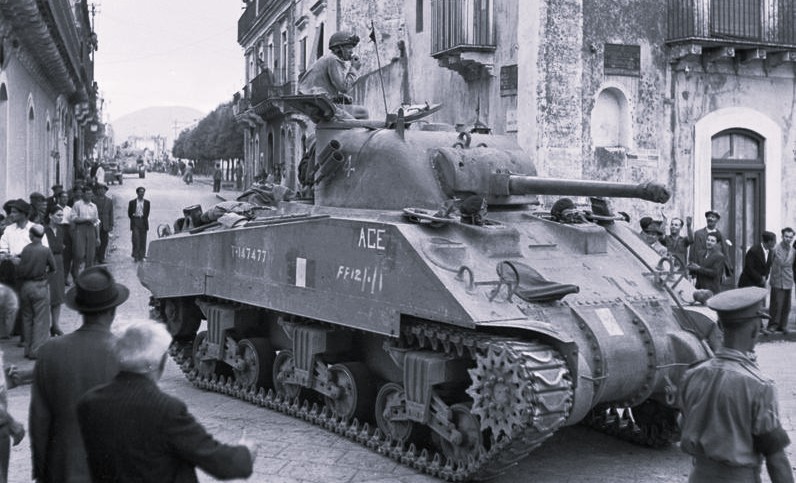
“At dawn on January 11 numerous regiments, supported by armoured forces, launched a violent attack on the defensive positions of the rebels. According to official documents, the battle resulted in the deaths of 17 troops and 19 civilians, with 24 injuries on the military side and 63 on the civilian one”. [8]
Parlato recounts that the leaders of the revolt, who had evidently put up a good fight, only surrendered after a British officer threatened to rase Comiso completely to the ground if they did not do so. Some 300 of the inhabitants were deported to the prison island of Ustica. [9]
He writes: “The non si parte (‘we’re not leaving’) revolt is emblematic of the objective convergence of three currents very different from each other, having opposite aims in a struggle against the state, which makes the [Sicilian] underground fascist movement different from other expressions of fascist resistance in the South.
“From the point of view of the [Sicilian] separatists, the state was regarded as essentially ‘Italian’ and, as such, it had to be attacked via popular insurrections fuelled by demands of a ‘primary’ nature, such as food and opposition to conscription.
“For the fascists, it was a question of fighting a state which had allied itself with the occupying entity on which it was totally dependent. The Sicilian case, and to a large extent the Sardinian one, differed from other instances of the fascist underground because of the absence – in the initial phase – of radically anti-communist positions. In truth, there was an anti-communist ingredient, but it was not important enough to allow any co-operation or contact with the Allies, who remained the principal enemy”. [10]
Parlato explains that the third element in this unlikely “tactical alliance” [11] were the grassroots communists who had not appreciated the Svolta di Salerno, the “Salerno U-Turn” of April 1944 in which the Italian Communist Party (PCI) leader Palmiro Togliatti, following orders from Moscow, sought a compromise with the Italian monarchy and government to create a government of “national unity” in the South. [12]
They saw in this an enormous contradiction: “Togliatti’s party had a collaborative relationship with the bourgeois and conservative forces against which the PCI had been fighting for months in the context of a particular war, the Resistance – that’s to say a class war”.
“They had decided not to remain neutral in the face of the popular uprisings, against the recommendations of the official socialist and communist press”. [13]
Parlato says that the “libertarian, anti-militarist and revolutionary soul” of grassroots communist members in Sicily thus inspired them to fight alongside “fascists, separatists and anarchists” against a common enemy, the state. [14]
I would say that this was a great example of what can happen when people of all political backgrounds act according to their gut feeling, their instinctive understanding of a given situation, and refuse to obey the commands of their manipulative (and manipulated) central “leadership”.
It is interesting to note that communist leader Togliatti supported conscription, compulsory of course, into the armed forces of the monarchist South, in the same way as Mussolini was an avid proponent of conscription for the RSI’s forces in the North.
Parlato draws attention to the parallel reasoning of these two supposedly quite different political leaders [15] and in my next piece I will be looking at the strange love-hate relationship between “the left”, the communists in particular, and the neofascist movement that was being born in Italy at the end the Second World War.
Also in this series:
Neofascists and communists: a love-hate relationship
Divide and rule: the anti-communist psychosis
Neofascism, industrialism, corruption and Israel
[1] Giuseppe Parlato, Les fascistes sans Mussolini: Les origines du néofascisme en Italie (1943-1948), trans. Istvan Leszno, (Château Thébaud: Ars Magna, 2025), originally published in 2006 then 2012 as Fascisti senza Mussolini: le origini del neofascismo in Italia (1943-1948), p. 75. All subsequent page references are to this work and translations are my own.
[2] p. 78.
[3] https://it.wikipedia.org/wiki/Strage_del_pane
[4] p. 79.
[5] Ibid.
[6] Ibid.
[7] pp. 79-80.
[8] p. 80.
[9] Ibid.
[10] p. 82.
[11] p. 77.
[12] p. 82, https://it.wikipedia.org/wiki/Svolta_di_Salerno
[13] p. 82.
[14] Ibid.
[15] p. 84.


Trump, with friends like Peter Thiel, would be impossible to beat unless the military had a schism or outright revolted against the criminal state.
LikeLiked by 1 person
Why don’t we riseup, what are we waiting for?
What is the fear that’s holding back humanity in the face of pure evil.
Humanity is worth fighting for – if only so that the next generations will not have to fear the fascist of today.
The only requirement for evil to succeed is for good people to do nothing.
Fascism wasn’t defeated at the end of the second world war, it was only getting started.
LikeLiked by 1 person
Yes indeed.
LikeLiked by 2 people