A book review by Paul Cudenec, who reads it here
I wrote recently about the need to nurture life-rooted thinking and one of the realms in which I have found this is Biodanza, which literally means Dance of Life.
I got involved in this activity in a fairly random way four years ago and initially regarded it as merely an enjoyable weekly get-together, but, as I explain in Our Sacred World, I came to realise that behind it is a philosophy very close to my own. [1]
As well as the articles that I previously cited, I have now also read a newly-published book on the subject called La Biodanza: pulser, aimer, partager (‘Biodanza: pulsating, loving, sharing’), whose author, Paula Roulin Prat, was trained in Biodanza by its late founder Rolando Toro in 1988 and has been involved with it ever since.
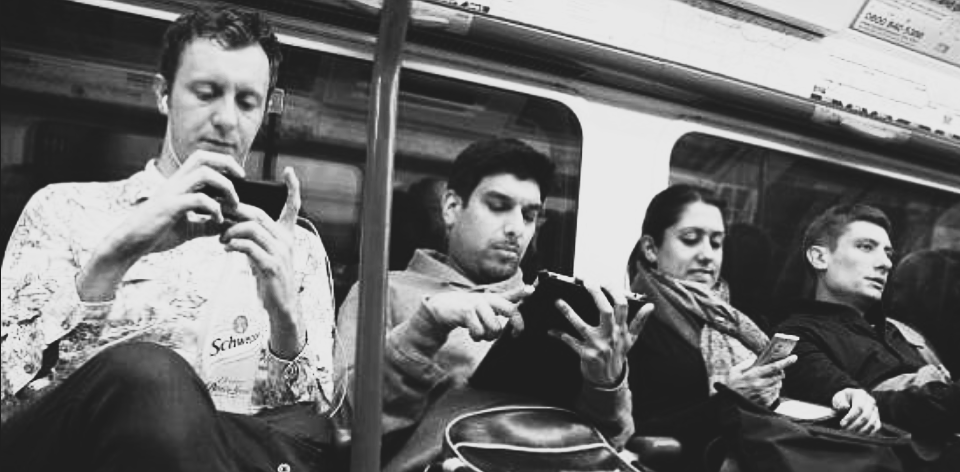
She writes: “Lots of contemporary professions involve us being in front of a computer screen, concentrated on our tasks. From a very young age, children learn while sitting on chairs, installed in front of the TV or with their smartphone. Life is lived more and more by proxy, virtually, everyone in their home, often plunged into an artificial world.
“Our civilization is relationally sick, we lose our bearings and meaning, submerged by a continual and excessive flow of information, mostly violent. We are increasingly disconnected from a nature that we are destroying and polluting”. [2]
“Biodanza is a fantastic opportunity to reconnect with ourselves, with who we are, and to feel the link that unites us with all that surrounds us. It plays an innovative and even revolutionary role with regard to the challenges of our century”. [3]
“Biodanza invites us to place life at the centre, the life that palpitates within us in a unique fashion”. [4] “Everything that exists – stars, planets, animals and human beings – are parts of a much larger living system. The universe exists because life exists and not the other way round”. [5]
Roulin Prat explains that when we take part in a Biodanza session we remove the masks of our usual social and cultural identities and access our inner depths, thanks to the powerful combination of music, movement and close contact with other people.
“Mystic ecstasy is an inner illumination, a clear perception of the living connection between all creatures, a love-stricken surrender to the joy of being part of creation, an extension and fusion of the consciousness of time and space”. [6]
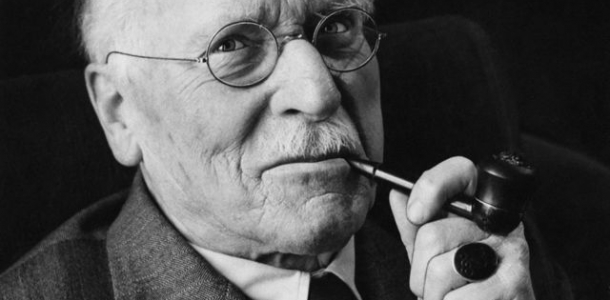
I was interested to see that she refers to the theories of organic radical inspiration Carl Jung [7], pictured, on the collective unconscious which “retains and transmits the psychological heritage common to the whole of humankind… it is the historical memory of the human species, transmitted from generation to generation”. [8]
She refers to his concept of archetypes, which can not only be found in myths but within our own minds, representing innate possibilities which can be activated in the right circumstances: “Biodanza invites us to live and dance mythical archetypes. It thus allows us to access their ancient knowledge and to feel their transformative power”. [9]
And she lists some of the ways in which Biodanza founder Toro saw myths influencing our understanding:
* The sacralisation of nature; the presence of the divine in vegetation, the sea, the mountains; rites of initiation into the mysteries of life and death; the exaltation of fecundity and the expansion of consciousness are the heritage of Demeter, goddess of fertility.
* The joy of living, the search for pleasure and ecstasy and the freeing of deep instinctive potential through dance are the heritage of Dionysus, god of the vegetation, of the vine and of wine.
* The power of music, poetry and dance, capable of inducing transmutational processes, are the heritage of Orpheus, son of the muse Calliope, poet, musician and singer. [10]
Roulin Prat continues: “Another archetype used in Biodanza is that of the angel. Angels have a transcendent dimension. They are not only an image, but also a feeling, a luminous form of the soul which offers emotion, relief and tranquillity. They represent the integration of sensitivity and emotionality, which are often dissociated, and evoke purity, lightness and innocence.
“Biodanza invites us to invoke angels and, little by little, to incorporate them into us so that we may ourselves become angels and take on their qualities. Dancing the angel also puts us into a state of mind that is happy, free and buoyant”. [11]
She says that Toro had asked himself for a long time what was the most repressed part of a modern human being and he came to the conclusion that it was our greatness, the full potential within each of us.
“Of an incomparable splendour, this is, however, not valued by our culture or our educational system, which both advocate and encourage competition and profit to the detriment of the sacredness of life and our humanity”. [12]
She links this to the idea of the numinous, the term used by the German theologian Rudolf Otto to refer to that which is indescribable and beyond human comprehension.
“The numinous unconscious is the deepest unconscious. It contains the luminous part of us, our greatness, our splendour and our sacredness.
“The numinous unconscious gives us access to a feeling of intimacy, to limitless love and to a connection with beauty and mystery. When we are in touch with this part of our unconscious we feel our intrinsic value”. [13]
And, crucially: “Connecting to our own light allows us to discover it in others”. [14]
Roulin Prat concludes that Biodanza therefore not only helps us to explore our own individual potential, but, because it is based on “universal laws which conserve life”, [15] it allows us to drink deep from the wellsprings of our species’ past – of our true nature before we were crushed and reduced by rapacious modernity.
In the words of a poem by Toro:
Biodanza develops in us
Ancestral memory
The absolute possibility of love. [16]

[1] Paul Cudenec, ‘Coming back to life’, Our Sacred World: Enjoyed, denied and found again, pp. 110-18, https://winteroak.org.uk/wp-content/uploads/2026/04/our-sacred-worldonline-2.pdf
[2] Paula Roulin Prat, La Biodanza: pulser, aimer, partager (Gap: Editions Le Souffle d’Or, 2026), p. 10. Translations are my own and all subsequent page references are to this book.
[3] p. 11.
[4] p. 134.
[5] p. 41.
[6] p. 83.
[7] https://orgrad.wordpress.com/a-z-of-thinkers/carl-jung/
[8] p. 89.
[9] p. 95.
[10] p. 96.
[11] Ibid.
[12] p. 98.
[13] p. 99.
[14] p. 101.
[15] p. 122.
[16] p. 136.

