
by Paul Cudenec, who reads the article here
Ernst Friedrich Schumacher (1911-1977) is best remembered for his 1973 book Small is Beautiful: A Study of Economics As If People Mattered and its message that “infinite growth in a finite environment is an obvious impossibility”. [1]
As the title of the book conveys, he saw it as important to restore a human scale to human self-organisation: “Centralisation is mainly an idea of order; decentralisation, one of freedom”. [2]
Schumacher’s attack on centralisation and economic growth went hand in hand with a broader assault on industrial society itself.
He noted in Small is Beautiful that “modern man has built a system of production that ravishes nature and a type of society that mutilates man”. [3]
As I explain in my profile of Schumacher on the organic radicals site, [4] he also challenged the ways of thinking which have allowed the industrial mega-racket [5] to gain its stranglehold on our lives.
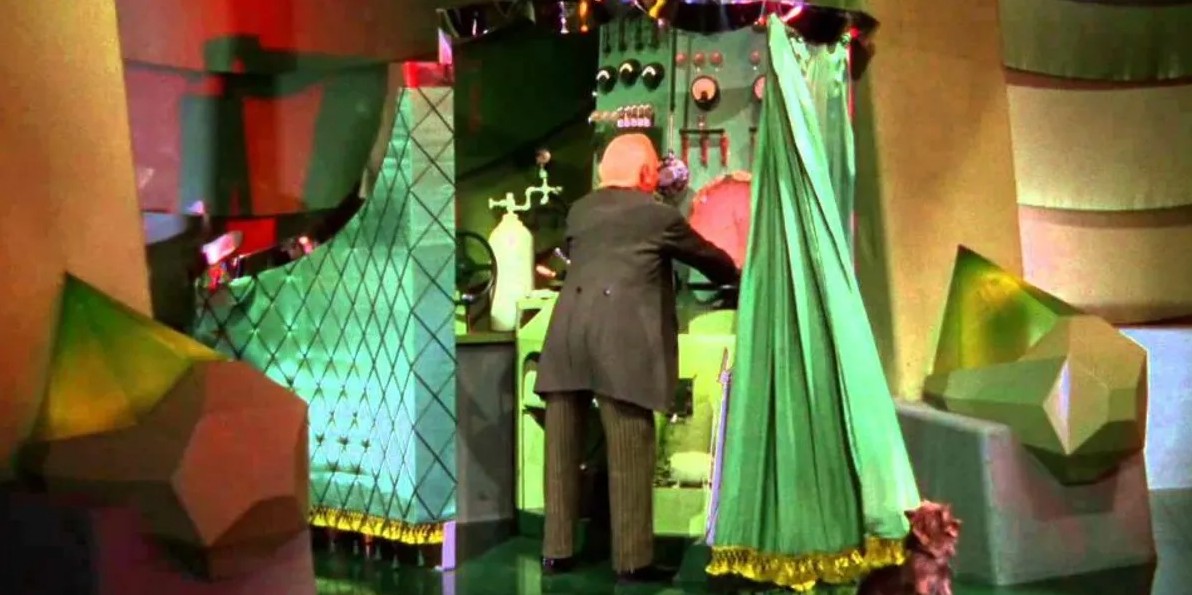
One of these is the obsession with the idea of paid “work” – of any kind, no matter how pointless or harmful – as being an essential bulwark of everyone’s existence.
He explained: “That soul-destroying, meaningless, mechanical, monotonous, moronic work is an insult to human nature which must necessarily and inevitably produce either escapism or aggression, and that no amount of ‘bread and circuses’ can compensate for the damage done – these are facts which are neither denied nor acknowledged but are met with an unbreakable conspiracy of silence – because to deny them would be too obviously absurd and to acknowledge them would condemn the central preoccupation of modern society as a crime against humanity”. [6]
Our separation from nature is, of course, another key problem: “Modern man does not experience himself as a part of nature but as an outside force destined to dominate and destroy it”. [7]
As well as being inspired by the decentralist, degrowth economic ideas of organic radical inspirations Mohandas Gandhi [8] and Leopold Kohr, [9] Schumacher was also influenced by the metaphysical critique of modernity voiced by the perennialist wing of the revived tradition.
In Small is Beautiful he quoted both Aldous Huxley [10] and Ananda Coomaraswamy [11] and he explained in A Guide for the Perplexed that he had taken the term “the Reign of Quantity” from René Guénon (pictured), [12] “one of the few significant metaphysicians of our time”. [13]

It was this aspect of Schumacher’s thinking which lay behind his judgement in the latter book, first published in 1977, that “while wealth may still be accumulating, the quality of man declines”. [14]
It also informed his criticism of the one-dimensionality of modern thought, in contrast to the “three-dimensional structure” of traditional wisdom. [15]
Contemporary society rejects ideas of “higher” or “lower” degrees of quality in favour of judgements based purely on quantity, he pointed out.
And yet the idea of something being “higher” is almost universally used in traditional ways of thinking across the world, he said: “‘Higher’ always means and implies ‘more inner’, ‘more interior’, ‘deeper’, ‘more intimate’; while ‘lower’ means and implies ‘more outer’, ‘more external’, ‘shallower’, ‘less intimate’. This synonymity can be found in many languages, perhaps in all of them”. [16]
It is also at the root of our ethical judgements, which regard good as being a “higher” quality than evil, argued Schumacher.
He observed: “The modern world tends to be sceptical about everything that demands man’s higher faculties. But it is not at all sceptical about scepticism, which demands hardly anything”. [17]

A Guide for the Perplexed is refreshingly clear about the obvious dead-end represented by the industrial monstrosity we are told is “civilization”.
Schumacher writes: “The faith in modern man’s omnipotence is wearing thin. Even if all the ‘new’ problems were solved by technological fixes, the state of futility, disorder and corruption would remain. It existed before the present crises became acute, and it will not go away by itself. More and more people are beginning to realise that ‘the modern experiment’ has failed”. [18]
Troy Southgate, whose fascinating political journey I recently described, [19] takes a close look at Schumacher’s philosophy through the lens of this particular work in his 2025 book The World According to Fritz: E.F. Schumacher and The Perennial Philosophy.
Obviously, there is much thematic overlap with what I wrote about, but Southgate goes into more detail in his 120 pages than I could in my profile and he does pick out some choice quotes that I wish I had used, such as Schumacher’s evocation of “the progressive constriction and narrowing of the modern mind”. [20]
He points out: “For Schumacher things have continued to decline ever since the Cartesian revolution set out to reshape man’s view of the universe.

“Logic has separated man from the great Chain of Being and, rather to seek to elevate himself to the heavens, he has fallen into a hell of his own making”. [21]
“The rationalist methodology favoured by [René] Descartes does not extend beyond the application of Reason, completely ruling out the potential of the human imagination.
“We must, he announced, even discount the information that we receive from our senses and this narrow approach to science and philosophy even suggests that whenever we encounter an intellectual barrier our investigations should cease”. [22]
Channelling Schumacher’s viewpoint, Southgate describes how Descartes (1596-1650) “became so arrogant in his efforts to overcome the great minds of the past that he portrayed both ancient and medieval philosophy as examples of congenital error”. [23]
Southgate notes that the thinker was carrying forward the work begun by Francis Bacon (1561-1626) in launching “a scientific revolution against the established wisdom of antiquity”. [24]
As I set out in August 2025 in ‘The Invisible College and the plan for our enslavement‘, [25] I think both of these men were part of a deliberate effort to enact a Great Reset of those times, to undermine the foundations of European thought and culture and so pave the way for our exploitation by judeo-supremacist industrial imperialism.
Southgate describes how Schumacher regarded these changes as a “great impoverishment” in which the age-old roadmap to life had been discarded by the purveyors of a dislocated and confused world. [26]
“It is hardly surprising that we find ourselves in the middle of a tangled forest with a broken compass and no way of finding our way through the wilderness”.
He says that for Schumacher the knowledge of the past is like a network of forgotten footpaths which no longer appears on a map which has changed beyond recognition. [27]
That is very much the insight behind the organic radical project, by the way. While some of the individual thinkers featured there remain well known, what has been hidden from general view are the connections between them; the overview that making such connections can provide; the understanding that together these elements constitute another way of thinking, a true and traditional wisdom which has been deliberately concealed by the modern tyranny.
Southgate writes that “the reductionist plan of the Cartesian cartographer has dispensed with the qualitative aspects of ‘higher’ and ‘lower’ features and replaced them with purely quantitative effects that offer little guidance on the voyage from A to B”. [28]
Schumacher himself declared: “The old science – ‘Wisdom’ or ‘science for understanding’ – was primarily directed ‘towards the sovereign good’, i.e. the True, the Good and the Beautiful, the knowledge of which would bring both happiness and salvation.
“The new science was directed mainly towards material power, a tendency that has meanwhile developed to such lengths that the enhancement of political and economic power is now generally taken as the first purpose of, and main justification for, expenditure on scientific work.
“The old science looked upon nature as God’s handiwork and man’s mother; the new science tends to look upon it as an adversary to be conquered or a quarry to be exploited”. [29]
From his 2020s perspective, Southgate adds: “What Schumacher calls ‘knowledge for manipulation’ has become an enormous threat and those readers who experienced the so-called pandemic of 2020 onwards will have seen how expressions such as ‘trust the science’ were designed to reinforce a global campaign of systematic disinformation”. [30]

He further cites Schumacher’s 1977 warning regarding this malevolent modern science: “If it continues to be a juggernaut outside humanistic control there will be a reaction and revulsion against it which would not exclude the possibility of violence”. [31]
And Southgate adds: “This has certainly been the case in relation to the authoritarian restrictions that were imposed during the Covid-19 debacle, not to mention similar opposition towards the scientific ‘justification’ for transgender ideology”. [32]
As well as being used to exploit and control us, this science also reduces our individual experience of life and our understanding of its meaning.
Schumacher writes: “We are given a large number of definitions of man which make him out to be nothing but an exceptionally intelligent animal with an unduly large brain, or a tool-making animal, or a political animal, or an unfinished animal, or simply a naked ape.
“No doubt, people who use these terms cheerfully include themselves in their definitions and will have some reason for doing so. Nothing is more conducive to the brutalisation of the modern world than the launching, in the name of science, of wrongful and degraded definitions of man, such as ‘the naked ape’.
“What could one expect of such a creature, of other ‘naked apes’ or, indeed, of oneself? When people speak of animals as ‘animal machines’ they soon start treating them accordingly, and when they think of people as naked apes, all doors are opened to the free entry of bestiality”. [33]

Contemporary industrial thinking drags us down into the lower level of existence which is its domain, at the same time as denying that any such thing exists.
Schumacher writes: “A person, for instance, entirely fixated in the philosophy of materialistic scientism, denying the reality of the ‘invisibles’ and confining his attention solely to what can be counted, measured and weighed, lives in a very poor world, so poor that he will experience it as a meaningless wasteland unfit for human habitation”. [34]
Modernity’s flat and fragmented analysis means people can only ever see the trees, rather than the wood, said Schumacher: “To say that life is nothing but a property of certain peculiar combinations of atoms is like saying that Shakespeare’s Hamlet is nothing but a property of a peculiar combination of letters”. [35]
Another way of putting this (as somebody once wrote – I am not sure who now) is to say that it is like dismantling a TV set and scientifically concluding that there is no evidence that the programme you were watching had a plot.
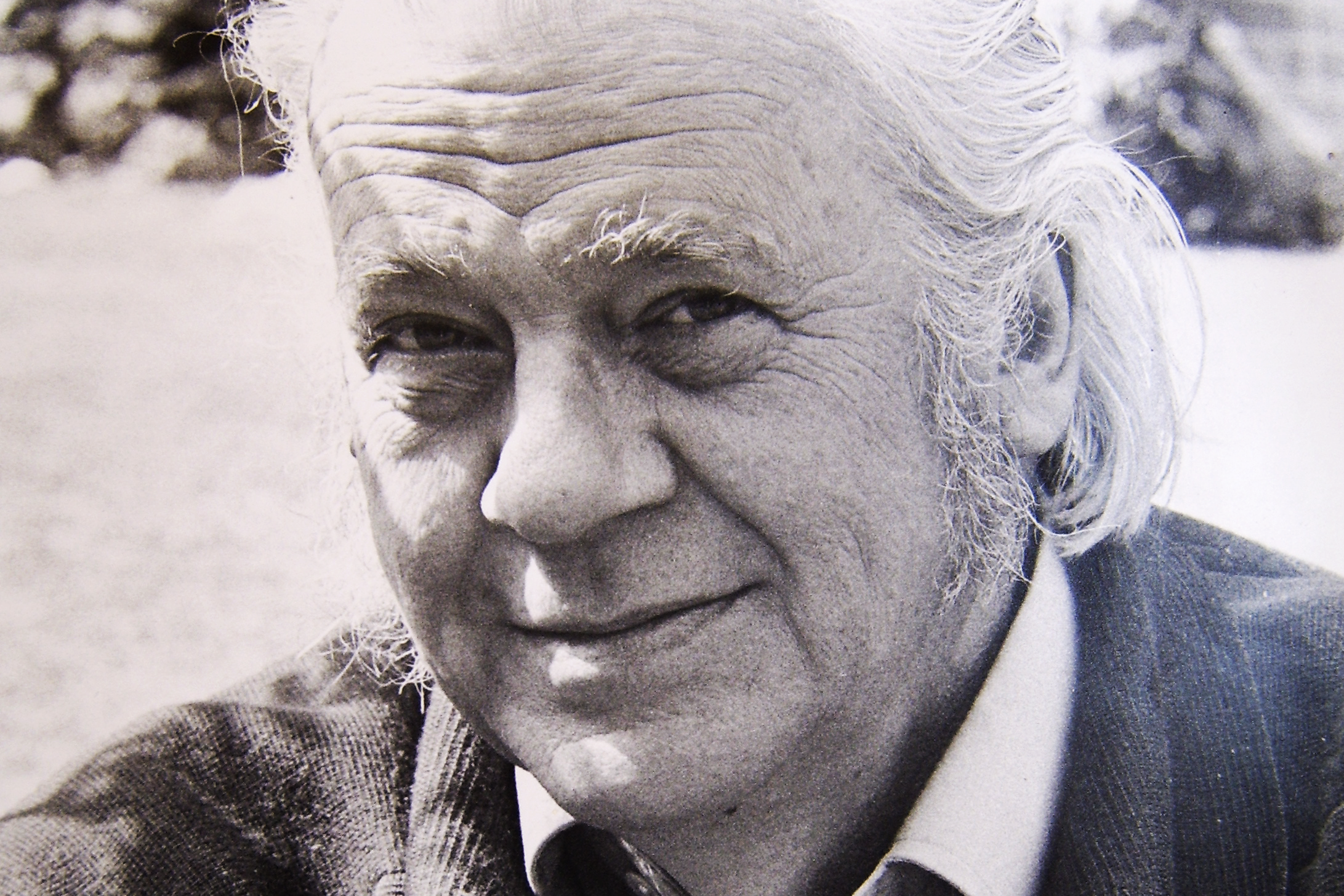
Schumacher (pictured) condemned “a view that counts as ‘real’ only inanimate matter and treats as ‘unreal’, ‘subjective’ and therefore scientifically non-existent the invisible dimensions of life, conscioussness and self-awareness”. [36]
Half a century ago, Schumacher would not have been thinking about AI, but that certainly comes to mind when he writes that “the lower level tends to produce a kind of mimicry or counterfeit of the higher, just as an animated puppet can at times be mistaken for a living person, or a two-dimensional picture can look like three-dimensional reality”. [37]
Our task is therefore to extract ourselves from the dungeon of the lower modern industrial world and rediscover the heights which human beings are capable of achieving.
Schumacher said we need to make full use of what he called our intellectual senses, adding: “Without them, we should be unable to recognise form, pattern, regularity, harmony, rhythm and meaning, not to mention life, consciousness and self-awareness”. [38]
We also have to start to think with our hearts rather than our heads. Southgate explains that for Schumacher we can receive “flashes of understanding” that “open ‘the eye of the heart’ and allow truth to enter the soul”. [39]
“The purpose is to remove the mind from the head, where it remains constantly occupied, and redirect it to the place where body and soul converge”. [40]

“Our path, in Schumacher’s eyes, is threefold. Firstly, we must study society in light of tradition with a view to procuring a ‘temporary’ happiness’ from the external confirmation that can be gleaned.
“Secondly, this information must be thoroughly filtered so that we retain the good and discard everything that is bad. This process has been described by the Swiss psychiatrist Carl Gustav Jung (1875-1961) [41] as ‘individuation’.
“Thirdly, Schumacher says, after completing the first two steps the individual must ‘die’ to himself in the sense that personal likes and dislikes – or what he describes as ‘egocentric preoccupations’ – are considered secondary.
“Instead of being directed from outside, by external influences, one becomes self-directed; this, the ultimate form of freedom is no different to being ‘God-directed'”. [42]

[1] E.F. Schumacher, Small is Beautiful: A Study of Economics As If People Mattered (London: Abacus, 1974), p. 40.
[2] Schumacher, Small is Beautiful, p. 203.
[3] Schumacher, Small is Beautiful, p. 246.
[4] https://orgrad.wordpress.com/a-z-of-thinkers/ernst-friedrich-schumacher/
[5] Paul Cudenec, ‘An A-Z of the modern mega-racket’, https://winteroak.org.uk/2026/09/04/an-a-z-of-the-modern-mega-racket/
[6] Schumacher, Small is Beautiful, p. 30.
[7] Schumacher, Small is Beautiful, pp. 10-11.
[8] https://orgrad.wordpress.com/a-z-of-thinkers/mohandas-gandhi
[9] https://orgrad.wordpress.com/a-z-of-thinkers/leopold-kohr
[10] https://orgrad.wordpress.com/a-z-of-thinkers/aldous-huxley/
[11] https://orgrad.wordpress.com/a-z-of-thinkers/ananda-coomaraswamy
[12] https://orgrad.wordpress.com/a-z-of-thinkers/rene-guenon/
[13] E.F. Schumacher, A Guide for the Perplexed (London: Jonathan Cape, 1977), p. 135.
[14] Schumacher, A Guide for the Perplexed, p. 67.
[15] Schumacher, A Guide for the Perplexed, p. 20.
[16] Schumacher, A Guide for the Perplexed, p. 43.
[17] Schumacher, A Guide for the Perplexed, p. 71.
[18] Schumacher, A Guide for the Perplexed, pp. 152-53.
[19] Paul Cudenec, ‘When is a “fascist” not a fascist?’, https://winteroak.org.uk/2026/10/16/when-is-a-fascist-not-a-fascist/
[20] Schumacher, A Guide for the Perplexed, p. 105, cit. Troy Southgate, The World According to Fritz: E.F. Schumacher and The Perennial Philosophy (Portugal: Black Front Press, 2025), p. 80.
[21] Southgate, p. 118.
[22] Southgate, pp. 9-10.
[23] Southgate, p. 10.
[24] Ibid.
[25] Paul Cudenec, ‘The Invisible College and the plan for our enslavement’, https://winteroak.org.uk/2025/08/11/the-invisible-college-and-the-plan-for-our-enslavement/
[26] Southgate, p. 11.
[27] Ibid.
[28] Ibid.
[29] Schumacher, A Guide for the Perplexed, p. 65, cit. Southgate, pp. 51-52.
[30] Southgate, pp. 52-53.
[31] Schumacher, A Guide for the Perplexed, p. 121, cit. Southgate pp. 93-94.
[32] Southgate, p. 94.
[33] Schumacher, A Guide for the Perplexed, p. 31, cit. Southgate, p. 23.
[34] Schumacher, A Guide for the Perplexed, p. 45, cit. Southgate, p. 37.
[35] Schumacher, A Guide for the Perplexed, p. 29.
[36] Schumacher, A Guide for the Perplexed, p. 34, cit. Southgate, p. 26.
[37] Schumacher, A Guide For the Perplexed, p. 34, cit. Southgate, p. 27.
[38] Schumacher, A Guide for the Perplexed, p. 50.
[39] Southgate, p. 47.
[40] Southgate, p. 67.
[41] https://orgrad.wordpress.com/a-z-of-thinkers/carl-jung
[42] Southgate, pp. 115-16.

