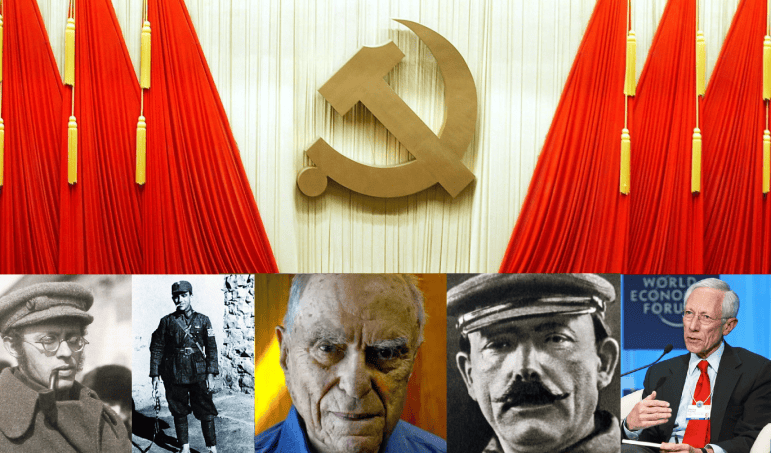
by Paul Cudenec, who reads the article here
The seizure of power by the communists in 1949 led to a brutal and murderous assault on Chinese life that was even worse than that experienced by Russians under the Bolsheviks.
In January 1958 Mao Zedong, the chairman of the Chinese Communist Party (CCP), launched the regime’s second five-year plan, known as the Great Leap Forward.
Says Wikipedia: “The purpose of the plan was to use heavy industry to expedite the production of raw materials such as steel as a supplement to economic growth, similar to the Soviet model and the defining factor behind Mao’s Chinese Marxist policies.
“Mao spent ten months touring the country in 1958 to gain support for the Great Leap Forward and inspect the progress that had already been made. What this entailed was the humiliation, public castigation and torture of all who questioned the leap”. [1]
This rapid industrial “growth” and “development”, with people being sucked from the countryside into the cities, was a disaster – millions died from the resulting famine.
Author Frank Dikötter puts the death toll from 1958 to 1962 at more than 45 million Chinese – of these, around 7% were tortured and killed by the government, 2% committed suicide and 5% died in Mao’s labour camps built to hold dissidents. [2]
He describes severe punishments for slight infractions, such as being buried alive for stealing a handful of grain or losing an ear and being branded for digging up a potato.
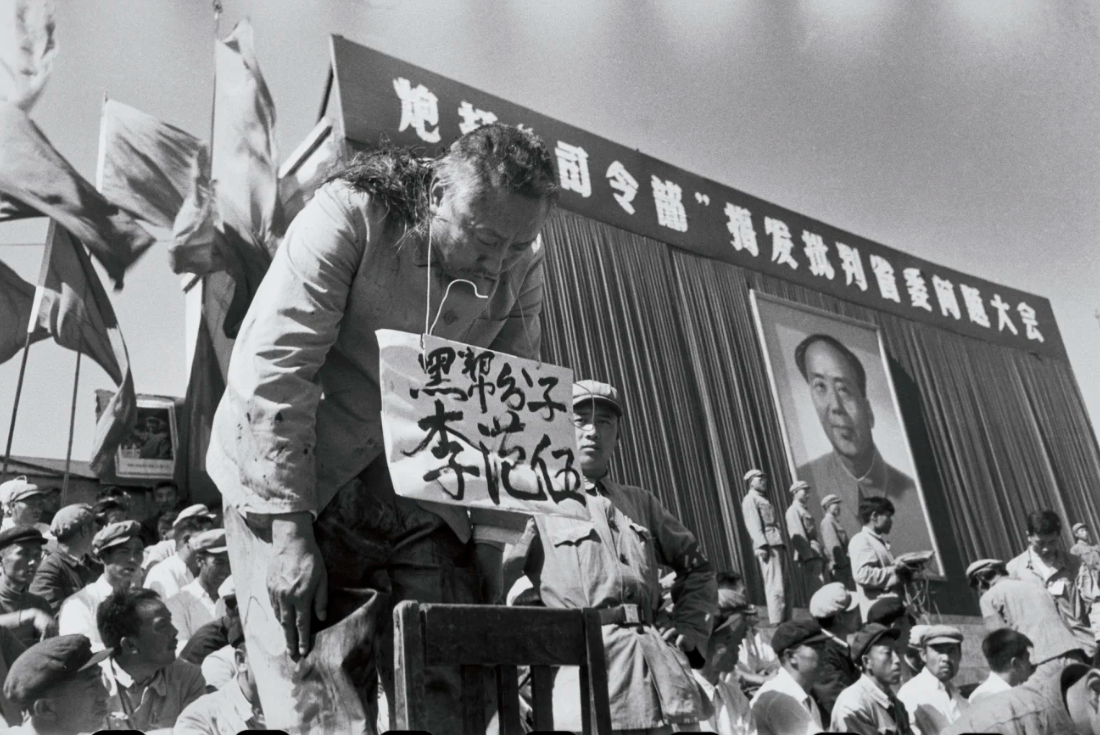
The so-called Cultural Revolution, which began in 1966, was an insanely cruel effort to impose “modernisation” and destroy all that was traditional.
Mao’s Red Guards sought to wipe out the “Four Olds” (old ideas, old culture, old customs, and old habits), often by desecrating historical artifacts and cultural and religious sites. Tens of millions of people were persecuted and sometimes massacred – up to 2 million died. [3]
I have previously explained how the Bolshevik, Fascist and Nazi regimes – which likewise combined rabid industrialism with authoritarian terror – were all controlled by the entity I call ZIM, the zio-imperialist mafia. [4] But who could have been behind the nightmarish communist tyranny that subsequently took hold of China?
Yitzhak Shichor of the University of Haifa and Hebrew University of Jerusalem sheds some light on the matter in a fascinating paper published in the International Journal of China Studies in 2020.
He writes: “Jews were deeply involved in Communist revolutions in Europe, and primarily in Russia, often in leading positions. This is understandable given their demographic location, extensive education and suffering over the years.
“However, how could we account for the fact that they also played a role in Communist revolutions in Asia, and especially in China? There were practically no Jewish communities to speak of and those few who lived there had been almost totally assimilated, and had no interest whatsoever in Chinese culture, history and politics.
“Still, Jews (who arrived out of China) not only took part in the revolution but had also helped igniting it and then stayed on or joined later”. [5]
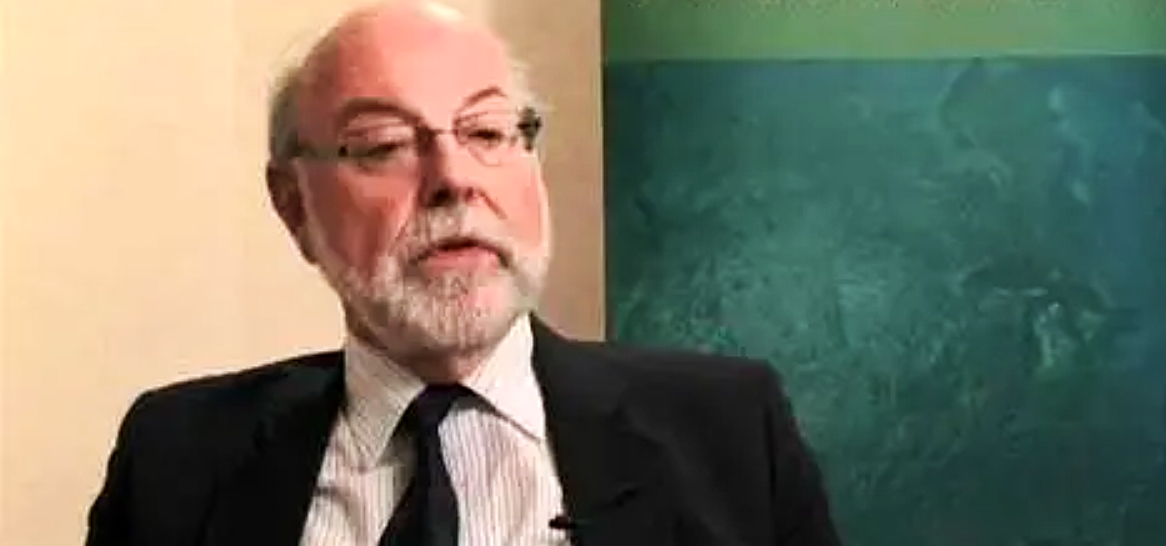
Shichor (pictured) says of these Jewish participants: “Their main value to the revolution was mainly writing, translation, communication and publication. Although they were all deeply committed to the Chinese Communist revolution, some of them were jailed – for years – and occasionally more than once. Nonetheless, they continued to believe in, and even to justify, the Chinese Communist Party”. [6]
Shichor explains that the Marxist brand of socialism, which reached China via Japan, was initially the least attractive to Chinese intellectuals.
“Considered too violent, the notions of ‘class struggle’ contradicted traditional Confucian values of harmonious and integrative society, and the thought that ‘workers’ represented the ‘universal’ and ‘revolutionary’ class, did not conform to pre-modern Chinese beliefs…
“Whatever socio-political opposition and ideological radicalism existed, they were articulated not by Marxist communism, but by anarchism. Mao Zedong, one of the founders and later leader of the Chinese Communist Party (CCP), regarded himself as anarchist up to the early 1920s”. [7]
But Marxism-Leninism soon came to the fore, thanks to the influence of the Bolsheviks, and Schichor reveals that “many of the chief Soviet and Comintern missionaries in China were Jewish”. [8]
He looks at the signficant role of Mikhail Borodin (1884-1951), born Mikhail Markovich Gruzenberg, saying that he is usually associated with the Nationalist Party in China (Guomindang, GMD), but that “his mission was ultimately and fundamentally to promote the CCP”. [9]
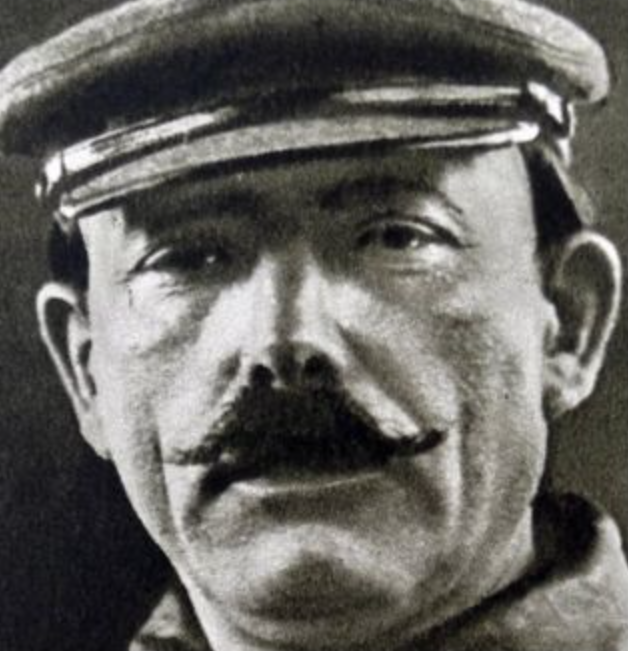
Borodin (pictured) was to adopt the usual communist approach of disassociating himself from any particular ethnic roots, but it is interesting to note that at the age of 16 he had joined the Bund (the General Jewish Workers’ Union), an organisation which placed great emphasis on Jewish identity. [10]
Adolph Abramovich Joffe (1883-1927), born in the Crimea to a Jewish-Karaite family and a participant in the Bolshevik revolution, was the Soviet ambassador to the official government in Beijing from 1922 to 1924 and “tried hard to convince Sun Yat-sen [the nationalist revolutionary prime minister] to trust Moscow”. [11]
Shichor writes: “While Marxism-Leninism had existed in parts of China as a theory, turning it into an organized activity began with Comintern missionaries, headed by Grigorii Naumovitch Voitinski [1893-1953], who dealt with setting up the CCP… the idea of forming a CCP had already circulated by that time, but no actions had been taken, before his arrival, aged 27, in April 1920″.
Voitinski – born Grigorii Naumovitch Zarkhin to a Jewish family in Nevel, Russia – is considered by historians to have exercised “an immense influence on the Chinese Communist Movement”, he adds. [12]
“In 1920 he became deputy director of the Comintern’s Far Eastern Bureau and left for China, where he met with Chen Duxiu and Li Dazhao, the future CCP leaders.
“Although Chen toyed with the Communist idea as early as 1918, he had also been attracted by other ideas (like federalism). It was only after he met Voitinski (pictured) that he became committed to Communism, not just in theory but also, and more important, in practice.
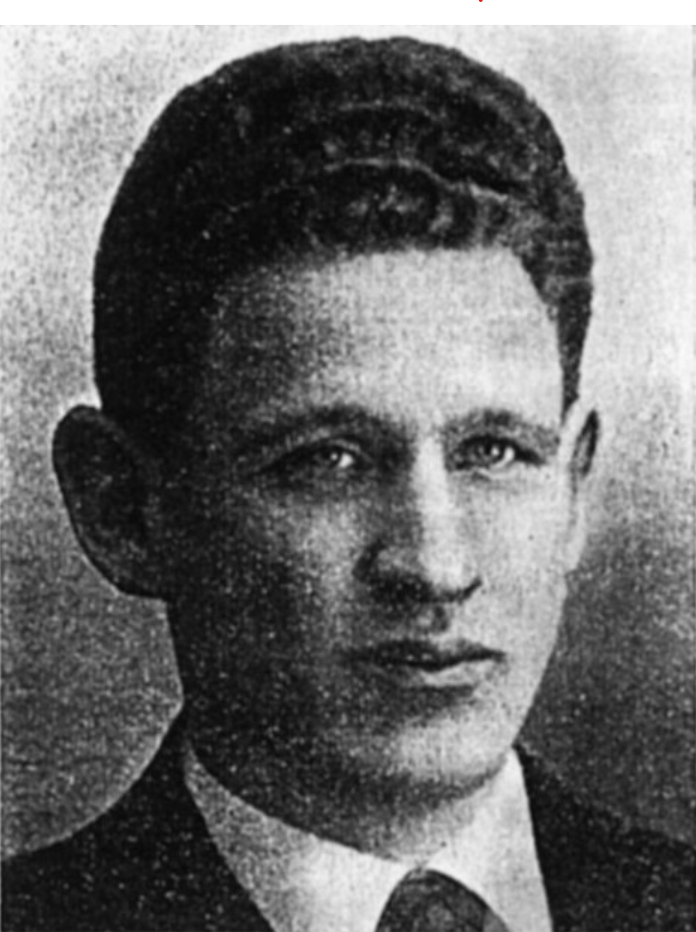
“It was following his meetings with Voitinski that the first communist cells had been formed – at least seven in different cities and provinces, before the CCP was organized. Voitinski’s promotion of Marxist study groups not only paved the ground for the establishment of Party cells but also for distributing Marxist-Leninist knowledge that Chinese intellectuals had been lacking”. [13]
“His impact was felt not only in the emergence of anti-US feelings among Chinese intellectuals, but also, and more significantly, in fighting anarchism and in its eventual demise”. [14]
A key role of industrialist and authoritarian communism has always been to crush all real opposition to the empire of greed whose agenda it secretly serves.
As an aside, some insights into Chinese anarchism can be found in an essay by Robert Scalpino and George T. Yu.
They argue: “Anarchism, whatever its utopian qualities for modern China, was in many respects also naturally Chinese. It was the other side of the Confucian, educative, centralized, authoritarian state. It was the scholar in contemplation and out of office, the peasant out of reach of his landlord, the wanderer beyond the outstretched hands of the state. Indeed, it was the imperishable goal of all men at all times – complete freedom for self realization within the limits of social justice, to the limits of one’s capacity”. [15]
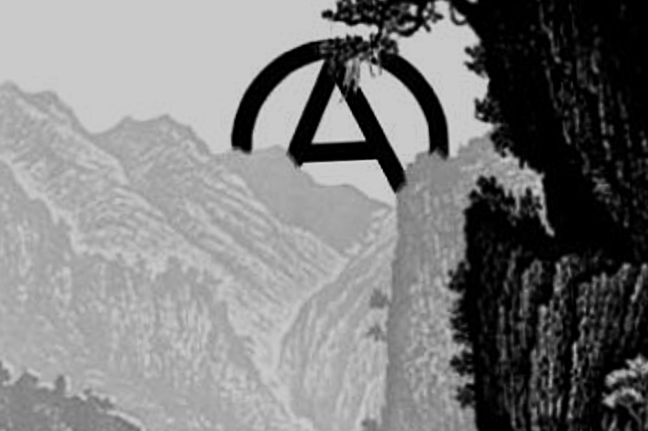
They cite a definition of anarchism that appeared in the movement’s journal Hsin Shih chi (‘The New Century’) in 1907: “The individual is the basic unit in society. Together with others, he forms a village, and with other villages, a country is formed. Society in turn is formed through the process of bringing all countries together.
“The proper society is that which permits free exchange between and among individuals, mutual aid, the common happiness and enjoyment of all, and the freedom from control by the force of a few. This is what Anarchism seeks to realize.
“The governments of today, however, are organized by the few, who in turn pass laws which are of benefit to the few. Thus the state is the destroyer of the proper society. In sum, what we seek is the destruction of the destroyer of proper society”. [16]
It is quite clear why those out to destroy “proper society” in favour of global “communist” tyranny would want to wipe out the alternative presented by anarchism.
The authors note: “Historically, Marxism was unable to make inroads into China until after the Russian Revolution of 1917 when Lenin’s followers, bankrolled by the Bolshevik government, began their attacks on Anarchists in Russia and neighboring countries…
“There is no better way to see the authoritarian elements in Communist theory than to read the Communist polemics directed against the Anarchist”.
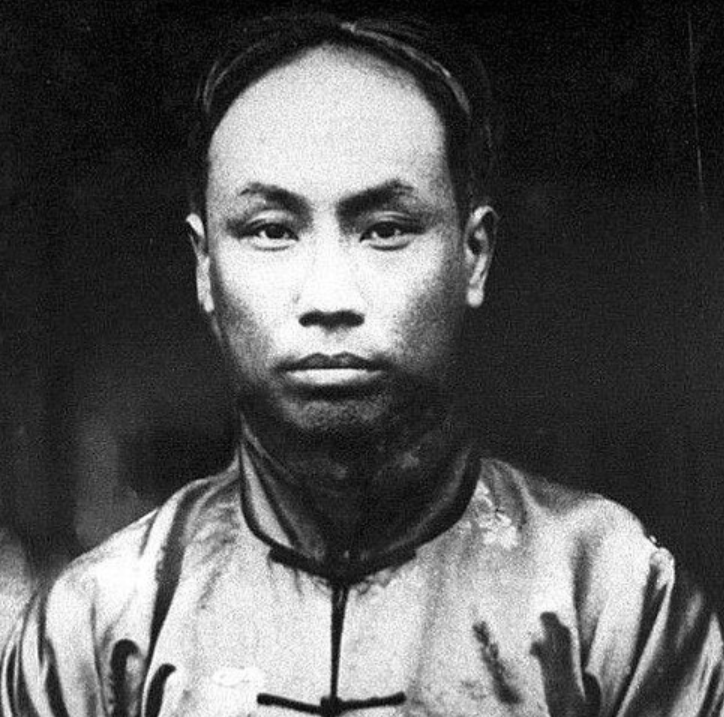
To this effect, they quote the aforementioned Chen (pictured), the leading spokesman for the Chinese communists. He described the Chinese people as corrupt and backward and said that, if they were to be saved, there had to be “strict interference” in economic and political matters, an “enlightened despotism”. The chief obstacle to this was the “lazy, wanton, illegal sort of free thought that forms a part of our people’s character”. [17]
Although, from my perspective, many Chinese anarchists at the time were worryingly enthusiastic about “progress” and “science”, Scalpino and Yu add: “Ch’en pursued another theme with vigor: Anarchism would have man return to primitivism. Economically, it would take him back to the era of handicraft industries. Politically, it would remove him to the days of tribalism”. [18]
Chinese revolutionaries were taken to the USSR to undergo Bolshevik brainwashing: in 1925, a first wave of some 340 Chinese students – both GMD and CCP – arrived in Moscow to attend the new Sun Yat-sen University.
The first rector of this institution was Karl Radek (1885-1939), pictured, who was born Karol Sobelsohn to a Jewish family in Lvov, Ukraine.
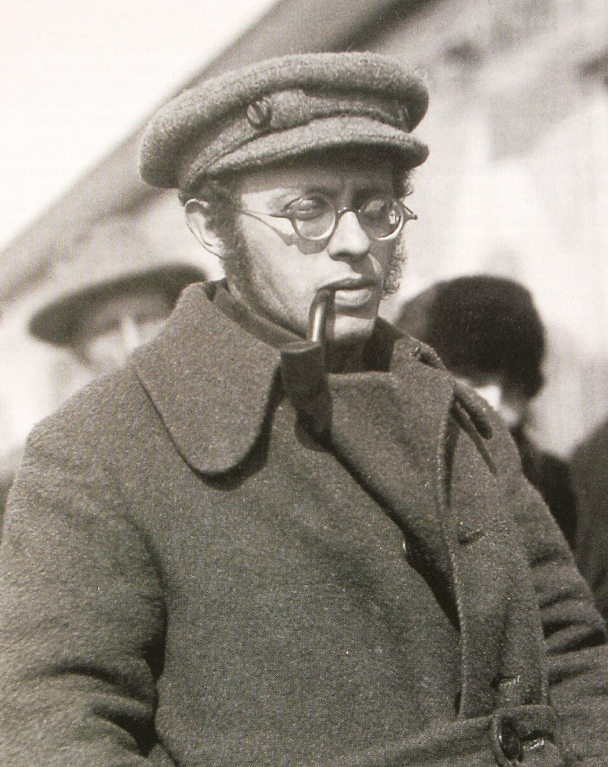
Shichor comments: “As the rector of Sun Yat-sen University, he must have influenced Chinese students – both left and right… One of his sentences, published in 1925 and related to the prospects of the CCP to seize power, could be regarded, in retrospect, as a prediction: in the course of its revolutionary struggles, the Chinese proletariat, together with the petty bourgeoisie, ‘will be forced for the time being to develop the economic power of the land in a capitalist fashion'”. [19]
Among the Jewish activists who associated themselves with Chinese communism were a number of Americans, we learn.
One of these was Sidney Rittenberg (1921-2019): “Influenced by his grandfather (on his mother’s side), who had been a Russian Jewish revolutionary, Rittenberg joined the American Communist Party in 1940 when he was eighteen”. [20]
“When he arrived in China in September 1945, the war was over… Usually, Chinese he met did not know what a Jew was. He began to meet Chinese communists and, as a soldier free to move, did them modest favours – including helping several underground activists to escape from the police”. [21]
“Sometime by late 1946 or early 1947, Rittenberg became a Party member, approved by the top communist leaders, including Mao, Liu Shaoqi, Zhou Enlai, Ren Bishi and Zhu De. He was the first US citizen to become a CCP member. His main role was to make information about communist victories – discounted and ignored outside China – available to the West”. [22]

Shichor relates that for a few months in 1967, Rittenberg (pictured) was the head of China’s Broadcast Administration (Radio Beijing), at a time “when the Cultural Revolution was turning nasty”.
His activity there apparently led to certain “antisemitic” critics complaining that “Rittenberg shows all the qualities we have long been accustomed to finding in the Jew”. [23]
Shichor relates that after his return to the USA, Rittenberg continued his mission – to “make China more accessible to the West” – but now spurning revolutionary talk for an economic message. [24]
Rittenberg was, it seems, interviewed on CBS network’s 60 Minutes more than any other individual and, in parallel, he founded a consulting firm for American companies doing business in China.
Says Shichor: “He offered his services, personal connections and familiarity with the Chinese system, turning into a full-fledge capitalist, making millions of dollars. As such, he personally embodied the combination post-Mao China has been attempting, a socialist market economy, capitalism under a communist system. This unprecedented innovation was introduced to China mainly by Jewish economists”. [25]
More on that shortly.
Another key Jewish figure in Chinese communism was Israel Epstein (1915-2005), pictured, whose worldview Shichor describes as “a combination of orthodox Judaism and European enlightened modernism”. [26]
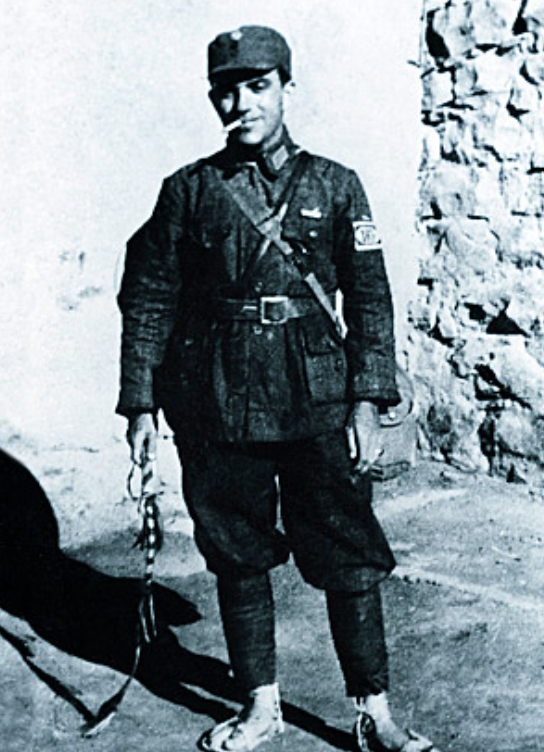
He became a naturalized Chinese citizen and was one of the founders of a pro-industry magazine called China Reconstructs, taking on the role of editor-in-chief in 1979.
Shichor adds: “In 1983, he was admitted to the CPPCC (Chinese People’s Political Consultative Conference). Half of its ten non-Chinese members at one time were Jewish. Jews played constructive roles in most of China’s media, directed to the outside world”. [27]
Yet another of these propagandists was Sidney Shapiro (1915-2014), who was born to a Jewish family in Brooklyn, New York.
“After graduating, he joined a prominent firm of Jewish Wall Street lawyers. He left New York in March 1947, not for any ideological motives or communist inclinations, but hoping to improve his Chinese while seeking a job as a business lawyer for an American firm in Beijing. Through his would-be Chinese wife, he approached the communists…
“Soon employed by the Bureau of Cultural Relations with Foreign Countries, Shapiro became a translator of books and pamphlets. He still insisted that he ‘wasn’t much of a Marxist’”. [28]
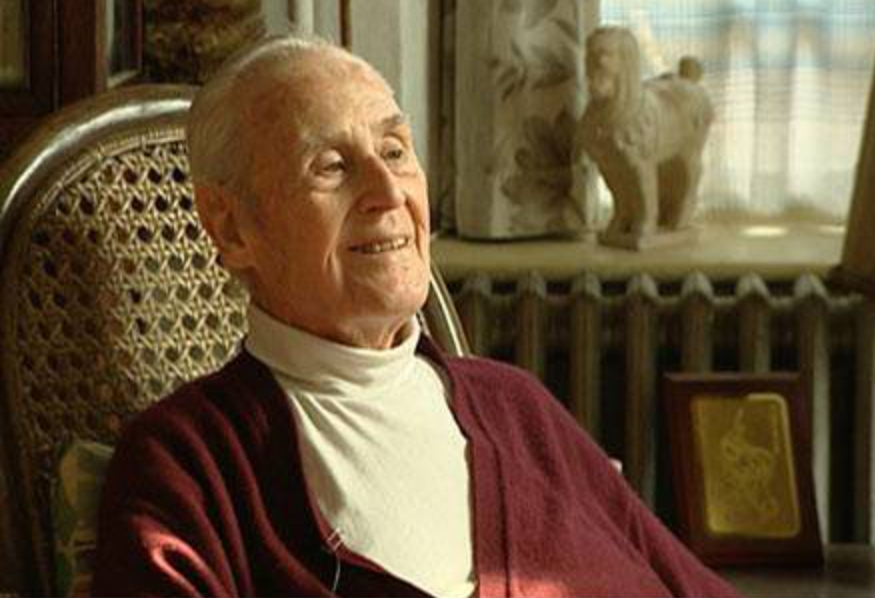
“In the early 1960s, Shapiro (pictured) finally decided that he had the kind of life he wanted most. He realized he ‘could do more useful and satisfying work in Peking than in New York’, and in 1963 applied for Chinese citizenship, which he received a few months later”. [29]
David Crook (1910-2000) was born in London, England, to a Jewish family of Eastern European origins.
He joined the Communist Party in 1936, went off to be part of the International Brigades in the Spanish Civil War and was promptly “recruited by the KGB”. Shichor reveals: “He began spying on leftist ‘elements’ who opposed the Soviet Union, and especially Stalin… In May 1938, on Soviet orders, he left for Shanghai… Officially, he was teaching literature at St. John’s University and later at Suzhou University. Unofficially he spied, especially on ‘Trotskyists'”. [30]
During the Second World War Crook (pictured below) joined the RAF and became an officer but was demoted because he was “suspected of spying for the Soviets” – correctly so, presumably! [31]
After the war he went to live in China and by the early 1950s had become deputy dean in the English Department of what was to become the Beijing Foreign Languages Institute.
Shichor explains: “Crook’s teaching concentrated on training interpreters and translators who would escort foreign visitors, rather than ‘wasting’ time on teaching literature he considered ‘impractical’ at best, and ‘intellectual’ at worst. Many of his thousands of students ‘reached the highest ranks in the foreign ministry and in academia'”. [32]
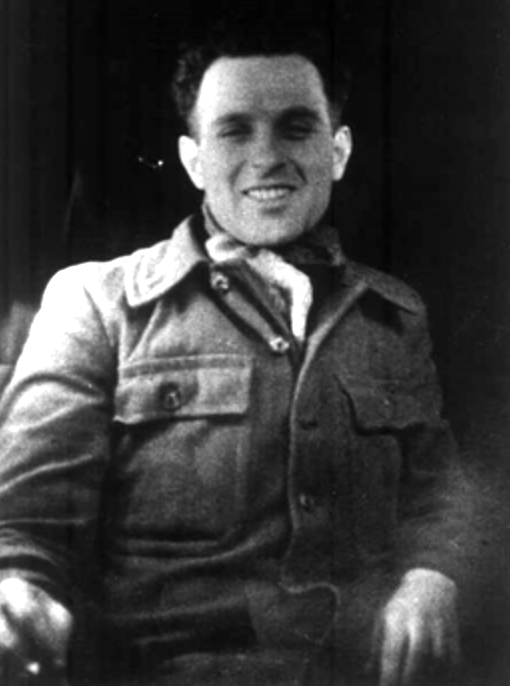
Crook’s propagandistic activities in the 1970s included a three-month-tour in the world outside the communist state “where he spoke in favour of the Cultural Revolution and China”. [33]
A second “British Jew who became full-fledged pro-Chinese spokesman”, as Shichor puts it, was Michael Shapiro (1910-1986).
I see that he was actually born in Ukraine, but his family settled in the East End of London and he gained British nationality in 1931. He joined the Young Communist League in 1931 and the Communist Party of Great Britain in 1934. [34]
Shichor says: “In 1949, or 1950, he left for China, reportedly ‘at the invitation of the Chinese Communist Party Central Committee, and on the assignment of the British Communist Party’ and was attached to the China Information Bureau”. [35]
“Michael Shapiro (pictured) never returned to the UK. Until his death in 1986, a total of 36 years, he worked at Xinhua News Agency and Foreign Languages Press, copy-editing English commentaries for the Department of Home News for Overseas Service, as well as translating the works of Mao Zedong and Liu Shaoqi. This was the Western ‘foreign experts” – many of them Jewish – main mission, as demonstrated in the following episode.
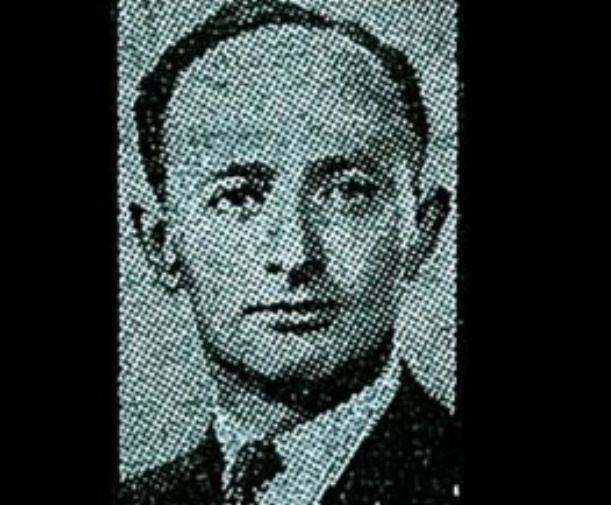
“In late 1959, the CCP Central Committee decided to form a team to translate a fourth volume of Mao’s Selected Works into English, and to revise the outdated English translation of the first three volumes, issued by the mid-1950s.
“Work began in early 1960 by a team of fourteen, of which nine were Chinese (Oxford-educated scholars, Foreign Ministry, Foreign Languages Press and Foreign Languages Institute officials) and five foreigners: Sydney Rittenberg, Frank Coe, Israel Epstein, Sol Adler, and Michael Shapiro – all Jewish”. [36]
But Jewish influence on communist China was not merely cultural, as Shichor proudly relates.
In the late 1970s, as soon as Beijing’s post-Mao leaders decided it was time to undertake wide-ranging economic reform (which some had in mind since the early 1950s), discussions were held with leading foreign economic experts, invited to China. Intentionally, or not, most of them were Jewish. Historically, Jews were usually associated with money (capital), for better or for worse. Skilled in commerce and banking, educated, urban yet highly mobile, and with worldwide family connections – Jews represented modernity, and a most significant driving force behind capitalist growth and development. Marx himself specifically equated capitalism with Judaism. Jews also excelled in research: 40 percent of all Nobel Prize winners in economics and 51 percent of all US economics Nobel Prize winners were Jewish. Some of them helped China to become the second – perhaps the leading – world economic power. [37]
The Jewish “experts” invited to red China in 1979 included the economist Milton Friedman (1912-2006), who accepted and made the trip. [38]
Shichor adds: “Another delegation visited China in 1979. Headed by the University of Pennsylvania Profesor Lawrence Klein (who won the 1980 economics Nobel Prize), it included professor Irma Adelman, [of] the Department of Agricultural and Resource Economics, the Graduate School of the University of California, Berkeley; and Kenneth Arrow of Harvard University (who had won the Nobel Prize in 1972) – all Jewish”. [39]
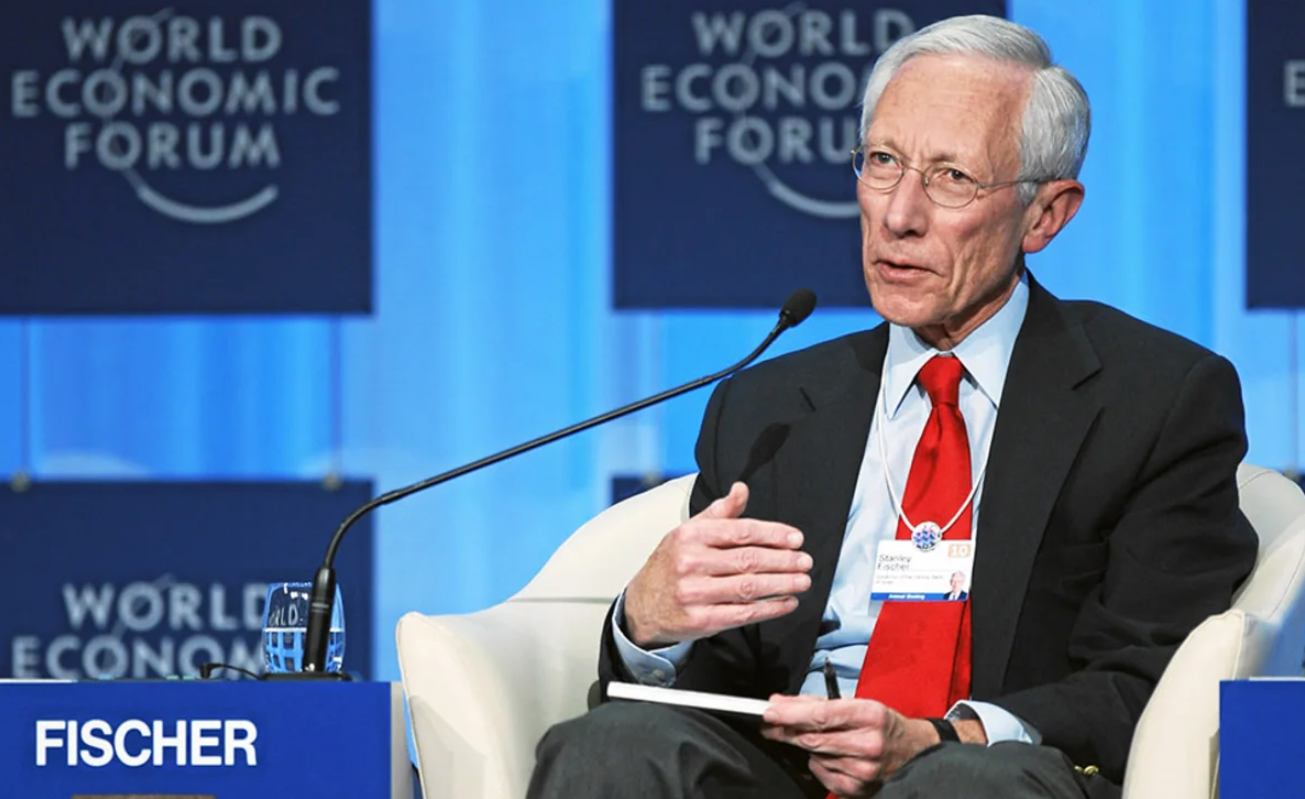
Then in November 1988 Chinese prime minister Zhao Ziyang met and sought advice from the American-Israeli Stanley Fischer (1943-2025), who had earlier that year become chief economist of the World Bank. [40]
Fischer went on to be deputy managing director of the International Monetary Fund, governor of the Bank of Israel and vice chair of the US Federal Reserve. Oh, and he was also an executive at Citigroup, a senior advisor at BlackRock, a “Distinguished Fellow” of the Council on Foreign Relations and a member of the Bilderberg Group. [41]
Are there really still people out there who think that all these global inter-connections are coincidental and that to suggest otherwise is to spread “anti-semitic conspiracy theories”?

Further reading:
BRICS in the wall of global greed
China is globalist
China and the same old global mafia
China and Israel’s belt and road to tyranny
China: From real Tao to Mao, and then to multipolar fake Tao
China, Hong Kong and the global bankers
[1] https://en.wikipedia.org/wiki/Mass_killings_under_communist_states#China
[2] Ibid.
[3] https://en.wikipedia.org/wiki/Cultural_Revolution
[4] Paul Cudenec, The False Red Flag,
https://winteroak.org.uk/wp-content/uploads/2024/03/the-false-red-flag–1.pdf
Paul Cudenec, ‘Benito Mussolini and the New World Order’,
https://winteroak.org.uk/2026/02/05/benito-mussolini-and-the-new-world-order/
Paul Cudenec, ‘Adolf Hitler and the zio-imperialist mafia’, https://winteroak.org.uk/2025/05/08/adolf-hitler-and-the-zio-imperialist-mafia/
[5] Yitzhak Shichor, ‘Combining Contradictions: Jewish Contributions to the Chinese Revolution’, International Journal of China Studies
Jewish Contributions to the Chinese Revolution Vol. 11, No. 2, December 2020, p. 183, https://ics.um.edu.my/img/files/IJCS-112-1Yitzhak-for-website.pdf Thanks very much to the reader who pointed me to this paper!
[6] Ibid.
[7] Shichor, pp. 184-85.
[8] Shichor, p. 186.
[9] Shichor, p. 187.
[10] Ibid.
[11] Shichor, p. 188.
[12] Shichor, p. 189.
[13] Ibid.
[14] Ibid.
[15] Robert Scalpino and George T. Yu, ‘The Chinese anarchist movement’,
https://libcom.org/article/chinese-anarchist-movement-robert-scalpino-and-george-t-yu
[16] Hsin Shih-chi, No.8, August 10, 1907, pp. 2-3, cit. Scalpino and Yu.
[17] See Ch’en Tu-hsiu, ‘Chinese Style Anarchism’, Hsin Ch’ing-nien, Vol.9, No. 1, May 1, 1921, pp. 5-6, cit. Scalpino and Yu.
[18] ‘Ch’en Tu-hsiu’s Third Reply to Ou Sheng-pai’, op. cit., pp. 140-41, cit. Scalpino and Yu.
[19] Shichor, p. 190.
[20] Shichor, p. 191.
[21] Ibid.
[22] Shichor, p. 192.
[23] Ibid.
[24] Ibid.
[25] Ibid.
[26] Shichor, p. 193.
[27] Ibid.
[28] Shichor, p. 194.
[29] Shichor, p. 195.
[30] Ibid.
[31] Ibid.
[32] Shichor, p. 196.
[33] Shicor, p. 197.
[34] https://en.wikipedia.org/wiki/Michael_Shapiro_(journalist)
[35] Shichor, p. 198.
[36] Shicor, pp. 198-99.
[37] Shicor, p. 200.
[38] Ibid.
[39] Shichor, p. 201.
[40] Ibid.
[41] https://en.wikipedia.org/wiki/Stanley_Fischer

