
Number 92
- Stealing our planet, freedom and future
- Blair, Berlusconi and false flag terror
- Aaron Bushnell is dead! Long live Aaron Bushnell!
- Otto Gross: an organic radical inspiration
- Acorninfo
1. Stealing our planet, freedom and future

Important members of governments and institutions are secretly preselected and groomed (e.g., as WEF “Young Global Leaders”), and then elected or appointed, to work for the aims of the power elite.
This way, nations become pawns on the global chessboard. In the early 1990’s, three men took part in a US training course for global leaders: Nicolas Sarkozy, Gordon Brown and Jan Peter Balkenende. Fifteen years later, all three were (s)elected as prime minister in their respective countries: France, the UK and Holland.
The common people are “mind controlled” to believe the official narrative (also called “manufactured consent”, a term by Noam Chomsky; also called “perception management”).
The conspiratorial analysis of history is indeed more complicated, as it factors in the crucial role of hidden powers, which covertly direct the global puppet theater, using countries and institutions as their Punches and Judies, or chess pieces.
Cover-ups are a standard part of the operations of these powers, including the destruction of documents and other evidence. During the serious food scarcities in Europa, right after WW1, that happened on a massive scale, when Glafia agent Herbert Hoover (later rewarded with the 31st presidency of the United States) removed many shiploads of documents from all European countries, including Germany and Russia, in exchange for food (all these countries were starving). This document harvest ended up under lock and key in the newly created Hoover Institute at Stanford University, USA.
Were critical documents pertaining the true origins of WW1 destroyed in the process? Nobody knows. Likewise, millions of WW1 documents are still classified in the UK, and gradually disappearing, it seems. To protect whom, more than a century after the war? The fact that no official historian has ever protested such bizarre measures is self-explanatory: an independent analysis of these hidden documents would probably contradict the official version of history.
Is social science any different?
The received history is thoroughly contaminated by the ruling oligarchs, see Carroll Quigley’s Tragedy and Hope. Russia’s top-intellectual, Andrey Fursov, states that our scientific institutions are similarly shackled by a global Mafia:
“I would like to remind you about the research by Andy Coghlan and Debora MacKenzie published in October 2011 on the site of the New Scientist. This group of scholars showed that 147 companies, 1% of all companies, controlled 40% of the world economy. This is very indicative. This means that the modern economy, whose basic unit of analysis is the market, conceals more than it shows. Politics and the nation-state are fading away, and this means that political science, with its basic units of analysis— politics and the state — not only cannot adequately conceptualize, but cannot even merely depict real power relations, especially on the global level.
“Secondly, there is another serious problem with political science. Real power is usually secret or semi-secret, shadow power. Conventional political science has neither concepts nor methods, to analyse this type of power. The more democratic the facade of the western society was becoming in the 19th and 20th centuries, the less real power it had. This power was channelled into closed clubs, super-national structures, etc. What I am saying is banal and trivial, but political science in its present condition cannot analyse real power relations.
“So, a new social science is needed, studying the real world, and not that which professed scholarship defines as real. A new social science with new disciplines, new concepts, a social force which will be able to create such a new type of scholarship, has the best chance to win in the 21st Century”.

In the meantime, power and capital have been concentrated even more (see documentary Monopoly by Tim Gielen), but Fursov’s proposal for a “new social science” has never been implemented in any institution.
Yet far before Fursov proposed it, several brave professional and amateur historians have been using his method. They were often retired, because still employed researchers who dare to touch “the third rail” often find their careers suffering or blocked (“career suicide”): “You may rock the boat, but not the ocean.”
The analysis of conspiracies is a combination of historical research (mainly based on primary evidence: documents) and detective work. To solve a crime, detectives normally don’t concentrate on documents – as there often are none – but on secondary or circumstantial evidence: Cui bono? (Who benefits?); the money trail (“follow the money”); and motive, means and opportunity. These analysts are also alert on cover-ups, pitfalls, falsifications, and false tracks, including “false flags attacks”.
In my initial research on centuries long conspiracies and serial crimes, I mostly leaned on “controversial” or “unconventional” authors. Authors whose work, as explained above, is almost always heavily suppressed by the mainstream media (Wikipedia of course included) or classified as “looney conspiracy theories” or “racist” or “anti-Semitic” (see also Disclaimers). Yet in the last years of my 10-year study, I discovered several highly respected mainstream historians who basically supported the same thesis, although in very different terms, which results in a “convergence of evidence” (eight of them are mentioned in B10).
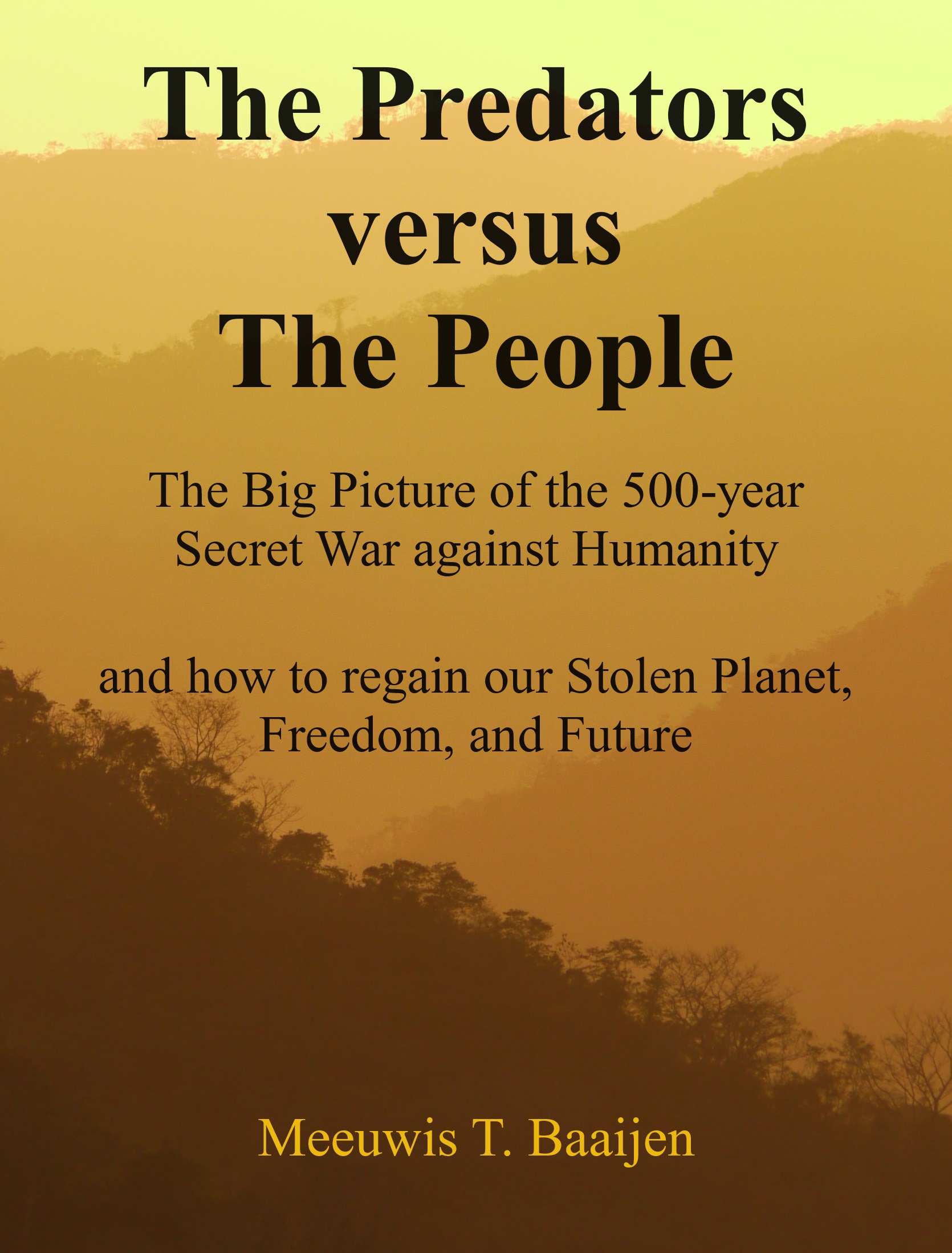
The resulting book is a counter-narrative to the official lies as told in Plato’s Cave. It is based on thousands of books and articles, interviews, and documentaries, analyzed during 10 years of more than full-time research. Its sources are high quality, but as an old Soviet joke goes: “The future is certain; only the past is unpredictable”. The past can never be replayed, but patterns can be discerned. And ideally, a solid, coherent, and logical framework can be formulated in which past and present event can find a place. In this case, that’s The Predators theory of history, see A8.1. It’s the antithesis of Marx’ class struggle, and of capitalism’s fake “free trade and competition” theory, and also of the WEF’s “Great Narrative”.
When I started this long and winding journey into the discovery of history, I had not the slightest idea where I would end up, and that so many nightmares would be mine. I simply went where the evidence was leading me. My only interest was finding out the truth on how the world really works. And especially, how 9/11 (the event that had triggered me) could have happened.
As a trained veterinarian, I had learned to systematically observe the symptoms of a sick animal or herd, to then examine it methodically. With the preliminary results thus obtained, the veterinarian or medical professional doesn’t jump to a diagnosis, but first formulates a list of hypotheses on the possible cause of the ailment: the differential diagnosis. To sort out the final diagnosis, additional examinations are often needed.
My differential diagnosis
My initial differential diagnosis of global history had many hypotheses: Illuminati, Skull & Bones, the Vatican, the Jesuits, the Jews, Phoenicians or Canaanites, Nazis, Freemasons, banksters, but David Icke’s aliens and shape shifting reptilians didn’t make it to my list. Yet as Poirot concluded in Murder on the Orient Express, “there were too many clues”. As it turned out, Lord Acton had formulated the correct diagnosis already 125 years ago:
“The issue which has swept down the centuries and which will have to be fought sooner or later is the people versus the banks.”
Acton was seen as “one of the most learned people of his age, unmatched for the breadth, depth, and humanity of his knowledge,” and “one of the most articulate defenders of religious and political freedom” in the 19th century. In brief, it’s the globalist banker dynasties plotting to steal our planet, freedom, and future, which they do by proxy, or in other words, by deceit. The others on the list above are just that, their – always exchangeable – proxies.
The intentions of these bankers are the same as those of the Greeks, Romans and Babylonians who established enslaving empires by blunt force. But their methods are far more sophisticated: by proxy, totally stealthy, and now combined with advanced technology and a 100% coverage of the globe. Their proxies close to us are people we trust, who behave and speak and look and smile and dress like us, because we elected or appointed them in our “democracies”.
Very clever indeed!
Taken from the Introduction to the new downloadable book The Predators versus The People, by Meeuwis T. Baaijen.
2. Blair, Berlusconi and false flag terror
by Paul Cudenec
I have been going on for years about Gladio, the NATO-organised terrorist network behind a glut of false flag attacks in the second half of the last century, a forerunner to the false flag spectacles we have seen more recently.
So I was intrigued to read, via Kit Klarenberg, that mainstream Italian newspaper La Repubblica has just published an interview with Roberto Jucci, veteran “general of top secret missions”, in which he talks about its activities.
The paper seems to focus on the role of US “centers of power” in the murder of “left-leaning statesman” Aldo Moro.
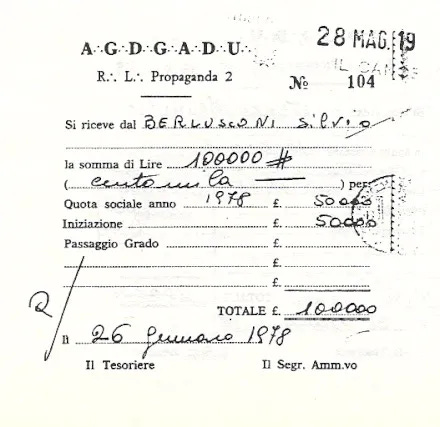
But also notable is the reminder that they worked “in conjunction with notorious Masonic lodge P2” of which one of the highest-profile members was the late politician and media tycoon Silvio Berlusconi.
Berlusconi, as The Independent reports, was “involved in dozens of court cases on charges including money laundering, mafia collusion and underage prostitution”.
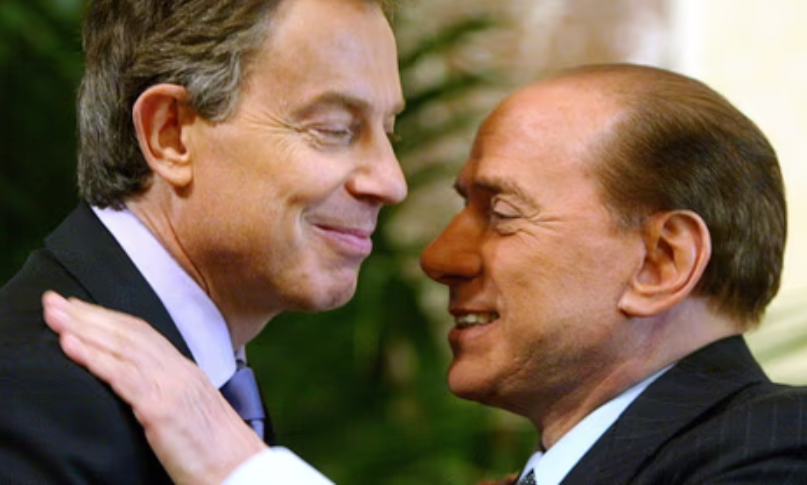
Researchers into nefarious goings-on have long shown an interest in the links between Berlusconi and former British Prime Minister Tony Blair, so close to the Rothschild gang.
And The Independent’s piece notes that Blair and his wife Cherie, who were known for frequently holidaying in Tuscany, Italy, were entertained by Berlusconi in 2004 at his luxury villa in Sardinia.
“The Italian leader put on a £50,000 firework display to welcome the Blairs, which culminated in rockets spelling out ‘Viva Tony’ in the Mediterranean sky.
“In an interview with an Italian magazine a few years later, Cherie Blair said she ‘never had such a night as the one we spent with [Berlusconi] in Sardinia’.
“Downing Street defended the meeting at the time, claiming Mr Blair and Mr Berlusconi were discussing the Iraq War, as well as other business deals”.

Blair and Berlusconi were so chummy that Sir Ivor Roberts, former British ambassador in Italy, went so far as to describe the relationship between the two men as a “bromance”.
He wrote: “The last time the two met as prime ministers of their respective countries was in Italy, and I had a ringside seat as British ambassador in Rome. After introducing his cabinet to Blair, Berlusconi cut the desultory conversation of EU politics off and declared: ‘Tony, I love you so much that if you were a woman I would propose to you’.
“Blair took this unusual gambit in his stride and without a pause replied: ‘And, Silvio, if you were as rich as you are, I would accept!’.”
By 2002, the UK state was already so worried that Blair was being seen to be too close to Berlusconi that it manipulated media coverage to play down the link, as this 2023 Guardian report explains.
After Berlusconi’s death last year, Blair predictably sung his praises: “Silvio was a larger-than-life figure. I know he was controversial for many but for me he was a leader whom I found capable, shrewd and, most important, true to his word”.
Ex-ambassador Roberts says that, given that they were supposedly at different ends of the fake left-right political “spectrum”, the close relationship between Blair and Berlusconi was “one of the mysteries of European politics”.
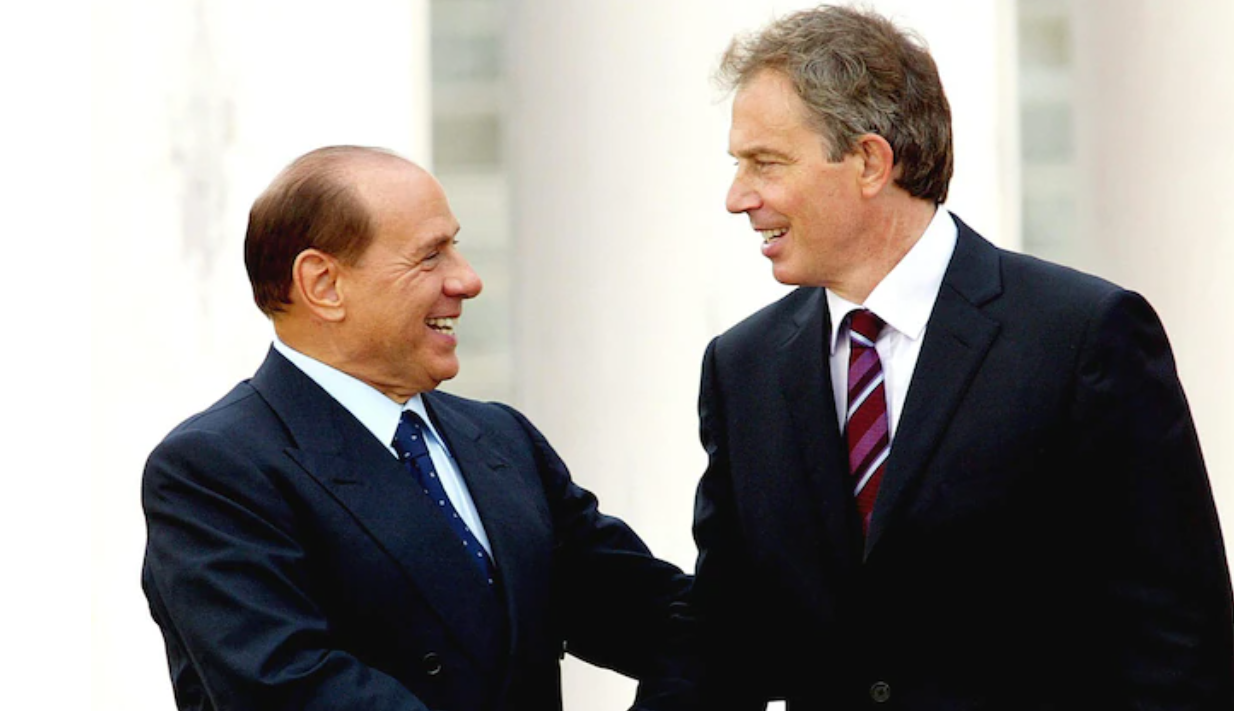
But anyone aware of their roles in the corrupt global criminocracy will hardly find their closeness surprising.
Thinking back to Gladio, P2 and false-flag terrorism, it is interesting to recall that Blair was PM at the time of the 1999 London Nail Bombings, took the UK into US-led wars in Afghanistan and Iraq following 9/11 and was still Prime Minister in 2005 when London suffered the notorious 7/7 terror attack, which I discussed in a recent article.
All just coincidence, no doubt!
3. Aaron Bushnell is dead! Long live Aaron Bushnell!
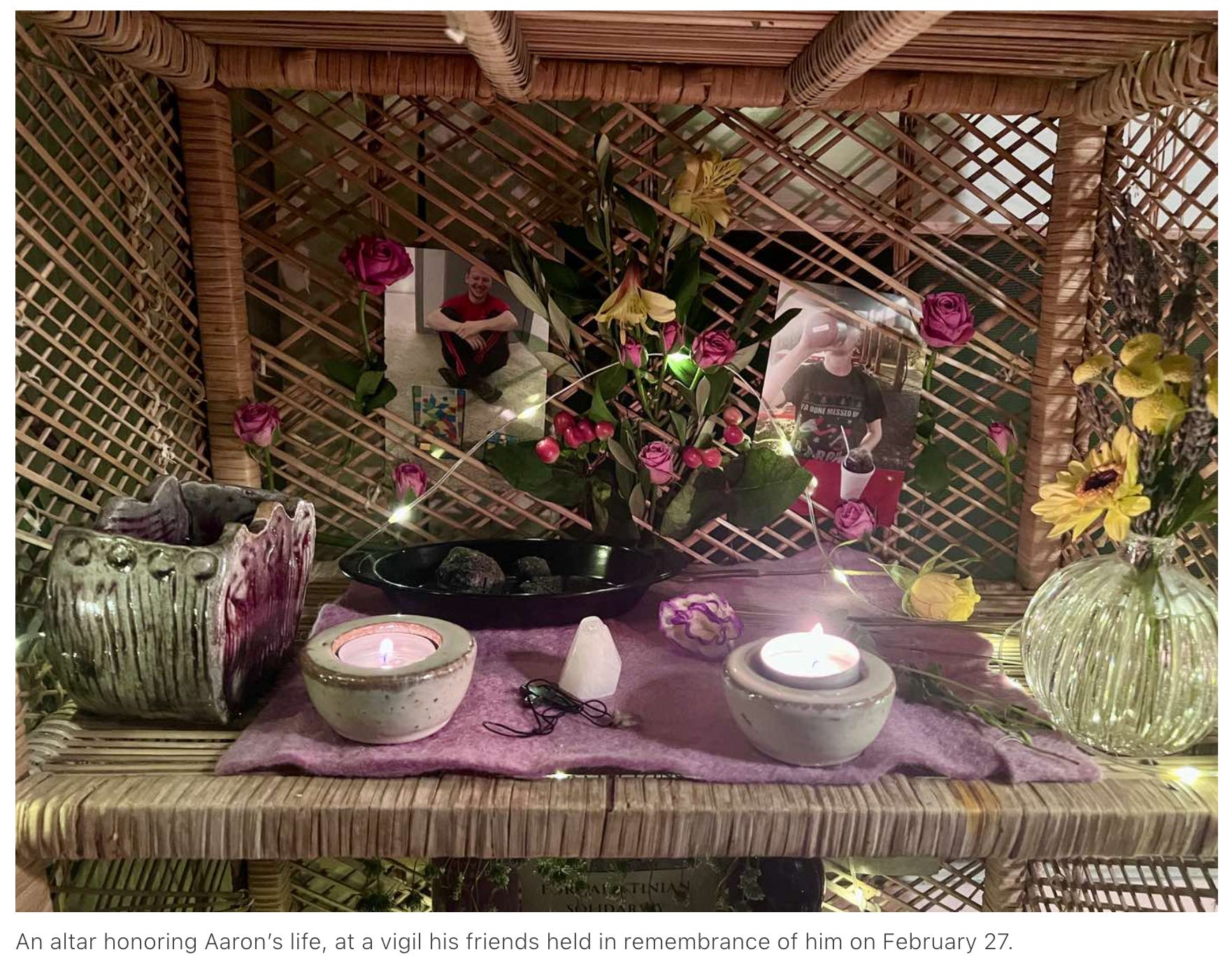
“I am an anarchist, which means I believe in the abolition of all hierarchical power structures, especially capitalism and the state… I view the work we do as fighting back in the class war which the capitalist class wages on the rest of humanity”. – Aaron Bushnell
Before burning himself to death on February 25th, Aaron Bushnell sent an email to the CrimethInc. Ex-Workers Collective.
It read:
Today, I am planning to engage in an extreme act of protest against the genocide of the Palestinian people. The below links should take you to a livestream and recorded footage of the event, which will be highly disturbing. I ask that you make sure that the footage is preserved and reported on.
Their reaction was disappointing, to say the least. Instead of choosing to honour his dying wish, they instead chose to pathologize his chosen form of protest, attributing it to his Christian upbringing and suggesting that his deep moral conviction was an unfortunate result of childhood brainwashing.
Now, I must confess – if a friend told me that they were planning to take their own life to make a point, I would almost certainly try to talk them out of it. But Aaron’s final act was a clearly premeditated expression of his desire for justice, and as such, I cannot help but respect it. However one feels about martyrdom, Aaron Bushnell was a martyr.
He was also an anarchist, which means that he is an anarchist martyr. No one coaxed or cajoled or coerced him into doing something that he didn’t want to do. He clearly believed that the best thing that he could possibly do to express his righteous rage at the Israeli genocide in Gaza was to make the ultimate sacrifice, and that is what he did.
One of the core precepts of anarchism is bodily autonomy, and that includes the right to end one’s own life. Furthermore, if the purpose of political protest is to make a point that will not be ignored, he succeeded.
His death has already started a conversation amongst anarchists about martyrdom, and this conversation will surely continue for some time. There was something undeniably powerful in Aaron’s dying act, and it struck a chord with many people.
It was an act of protest, but it was somehow also more than an act of protest. Was it performance art? Propaganda of the deed? Proof of something almost incomprehensible to many modern people?
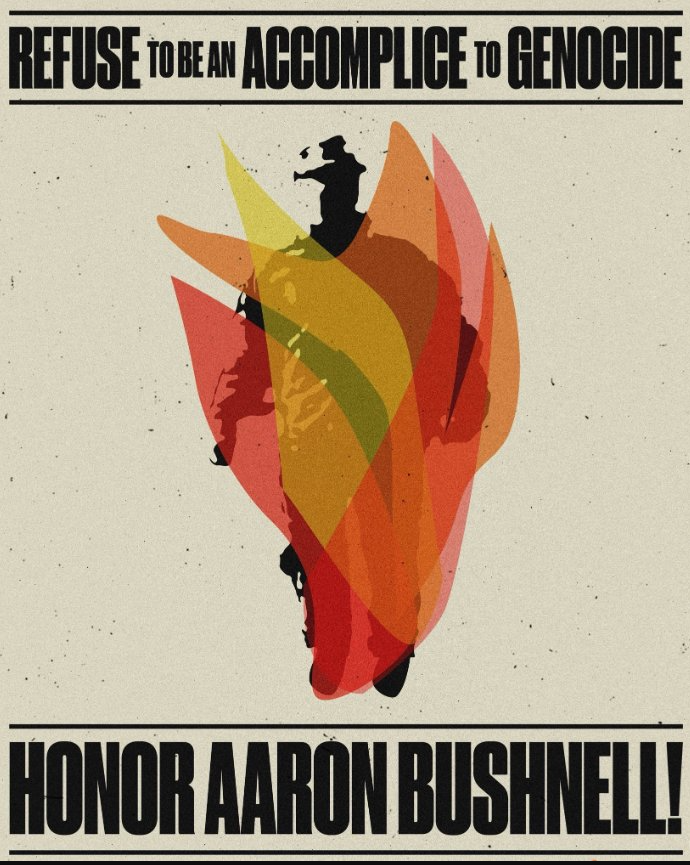
It was a symbolic act whose meaning evades glib interpretation, because it speaks to the presence of something that Western Civilization is now mostly devoid of – profound moral conviction, accompanied by almost unimaginable courage.
I will also point out that Aaron Bushnell’s symbolic act was particularly effective. Not only did was it a shot heard around the world, it has also started a conversation in anarchist circles about suicide.
Although many anarchist men have taken their lives in recent years, their deaths have not provoked much soul-searching. Aaron’s death has.
If anyone reading this finds themselves considering a similarly extreme form of protest, I would encourage you to ask yourself what the best and most strategic way to give your life to the movement might be.
For most of us, that will involve living for our beliefs, not deliberately dying for them. That said, without some people being willing to give their lives for what they believe in, we don’t stand a chance against the forces arrayed against us.
Aaron was showing what it will take to win, and it’s not pretty. On a certain level, however, it is beautiful.
I’ll leave you with Aaron’s last will and testament:
“I wish for my remains to be cremated. I do not wish for my ashes to be scattered or my remains to be buried as my body does not belong anywhere in this world. If a time comes when Palestinians regain control of their land, and if the people native to the land would be open to the possibility, I would love for my ashes to be scattered in a free Palestine.”
P.S. It is worth noting that the Crimethinc collective has recently invited people to submit critiques of their work. This appears to indicate that some kind of collective soul-searching is occurring within their collective, and I encourage people to take the time to share your thoughts with these once-mighty torch-bearers of the anarchist tradition.
4. Otto Gross: an organic radical inspiration
The latest in our series of profiles from the orgrad website.
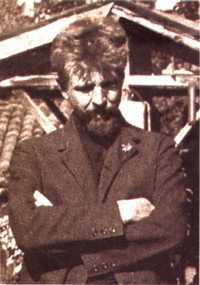
“Human nature as it is conceived and inborn in everyone strives towards the two great values of freedom and relationship”
Otto Gross (1877-1920) was a psychoanalyst whose innovative theories provided the field with a revolutionary anarchist dimension.
He argued that innate principles within the human mind, such as those which allow mutual aid and co-operation, are repressed by the external influence of contemporary society.
The psychoanalyst’s work of overcoming repression and releasing this hidden human potential could therefore be applied on a social level as well as an individual one.
Sigmund Freud wrote that “Gross is a highly intelligent man” (1) and Carl Jung told Freud that Gross “often seemed like my twin brother”. (2)
Gross mixed with artists and writers from the German expressionist movement, (3) was friends with Franz Kafka, with whom, at one point, he intended editing a journal, (4) and influenced Karl Jaspers, (5) Robert Musil, (6) and D.H. Lawrence. (7)
But, for all that, he is strangely unknown today. “A dissident, he was made a non-person and almost completely vanished from the record”, writes Gottfried Heuer. (8)
Gross’s thinking was influenced by fellow orgrad inspirations Georg Hegel and Peter Kropotkin, as well as by Jean Jacques Rousseau, Friedrich Nietzsche and Max Stirner (9) and he refers in his writing to the work of orgrad scientists Constantin von Monakow and Hans Driesch, with his “beautiful experiments”. (10)
Heuer regards Gross as part of “a thread, frequently broken and interrupted, which weaves its way through history, an underground tradition of countercultural dissent”. (11)

Initially a disciple of Freud in his native Austria, Gross discovered at the age of 30 that he had more in common with the Swiss Jung, from whom he sought treatment for his drug addictions.
The charismatic Gross had a powerful impact on Jung, who until that point had remained stuck in a bourgeois Christian mindset. He praised Gross’s insights and enthusiastically embraced his liberatory ideas, particularly his rejection of monogamy. (12)
According to Ernest Jones, Freud “expressed the opinion that Jung and Otto Gross were the only true original minds among his followers”. (13).
Gross was enthused by the idea of a return to pre-Christian forms of spirituality and social organisation, including sexual liberation.
He spent time in the famous experimental alternative community at Monte Verità in Ascona, Switzerland, where anarchist political ideals fused seamlessly with neopagan spirituality.
In his book on the Ascona counterculture, Martin Green writes that “Otto Gross was familiar with every kind of heresy” and that “his teachings attacked not just Christianity but the whole complex of secular faiths that had grown up around Christianity in the West”. (14)

It was in Ascona that he met the anarchist Erich Mühsam (a friend of Gustav Landauer) and Mühsam’s partner Johannes Nohl.
Gross’s political engagement saw him advocating the anarchist “Propaganda der Tat”, propaganda by deed, and he was actively involved in smuggling, theft and other illegal activities. (15)
Notes Heuer: “The encounter of Gross, Mühsam and Nohl had profound consequences: psychoanalysis became politicized and, one might say, revolutionary politics became psychoanalysed”. (16)
He further comments: “In anarchism, Gross seems to have found not only a theoretical framework for his earlier rebellious protest, but also an environment of political activism. This enabled him to link the ideas of anarchist thinkers with psychoanalytic concepts and his own clinical practice. Yet Gross, Mühsam and Nohl also considered a further dimension: spirituality. The three friends came to understand the personal, the political and the spiritual as ‘three coordinated and mutually inclusive aspects’ (17) diametrically enhancing each other”. (18)
This anarchist spirituality involved “a profound realization of the interconnectedness of everyone and everything”, (19) the holistic thinking which underlies the organic radical tradition.
Emanuel Hurwitz writes: “Gross joins the ranks of those researchers who refuse a division of the world into physical and spiritual-intellectual realms. For them body and soul are the expressions of one and the same process, and therefore a human being can only be seen holistically and as a whole”. (20)

Gross’s anarchism dovetailed with his conviction that the “angeborene Anlagen“, (21) innate capacities, of the human mind needed to be freed so that we could live differently and harmoniously.
He wrote in the essay ‘Protest and Morality in the Unconscious’: “The psychology of the unconscious opens up for us now the area of hidden values that are preformed in one’s nature [Anlage] and pushed out of the conscious realm of the mind under pressure from education and authoritarian suggestions”. (22)
These hidden values could now be brought back into consciousness and “allow a view closer to the original one of the human being and true human potential, inherent personal values and primary determination through individual capacities”. (23)
In 1902, the same year that Kropotkin published his classic work Mutual Aid: A Factor of Evolution, Gross advanced his own similar theory on the way that living beings have a natural tendency to act together in the collective interest.
“These original capacities for ethical associative complexes naturally appear first in lower organisms, as merely the simplest kind of reflex reactions. An extremely instructive example of social energy [Synergetik] of a large group of individuals through primitive reflex reactions may be observed in a school of young fish. The entire school moves uniformly like an organism, particularly in fight or flight”. (24)
This natural solidarity was a “will to relate” which could be contrasted to the “will to power” which dominated “the adjusted – bourgeois – psyche”, he said. (25)

Gross came to see ethics as stemming primarily from this natural tendency towards mutual aid, as Kropotkin was himself to set out in his final work, Ethics. It was not so much a question of moral value judgements as of “a primitive instinct inherent in the human species”. (26)
Wrote Gross: “In the highly organized mass psyche, the impulse to defense turns, for all the individuals in the group, against the threat: out of primitive instincts emerges the sense of justice”. (27)
Gross explicitly referred to the parallels between his psychoanalytic work and Kropotkin’s theories in a 1919 article. He wrote: “The sovereign socially dispositioned [angelegt] and inherently ethical preformation that we are in a position to free from repression through the methodology of the psychology of the unconscious is already familiar to us through P. Kropotkin’s discoveries: inherent ‘instinct of mutual aid’, on the comparative-biological proof of which P. Kropotkin has begun to establish the primary basis for a genuine ethic as a simultaneously genetically grounding and normative discipline”. (28)
From his psychoanalytical perspective, Gross focused particularly on the way in which, right from our birth, individuals are subject to authority – from family, school and society – and put under pressure to stifle our inborn nature, including our innate sense of right and wrong, for fear of being rejected by those around us.
He wrote: “The fear of loneliness, the drive for contact, forces the child to adapt: the suggestions from foreign will that one calls education are incorporated into one’s own will. And so the majority consist almost solely of foreign will that they have incorporated, of the foreign type to which they have adapted, of the foreign being that appears to them completely to be their own personality.

“They have by nature become by and large uniform because the foreign will of all, of which they consist in reality, is, in its deepest nature and ultimate goals, uniformly directed. They have spared themselves an inner divisiveness; they have adapted to things as they are. They are the majority”. (29)
At the same time, said Gross, there were others who never completely repressed their own nature in the “vicious circle of adapting to others” (30) and were thus condemned, in our society, to a lifetime of inner conflict as they tried to understand and cope with what they were experiencing.
He turned on its head the usual assumption that those who did not adapt to the society around them were suffering from some kind of mental disturbance.
Instead, it was the conformist majority who were failing to live in the way that human beings were intended to live, he argued.
“If we take as our norm, the highest unfolding of all inborn human potentialities, and if we know intuitively and from experience that the existing social order makes it impossible to achieve the highest possible development of the individual and of humanity, then we shall recognise satisfaction with present conditions as below par”. (31)

The non-conforming individuals, “in whom an inherent, species-specific nature and its basic instincts are able to remain effective”, (32) were only few in number, he said, and should in fact be regarded as “the healthy ones, the fighters”. (33)
They were infused with “the revolutionary instinct of humankind” which “refuses to adapt to that which is inferior”. (34)
Gross was dismayed by the limited scope and ambition of thinking that should, theoretically, be challenging the dominant system.
Part of his disappointment surrounding Freud involved the way that he and his followers backed away from the political implications of their work and so could not reach the crucial stage where “all traditional authority is put in question and the existential basis is shattered of those who feel at home and safe in the authority of the existing order”. (35)
Gross also regretted that revolutionary movements had never managed to tackle the root cause of society’s ills and ended up simply replicating the same structures.

He wrote in 1913: “None of the revolutions belonging to history have been successful in setting up the freedom of the individual. They vanished without effect, always as forerunners of a new bourgeoisie; they ended up in a hasty wanting to align oneself in generally acknowledged normal states. They collapsed because the revolutionary of yesteryear was instilled with authority”. (36)
For him, therefore, a true revolution had to incorporate the insights he had gained from his psychoanalytical work. His “vocation” was “to free the essential personal style of the individual from all that is alien, destructive, contradictory”. (37)
Revolution had to aim at nothing less than freeing the innate human spirit from the cage of conformism placed around it by authoritarian society.
This was “the highest and true goal of revolutions” said Gross. “It will have to be demonstrated that human nature as it is conceived and inborn in everyone strives towards the two great values of freedom and relationship”. (38)
“The psychology of the unconscious is the philosophy of the revolution… It is called upon to inwardly create capacity for freedom, invoked as the groundwork of revolution”, he argued. (39)
“Once it is shown that repressing the values of one’s own nature means sacrificing the highest human potential, a demand for revolution as the result of the psychology of the unconscious becomes absolute”. (40)
This was a mighty cultural challenge, he explained, which would require “an absolutely irreconcilable opposition to all things and individuals recognized today as authority and institution”. (41)

In common with other thinkers who inspire the organic radical philosophy, Gross regarded humankind as having been on the wrong path for many centuries.
In one 1919 article he traced this back to humankind’s biblical “fall from grace” as described in Genesis.
“New guidelines have been forced on to all of humanity”, he wrote, describing this ancient “cultural catastrophe” in which “a new moral and judicial order” had led to “the spread of materialistic values over the earth”. (42)
He added: “This is the great revaluing of all values through which humanity has given life its existing authoritative character and created those norms that today prove neither organic nor assimilable, but reveal instead in their foreign nature that they are always and everywhere a contagion of unending inner confusion and self-destruction through sickness and decline”. (43)
The harm that had been done needed to be undone before a decent way of living, based on unblocked human nature, could be restored, he insisted.
“The furthest-projected goal ultimately of the future can only be the undoing of an error of humanity, only the recapturing of a goodness and of a niveau lost an unimaginably long time ago, only the redemption of inherited guilt and its damning effects.
“No really new creation, but merely, as the highest that can be attained, a full recognition of the complete error, primordially, in everything – a backward-reaching revaluing of all values, a will to the reconstruction of the primordial basis for relationships, society, and to the development of culture which may then begin”. (44)
Video link: Otto Gross: The Personal is the Political (44 mins)

1. S Freud & CJ Jung, The Freud/Jung Letters (London: Hogarth, Routledge & Kegan Paul, 1974), p. 69, cit. Gottfried M. Heuer, Freud’s ‘Outstanding’ Colleague/Jung’s ‘Twin Brother’: The suppressed psychoanalytic and political significance of Otto Gross (London & New York: Routledge, 2017), p. 50.
2. Freud & Jung, p. 156, cit. Heuer, p 50.
3. Heuer, pp. 33-34.
4. Heuer, p. 172.
5. Heuer, p. 189.
6. Ibid.
7. Heuer, p. 193.
8. Heuer, p. 2.
9. Heuer, p 59.
10. Otto Gross, ‘Freud’s Ideogenic Factor and Its Meaning in Kraeplin’s Manic Depression’, 1907, Selected Works 1901-1920, trans. by Lois L. Madison (New York: Mindpiece, 2012), p. 144 footnote.
11. Heuer, p. 146.
12. Frank McLynn, Carl Gustav Jung (New York: St Martin’s Griffin, 1998), p. 118.
13. Ernest Jones, The Life and Work of Sigmund Freud, Volume 2: Years of Maturity 1901-1919 (New York: Basic Books, 1955), cit. Richard Noll, The Jung Cult: The Origins of a Charismatic Movement (London: Fontana, 1996), p. 152.
14. Martin Green, Mountain of Truth: The Counterculture Begins: Ascona, 1900-1920 (Hanover: University Press of New England, 1986), p. 17, cit. Noll, pp. 161-62.
15. Heuer, p. 64.
16. Heuer, p. 123.
17. Erich Mühsam, Erich Mühsam und Otto Gross, C. Hirte, ed. (Lübeck: Erich-Mühsam-Gesellschaft, 2000), p. 10.
18. Heuer, p. 62.
19. Heuer, p. 65.
20. E. Hurwitz, Otto Gross. Paradies-Sucher zwischen Freud und Jung (Zurich: Suhrkamp, 1979), p. 66, cit. Heuer, p. 60.
21. Otto Gross, ‘Protest and Morality in the Unconscious’, 1919, Selected Works, p. 286.
22. Gross, ‘Protest and Morality in the Unconscious’, Selected Works, p. 281.
23. Ibid.
24. Otto Gross, ‘On the Phylogy of Ethics’, 1902, Selected Works, p. 15.
25. Otto Gross, ‘Zur funktionellen Geistesbildung des Revolutionärs’, Werke 1901-20 (New York: Mindpiece, 2009), p. 355, cit. Heuer, p. 101.
26. Otto Gross, ‘On the Symbolism of Destruction’, 1913, Selected Works, p. 265.
27. Gross, ‘On the Phylogy of Ethics’, Selected Works, p. 16.
28. Gross, ‘Protest and Morality in the Unconscious’, Selected Works, p. 282.
29. Gross, ‘On the Symbolism of Destruction’, Selected Works, p. 266.
30. Otto Gross, ‘Situation des intellectuels’, Psychanalyse et Révolution: Essais, trans. by Jeanne Étoré (Paris: Éditions du Sandre, 2011), pp. 145-46.
31. Otto Gross, ‘Der Fall Otto Gross’, 1914, Von geschlechticher Not zur sozialen Katastrophe (Hamburg: Nautilus, 2000), pp. 75-76, cit. Heuer, p. 36.
32. Gross, ‘On the Symbolism of Destruction, Selected Works, p. 267.
33. Otto Gross, ‘On Overcoming the Cultural Crisis’, 1913, Selected Works, pp. 259.
34. Gross, ‘Situation des intellectuels’, Psychanalyse et Révolution, p. 147.
35. Gross, ‘Protest and Morality in the Unconscious’, Selected Works, pp. 281-82.
36. Gross, ‘On Overcoming the Cultural Crisis’, Selected Works, p. 259.
37. Otto Gross, Letter to Else Jaffé, 1907-08, Otto Gross Archive, London, cit. Heuer, p. 87.
38. Gross, ‘Zur funktionellen Geistesbildung des Revolutionärs’, Werke, p. 355, cit. Heuer, p. 101.
39. Gross, ‘On Overcoming the Cultural Crisis’, Selected Works, p. 257.
40. Gross, ‘Protest and Morality in the Unconscious’, Selected Works, p. 281.
41. Gross, ‘Protest and Morality in the Unconscious’, p. 284.
42. Otto Gross, ‘The Basic Concept of Communism in Paradisical Symbolism’, 1919, Selected Works, pp. 274-5.
43. Ibid.
44. Gross, ‘The Basic Concept of Communism in Paradisical Symbolism’, Selected Works, p. 279.

The criminocrats want to herd us all into centralised smart-city digital slave camps and are already starting the process in Australia and New Zealand under a climate-pretexted policy termed “Managed Retreat”. Campaigner Kate Mason warns: “Managed Retreat is not about taking a holiday, it is the government forcing you off your property due to climate change modelling”. She adds: “People will be unable to get insurance and secure mortgages once the climate risk is calculated on their properties/towns”.

* * *
“A rise in ‘Jew hatred’ is all but inevitable if you redefine antisemitism, as western officials have recently done via the International Holocaust Remembrance Alliance’s new definition, to include antipathy towards Israel – and at the moment when Israel appears, even to the World Court, to be carrying out a genocide”. Some welcome common sense from journalist Jonathan Cook in a March 7 article on Middle East Eye.

* * *
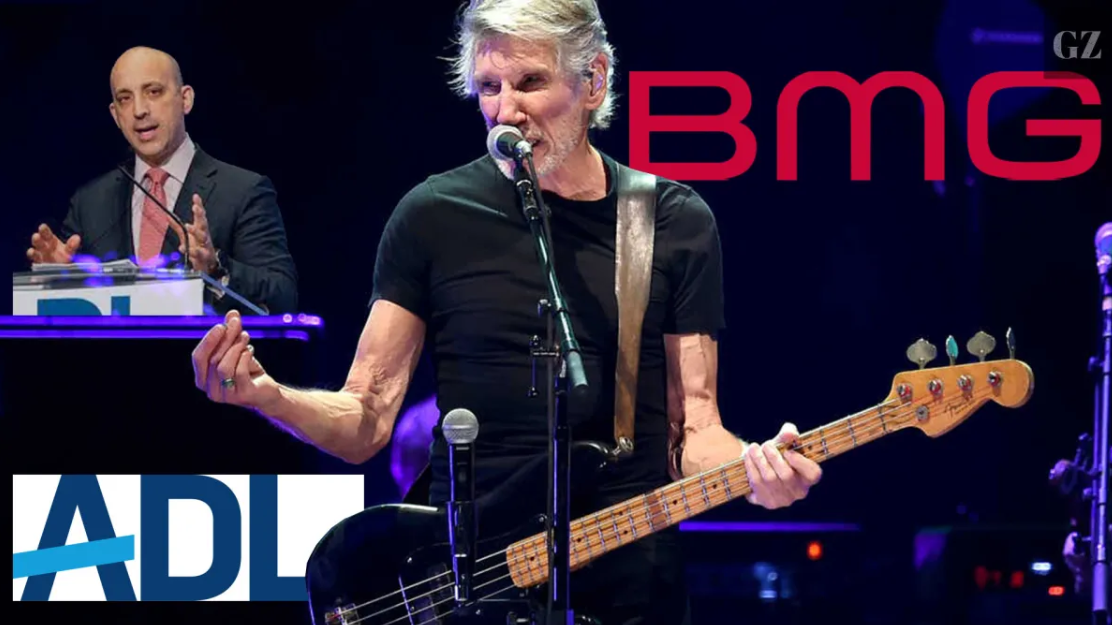
“The contention that I’m an antisemite because I’ve stood up against the attempted genocide of the indigenous people of Palestine is dead in the water. The people of the world have seen through the wall of hatred and tissue of lies”. So says rock star Roger Waters, co-founder of Pink Floyd, interviewed by The Grayzone about Zionist attempts to cancel him because of his ethical stance on Gaza.
* * *
A new report by Campaign Against Arms Trade on the “Military-Industrial-Academic Complex” reveals deepening ties between UK universities and the arms industry. It seems that the dealers-in-death have got academia firmly in their blood-covered hands.

* * *
“Let’s boycott, undermine, sabotage the war industry! The enemy is not the exploited on the other side of the front, but the politician, the manufacturer, the banker who gets richer with our blood!” A powerful message from anarchists in Spoleto, central Italy.

* * *
“Fascism and colonialism are faces of the same coin… The big new public-private partnerships ensure private profit can be driven by public money”. An important warning from David Bell on the Brownstone Institute site.
* * *
“Did Larry Fink, the top man at BlackRock, suddenly develop a conscience and become an environmentalist who cares about the planet and ordinary people? Of course not”. An interesting article from Colin Todhunter on ‘Net Zero, Fake Green, the Digital Panopticon and the Future of Food’.

* * *
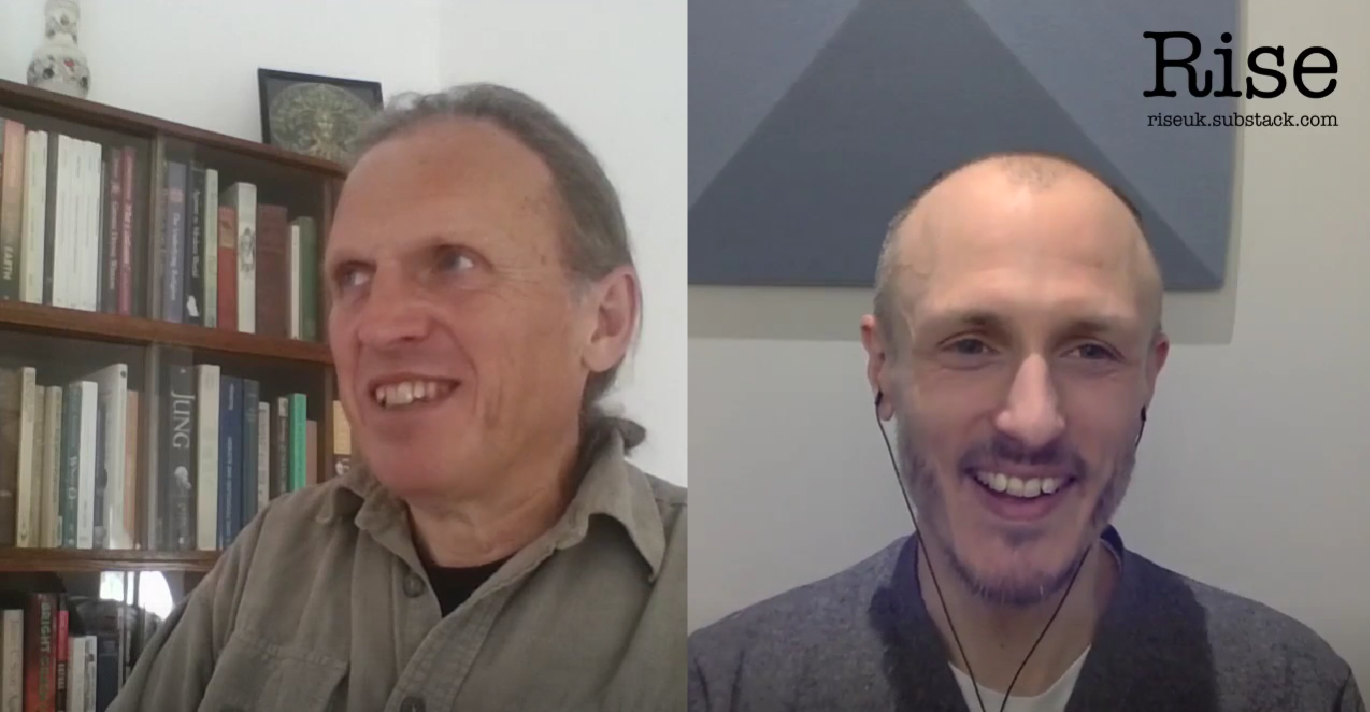
A wide-ranging conversation between Paul Cudenec of Winter Oak and Ben Rubin of Rise UK and UK Column can be viewed here. Topics addressed include the criminocracy and its globalism, the protest movement, identity politics, the soul of the English and how we find a route through the madness. Ben’s post includes a useful synopsis and index for those who don’t want to watch the whole 104 minutes.
* * *
A former English police constable, Gary Waterman, has been taking to the internet to expose what he says is a huge government-endorsed fraud surrounding illegal practices at Company House, with massive implications for the British state and indeed the rest of the world. His YouTube channel can found here.
* * *
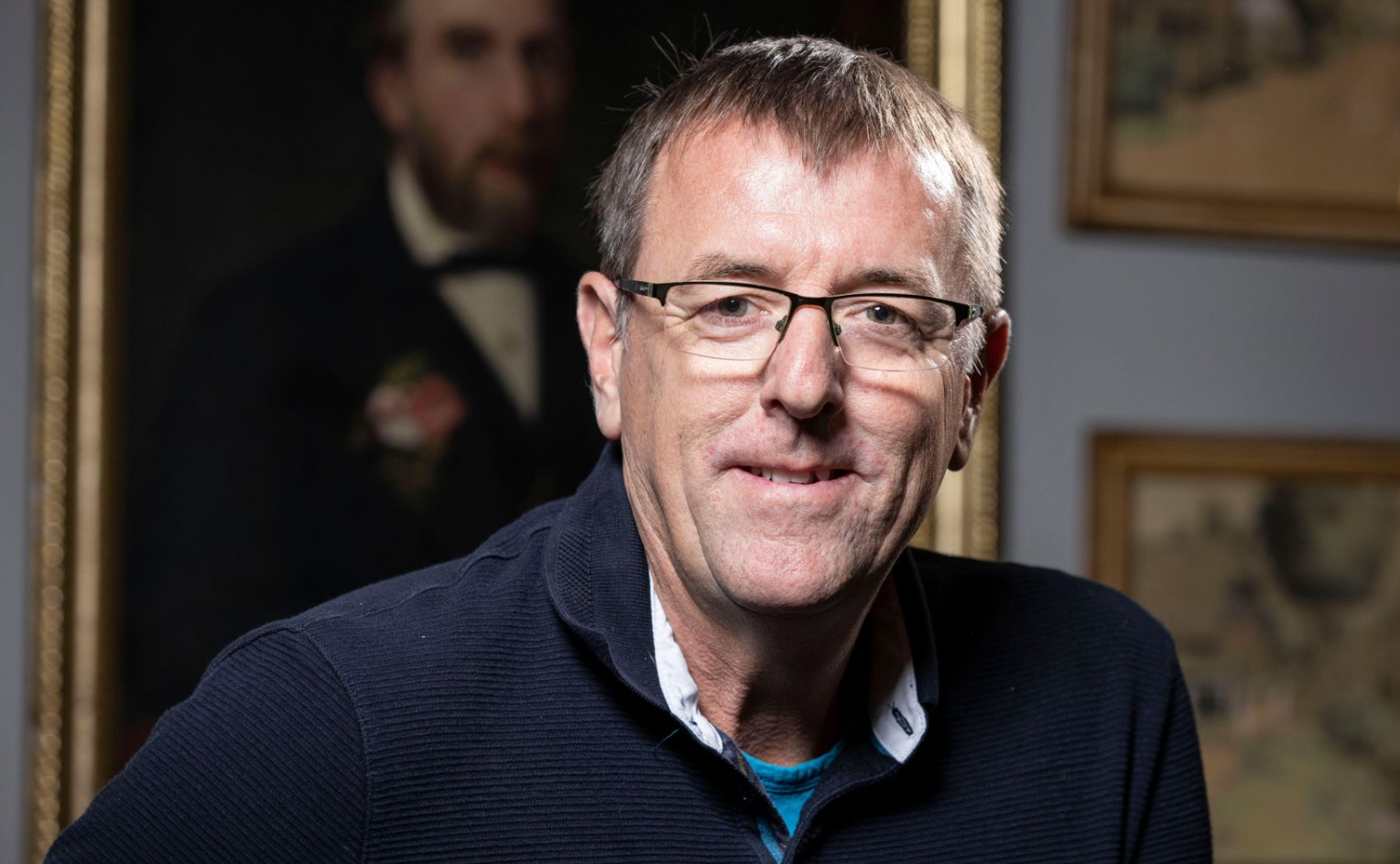
“They fear the electorate realising that our government are crooks and every day the numbers are growing. It’s beautiful to watch the awakening although if we could speed it up a bit that would be great”. Former England footballer Matt Le Tissier, one of the few “celebrities” to consistently challenge the official lies, curls another truth into the back of the net.
* * *
“The State was established for the precise purpose of imposing the rule of the landowners, the employers of industry, the warrior class, and the clergy upon the peasants on the land and the artisans in the city. And the rich perfectly well know that if the machinery of the State ceased to protect them, their power over the laboring classes would be gone immediately”. Peter Kropotkin

(For many more like this, see the Winter Oak quotes for the day blog)
If you like this bulletin please tell others about it. Subscribe by clicking the “follow” button.
—–
Back Issues
Follow Winter Oak on Twitter at @WinterOakPress
 winter oak