Number 91
- An ABC for opposing the criminocracy
- The Great “Green” Fraud
- A story for farmers in struggle and the citizens who support them
- Smelling Flowers in the Rain
- John Ball: an organic radical inspiration
- Acorninfo
1. An ABC for opposing the criminocracy
by Paul Cudenec
If we wish to fully understand – and thus to effectively oppose – the global criminocrats, we need to stop thinking in terms of “politics” as currently known.
They couldn’t care less about questions of political ideology and values, about “left” or “right”, “red” or “blue”, “capitalism” or “communism”.
Yes, these are useful devices in their divide-and-rule strategies, but they have no interest at all in the political content.
This is because they are, quite simply, criminals whose sole aim is to expand and protect their own ill-gotten wealth and power.
They were just as happy to make money in the USSR and Nazi Germany as they are today in fake Western “democracies” or Eastern oligarchies, whether or not currently labelled “communist”.
The only thing that matters to them is that the regime in question facilitates Business as Usual for their nefarious activities.

Basically this amounts to:
A. An ever-ongoing flow of money-making opportunities under the guise of “progress”, “development”, “innovation”, “economic growth” or “modernisation”. They lend the money to governments for allegedly crucial “infrastructure”, they win the contracts, they exploit the labour, they supply the raw materials, they build the machinery, they sell the product, they rake it in. If this gravy train ever slows down a little, all it needs is a convenient war, “pandemic” or other “crisis” to kick it back to full speed.
B. A means of imposing their domination on the population. This historically means the state, which, by direct and indirect taxation, makes people pay for the mechanisms by which they are repressed. Police, government bodies and the military/intelligence forces are all there to protect criminocratic rule and racketeering from dangerous outbreaks of real democracy. As institutional power is globally centralised, international bodies like the EU, the WHO and the UN are also playing this enforcement role.
C. Ensuring their own invisibility. This is very important for the criminocracy because they are all too aware that they are a tiny minority – a few thousand core players against a global population of more than 8 billion. If large numbers of people understood that the criminocracy existed, and what it was up to, the resulting revolt could not be held down, even by the resources available to the criminocracy. A particular worry would that be individuals currently unknowingly working for the criminocracy might switch sides if they understood the real stakes. So the criminocrats encourage limited and misleading versions of history, tightly control media output and systematically deploy the term “conspiracy theorist” to discredit anyone who points in their direction, implying stupidity and borderline insanity with, for added effect, smears such as “extremist”, “reactionary”, “far-right”, “fascist”, “terrorist”, “hate criminal” and “anti-semite”.
In view of this, we can see, emerging from the fog of “political” confusion, the only dividing line that really matters.
Resistance to the criminocracy needs to involve:
A. Opposition to its money-making “development” racket.
B. Opposition to the institutions that impose its central control.
C. Exposure of the existence and activities of the criminocracy to as wide a global public as possible.
Any “resistance” not built on these foundations can achieve nothing.
by Escapekey
What you see happening around you has been planned for generations. We’re now in the final stages, and the distractions will become increasingly outrageous.
Rather than get distracted, let me summarise what’s actually taking place, on how they plan to wrap up their multi-generational efforts to impose a technocratic, global government.
It’s about controlling the right to emit carbon dioxide. Because those who do, control economic activity without which you won’t be able to do much. And, in this regard, the role of the Earth Summit in Rio in 1992 cannot be overstated.
There are two core components to this scam. The United Nations Framework Convention on Climate Change (UNFCCC) and the Convention on Biological Diversity, aka the CBD. The former declares that we must not increase temperatures above a certain – arbitrary – threshold. To stay within said – as claimed by the UNFCCC – we have to control emissions. This creates a scarcity of carbon dioxide emissions, which can then be exploited financially.
When a farmer works his field to produce food, or a power plant generates electricity, both will soon be required to ‘offset’ their carbon dioxide emissions. In this equation, anyone emitting is considered a carbon source, and the flip side of that coin is called a carbon sink. Carbon sinks comprise anything that absorbs carbon dioxide; we here talk about the likes of forests, and wetlands like mangroves.
And while the UNFCCC creates the scarcity, the CBD’s stated aim is to increase the pool of allowable carbon dioxide emissions – ie, alleviate said scarcity – through the restoration of biodiversity.
Consequently, when governments set out to spend trillions of your taxes to improve forests, mangroves and so forth, the stated aim is to improve biodiversity, which will lead to an increase in carbon absorbed by said forests, which consequently will increse the pool of (allowable) carbon dioxide emissions.
Carbon dioxide emissions, in this regard, are a type of ‘ecosystem service’. And those are rendered by a ‘natural asset’. You might have heard this expression before, likely due to the NYSE ‘Natural Asset Company’ rule change, temporarily put on ice.
These are a type of holding company which has lease on a sustainably exploitable resource, or in their terminology – an ‘ecosystem service’ – which futher count the likes of fresh water (think Nestle), Eco-tourism, or timber from a forest. However, this exploitation is only allowed provided that the ‘natural asset’ rendering said ‘ecosystem service’ is not damaged in the process.
This ‘Natural Asset Company’ will then in turn be floated on a stock exchange. Once floated, the imperative shifts exclusively to profit generation from the artificially scarce resource – carbon credits – translating into far higher prices for ‘carbon sources’ – such as farmers and power plant – who will have no option but to increase prices on the end consumer – and that would be you.
Large corporations and opaque financial constructs were in a rush to buy up aquifers and forests a few decades ago. This is why. Most of those investment opportunities were front-run, because the insiders knew where we’d be some 20 years down the line.
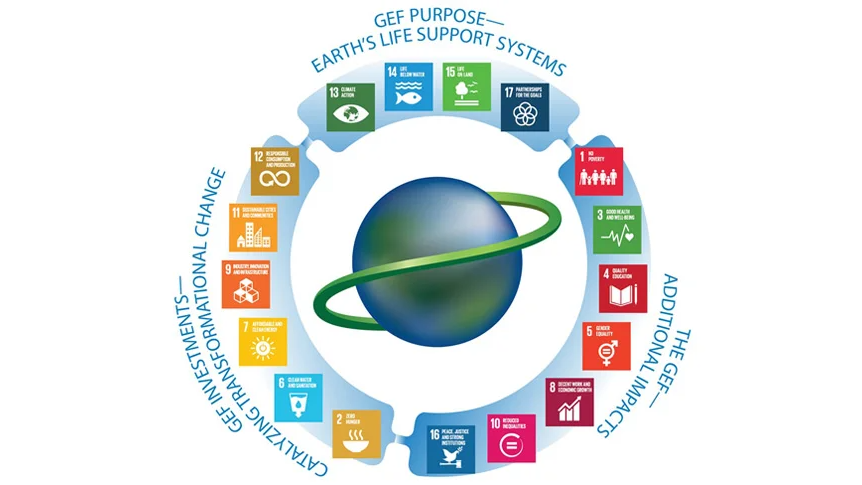
However, buying large tracts of land turns expensive, and consequently, under the guise of ‘conservation’, a great many nations set aside ‘nature reserves’, and submitted these to the UNESCO Biosphere Reserve program, which at present holds an area of the world comparable to the size of Australia. And these reserves span a great many forests, and other areas of considerable worth from the perspective of monetising carbon credits.
And that’s where the Global Environment Facility enters the stage. What they do is to structure ‘blended finance’ deals for ‘ecosystem services’, using a ‘landscape approach’. And while you should be aware of the former, the latter – the ‘landscape approach’ is a description of an arbitrary geographic range.
This, along with a duration – ie, a number of years – and the ‘ecosystem service’ requested, will be presented to the Global Environment Facility, who will structure a such-blended finance deal. The outcome is a lease for an ecosystem service, which will promptly be transferred to a holding company, and floated on the stock exchange as a ‘Natural Asset Company’.
Blended finance deals are named as such, because they comprise public (taxpayer), private (billionaire class), and philanthropic capital. Thing is, however, the latter contribute virtually nothing. Their inclusion appears entirely motivated around taking credit.
The private invests 5-20% depending on interest on offer, also depending on geographical region. In Africa, for instance, they have little to no interest, and consequently, the taxpayer contributes practically all in this regard.
What this does, however, outline is that there is fundamentally no reason why the private investor should be involved whatsoever, because their meagre contribution could just as well be picked up by the public (taxpayer).

That’s where the structure of these deals enters the stage. Because in spite of being much smaller, the private is ‘senior’ to the public, meaning in the event of bankruptcy, the private is in effect shielded; the public taxpayer will lose their money before the private will lose a penny. Think 2008, and CDOs – but this time, with your taxes as the sitting duck. Typically, this additional level of risk is compensated for through a higher interest rate, but not so in this regard.
In fact, per GEF itself, it is not uncommon to find the private investor receiving 2-3x interest rate – while, as said, simultaneously running much less risk. In short – all of this is a colossal public transfer to the privileged few. It’s a way to continuously squeeze every nation, and every person and business into bankruptcy, one after another, leaving only a few standing at the end. And all of this, under the guise of ‘saving the planet’.
And the central banks are in on this. Those CBDCs they currently seek to push through in an obviously coordinated manner? Yes, an increasing amount of documents outline how these will be coupled with carbon emissions down the road, meaning that almost certainly, you will receive the same ‘carbon credit allowance’ as everyone else, much like how the economy broadly worked – or rather, didn’t – in the Soviet Union. This approach is furthermore clearly outlined by One World Trust’s ‘Charter 99’, where said OWT was founded in the wake of WW2, and included the likes of Clement Attlee and Winston Churchill.
Thing is, the whole thing is based on fraud, and that is no exaggeration. There’s a large reliance on the ‘Contingent Valuation Method’, which in no uncertain terms means asking a range of people what they would pay for a given item, and then valuing said on that account. Yes, really. But not only does this ‘ecosystem service valuation’ depend on this utter guesswork, but assigned values include deeply subjective values, such as valuing a stroll in a forest, regardless of how completely absurd that might appear.
The sheer quantities of information, further, is practically unlimited. To solve this problem, they propose a range of ‘approximations’ in a way comparable to improving neighbouring squares to cities, when playing a game of Civilisation on your PC.
We can then consider assigning carbon credits to a forest in the first place, which is nothing short of pure guesswork, and highly likely to be distorted in the direction of those insiders attempting to push through this system in the first place.
And then there’s the carbon consensus itself. No such existed in 1979, but was the result of a handful of ICSU cherry-picked climate scientists, clearly evidenced by the resulting conference proceedings hinting at extraordinary levels of bias, plus the long-term planning of society in general clearly laid out through said proceedings.

In fact, the quantity of papers pertaining exclusively to carbon dioxide itself was in a minority, which safe to say is a little odd, given that the event took place just 3 years after Bert Bolin – a primary driver of the narrative – unilaterally declared in front of the US Senate that the only thing they knew for sure, was that an increase in carbon dioxide led to increased plant growth. When asked if this led to global warming, he added this was ‘his personal opinion only’, and he further concluded by stating that professional climate scientists are the least likely to make predictions.
But, of course, as soon as this carbon dioxide narrative was established, annual temperatures suddenly went from being completely unpredictable, to rising in an almost linear fashion. This narrative was fabricated along the way with help from the ICSU and associated scientists, and their committees, which include the likes of SCOPE (Scientific Committee on Problems of the Environment).
Incidentally, it was also SCOPE which set the course for the global surveillance they have progressively rolled out since 1972. But though that’s a story in itself, it does deserve a mention as this initiative – through GEO BON and GBIOS – will be used to uphold the Convention on Biological Diversity’s centrally stated purpose. Restoring biodiversity.
Which private actors then turn around and monetise.
3. A story for farmers in struggle and the citizens who support them
by Giovanni Pandolfini
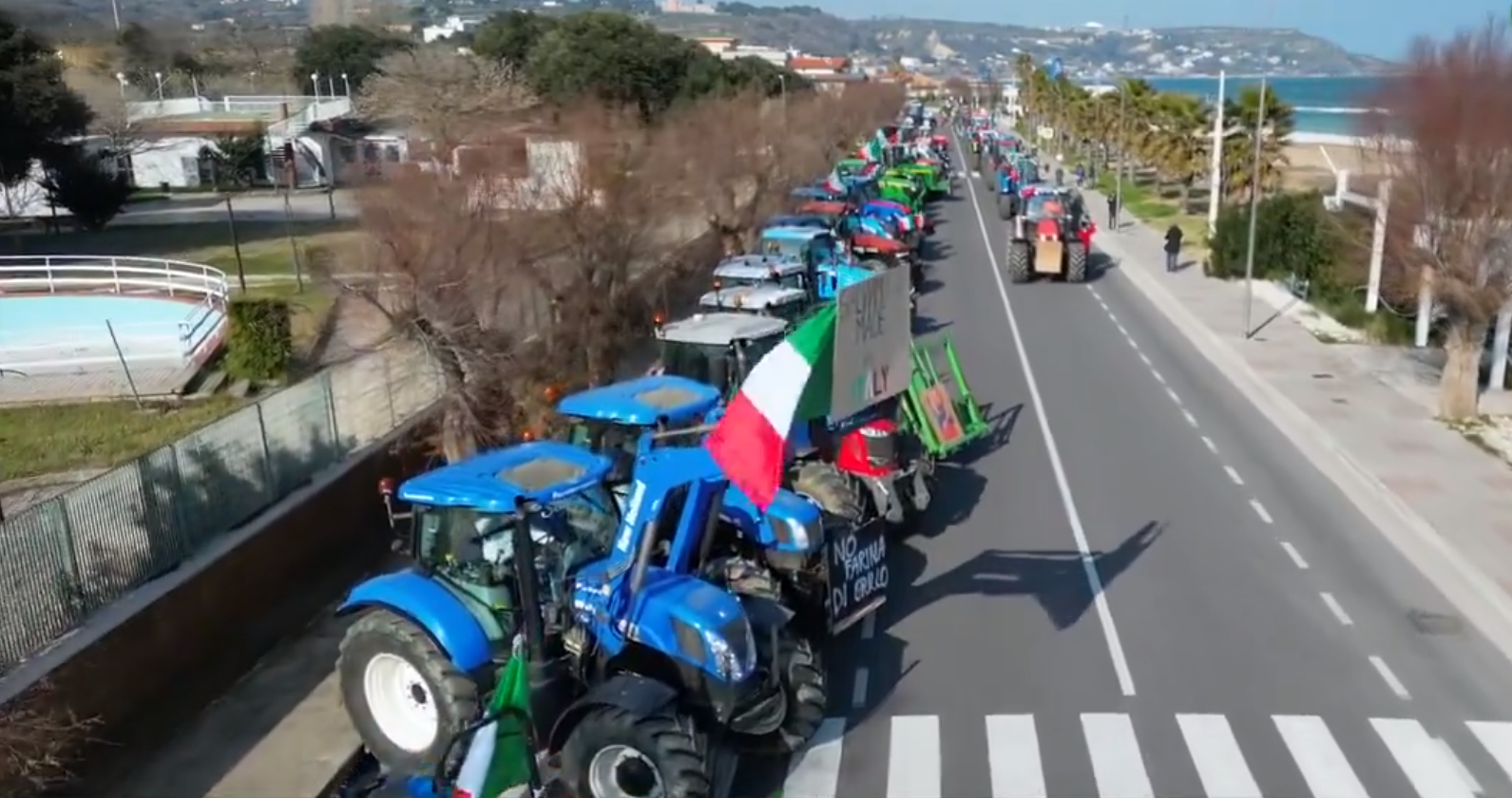
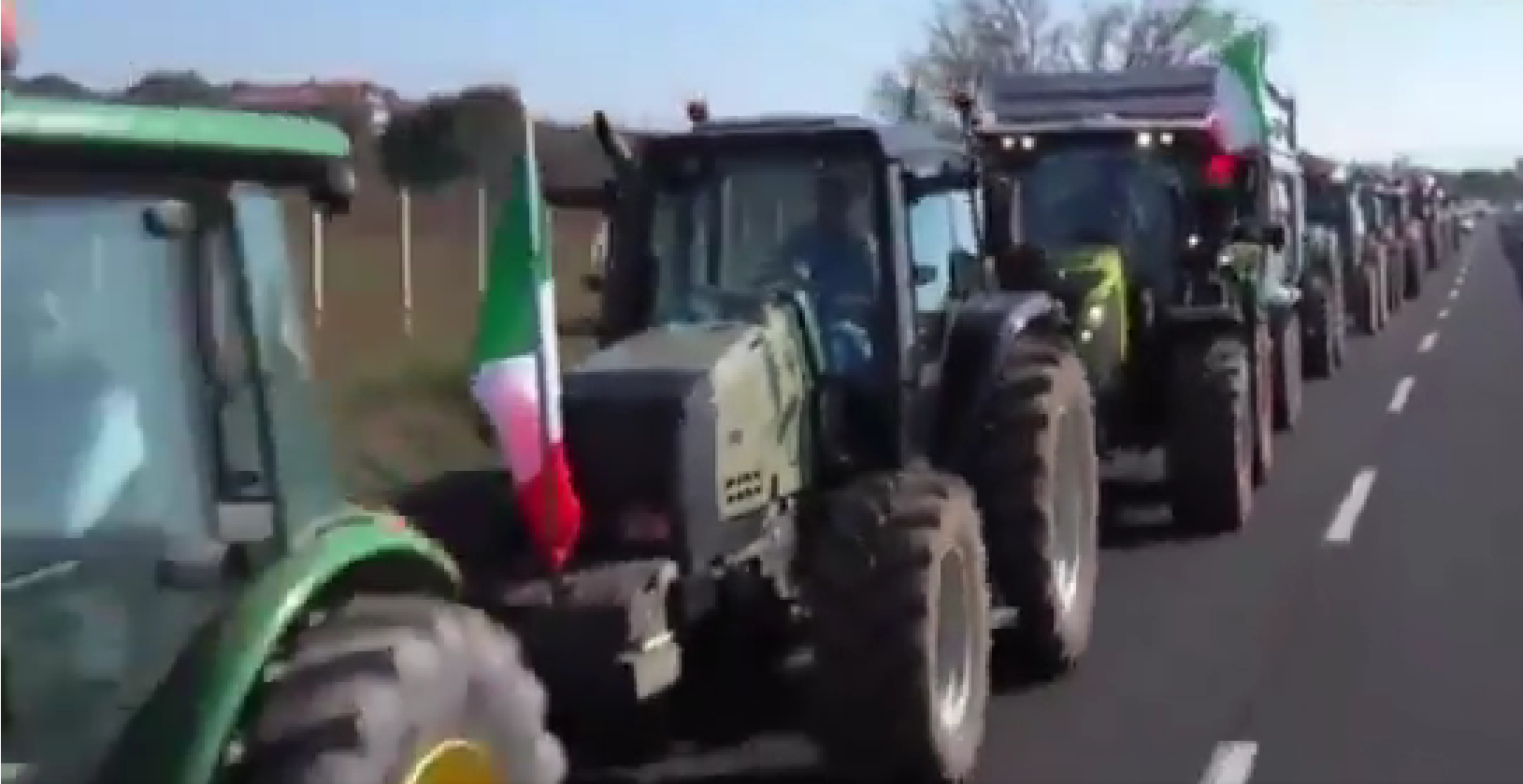
A few years ago I found myself talking to a farmer, a colleague, who ran his family cereal farm in the fertile and flat lands of the Milan-south park area. He was very concerned about the future of his business, which had supported his family economically for several generations.
The accounts no longer add up, he said:
“Expenses are always rising, as are bureaucratic obligations, tax obligations, workplace safety regulations, environmental sustainability regulations, regulations for upgrading facilities, regulations for purchasing and maintaining the machinery needed to work the land, for seeds, for cultivation treatments (herbicides, fertilisers and pesticides) and for the transport of products, not to mention the cost of energy, agronomic, legal and commercial advice that I absolutely need in order to work and to feel at least in order and not to take risks. “
Complaining further, he added:
“On the other side of the costs there should be adequate revenues but the harvest raises prices that barely cover current expenses when everything is running smoothly, without considering the thousands of possible hiccups that are becoming more and more frequent, new adversities such as invasive pests, particularly strong fungal attacks, damage from game such as ungulates and many others, long dry periods without rain, periods with too much rain and floods, hail and heavy storms with destructive winds, unusual temperatures with daily temperature ranges of around 20° and many others, our only salvation is CAP subsidies and concessions for machine purchases such as capital grants from the psr (i.e. non-refundable, non-returnable) and conduction credits such as agricultural promissory notes that banks renew without too many demands.

“The trade association advised me to specialise, to modernise my company, to innovate my equipment, to invest more decisively in my business, to believe in myself and to rely on them for financial advice, to untangle the jungle of contributions and the swamps of legal obligations.
“On the other hand, they are always the ones who have the cooperatives and consortia that sell me everything I need and then collect the product from me in their processing and storage centres, so I cannot disregard them.
“Of course, in order to benefit from the subsidies, which they always help me to obtain, purchases for innovation and development of my farm must strictly be made with new, increasingly expensive and sophisticated machines. In the past, I used to repair tractors and equipment myself with a small workshop, a welder and a hose, but today mechanics has merged with electronics and I have to turn to specialised workshops that cost a fortune.
“The bank has granted me loans, overdrafts, and advances on invoices because I make the money go round, but now they are telling me that my business is no longer all mine but a little of theirs, and so if I really believe in my business, as they have believed in it, I cannot refuse to sign a guarantee with my real estate, house and land, everything we have, everything my family has built with so much work and toil over time.
“My hands are tied. I don’t know what to do anymore, I have to work more but I need more land, I have to increase my business and contributions”.
At the end of his reasoning he came to a conclusion :
“I only have 150 hectares, and today with 150 hectares of arable land you can’t feed your family, you would need at least twice that amount to be able to live comfortably.”
Incredible and completely absurd. By what contortion of thought can one arrive at such a conviction?
The reasoning of the poor modernised, specialised, industrialised agricultural entrepreneur who is more or less in step with the minimum degree of ‘legality’ required for his activity, is more or less this:
In order to work the land, service the crops, harvest and store the products I obtain, I need to activate many investments. Their amortisation costs me disproportionately to what I can achieve by selling the fruits of my labour on the market, at current prices (assuming everything goes well and with the risks borne by me). My activity only becomes ‘possible’ if to the saleable product I add a share of subsidy from the agricultural incentive system put in place by the European Community with its complicated allocation mechanism.
And since the main delivery mechanism for CAP funds refers to a premium per hectare, I need a ‘minimum’ surface area to make my enterprise economically profitable. One understands that those who own an area of land below this limit cannot meet their production costs and if they have not already done so, they have to stop, close down their business; those who are close to this limit risk a lot, work a lot and earn little, while those who own ten or twenty times this limit have much more peace of mind and profit entirely provided by the European community drawing on the tax levy of millions of workers.
Have you ever seen a more unfair mechanism?
I need such an area that allows me to invest more and more in technological innovation and greater use of energy and cultivation inputs so that I can get the most I can out of my land as quickly as possible, while at the same time drawing on the investments that the system offers the most profitable at the time.
Have you ever seen anything more dangerous for the environment and the healthiness of food?
The level of this minimum amount of land required for this type of survival is extremely variable from year to year with the tendency to increase and to favour large companies to the detriment of smaller ones.
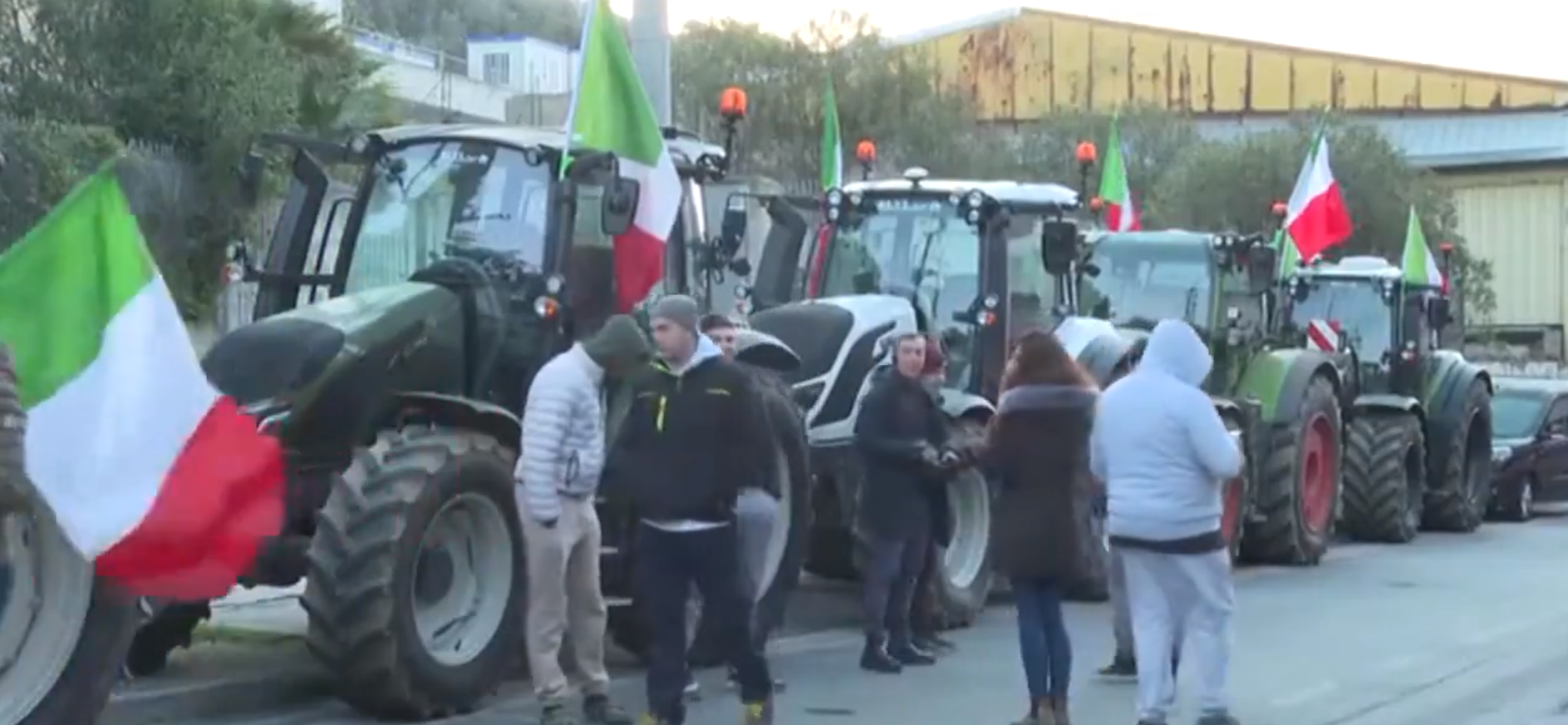
A perverse and diabolical path destined to lead to the ruin of almost all practitioners in order to make only a few emerge, the most structured, the most capital-backed, the already large, the most predatory, to the detriment of all the others.
This relationship between surface area and economic sustainability is most evident on cereal or fodder specialisations, but we can extend it to all other more intensive agricultural specialisations such as horticulture, fruit-growing, viticulture, etc. etc., up to animal husbandry with its mega-industrial farms.
Intermediaries and the large-scale retail trade have everything to gain from such a system, and the agricultural producer, who will invariably find himself with a large mass of almost always perishable product at a precise and limited time of the year, is the weakest link in the whole system.
Have you ever seen anything more dangerous?
Instead.
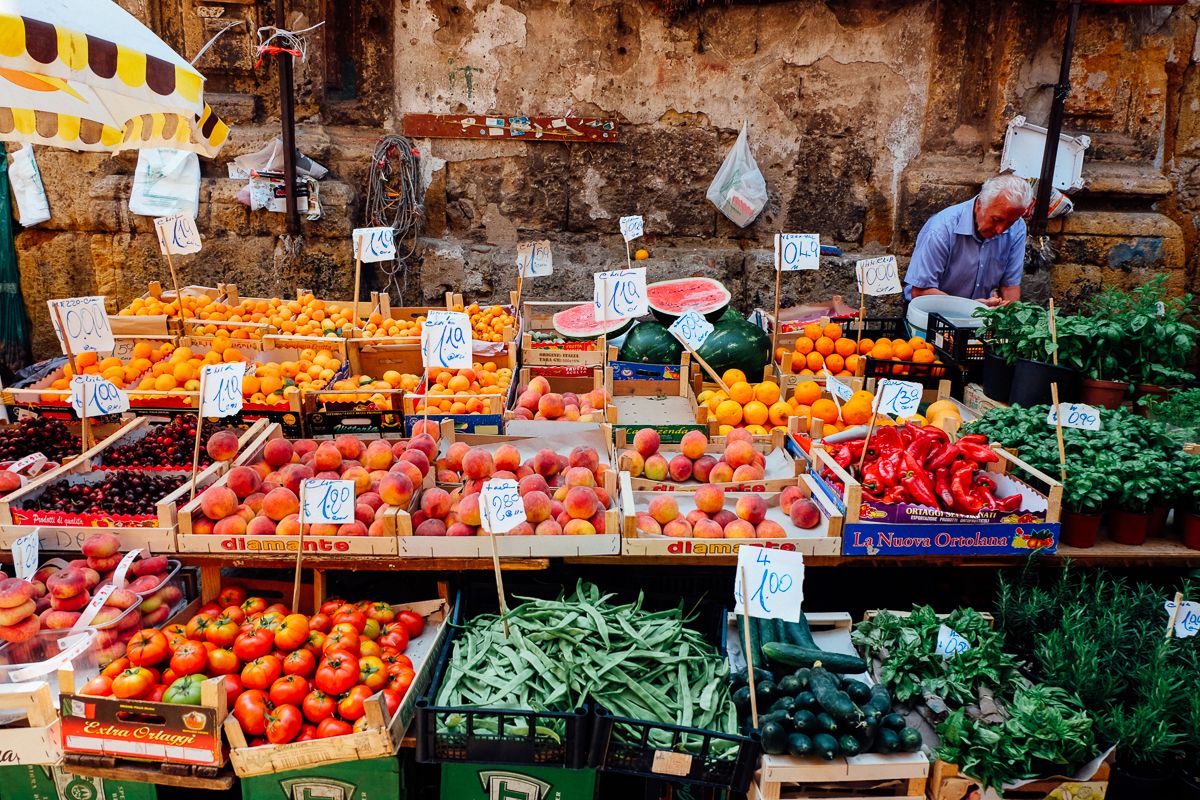
150 hectares are, for those unfamiliar with the proportions of cultivated areas, a field of 1 km by 1.5 km, roughly equal to 215 football fields.
How is it possible to argue that with such a large area of good fertile lowland land with sufficient water in a temperate climate such as ours, albeit a changing one, one cannot achieve sufficient income to feed a family?
In 150 hectares, approximately 180 to 200+ people could live and work and produce food for themselves and 800 others, with minimal mechanisation and almost complete self-sufficiency in energy and raw materials.
This would only be possible by practising agro-ecological peasant agriculture .
With a system of local and direct distribution of one’s own products, without intermediaries, without consultants, with the direct assumption of one’s own environmental and social responsibilities, with a simple and effective mechanism of participatory guarantee of the healthiness of one’s own products at a local level, with a self-managed credit system, with the possibility of transforming and preserving one’s own products in small artisanal plants, with rules different to those of the agro-industry, one could also obtain a decent income without too much effort and without self-exploitation.
What has happened and what is still happening in our countryside? Why does a farmer go so far as to sustain the paradox that he cannot feed himself and his family on ‘just’ 150 hectares?
It is useless to ask and demand more investment from the institutions, more attention to the workers in the primary sector, more dignified sales conditions for their products, an income sufficient to their expectations and needs – they will always respond with more bureaucracy, more technology, more specialisation and more subservience to their system.
It is necessary to get out of the condition of agricultural enterprise in a globalised market and build a local and decentralised community fabric that can autonomously dispose of its territory, control it and defend it.
A thousand and one village autonomies that through the production of their own food can represent the most economically and ecologically sustainable and humanly pleasant way of being in this world.
Have you ever seen anything easier?
4. Smelling Flowers in the Rain

A dystopian future is depicted in a new film due to be released in June 2024.
A trailer for Smelling Flowers in the Rain, a Spy My Studio production, can already be found on social media.
The story, set in 2040, explores the rise of an extraordinary young man (Flynn Faroe) amidst a background of repulsive realities and raw repression that leaves him no alternative than to rise up and revolt.
Explain Spy My Studio: “No path to emancipation is ever easy, it’s built on the bones of the brave and the bold. Flynn Faroe dreams of utopia but lives in dystopia, something has to give, and it will.
“He gets his kicks from downing drones and bashing bots. It is a spontaneous naive reaction to his cards of life. Just when he thought life could not get any worse, it does as he becomes an unwitting victim of the tongue of treachery.
“Flynn Faroe has a choice, get out of Thraldom or face a fate far worse than death. But how to escape from the most surveilled confinement city in the empire?
“His face adorns electronic billboards across a city where many would gleefully turn his carcass in for less than the price of a chemical coffee. Few could remember a manhunt of this intensity.
“The stakes are high. His antagonist, the sinister Chief AGI who was programmed by a sadist, is chomping at the bit to get him strapped into his dreaded interrogation chair.
“Infamy has a price to pay. It also opens unexpected doors that lead to unimaginable outcomes… and Melissa Moore.
“In a plot with more twists than a hangman’s noose, the protagonist navigates an uphill battle against all the odds to finally discover a Utopia actually exists but its days are numbered, unless…”
More info here.

5. John Ball: an organic radical inspiration
The latest in our series of profiles from the orgrad website.

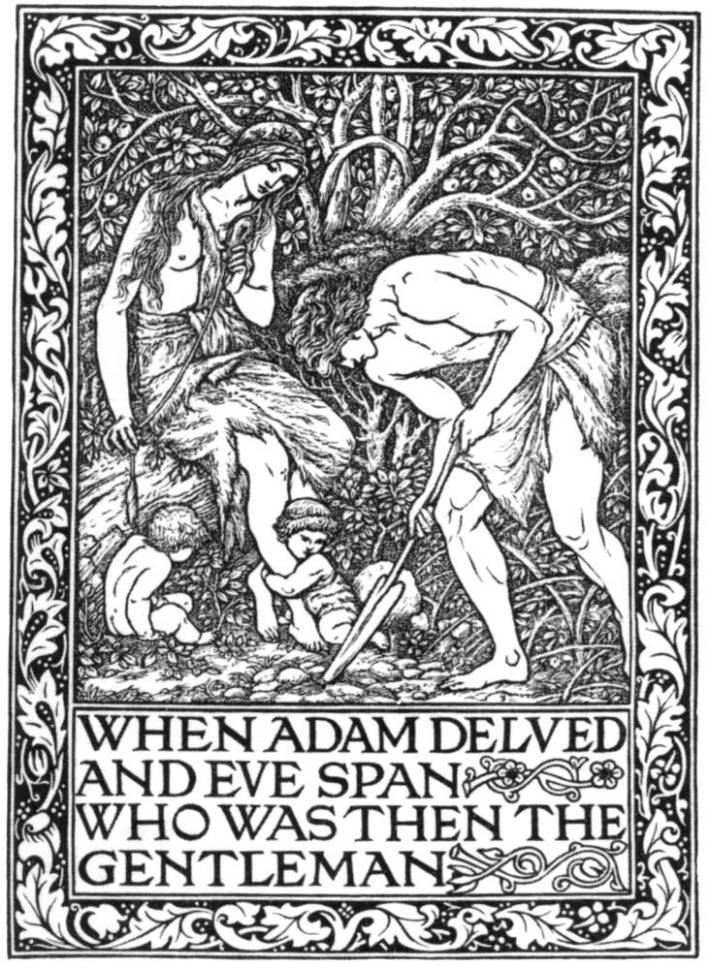
“When Adam delved and Eve span, Who was then the gentleman?”
John Ball (c. 1340-1381) was a wandering radical preacher, a “hedgerow priest”, who came to the fore in the medieval Peasants’ Revolt in England.
He was thrown out of his job as a priest in Colchester in 1366 and started travelling around medieval England, spreading the word of revolt. He was thrown in jail on several occasions.
In 1381, when 100,000 rebels marched into London, capturing towns and castles on their way, they freed him from prison.
Ball preached to the crowds at Blackheath and it is here that he asked the famous rhetorical question: “When Adam delved and Eve span, Who was then the gentleman?”
George Woodcock identifies Ball as one of the figures of the English and German peasant uprisings who first voiced “the kind of social criticism that was to end in anarchism”. (1)

The fragment of his speech which was preserved for posterity by French chronicler Jean Froissart “attacks both property and authority and implies a link between them that anticipates the arguments developed by the nineteenth-century anarchists”, adds Woodcock. (2)
Ball said: “Things cannot go well in England, nor ever will, until all goods are held in common, and until there will be neither serfs not gentlemen, and we shall be equal.
“For what reason have they, whom we call lords, got the best of us? How did they deserve it? Why do they keep us in bondage? If we all descend from one father and one mother, Adam and Eve, how can they assert or prove that they are more masters than ourselves? Except perhaps that they make us work and produce for them to spend!” (3)
Ball told his medieval contemporaries that their serfdom was unjust and that the time had come when they could “cast off the yoke they have borne so long and win the freedom they have always yearned for”. (4)
Ball’s radicalism was very much inspired by the dream of a Golden Age, the idea of a natural, organic, egalitarian society which had been stolen from the people.
Talking about the weeds (“tares”) in the Bible that had almost choked the good grain, he declared that the tares were the great lords, the judges and the lawyers. They all had to go, so that the people could all enjoy equal freedom, rank, and power, and share all things in common. (5)
When the authorities had crushed the revolt, Ball was tried and executed in the presence of Richard II.
Ball has been an inspirational figure for countless generations of English radicals. He appears, for instance, as a character in an anonymous 1593 play called The Life and Death of Jack Straw and would have been familiar to Gerrard Winstanley and the other radicals of the 17th century English Revolution who took up his call for an England where all things were held in common.
In 1888 William Morris published his novel A Dream of John Ball, in which a time-traveller updates Ball on the end of feudalism and subsequent rise of industrial capitalism. The radical priest realises that his hopes for a free and egalitarian future have yet to be realised, five hundred years after his death.
In 1999, an article in Green Anarchist declared that Ball’s message was “not of moderation, not of putting limited demands for financial improvement, but of the revolutionary desire for authenticity and true human community that underlay them, of the courage to fight for ourselves and our visions”. (6)
Video link: The Thoughts of John Ball (5 mins)

1. George Woodcock, Anarchism: A History of Libertarian Ideas and Movements (Harmondsworth: Penguin, 1979), p. 38.
2. Ibid.
3. Woodcock, p. 39.
4. Peter Marshall, Demanding the Impossible: A History of Anarchism (London: Fontana, 1993), p. 91.
5. Ibid.
6. John Connor, ‘John Ball – Primitivist: The Peasants’ Revolt and the State of Nature’, Green Anarchist #57-58, Autumn 1999. theanarchistlibrary.org
“Pro-Israel forces currently have control of NHS, Foreign Office, Home Office and Ministry of Defence data. Your data”. Some shocking revelations from rapper and journalist Lowkey in this must-see 8-minute video.

* * *
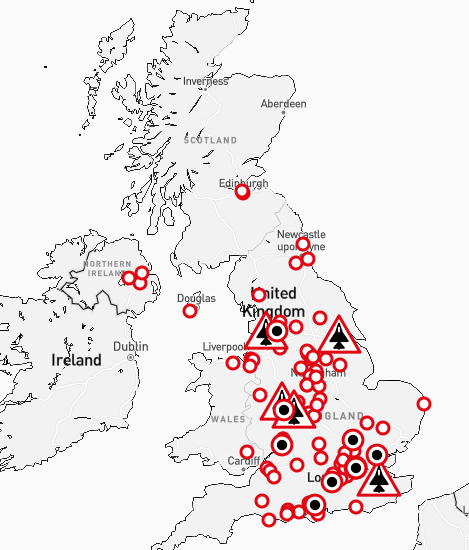
“The day will come when everyone will deny they were a Zionist. They will say it was a difficult time, and how could they have known about the horrors it caused. Zionism has had its day. A truly awful ideology that shames everyone who supported it” – so says UK artist and dissident Daniel Fooks. Meanwhile, for anyone who wants to take action against companies in the UK arming Israel’s genocide, Campaign Against Arms Trade (CAAT) has released an interactive map of locations where F35 jet components are made.
* * *
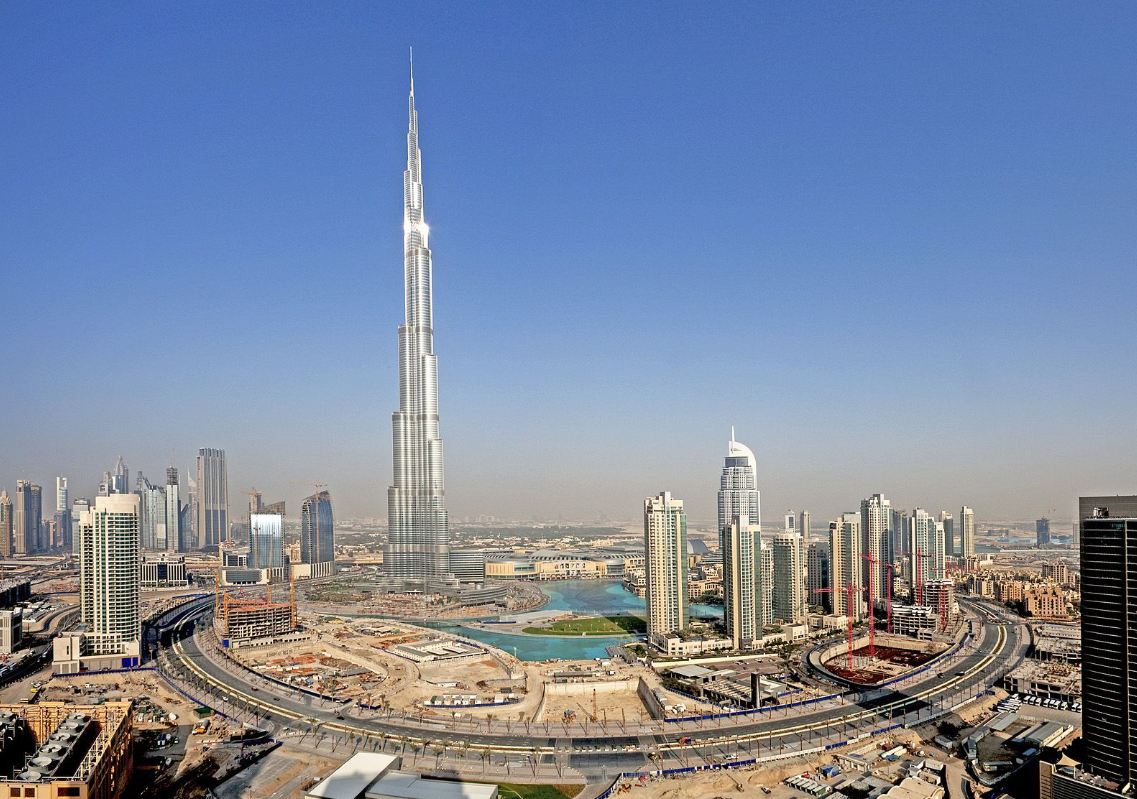
“The United Arab Emirates is not just a totalitarian state, but part of a new imperial axis with the Zionist state”, warns academic and journalist David Miller. He adds: “Part of the reason some anti-imperialists still cling to outdated ideas of the Zionist project and Gulf states as simple US satellites is this major blind spot about the importance of the UAE-Israel relationship and how its black ops are changing the world around us, from Europe to Africa to India”.
* * *
An extremely sinister new law was agreed on February 14 2024 by the French state, aimed at criminalising opposition to Big Pharma and its jabs. Article 4 of new legislation, previously dropped because of its controversial nature, creates an offence of “provoking the abandonment of medical care”, carrying the possibility of three years in jail and a fine of up to 45,000 euros. President Emmanuel Macron is a former Rothschild banker.

* * *
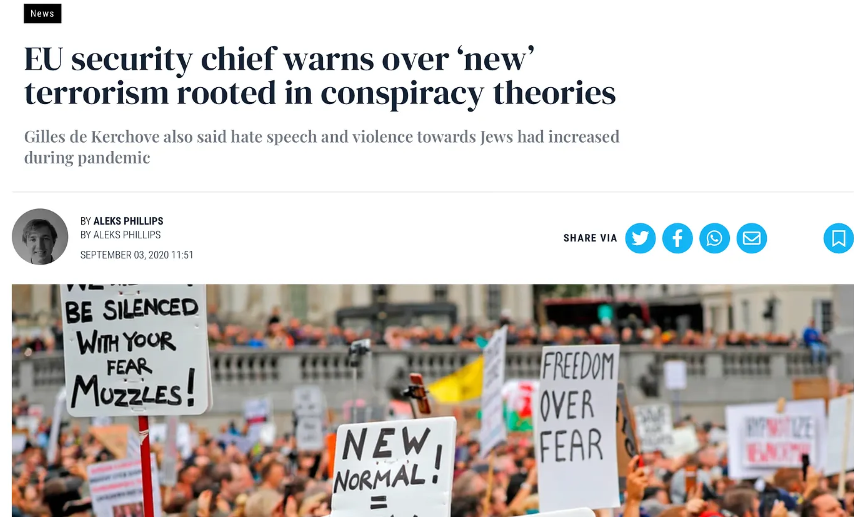
“Are you questioning the Climate Change modelling, the measures governments are putting in place under the guise of Net Zero, or that enormous amount of money that is going into global corporate hands? You’re a Far Right Extremist!” Kate Mason writes from Australia on the way that the “far right” is being used by the criminocracy as a device to justify totalitarian crushing of all dissent. All across the world, they are using the same trick. The global thought police have even apparently decreed that a new variant of “climate denial” has emerged – merely involving “rhetoric seeking to undermine confidence in solutions to climate change”. They really can’t stomach us questioning their racket!
* * *
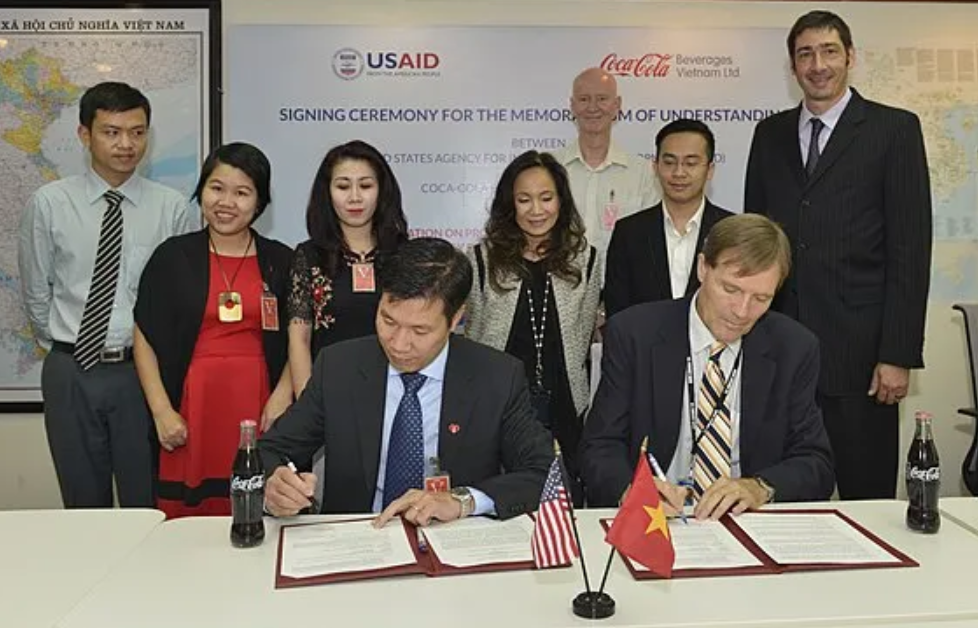
“What appears to be the case is that important decision-making positions within a government or a public sector body can now be occupied by people who are working for private interests”. Sophie Cooke writes on the Real Left website about corruption, BlackRock and the ‘public private partnerships’ that are the basis of criminocratic rule.
* * *
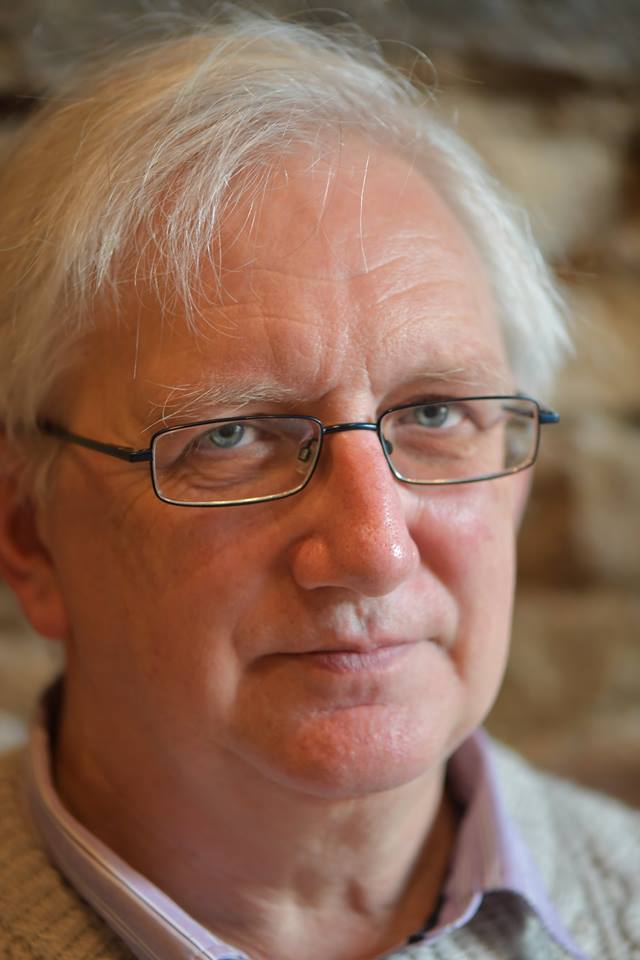
“Sometimes the blindingly obvious is worth saying out loud. Whether I am fighting for Julian Assange, fighting to save Palestinians or fighting the massive wealth gap in western society I always find I am fighting against precisely the same people and forces”. Former UK diplomat Craig Murray draws attention to something many of us have noticed…
* * *
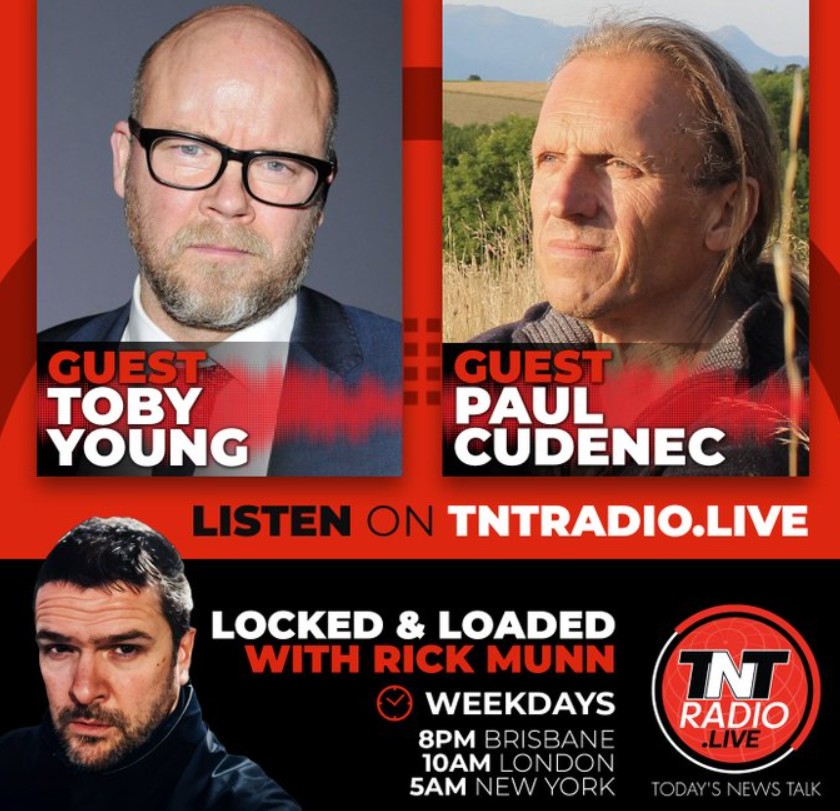
Winter Oak’s Paul Cudenec has been busy sharing his views in recent weeks and can be seen and/or heard talking to William Ramsey Investigates, Grimerica Outlawed and Rick Munn of TNT radio.
* * *
“It’s up to the ‘progressive left’ to start actually listening to what people outside the M25 (London’s ring road) and the ideological walled gardens embodied in places like The Conduit are actually saying. Not what they think we are, based on polling and prejudice”. Ben Rubin’s video report from the pavement outside a London event is well worth watching.

* * *
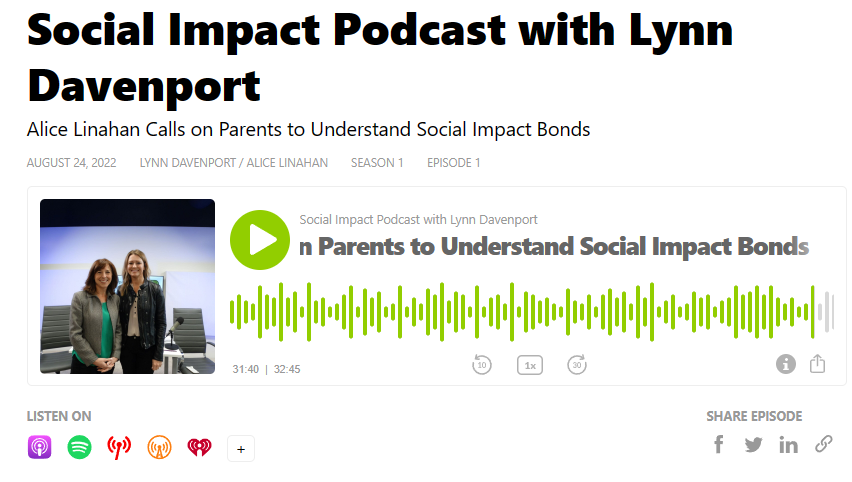
“Are math software programs in place to teach our kids math, or to monetize their scores for expected outcomes investors are looking for? Interestingly enough, investors are making money on their scores. Within this shift away from a focus on reading, writing, math, and history, to formative assessments that monitor children through every click, data is collected and sold”. This Social Impact Podcast with Lynn Davenport and Alice Linehan is very useful for anyone trying to get their head around the criminocracy’s impact slavery scam.
* * *
“What’s significant about Covid is that it represents the most extreme form of enclosure in human history… Lockdowns are a form of enclosure — putting an imagined fence around your home and turning it into your own personal ghetto”, writes Toby Rogers on his Substack blog.

* * *
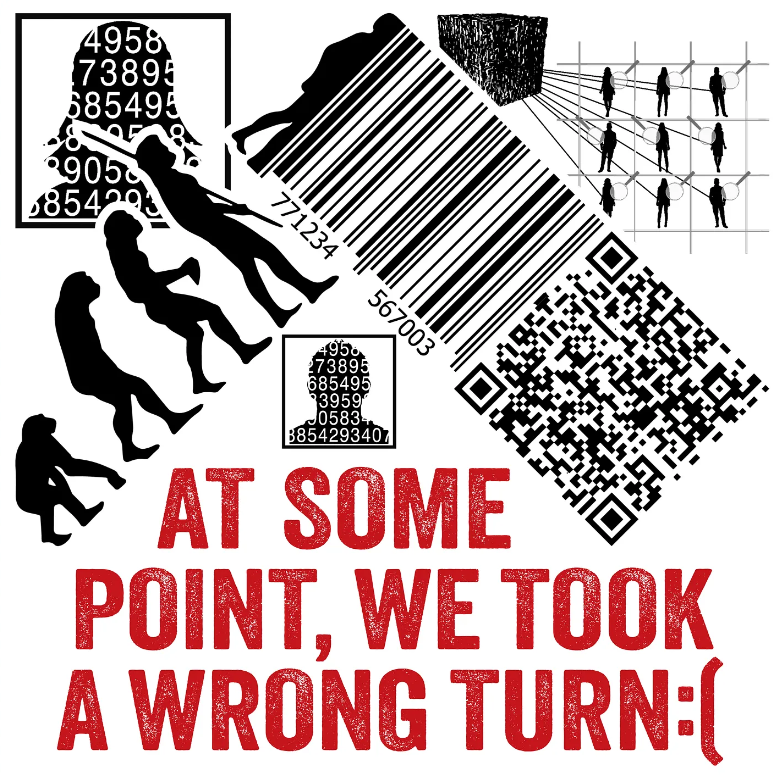
“One thing we are doing our level best to do is to encourage people to start quietly withdrawing their consent for the system to carry on functioning as it is”. The Stirrer points to the way ahead in a February 14 article.
* * *
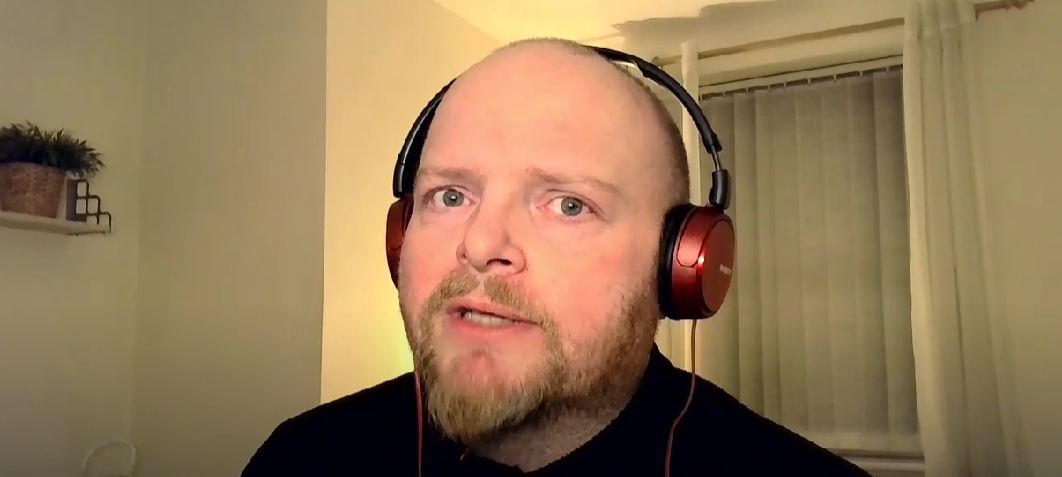
“Antifa are not anarchists”, explains this clear-thinking British YouTuber. “They want to be able to silence free speech and they’re against bodily autonomy. They’re authoritarians”.
* * *
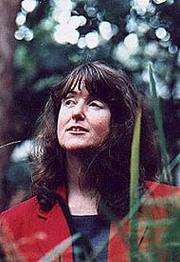
“Corporations seek not only to influence legislation and regulation but also to define the agenda – what it is legitimate for government to consider and what can be discussed in the political arena – thereby rendering those groups who have other agendas ineffective”. Sharon Beder.
(For many more like this, see the Winter Oak quotes for the day blog)
If you like this bulletin please tell others about it. Subscribe by clicking the “follow” button.
—–
Back Issues
Follow Winter Oak on Twitter at @WinterOakPress
 winter oak
Thank you once again. The review of the Green Fraud is quite helpful.
Leo Saraceno has written extensively on the topic too: https://web.archive.org/web/20230929061338/https://siliconicarus.org/2023/02/11/natural-asset-managers-how-decentralized-ledger-technology-will-drive-the-ecosystem-services-sector/
LikeLike