Number 90
- “You must be an anti-semite”
- Who’s afraid of our deep critique?
- Prague in May: against global capital and its wars
- Henry Salt: an organic radical inspiration
- Acorninfo
1. “You must be an anti-semite”

If you think free speech is a really good thing
If you fear the future that censorship may bring
If you think Mark Zuckerberg is a pawn of the CIA
If you don’t believe whatever the western leaders say
If you march and chant “from the river to the sea”
If you say you’ll keep fighting until Palestine is free
There’s just one explanation, right there in black and white
You must be an antisemite, you must be an antisemite
These lyrics to a song by the brilliant David Rovics, from his new album Notes from a Holocaust, really put their finger on the way that a certain term has been instrumentalised to the point of utter absurdity in the interests of silencing dissent.
Over the last few months we have all got used to hearing that it is “anti-semitic” to call for a ceasefire in Gaza, that being anti-Zionist is the same thing as being “anti-semitic“, that “false equivalence” between murders of Jews and by Jews risks “anti-semitic effect“.
David Rovics is Jewish and, while that doesn’t stop him from being accused of being “anti-semitic“, it does at least help him to see through the fraudulent nature of the insult.
As we have reported previously in The Acorn, the smear has for many years been wielded as a weapon to stifle criticism not just of Israel, but of the global criminocracy in general.
And it’s about time that we all took a leaf out of the Rovics songbook and, while remaining alert to the toxic threat of actual anti-semitism and other prejudiced attitudes, called out this blatant gaslighting.

Is it really “anti-semitic” to write a booklet exploring the power and activities of the Rothschilds, while carefully stressing that this is being done despite rather than because of their Jewish identity?
Is it really “anti-semitic” to write about the enormous influence wielded by globalist financier George Soros, given that he is Jewish?
Is it really “anti-semitic” to criticise the financial excesses of Goldman Sachs in the light of the fact that it is “a Jewish firm founded by Jews”?
Is it really “anti-semitic” to continue to investigate the “transgender” industry, even when several prominent funders turn out to be Jewish?
Is it really “anti-semitic” to write and stage “a morality tale about modern capitalism, a story of greed and financial trickery that left countless ordinary people impoverished or homeless” if the central characters, the Lehman Brothers, are Jewish?
Is it really “anti-semitic” to paint a mural declaring that “The New World Order is the enemy of humanity”, in which some of the depicted criminocrats are Jewish – and is it really “anti-semitic” to defend that mural from attack?

Is it “anti-semitic” to suggest that if the definition of what is “anti-semitic” is expanded way beyond most people’s understanding of the term, it is hardly surprising that a “rise in anti-semitism” can subsequently be identified and further instrumentalised?
Is it “anti-semitic” to point out that the victims of this instrumentalisation will not only be the non-Jews whose honest opinions will be criminalised and silenced, but the Jews who will be frightened into clinging to the gaslighters for protection against a majority outside world that they have been tricked into imagining is opposed to them as individuals and communities, rather than to the global mafia that oppresses and manipulates Jews and non-Jews alike?
2. Who’s afraid of our deep critique?
“How can we understand the heavy fire directed against anti-industrialist criticism within left and libertarian circles in recent months?” asks the Ruptures collective in France in an article published on January 5, 2024, entitled ‘Who’s afraid of the anti-industrialist critique?’
It is one of three notable responses that have been issued in reaction to the absurd smearmongering piece that appeared on the Mars Info site (and, it turns out, on other similiar sites) at the end of last year and which we described here.
In a well-argued in-depth essay, Ruptures explain that anti-industrialist ideas in France come mainly from the Situationists, whose best-known representative was Guy Debord, and that the movement took shape in the 1980s and 1990s around the journal and publishing house l’Encyclopédie des Nuisances.
“The anti-industrial critique is thus, above all, a social critique, a critique of current society, of its power relationships and its contradictions; and if it is critical of technology, it is only by an indirect route, having identified technology as one of the major means for the advance of capitalist society.

“For our part, if we take an interest in technology, it isn’t because we are techno-obsessives, but because it plays a central role in society. In fact, the anti-industrialist current is an updating of anti-capitalism…
“How can we understand the accusations suggesting that its main proponents in France are ‘reactionaries’, ‘homophobes’, ‘covid-denialists’, ‘uncritical of the extreme right’, etc?
“It seems to us fundamentally absurd to apply the label ‘reactionary’ to the heirs to a revolutionary current of thought.
“We’d remind you that the word ‘reactionary’ was used to designate counter-revolutionaries (inspired by the thought of Joseph de Maistre or Louis de Bonald) whose aim was to establish a hierarchical, vertical, rigid society which regarded social inequalities as natural.
“The aim of anti-industrialists is the opposite: to build the conditions of a sharing of wealth and power in which individuals can thrive, without falling into the progressivist trap of imagining emancipation as a radical separation from society or nature.
“Anti-industrialists remind their comrades on the left, heirs of socialism, that the egalitarian demands that we have in common have to be expressed alongside a critique of liberal technological power.
“At a time of impersonal domination (by corporations, Big Tech, etc), an anti-capitalism that refused to place the question of technology at the centre of its thinking would stand a good chance of becoming the ally of capitalist modernisation”.
Ruptures argue that the recent smears don’t reflect actual real-life disagreements between activists, but are a product of toxic online culture.
This kind of “tiresome” article, mixing bad faith, biased information, untruth by omission and actual lies, will, they say, never be presented by its authors for public discussion and debate.

“But it will serve for at least 15 years as support for a campaign of smears and disruption of activist events, all under the flag of ‘anti-fascism’.
“So who is afraid of the anti-industrial critique? No doubt those who do not want to attack capitalism at its roots and to build mass struggles, on issues and with means of organisation that unite people.
“The same ones who favour withdrawal into a fantasy world of struggles that are nothing but dead ends, at the expense of an advance towards social equality.
“There are those who insist that the extreme right (they say ‘fascism’) is the enemy we should prioritise. They don’t say much about the liberal ideology that is poisoning our times, nor about the tools of technological control, the productivist infrastructure or more broadly the imposition of a mass society that regards individuals as mere adjustment variables”.
Another reply comes from a woman who describes herself as a trade unionist and radical environmentalist, part of écran total, a group cited in the smear article.
She rightly complains that it is a “total fantasy” for the anonymous authors to suggest that the broad anti-industrialist movement is “reactionary and close to the extreme right”.
And she asks if the aim of the article is to “kill a movement and stifle all debate at the very moment at which techno-capitalism is in full swing, when security devices are multiplying (drones, digital ID passes being rolled out, facial recognition cameras…) and at which unprecedented social control is being installed?”
She adds: “It’s not possible to condemn a whole movement whose activists and collectives are often also anti-capitalist, libertarian and anti-authoritarian.

“Have those who wrote the article ever met the authors mentioned, have they ever come to a gathering of écran total?
“Visibly not. On the last occasion we spent some time on anti-capitalism which, to me, has no real meaning if uncoupled from any critique of the industrial and digital world.
“Perhaps if the authors of this article had had the courage to put their names to it, we could have met and discussed with them”.
Finally, a particularly witty commentary on the smear article posted on Lille Indymedia takes the form of an imagined address to the jury, delivered by “The Lawyer”.
“I would like to start by saluting the quality of the Prosecutor’s work, worthy of a great professional. One can only applaud the persons who carried out this work on a voluntary basis, while the quality of their police investigations and the coldness of their report – a collection of facts deprived of all thought – could have led them to pursue a brilliant career in the judiciary or the police, with the associated extravagant salary.
“Moreover, unpaid work such as this is generally at least rewarded by a certain glory or a minimum of social recognition. None of all that is sought here, with the Prosecutor remaining completely anonymous and uncontactable, being able neither to reply to his critics nor to boast of a job so well done.
“My speech is not at aimed at persuading the Prosecutor or the cops who helped him construct this edifying dossier. They represent Order and one does not debate with Order, one does not argue with Order, one cannot convince Order, Order not being – unfortunately for itself – capable of thinking.
“I dare to believe, ladies and gentlemen of the jury, that you do have this capacity and even that it perhaps affords you more pleasure, gratification and enjoyment than the capacity to respect Order”.
The Lawyer also takes on the insinuation in the pro-system smear article that the idea of being anti-industrialist is in some way linked to the “extreme right”, saying that the Prosecutor and vigilant anti-fascists should feel reassured.
“The extreme right is fundamentally pro-industrial and pro-technology. Its main party, currently called the Rassemblement National, has also supported nuclear power, the chemicals industry and so on. It has never been opposed to technology, which could indeed make life easier for it when, as seems probable, it comes to power.

“For a fascist government, what better than biometric surveillance, digital policing and QR-code passes controlling movement?
“The party’s new head, Jordan Bardella, has lately taken up radically pro-technology positions, celebrating the possibilities offered by the development of AI.
“One of his new advisors is called Laurent Alexandre: he’s the pope of transhumanism in France, a promoter of ‘enhanced humanity’, the logical outcome of current technological developments.
“This coming of technology-boosted superhumans is a project to eliminate the weakest. A minimum of intellectual honesty would oblige the Prosecutor to recognise that for the latter, whether they are immigrants or not, there is more to fear from techno-fascism than from anti-industrial ideas”.
The Lawyer finishes by calling on the “jury” to think for themselves.
It is sobering to note that when this article was posted on the Nantes Indymedia site, it was consigned to the “refused” section, alongside articles challenging gender ideology and pointing out historic links between Zionism and Nazism.
A website that calls itself “média toi-même” – yourself the media – clearly draws the line at people thinking for themselves and expressing themselves in ways unauthorised by the fake-left thought police who now seem to have largely captured what used to be the “alternative” media and are using it to launch hate campaigns against authentic opponents of the criminocratic system.
3. Prague in May: against global capital and its wars

A week of action against global capital is being staged in Prague, capital of the Czech Republic, in the spring of 2024.
“Together against capitalist wars and capitalist peace” is the slogan for this international initiative, which will take place from Monday May 20 to Sunday May 26.
Each weekday during this week will see a different event. There will be presentations, discussions, fundraisers, protests and various types of direct action.
Then the end of the week will be devoted to a bookfair and a conference, which will try to shift from theoretical matters towards the coordination of concrete anti-war activities.
Say the organisers: “The overarching theme of the days of action was not chosen at random. It is a topic of global importance. The inter-state wars that have escalated in the last few years are bringing humanity closer to the possibility of another world war breaking out.
“Millions of people are already being sacrificed in wars and the situation will get worse if there is no adequate response.
“Let’s talk about how to sabotage the war, how to prevent the proletarians from being sent to the slaughter, how to block the supply and transport of weapons, how to organize desertions, mutinies and fraternization among the proletarians in uniform on both sides of the front line, how to turn our guns against the organizers of the massacre, i.e. against ‘our own’ bourgeoisie and its lackeys…
“Let’s talk about how to turn the imperialist war into a revolutionary war for the abolition of the class society of capital based on misery”.
4. Henry Salt: an organic radical inspiration
The latest in our series of profiles from the orgrad website.

“Artificiality has become dominant in every phase of our existence”
Henry Salt (1851-1939) was a campaigner for both human and animal rights and a critic of industrial capitalism.
He stressed the need to recognise the common bond “that unites all living beings in one universal brotherhood” (1) and opposed the cold, mechanical outlook of the age in which he lived.
Salt wrote, summarising and channelling the organic vision of Richard Jefferies: “All life, whether social or individual, that is permanently divorced from communion with the vitalising influences of free air and sunshine, will be a stunted and diseased life; and to the long disuse and degradation of natural instinct, until artificiality has become dominant in every phase of our existence, must be attributed the present numerous evils of civilised mankind”. (2)

Salt’s 1892 book Animals’ Rights has been translated into a number of foreign languages and he also wrote studies of Henry David Thoreau and Percy Bysshe Shelley. In 1891 he formed the Humanitarian League.
He was friends with Edward Carpenter, Thomas Hardy, W.H. Hudson, William Morris and George Bernard Shaw, corresponded with Mohandas Gandhi, who had been inspired by Salt’s writing on vegetarianism, and met Peter Kropotkin, quoting his theories on natural solidarity in the pages of Animals’ Rights.
Like the Russian anarchist, Salt thought human beings had a natural sense of right and wrong, “a sense of justice which marks the boundary-line where acquiescence ceases and resistance begins, a demand for freedom to live their own lives, subject to the necessity of respecting the equal freedom of other people”. (3)
An old Etonian who was later taken on by the school as an assistant master, Salt resigned his post in order to dedicate his life to socialism, vegetarianism and other causes, which he saw as forming part of one wider struggle for freedom, justice and solidarity.
Looking back later on his rejection of this privileged world, he wrote: “By slow degrees, incident after incident brought a gradual awakening, until at last there dawned on my mind the conviction which alone could explain and reconcile for me the many contradictions of our society – that we were not ‘civilized’ but ‘savages’ – that the ‘dark ages’, far from being part of a remote past, were very literally present”. (4)

Part of the savagery that Salt identified among the British ruling class was its fetichisation of the imperial armed forces and its warped obsession with military parades and commemorations.
He wrote, in 1935: “To such a pitch has this glorification of warfare been carried out that in some quarters there is an insolent attempt to represent the policy of a simple pacifist body, such as the ‘No More War’ Movement, as ‘bordering on sedition’. Is it surprising, in these circumstances, that wars do not cease?” (5)
Every time a new military intervention loomed, it was the same story. While war itself was regarded as unpleasant in principle, “the particular conflict in which they are engaged is righteous, inevitable, one of pure defence – in their own words, ‘forced on us’. Every people says and believes this faithfully, pathetically; yet even if we admit its truth in any rare instance, a modern war is none the less an offence against humanity”. (6)
Salt’s highly principled world view left him feeling completely alienated from the pragmatic, money-orientated, meat-eating industrial jingoism of the Britain in which he spent his life, as can be gauged by the tongue-in-cheek title of his memoirs, Seventy Years Among Savages.
But it also set him apart from the mainstream currents of a Left which was increasingly prepared to compromise with capitalism in the pursuit of power and had little time for old-fashioned idealists.
Writes John F. Pontin: “Salt was soon forgotten and neglected by the Socialist movement which he had so long served. His ethical embrace of many causes was too much for the doctrinaire influences of the Fabians”. (7)

Salt’s nature-spirituality must also have increased his separation from a movement increasingly dominated by sterile industrial materialism.
His own beliefs shine through in his explanations of the thinking of Thoreau, Jefferies or, in this case, Shelley: “It was not the presence, but the absence, of spirituality in the established creed that made Shelley an unbeliever.
“I regard Shelley’s early ‘atheism’ and later ‘pantheism’ as simply the negative and affirmative sides of the same progressive but harmonious life-creed.
“In his earlier years his disposition was towards a vehement denial of a theology which he never ceased to detest; in his maturer years he made more frequent reference to the great World-Spirit in whom he had from the first believed”. (8)
Audio link: The Logic of Vegetarianism by Henry Salt (4 hrs).

1. Henry Salt, Animals’ Rights, cit. The Savour of Salt: A Henry Salt Anthology, ed. by George Hendrick and Willene Hendrick, (Fontwell, Sussex: Centaur Press, 1989) p. 61.
2. Henry Salt, Richard Jefferies: His Life and His Ideals (Sussex: Winter Oak Press, 2014) p. 57.
3. Salt, Animals’ Rights, cit. The Savour of Salt, pp. 56-57.
4. Henry Salt, Seventy Years Among Savages, cit. The Savour of Salt, p. 18.
5. Henry Salt, The Creed of Kinship, cit. The Savour of Salt, p. 194.
6. Salt, The Creed of Kinship, cit. The Savour of Salt, p. 197.
7. John F. Pontin, Preface, The Savour of Salt, p. 8.
8. Henry Salt, Percy Bysshe Shelley: Poet & Pioneer, cit. The Savour of Salt, pp. 136-37.

Approximately 3,000 ULEZ cameras were disabled, damaged, or disappeared in London during 2023, says a January 2024 Twitter/X post by D.D. Denslow. “The Blade Runners are at the forefront of a multi-faceted peasants revolt… mass non-compliance is our way out of this, with more people waking up every single day. We are winning, but shit is about to get a little tougher. So remember we the people are the ones with the power. Bring on the New Year!”

* * *
Animated by the same rebel spirit as the truckers’ revolt in Canada, German farmers are currently rising up against the globalist tyranny. Inevitably, this massive and well-supported revolt is largely being ignored by corporate-criminocratic media and, where it is acknowledged, is being smeared as involving “rightwing extremists”. Do they really think this mendacious device will work for ever?

* * *
“Clearly, just as with CBDCs, a far-reaching digital identity service is a threat to human rights. And, just as with CBDCs, if you interconnect national digital identity platforms you can build a global system”. So writes Kit Knightly in a piece on the ever-excellent OffGuardian site. He warns: “Global government is the endgame. We know that. Total control of every aspect of life for every single person on the planet, that’s the goal”.

* * *
In a highly informative article on the Daily Pakistan site, Dr Syed Mujahid Kamran notes that “the wealthiest families on the planet have striven systematically and secretly for a One World Government under their absolute control”. He adds: “Using the wealth that they have acquired through usury and manipulated wars, these families have, among other things, established universities and institutes which they control”.

* * *
Fake intellectuals working for dubious corporate “think tanks” exercise undue influence on both public opinion and government policy through their ubiquitous presence in the mainstream media and academia and through their authorship of official policy reports, says Glenn Diesen. He explains their job is to manufacture consent for the goals of their paymasters — notably weapons manufacturers and oil companies who profit from war.

* * *
Following on from “The Great David Graeber Debate” featured in the last Acorn, Crow Qu’appelle has been continuing his investigations into the truth behind the late anarchist academic and his untimely death. He writes in a January 12 post: “I think I have cracked the code of why The Dawn of Everything is such an insane combination of dazzling brilliance and cringe-inducing, face-palming stupidity. It’s because David’s real work was adapted to serve certain propaganda purposes, namely convincing people that resistance is futile because people consciously choose to be oppressed”.
* * *
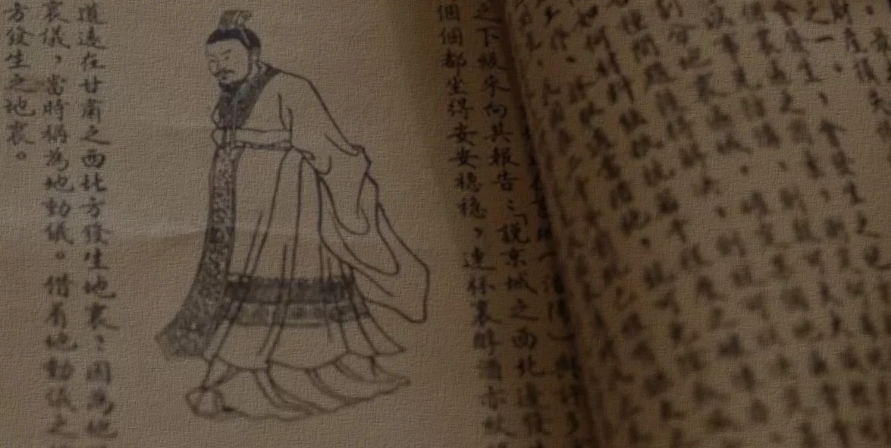
“The gradual emptying of knowledge held in common leaves civilisation vulnerable”, muses Chris Bateman in a thought-provoking piece published on January 9, 2024. He compares ancient China’s ‘Emperor’s mirror’, a vast anthology intended to include all known knowledge for the benefit of the imperial court, with the British empire’s Encyclopaedia Britannica and today’s Wikipedia. And he concludes: “The reflection in the Imperial Mirror grows dim indeed. One by one, the pages vanish. We are faced with the prospect of an empty encyclopaedia, and with it the ruination of the civilisation it once encircled”.
* * *
“The movement is riddled with informers, gatekeepers, controlled oppositionists and saboteurs. The movement must be on permanent high alert and call out these disruptive influences loudly and publicly”. So argues Chris Rea in a piece on the Real Left site looking at the current state of the UK’s Freedom movement. And Real Left, in collaboration with Vote Freedom Project, are hosting a public meeting on Saturday January 27 in Barnsley, South Yorkshire, on “Countering Subversion Within the Freedom Movement”. This will discuss “how to avoid traps and dead-ends set by the Capitalist system to neutralize those engaged in active opposition, particularly in relation to the 4th Industrial Revolution”. It will run from 2pm to 5pm, with a post-meeting social. Places are very limited due to venue size. To register, email realleftevents@yahoo.com with a brief explanation of who you are and why you’d like to attend.

* * *
“Looking at a number of underlying trends, it seems that a growing number of people are becoming more aware of what’s being done to us in the name of the great reset by those who presume to rule over us, and are starting to ask difficult questions and following on from that, fighting back. I’ll do my best to explain why I’m cautiously optimistic about the coming year”. The Stirrer kicks off 2024 with some encouraging “reasons to be cheerful“.

* * *
“The more atomized the society we live in and the more cut off from the whole we become, the greater the sense of pain and loss that forces us to try and create some kind of identity out of this void” – Paul Cudenec, Antibodies.

(For many more like this, see the Winter Oak quotes for the day blog)
If you like this bulletin please tell others about it. Subscribe by clicking the “follow” button.
—–
Back Issues
Follow Winter Oak on Twitter at @WinterOakPress
 winter oak