
Number 98
- Terrorism and the demonocracy
- The Veil Falls
- Farmers’ fires of rage against the global system
- Sri Aurobindo: an organic radical inspiration
- Acorninfo
1. Terrorism and the demonocracy

by Paul Cudenec
One of the most shocking of all the harrowing accounts to come out of Gaza this year was provided by UK surgeon Nizam Mamode.
He told MPs at a parliamentary hearing on Tuesday November 12 how the Israelis deliberately and systematically send drones to shoot children in areas they have just bombed.
“This is not an occasional thing. This was day after day after day operating on children who would say, ‘I was lying on the ground after a bomb dropped and this quadcopter came down and hovered over me and shot me’.”
Three days after this evidence was heard, Jersey police launched a 6.30am raid on the home of peace activist Natalie Strecker for speaking out against what Israel has been doing in Palestine.
According to the Jersey Evening Post, “police confirmed that having received a complaint, they arrested a 49-year-old woman on suspicion of an offence under Article 13.1 of the Terrorism (Jersey) Law 2002”.
Natalie was not the first to undergo such treatment, but is part of a growing number of critics of Israel, including journalists, targeted in this way by the pro-Zionist UK state.
Mum Clare Rogers had this to say after her daughter, Zoe, aged 21, was locked up as a “terrorist” after a protest against Elbit Systems, one of the arms businesses enabling the slaughter in Gaza: “Someone who believes so passionately in justice, is lamenting the deaths of innocent civilians and children. To be called a terrorist? That really disgusts me”.
The authorities’ use of the word “terrorism” and their deployment of “anti-terrorism” measures is extremely twisted.
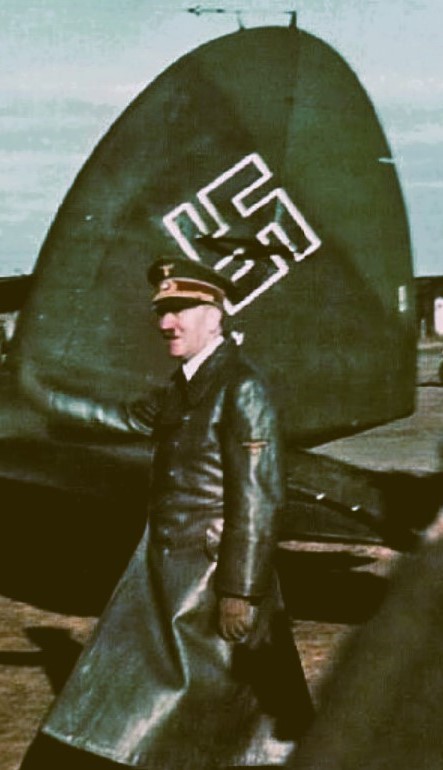
Defined as “the use of violence against non-combatants to achieve political or ideological aims”, actual terrorism seems to me to have most obviously been deployed by the likes of the British empire, Nazi Germany, the US empire or Israel – and, yes, I am very comfortable with bracketing them together in this way.
However, through their usual inversion of truth, all these regimes have instead used the “terrorist” label to describe those resisting or even just criticising their own terror-inflicting activities, whether in India, France, Iraq or, as we have seen, Palestine.
When you think about it, the cynicism behind this manoeuvre is simply staggering.
It’s worth setting this out plainly, particularly with regard to what is currently happening in the Middle East.
Deliberately murdering huge numbers of children is nothing short of evil.
Deliberately murdering huge numbers of children while painting yourself as the perpetual victim is very evil indeed.
Deliberately murdering huge numbers of children while painting yourself as the perpetual victim and having your critics arrested under “terrorism” laws is simply off the scale.
As regular readers will know, I have, since June 2023, been using the word criminocracy to describe those who rule over us.
Over the course of 2024 I have increasingly come to the conclusion that, although perfectly accurate, it is not strong enough to describe the real nature of the child-slaughtering global imperialist mafia.
I now think that a more appropriate term would be demonocracy.

by Lisa Marie
The revolution has begun,
each veil dropped, torn like flesh,
and with every rip, resistance brews,
thick and furious, in the blood of the collective.
They said it wouldn’t be televised—
but here we are, lights blazing,
cameras rolling, eyes pried wide,
watching the truth spit sparks.
So let the games begin,
let the shackles snap like brittle bones,
let the lies catch fire in the mouths of the liars,
let the rage surge, let it crack the sky.
This is not a protest;
it’s a reckoning, a wildfire, a storm,
where silence dies and fists rise,
and every scream fuels the fight.
3. Farmers’ fires of rage against the global system
“Free trade” might sound like a good thing, but it is today used to describe pretty much the opposite – the crushing of all local freedom, tradition and sovereignty under the jackboot of global Capital.
The Zapatistas knew that when they came down from the mountains of Chiapas in 1994 to resist the imposition of the North American Free Trade Agreement.
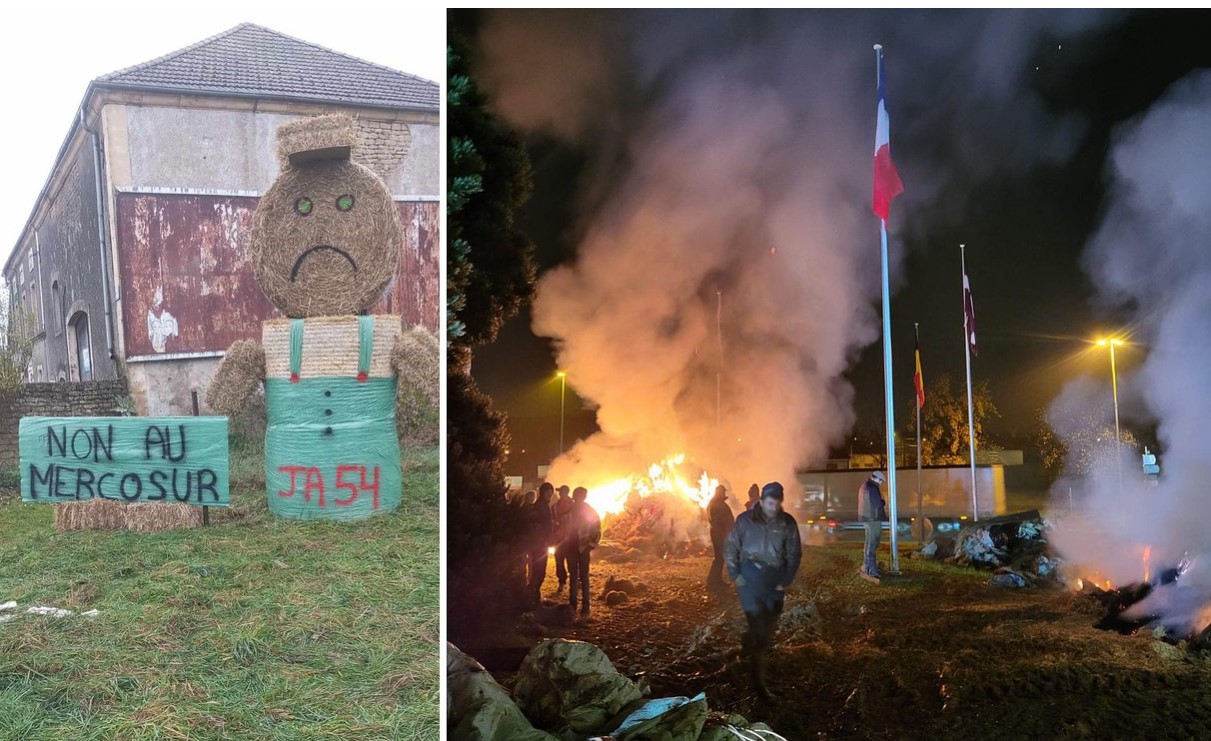
And French farmers knew that when they came out from their fields this week to resist the imposition of the proposed European Union–Mercosur “free trade” agreement.
This is “focused on sales of cheap meat and soy from South America into the EU on one hand and large sales of pesticides and cars from the EU to the Mercosur on the other”.
The protesting farmers are furious about the prospect of an incoming flood of beef, chicken, sugar and maize from Argentina and Brazil, produced with the help of antibiotics and pesticides that are banned in the EU.
Farmers’ union leader Arnaud Rousseau said that with tens of thousands of his members already in severe financial difficulty, the Mercosur agreement was “the cherry on the cake”.
Dairy farmer Armelle Fraiture added: “We have to make the government understand that this is too much. What is the point of imposing on us so many regulations, restrictions and prohibitions and then on the other hand opening the sluice gates to everything and anything?”
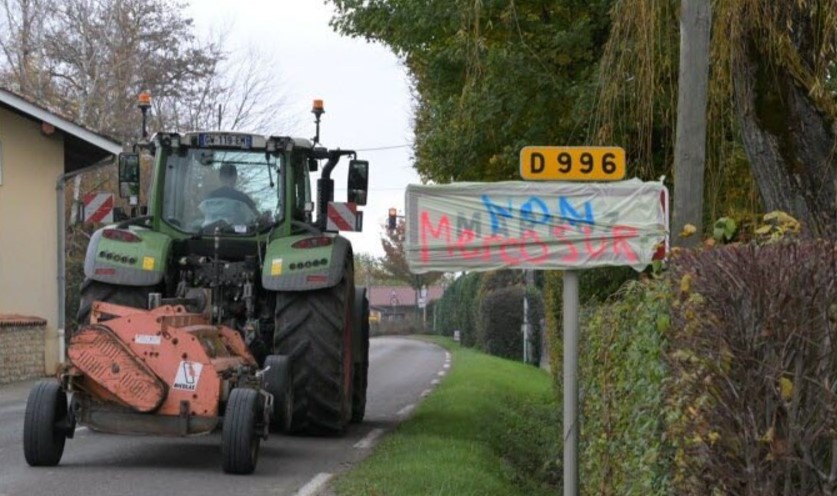
Although president Emmanuel Macron has said that France would not be signing the Mercosur treaty as it stands, he does not have a reputation for being a man of his word and his agenda is widely distrusted.
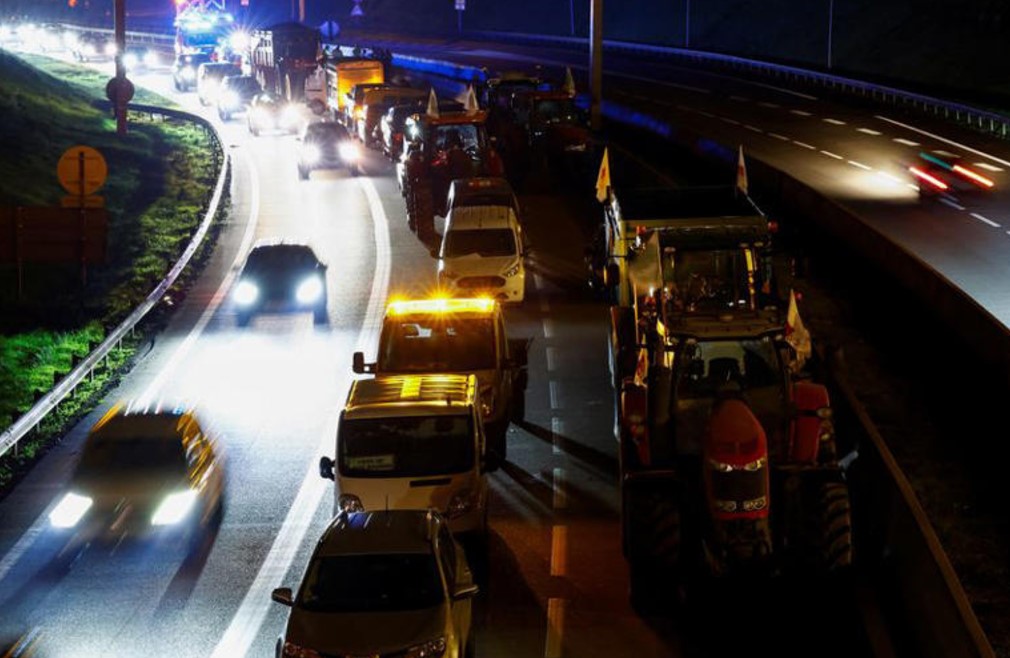
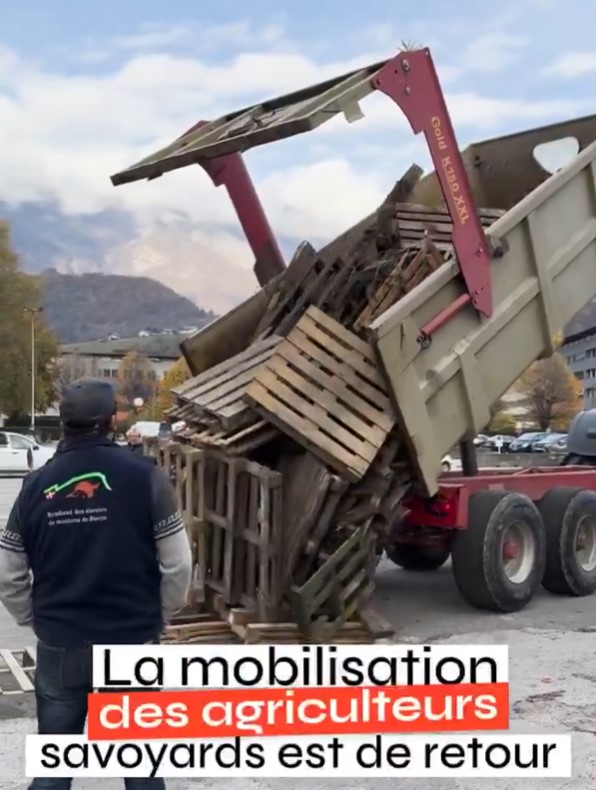
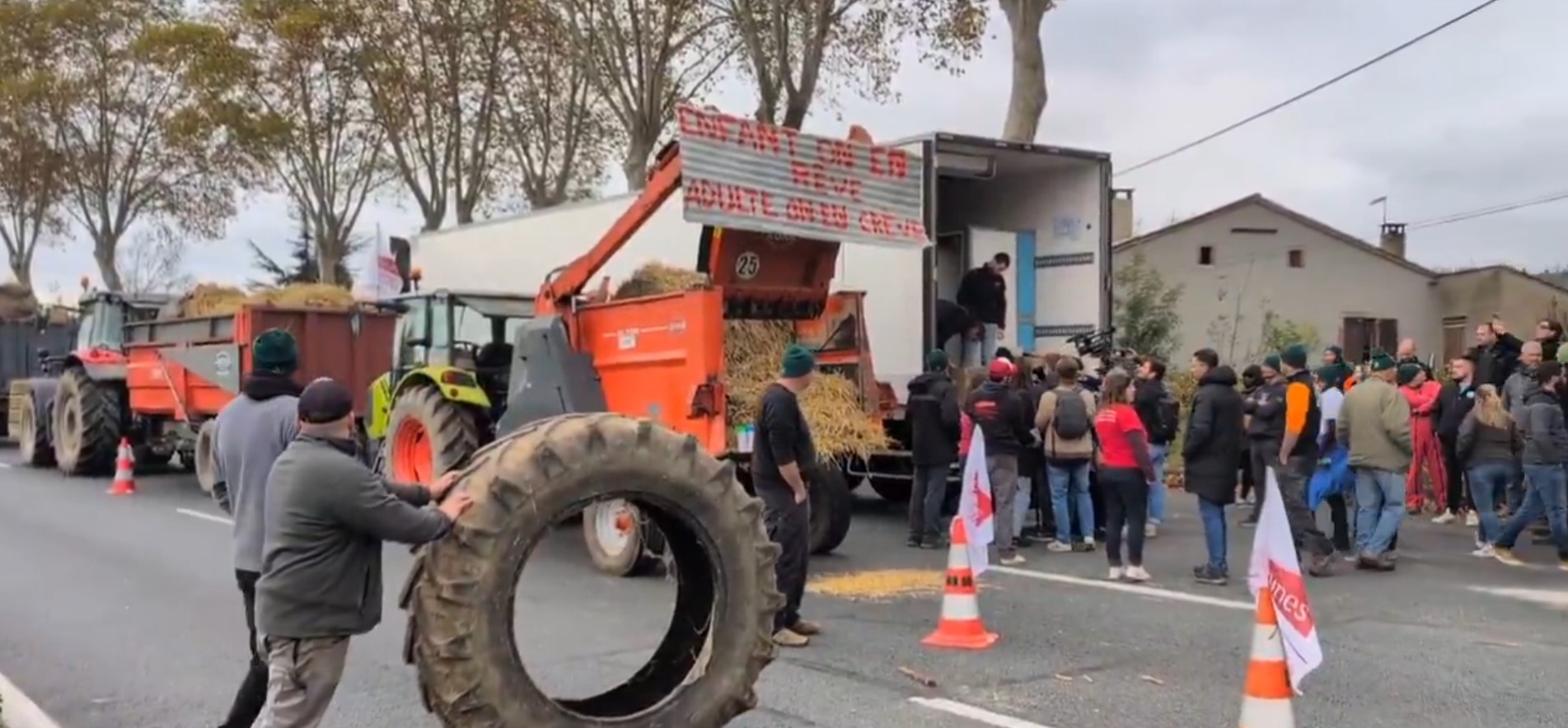
So farmers took to the streets on the night of Sunday November 17 and on Monday November 18, to coincide with the start of the globalist G20 conference in Brazil.
They parked their tractors outside Préfectures – state buildings – all over the country, from the northern town of Caen to the southern town of Avignon, where they had already blocked a bridge over the Rhône.

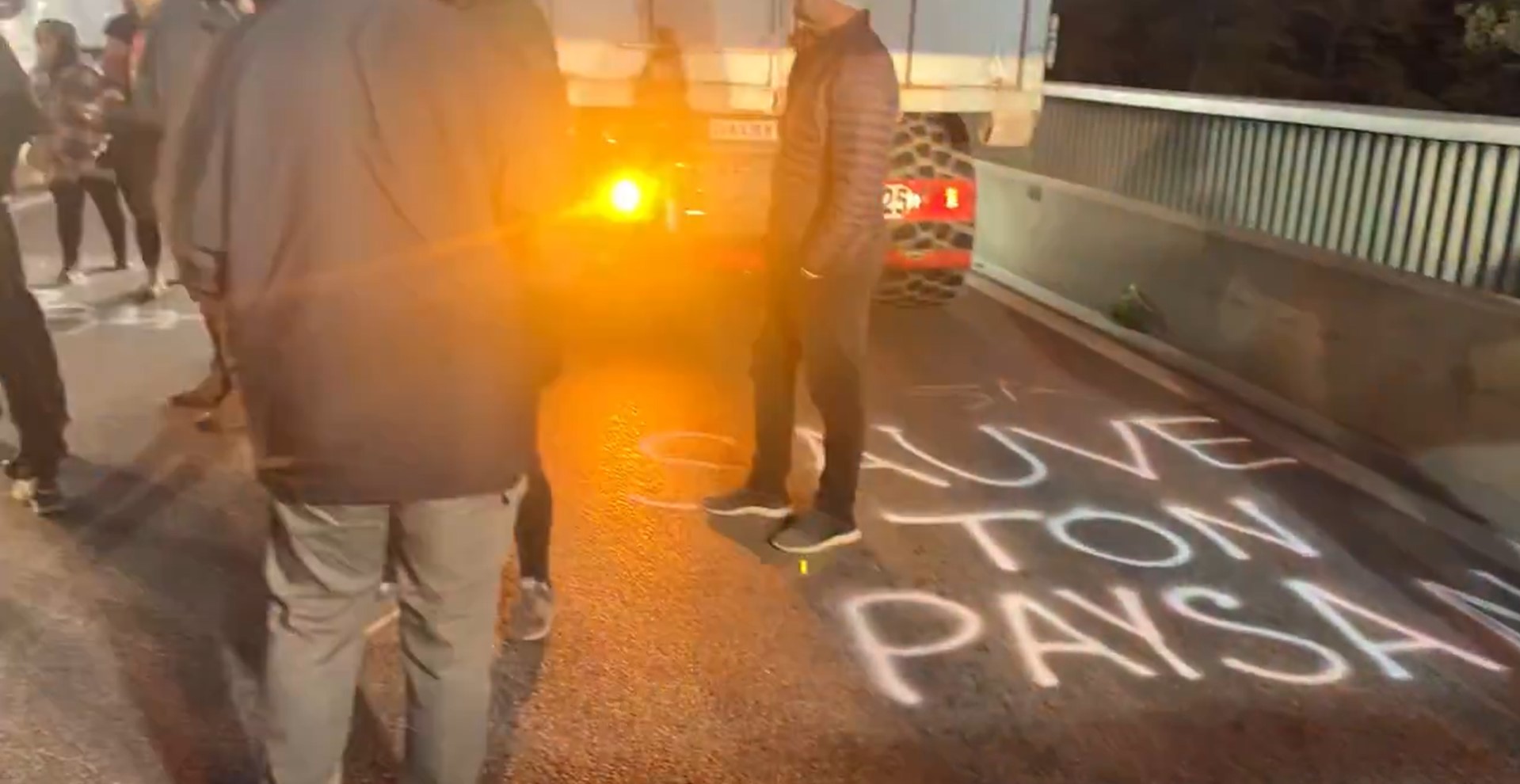
Tractors also occupied bridges over the Loire at Orléans and over the Rhine at Strasbourg.


Roads and roundabouts were partially blocked all over the place, such as at Velizy-Villacoublay near Paris and Cannet-des-Maures in the Var.

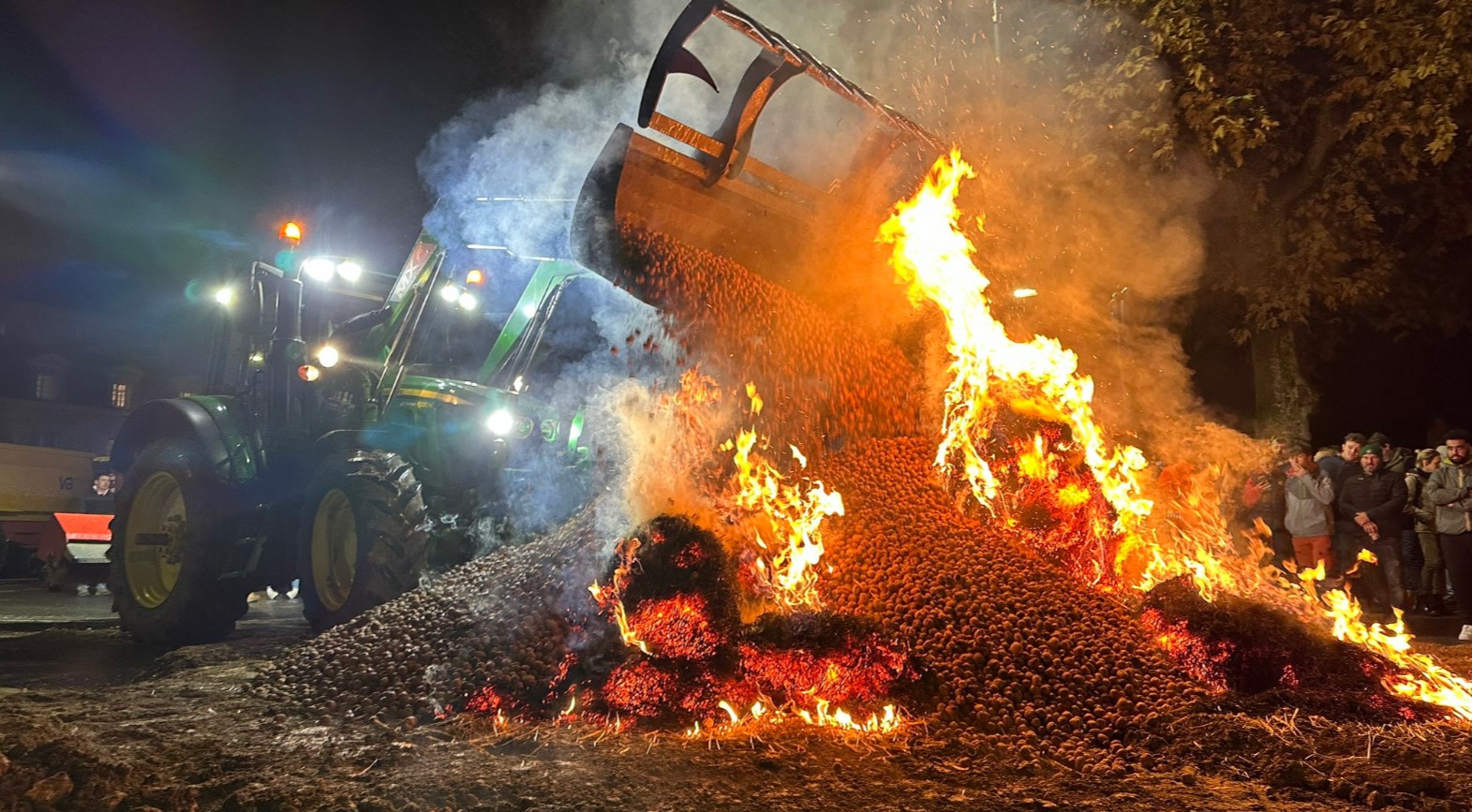
Various substances were sprayed and dumped at government buildings – such as at Le Puy-en-Velay, in Haute-Loire, at Albi in Tarn and at Beauvais in Oise.
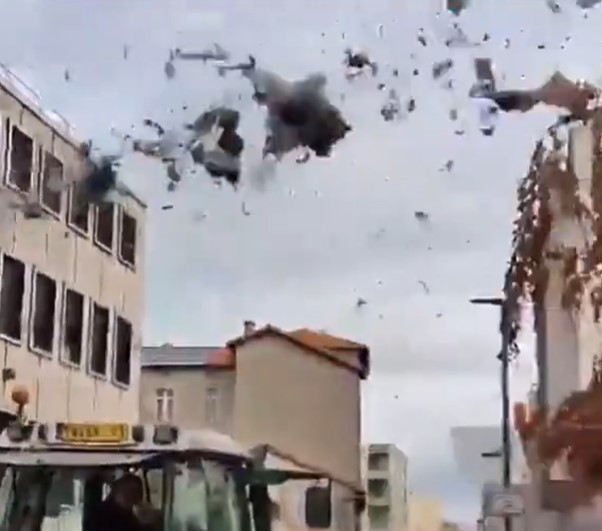
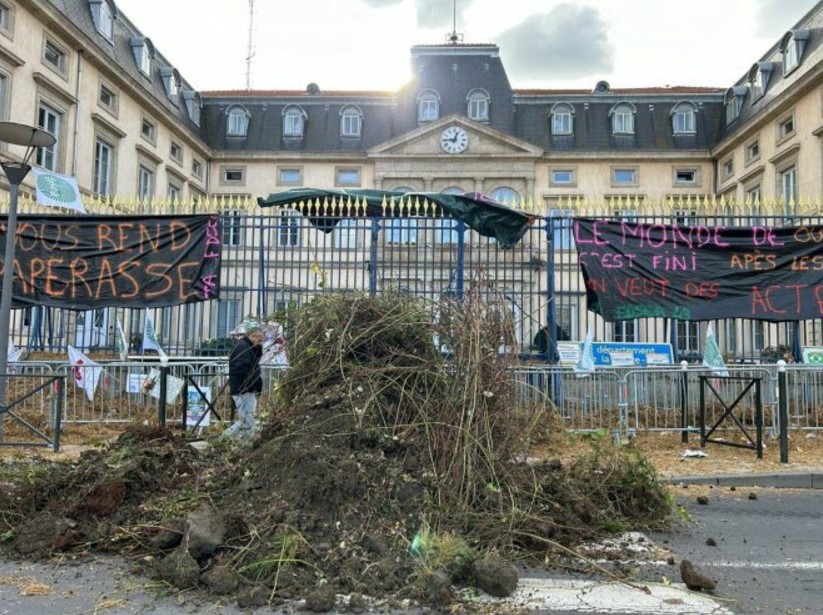

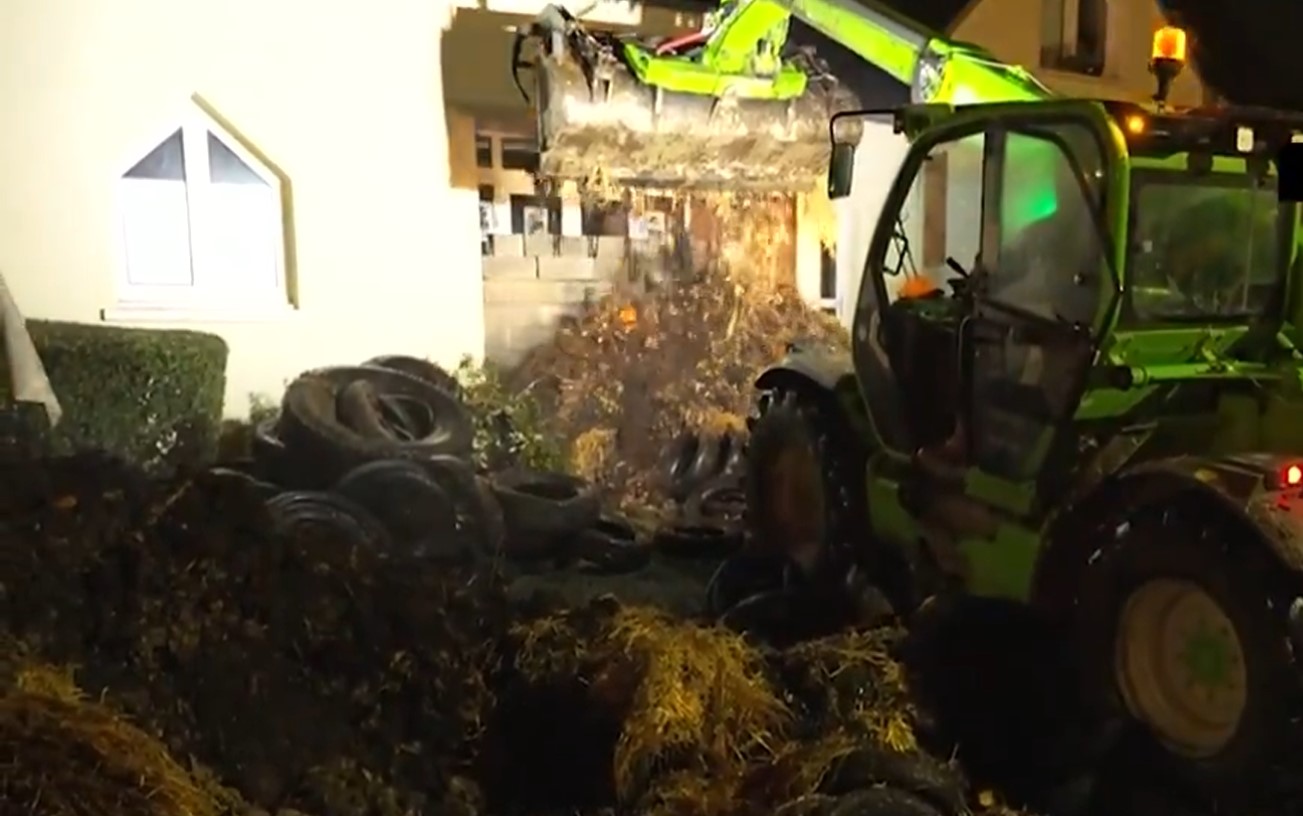
This big new mobilisation across France is being termed “Act II” of the farmers’ revolt which began in January this year.

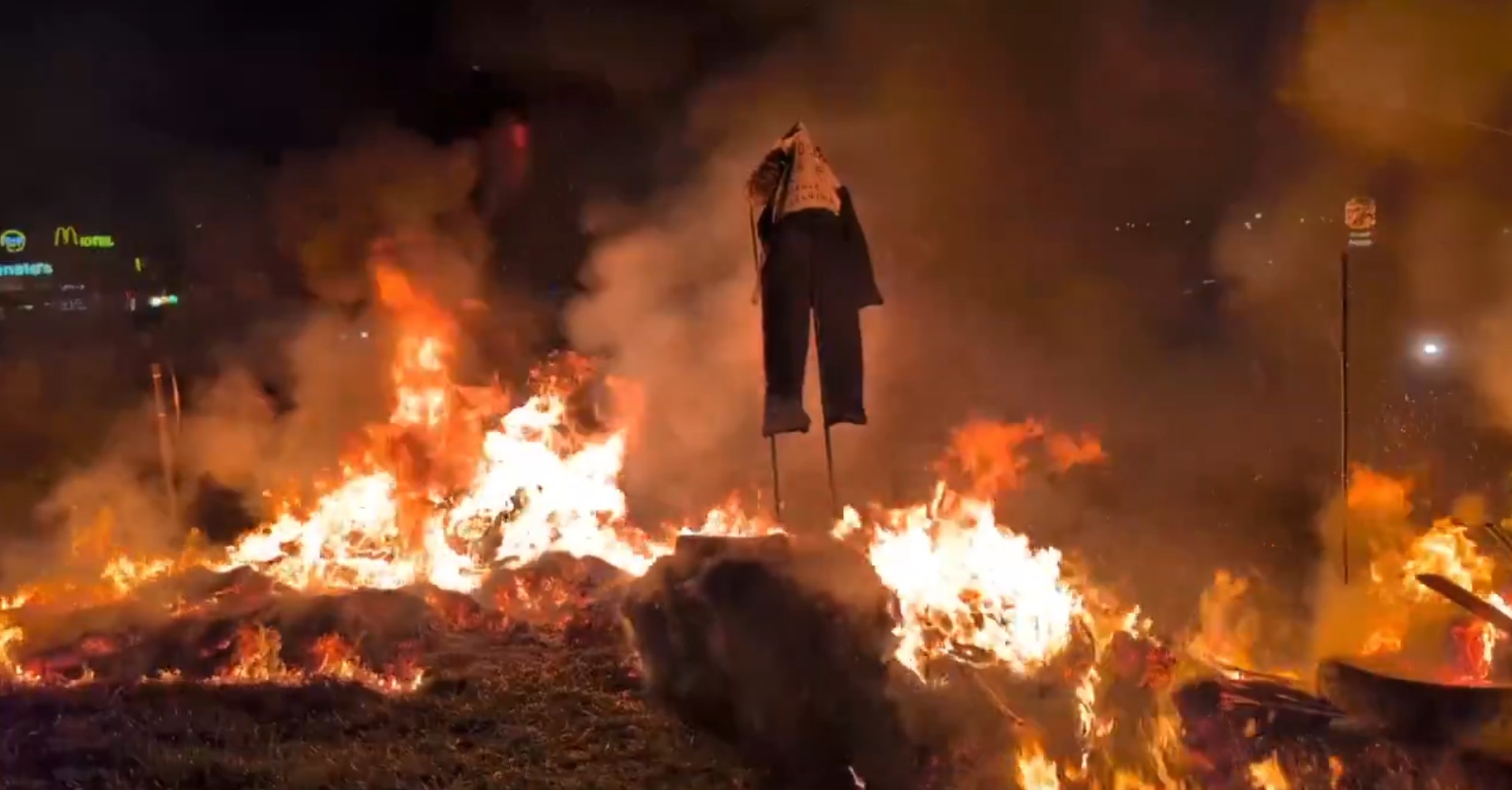
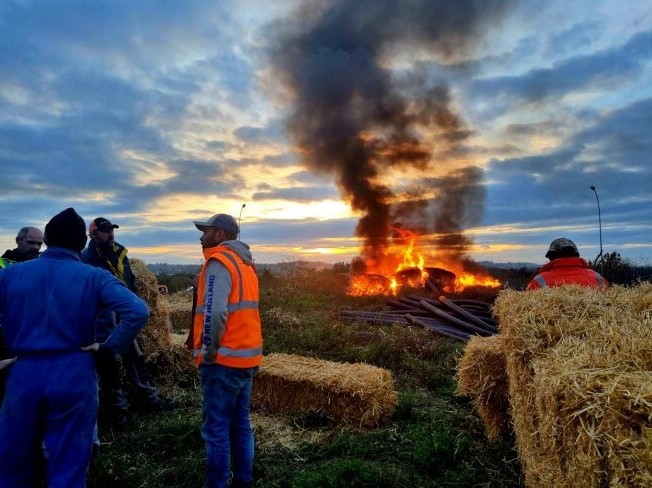
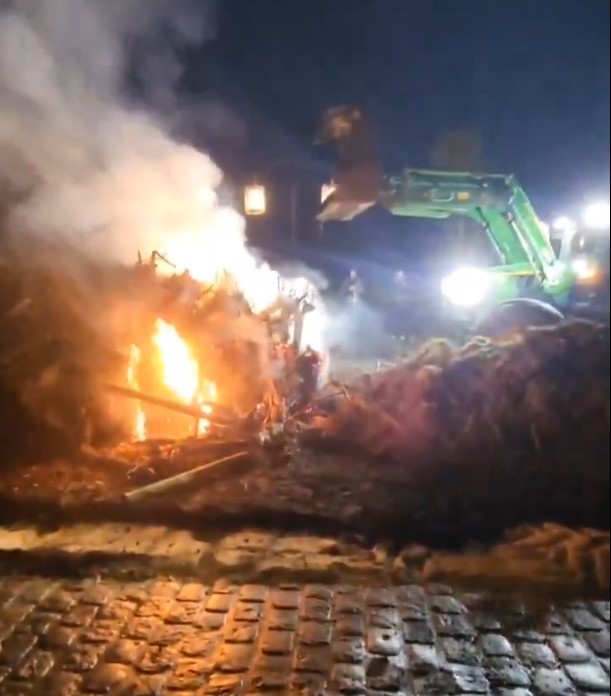
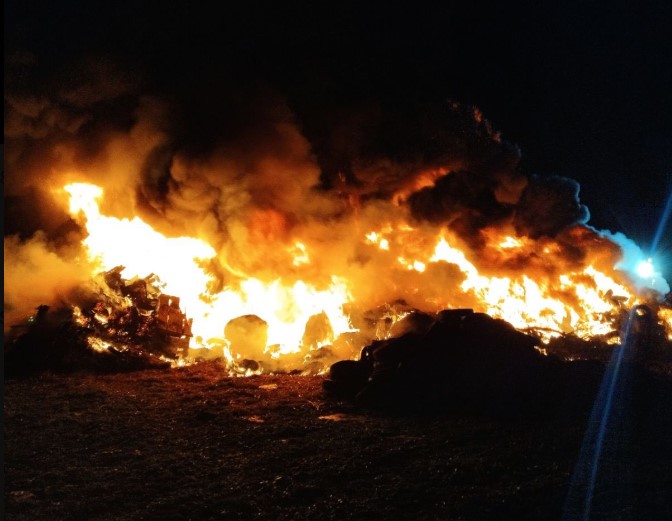
As dusk fell on Monday evening, “fires of anger” were lit everywhere – including the ones pictured here at Saint-Bonnet-de-Mure near Lyons, next to that city’s airport, at the docks in Bordeaux, at the little town of Villedoux in Charente Maritime, at Périgueux in Dordogne and at Thionville in Lorraine.
It’s a big “non” to globalist “free trade” from the farmers of France!

4. Sri Aurobindo: an organic radical inspiration
The latest in our series of profiles from the orgrad website.

“We must be governed by the guide within rather than by the opinions of men”
Sri Aurobindo (1872-1950) was in many ways the epitome of an organic radical inspiration.
On the one hand, he was a fiercely determined opponent of the global imperialist system, like Mohandas Gandhi, Bharatan Kumarappa and J.C. Kumarappa serving time in prison for his resistance to the British occupation of India.
On the other hand, he was a fine metaphysician, whose teaching did not steer people away from engagement with the world, as is too often the case, but instead stressed the spiritual imperative of using our physical existence for higher good.
Aurobindo played an important role in the struggle for swaraj, self-rule, and, before being imprisoned for a year in 1908, he edited a daily nationalist newspaper, Bande Mataram, which has been said to have “changed the political thought of India”. [1]

Mocking his “moderate” opponents, who referred to his own movement as “extremist”, he wrote: “To wish for our eternal serfdom is prudence and peacefulness. To think ourselves irremediably unfit is wisdom and moderation. To imagine ourselves a nation is madness. To love our country is superstition. To work for its emancipation is treason. To harbour any such sentiment is sedition”. [2]
The servile mental condition of so many educated Indians appalled him: “There is no longer any room in the Government schools for any but slaves and the sons of slaves”. [3]
And he declared: “If we are indeed to renovate our country, we must no longer hold out supplicating hands to the English Parliament, like an infant crying to its nurse for a toy, but must recognise the hard truth that every nation must beat out its own path to salvation with pain and difficulty, and not rely on the tutelage of another”. [4]
The sheer brutality of the British occupation angered him: “The Romans created a desert and called the result peace; the British in India have destroyed the spirit and manhood of the people and call the result law and order”. [5]
But his call for “popular freedom” [6] for Indians was also born of his keen awareness that the occupiers were operating on behalf of commercial interests and “employ Indian labour, not out of desire for India’s good, but because it is cheap”. [7]

He added that “exploitation of India by the British merchant” was the principal reason for bureaucratic colonial control. [8]
He identified a “a radical and congenital evil” at work: “The huge price India has to pay England for the inestimable privilege of being ruled by Englishmen is a small thing compared with the murderous drain by which we purchase the more exquisite privilege of being exploited by British capital”. [9]
Having grown up in industrial capitalist England, Aurobindo had there experienced at first hand “social degradation and an entire absence of the cohesive principle”. [10]
He approvingly referred to English poet and cultural critic Matthew Arnold’s description of this “modernised” and thus debased society as consisting of an aristocracy materialized, a middle class vulgarised and a lower class brutalized. [11]
Aurobindo then expanded on this analysis, at eloquent length.
“We may perhaps realize the nature of that unsounder aspect, if we amplify Matthew Arnold’s phrase: — an aristocracy no longer possessed of the imposing nobility of mind, the proud sense of honour, the striking preeminence of faculty, which are the saving graces — nay, which are the very life-breath of an aristocracy; debased moreover by the pursuit, through concession to all that is gross and ignoble in the English mind, of gross and ignoble ends: — a middle class inaccessible to the influence of high and refining ideas, and prone to rate everything even in the noblest departments of life, at a commercial valuation: — and a lower class equally without any germ of high ideas, nay, without any ideas high or low; degraded in their worst failure to the crudest forms of vice, pauperism and crime, and in their highest attainment restricted to a life of unintelligent work relieved by brutalising pleasures”. [12]

In contrast to this lowness at the rotten heart of the empire of greed, Aurobindo wrote of the lofty values represented by India’s ancient civilization.
“India cannot perish, our race cannot become extinct, because among all the divisions of mankind it is to India that is reserved the highest and the most splendid destiny, the most essential to the future of the human race”. [13]
“Ours is the eternal land, the eternal people, the eternal religion, whose strength, greatness, holiness, may be overclouded but never, even for a moment, utterly cease”. [14]
In order to free India from the dark forces of the global money-power, Aurobindo urged India’s traditional spiritual warriors to come to the fore.

He said: “It is high time we abandoned the fat and comfortable selfish middle-class training we give to our youth and make a nearer approach to the physical and moral education of our old Kshatriyas or the Japanese Samurai”. [15]
“Politics is the work of the Kshatriya and it is the virtues of the Kshatriya we must develop if we are to be morally fit for freedom.
“But the first virtue of the Kshatriya is not to bow his neck to an unjust yoke but to protect his weak and suffering countrymen against the oppressor and welcome death in a just and righteous battle”. [16]
Although Aurobindo supported boycotts and parallel structures as a tactic, [17] he rejected the fetichisation of any particular form of resistance and favoured a flexible approach.
“Resistance may be of many kinds, — armed revolt, or aggressive resistance short of
armed revolt, or defensive resistance whether passive or active: the circumstances of the country and the nature of the despotism from which it seeks to escape must determine what form of resistance is best justified and most likely to be effective at the time or finally successful”. [18]
There were limits to passive resistance, he said, and the moment that physical coercion of the people was attempted, “active resistance becomes a duty”.

He continued: “If the instruments of the executive choose to disperse our meeting by breaking the heads of those present, the right of self-defence entitles us not merely to defend our heads but to retaliate on those of the head-breakers.
“For the myrmidons of the law have ceased then to be guardians of the peace and become breakers of the peace, rioters and not instruments of authority, and their uniform is no longer a bar to the right of self-defence”. [19]
Aurobindo continued to convey this outlook through the philosophy of Yoga which he developed in French-controlled Pondicherry during the second half of his life, alongside Mirra Alfassa (referred to as “The Mother”).
Spiritual warriors, he said, can become “the channel in our mind and body for a divine action poured out freely upon the world”. [20]
Although this involved shedding the ego to become aware of universal belonging, the individual remained crucial, not just eventually as a physical tool for divine action but also as the means by which this gnosis might first be accessed.
“We must be governed by the guide within rather than by the opinions of men”, Aurobindo wrote. [21]
“Individualism is as necessary to the final perfection as the power behind the group-spirit; the stifling of the individual may well be the stifling of the god in man”, he warned.

“There is continually a danger that the exaggerated social pressure of the social mass by its heavy unenlightened mechanical weight may suppress or unduly discourage the free development of the individual spirit.
“For man in the individual can be more easily enlightened, conscious, open to clear influences; man in the mass is still obscure, half-conscious, ruled by universal forces that escape its mastery and its knowledge”. [22]
When the individual realised his power to channel and express the light of the universe, he could allow the life force which had always animated him to take on a new meaning as “an indispensable intermediary” [23] between above and below, said Aurobindo.
This was a way of enabling the highest truth to become present and active in the physical world.
Rather than suggesting that when we have become aware of our cosmic belonging we should withdraw from the “illusion” of the physical reality we have previously experienced, Aurobindo insisted that, on the contrary, we should return to the fray in a renewed form.
This was the very essence of his “integral and synthetic” form of Yoga, he said.
“An absolute liberty of experience and of the restatement of knowledge in new terms and new combinations is the condition of its self-formation.
“Seeking to embrace all life in itself, it is in the position not of a pilgrim following the highroad to his destination, but, to that extent at least, of a path-finder hewing his way through a virgin forest”. [24]

Video links: Sri Aurobindo: A New Dawn. An Inspirational Hand Painted Animation Film (28 mins), The Transformation: a documentary film on Sri Aurobindo (54 mins).
[1] A Life Sketch. https://web.archive.org/web/20150311184542/http://www.sriaurobindoashram.org/ashram/sriauro/life_sketch.php
[2] Bande Mataram, The Complete Works of Sri Aurobindo (Pondicherry: Sri Aurobindo Ashram Trust, 2002), p. 485.
[3] Bande Mataram, p. 113.
[4] Bande Mataram, p. 10.
[5] Bande Mataram, pp. 219-20.
[6] Bande Mataram, p. 140.
[7] Bande Mataram, p. 133.
[8] Bande Mataram, p. 222.
[9] Bande Mataram, p. 271.
[10] Bande Mataram, p. 42.
[11] Bande Mataram, pp. 32-33.
[12] Bande Mataram, p. 43.
[13] Bande Mataram, p. 84.
[14] Bande Mataram, p. 315.
[15] Bande Mataram, p. 223.
[16] Bande Mataram, p. 238.
[17] Bande Mataram, p. 300.
[18] Bande Mataram, p. 299.
[19] Bande Mataram, pp. 294-95.
[20] Sri Aurobindo, The Synthesis of Yoga (Pondicherrry, India: Sri Aurobindo Ashram Trust, 1973), p. 43.
[21] Aurobindo, The Synthesis of Yoga, p. 316.
[22] Aurobindo, The Synthesis of Yoga, p. 185.
[23] Aurobindo, The Synthesis of Yoga, p. 162.
[24] Aurobindo, The Synthesis of Yoga, p. 50.
What an upside-down state of affairs, when standing up to mass murder is officially regarded as “hate crime”! An important article from David Miller, to be read in conjunction with the viewing of this video about the history of the Anti-Defamation League and B’nai B’rith.

* * *
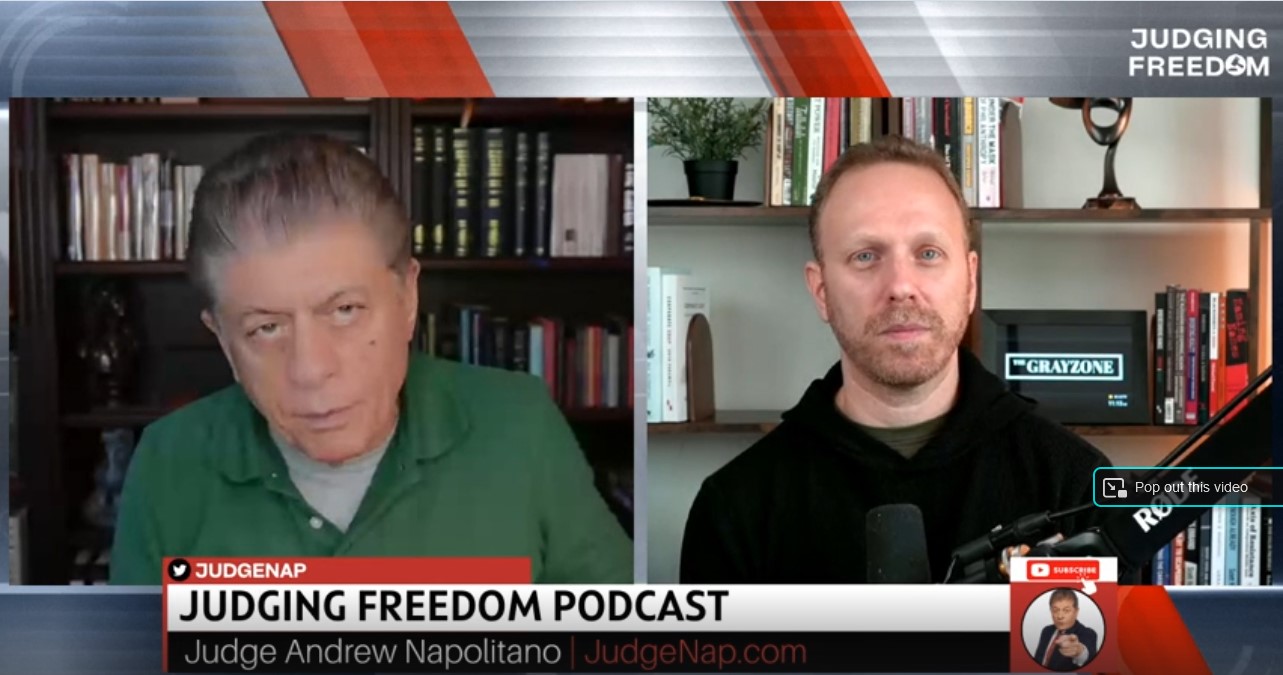
“Zionism has always fomented anti-semitism”. A truthbomb from Max Blumenthal of The Grayzone, talking to Judge Andrew Napolitano about the Israeli “pogrom” hoax in Amsterdam.
* * *
As all of Gaza’s being targeted and killed
The streets of Amsterdam were filled
With Jewish supremacists with metal rods
Laying down the line of God
Attacking cops and whoever got in their way
In the days before the football play
When Maccabi lost five-nil
And then the media, voices shrill
Began to create an elaborate sham
In Amsterdam
New song by the brilliant Jewish anti-Zionist singer/songwriter David Rovics.

* * *
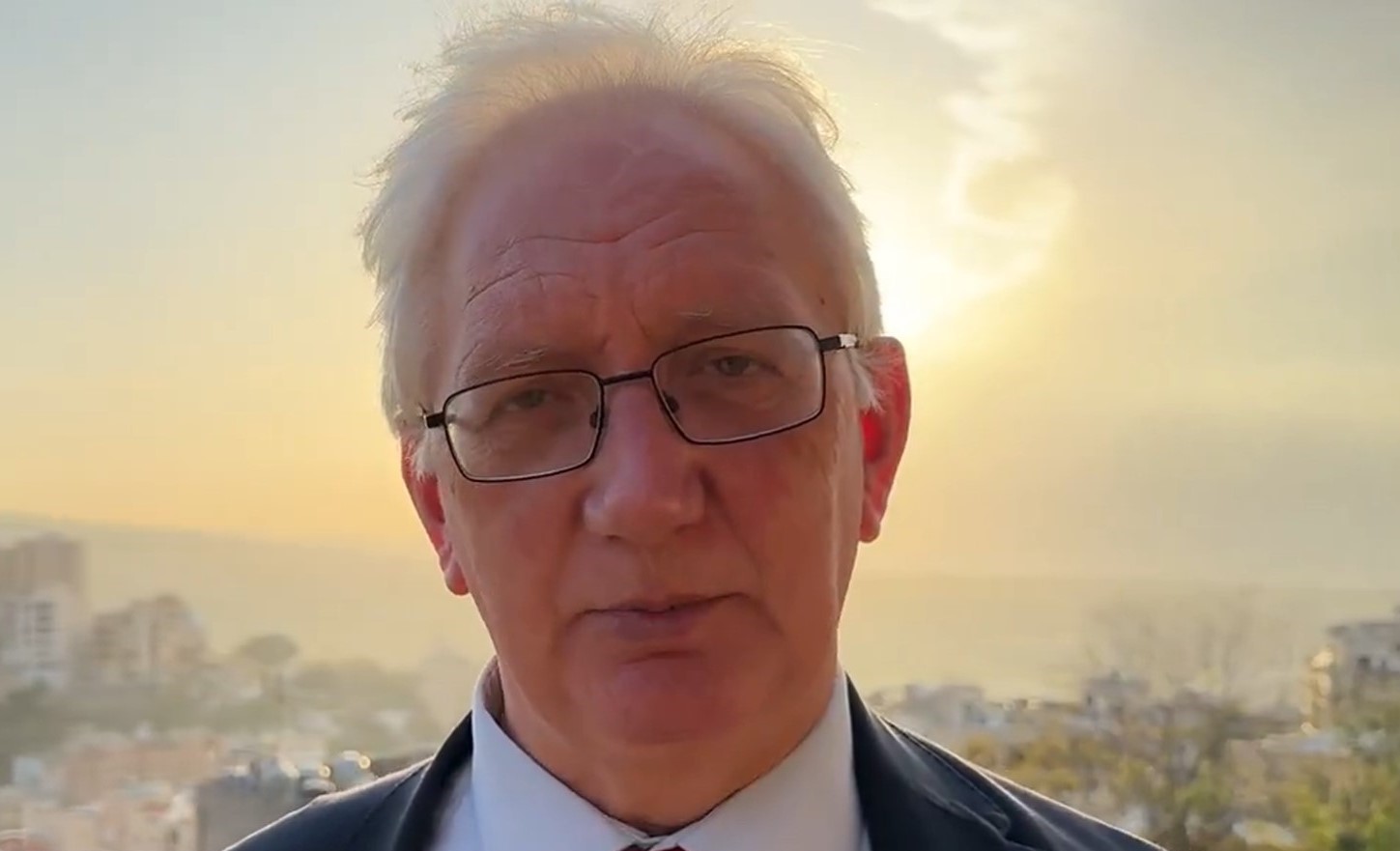
Former British diplomat Craig Murray reporting from Beirut on Saturday November 16 2024: “There has been a major escalation in the scale and intensity of Israel’s terror attacks on Lebanon today. Being here among the lovely people on the receiving end, it is simply astonishing that Biden, Starmer, Scholz etc all support this. The world has not gone mad, but evil”.
* * *
“What if the left and global capitalism are, at base, the same thing: engines for destroying customary ways of living and replacing them with the new world of the Machine?” asks Paul Kingsnorth. He adds: “The left and corporate capitalism now function like a pincer: one attacks the culture, deconstructing everything from history to ‘heteronormativity’ to national identities; the other moves in to monetise the resulting fragments”.
* * *
“For far too long, there’s been a belief that everyone must choose a leader and that they’re obligated to pick someone to represent them. But the truth is, you don’t. You don’t have to pick the lesser of two evils. This revelation is one of the core messages I’ve been shouting from the rooftops for years: you do not have to participate in a rigged game. You always have the power to say no. When given two options that don’t serve you, you have the right to flip the table and refuse to play. It’s encouraging to see more and more people recognizing this and stepping away from a system that doesn’t align with them”. So writes Franklin O’Kanu on his excellent Unorthodoxy blog.

* * *
“More people are starting to figure out that there is something evil out there. Something demonic. Something that wants to poison you, poison your child, poison your fetus, while controlling every single aspect of your life. Where you go, what you eat, what you say and what you think”. This statement can be found in ‘Lucifer‘, a fascinating piece about Sabbatean-Frankism on the Lies are Unbekoming site, where you can also find an in-depth look at the Rothschilds, inspired by Paul Cudenec’s 2022 booklet Enemies of the People.

* * *
“This world, described stupidly as modern as it were sufficiently justified by the very fact of existing today, has enormous means at its disposal, and notably a propaganda system whose power, efficiency and all-embracing scope simply cannot be compared with anything man has previously known or even imagined”. Georges Bernanos

(For many more like this, see the Winter Oak quotes for the day blog)
If you like this bulletin please tell others about it. Subscribe by clicking the “follow” button.
—–
Back Issues
Follow Winter Oak on Twitter at @WinterOakPress
 winter oak