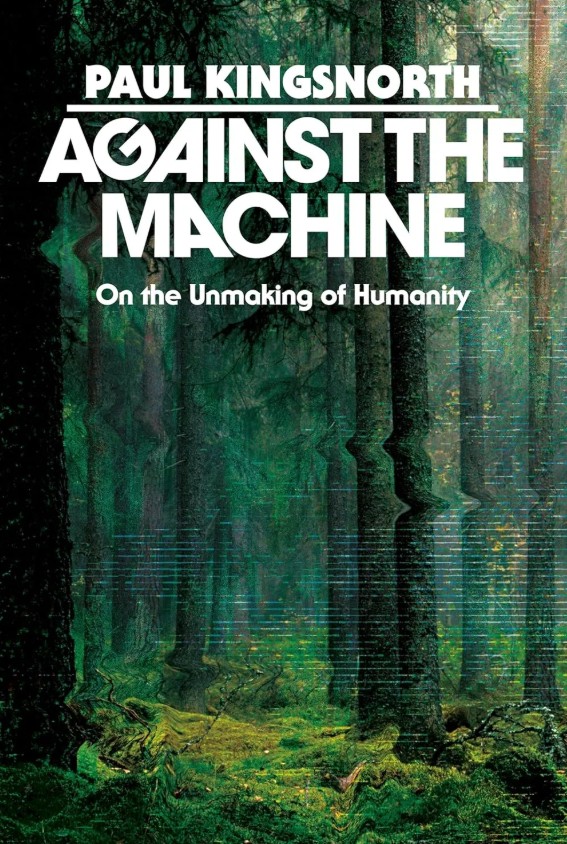
Doomsday is Such a Relief!

W.D. James reviews Paul Kingsnorth's new book. Paul Kingsnorth’s Against the Machine: On the Unmaking of Humanity (Thesis, 2025), is one of the books we’ve been needing. The book is the record of a personal journey toward a reckoning with Western modernity and the polycrisis it has engendered. Kingsnorth adopts the term, ‘The Machine,’ to identify the origin of … Continue reading Doomsday is Such a Relief!

Hobbes, Zombies, and the Sheriff

W.D. James continues his Faded Republic series with a seasonal film recommendation There is a stealth republic. For aficionados of low budget horror movies such as myself, Night of the Living Dead has to be among the best of the best. (Note: this essay contains spoilers throughout). George A. Romero’s 1968 cult classic was made for a … Continue reading Hobbes, Zombies, and the Sheriff

Of Causes Lost and Lost Again

by W.D. James What is the US South? In 1930, a group of ‘Twelve Southerners’ published a manifesto in defense of Southern culture. They called the anthology of twelve essays “I’ll Take My Stand: The South and the Agrarian Tradition.” The contributors were primarily literary folks, most of whom had connections to Vanderbilt University. They … Continue reading Of Causes Lost and Lost Again

Death and Poetry (The Myth of Philosophy 7)

by W.D. James Heroes are willing to give their lives, and in the old tales usually do, to protect their homes and loved ones. Their deaths are literally salvific. Beowulf suffering his mortal wounds acquired in destroying the dragon saves the people of his homeland. Of course, the archetype here is Jesus Christ whose death … Continue reading Death and Poetry (The Myth of Philosophy 7)

Socrates’ Demon (The Myth of Philosophy 6)

by W.D. James Socrates had a demon. Or, to avoid misunderstanding, he had a daemon, to stick to the Greek which does not have the negative connotation that the English word derived from it carries. Socrates and the divine In this series we have been tracking how Socrates, as the representative of philosophy, is portrayed … Continue reading Socrates’ Demon (The Myth of Philosophy 6)

Socrates’ Doctrine (The Myth of Philosophy 5)

by W.D. James From what we have learned of Socrates thus far in this essay series, it might sound odd to speak of ‘Socrates’ doctrine.’ After all, he had claimed that any wisdom he possessed was knowing that he did not know very much, if anything. Further, he insisted he was not a teacher. He … Continue reading Socrates’ Doctrine (The Myth of Philosophy 5)

Combat (The Myth of Philosophy 4)

by W.D. James In this series we have been exploring how in his Apology, Plato presents his mentor Socrates as a new sort of hero. Heroes fight monsters and previously we looked at who the monsters in this case were: those who subordinate truth to power. This time we’ll look at Socrates’ trial itself; the … Continue reading Combat (The Myth of Philosophy 4)

Wisdom (The Myth of Philosophy 3)

by W.D. James Philosophers have a comprehensive understanding of all aspects of existence. What they know, they always know with certainty. They are practically gods in the realm of knowledge and wisdom. Wait - none of those things are true (though philosophers often forget that). That philosophers might think and act like they were true … Continue reading Wisdom (The Myth of Philosophy 3)