by Paul Cudenec (who reads the article here)
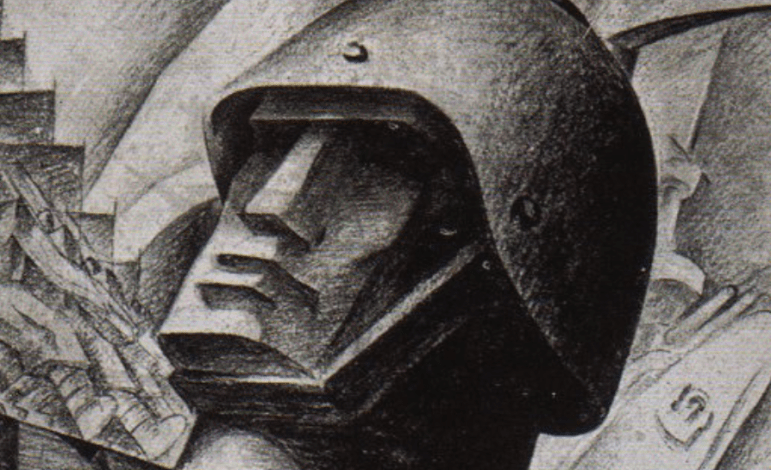
A shared emphasis on “modernisation” and industrialisation was one of the first clues I found to suggest that today’s global mafia are pursuing the very same agenda as the 20th century’s fascists and communists.
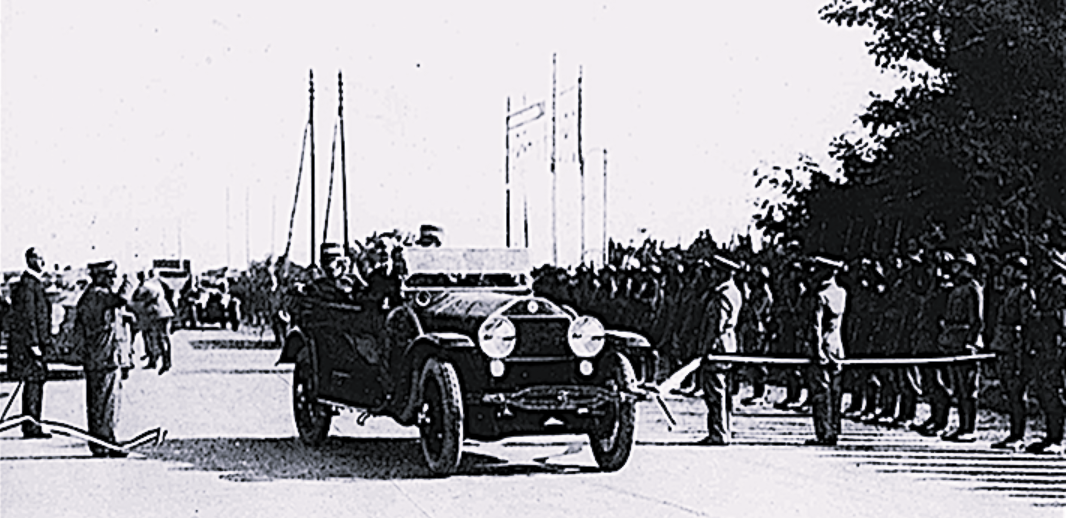
In Benito Mussolini’s Italy, “development” was at the forefront of the Zionist-linked [1] regime’s plans, as I explain in Fascism Rebranded. [2]
More land was cultivated and an infrastructure of roads, new towns and industrial estates was built.
Pierre Milza and Serge Berstein write: “A vast programme of public works was undertaken, carried out by private firms, who were offered lucrative contracts by the State.
“Electrification of the rail system began, with the construction of tunnels on the Rome-Naples and Bologna-Florence lines.
“A massive roadbuilding programme was entrusted to ANAS (Azienda Nazionale Autonoma delle Strade), created in 1928, which oversaw the showcase construction of big toll motorways, the first in Europe”. [3]
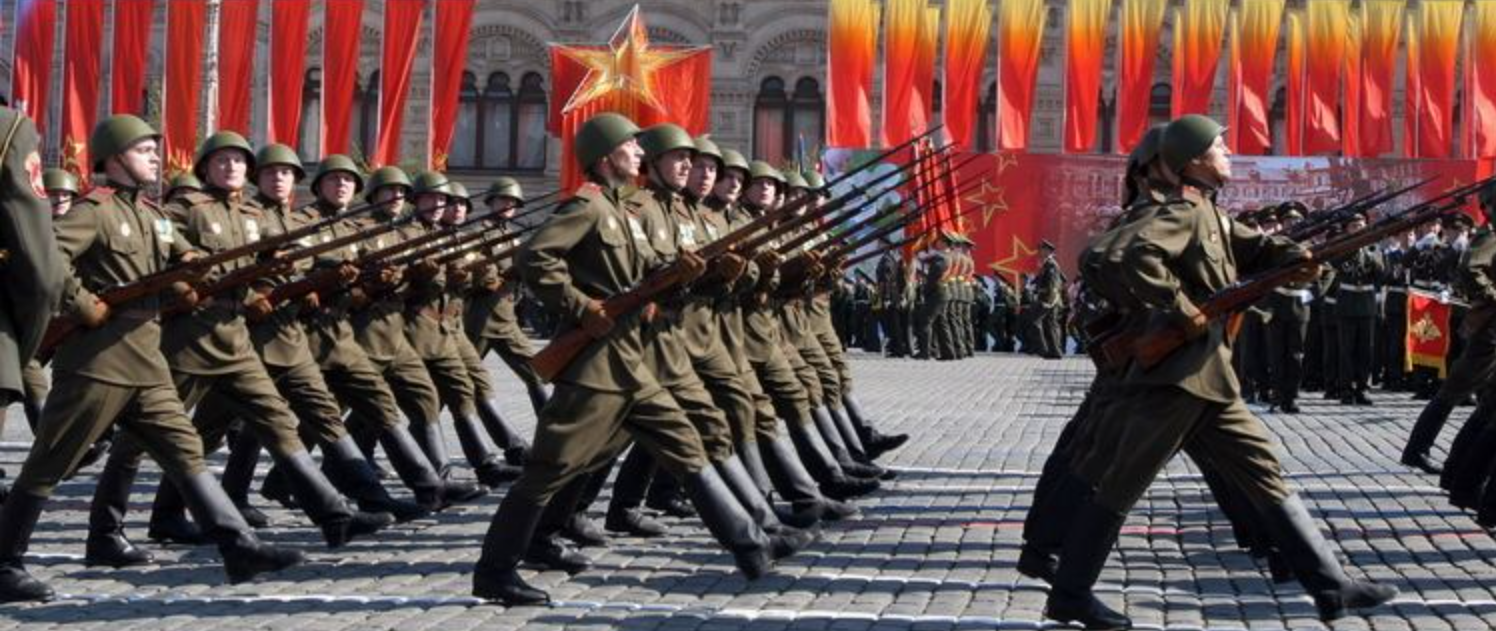
As for communism, I explain in The False Red Flag that as early as 1899 Lenin wrote a book called The Development of Capitalism in Russia in which he described the mobility of the workforce and the extension of the market as representing “progress”. [4]
He stressed the need to sweep away all the outmoded institutions that impeded the development of industrial capitalism, that supposedly necessary stage on the road to socialism. [5]
Writes Carroll Quigley: “Communism in Russia alone required, according to Bolshevik thinkers, that the country must be industrialized with breakneck speed, whatever the waste and hardships, and must emphasize heavy industry and armaments, rather than rising standards of living. [6]
“The high speed of industrialisation in the period 1926-1940 was achieved by a merciless oppression of the rural community in which millions of peasants lost their lives”. [7]
Communism was regarded as a “golden opportunity” in certain circles and a year before the revolution, US Ambassador David Francis cabled New York banker Frank Arthur Vanderlip: “Opportunities here during the next ten years very great along state and industrial financing”. [8]
Like fascism, communism provided financiers with the authoritarian state muscle to impose their industrial development projects on people who would not otherwise have gone along with them.
Totalitarian industrialism is very much the model favoured by Zionist godfathers the Rothschilds, as I set out in my 2022 booklet dedicated to that devilish dynasty, Enemies of the People.
They have, as I summed up, “amassed vast wealth at the expense of the rest of us, consistently put themselves before others, profiteered from war after war, grabbed hold of industrial infrastructure, exploited humanity, destroyed nature, corrupted political life, used royalty for their own purposes, privatised the public sector, imposed their global control in a secretive manner and now imagine that they can dictate our future, confining us to a miserable and denatured state of techno-totalitarian slavery”. [9]
With all this in mind, I was intrigued to come across a 2022 article by French historical researcher Margot Lyautey about the wartime activities in France of a German business called Ostland. [10]
This entity, boasting the full name Ostdeutsche Landbewirtschaftungsgesellschaft, initially operated in Nazi-occupied Poland from February 1940, where it was involved in installing Germans in farms owned by deported Poles.
I was going to remark that this kind of expropriation was rather communist in nature, until I realised that it was also similar to what Israelis do to Palestinian homes and land.
The similarities are, of course, no coincidence.
Ostland then set up a branch in occupied France, in the “zone interdite” (“forbidden zone”) – in the Ardennes, near the Belgian border – where farms and land had likewise been stolen from their owners.
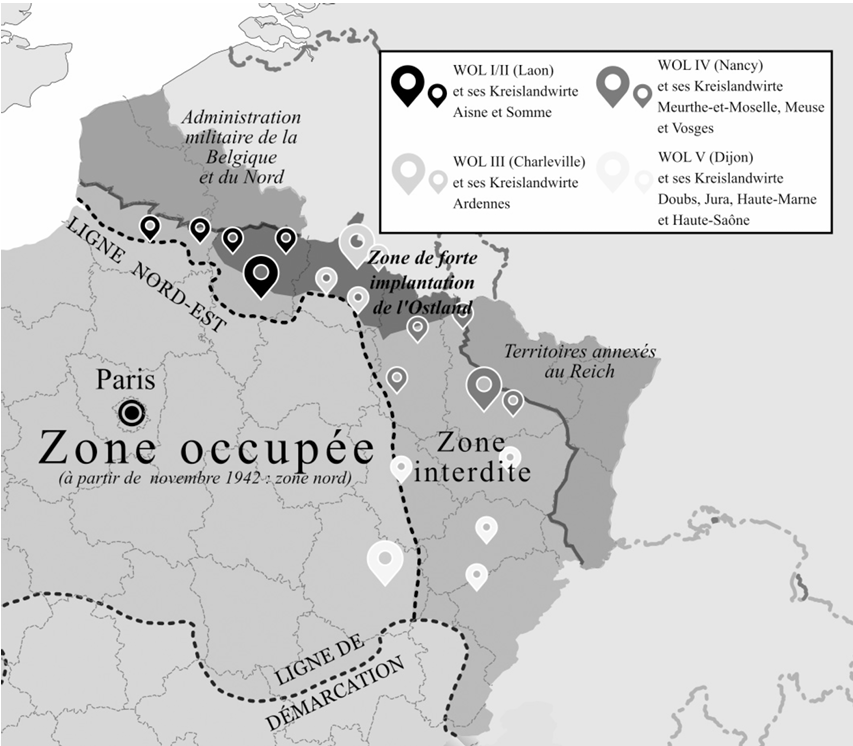
This was very much a public-private partnership of the kind favoured by the zio-globalist WEF, [11] the company being jointly controlled by the Nazi Ministry of Agriculture in Berlin and the occupation authorities in Paris, and funded by the Oberkommando Wehrmacht.
Lyautey writes: “This business, headed by Bernhard Wermke, was one of the key cogs of agricultural policy under the occupation”. [12]
She says that the food it produced would most probably have been sent directly to the Reich to feed its population and maintain its war effort. But its greater aim was to kick-start a “modernisation” process, which was, in fact, later imposed on France in the post-war period. [13]
Lyautey describes three main aspects to this role: “In the first instance, it had to serve as a shop window for ‘modern’ German agricultural methods and all the good that they could do for France”. [14]
“At the same time Ostland was also a laboratory in which the occupying power was preparing the agricultural policies of its occupation before rolling them out across France.
“To do this, Ostland developed 35 research centres across the whole ‘forbidden zone’ where agronomic trials were carried out (comparisons between German and French varieties, quantities of fertiliser, time of planting, etc).
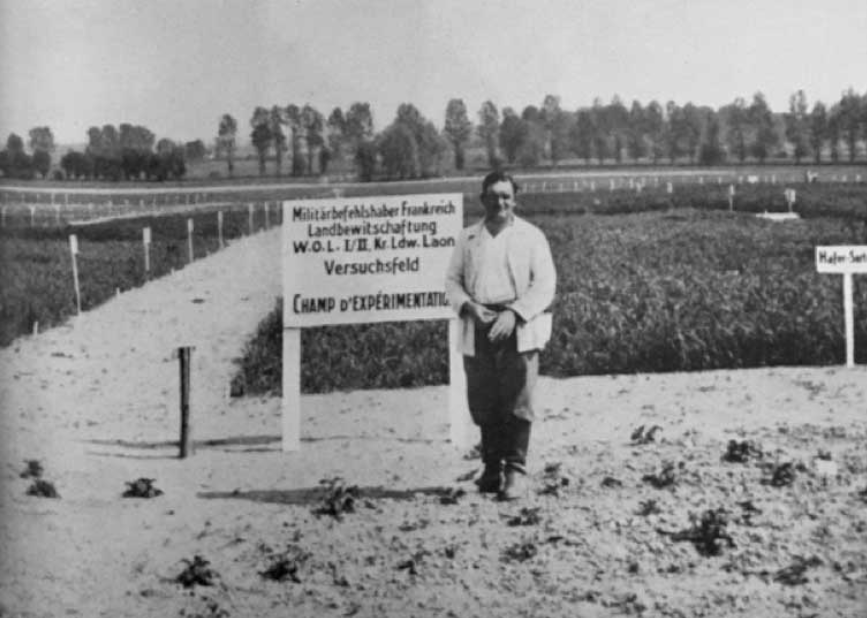
“Finally, Ostland was a school not just for French farmers, who supposedly learned to produce better, but also for the business’s German executives.
“Ostland was regarded as a training hub for a new elite of German farmers who would implement National Socialist ideas on a European scale.
“In fact the business aimed to be a school for transforming basic ‘blokes’ or ‘guys’ (Kerle) into enlightened farmers, into ‘pioneers’ (Pioniertrupp) of National Socialism, bringing order and knowledge”.
Order. Yes, of course.
“We should be clear that the social position of the Betriebsleiter [chiefs] was nothing like that of a small farmer, because they were in charge of large farming concerns with numerous staff”. [15]
“The line taken by Ostland’s executives was very much that of German politicians and scientists of the time, who peddled the notion that France was ‘backward’, in agriculture as in other areas”. [16]
Lyautey refers to Ostland boss Wermke’s recollection in 1966 that he found French agriculture in 1940 to be in a pitiful state compared to Germany.
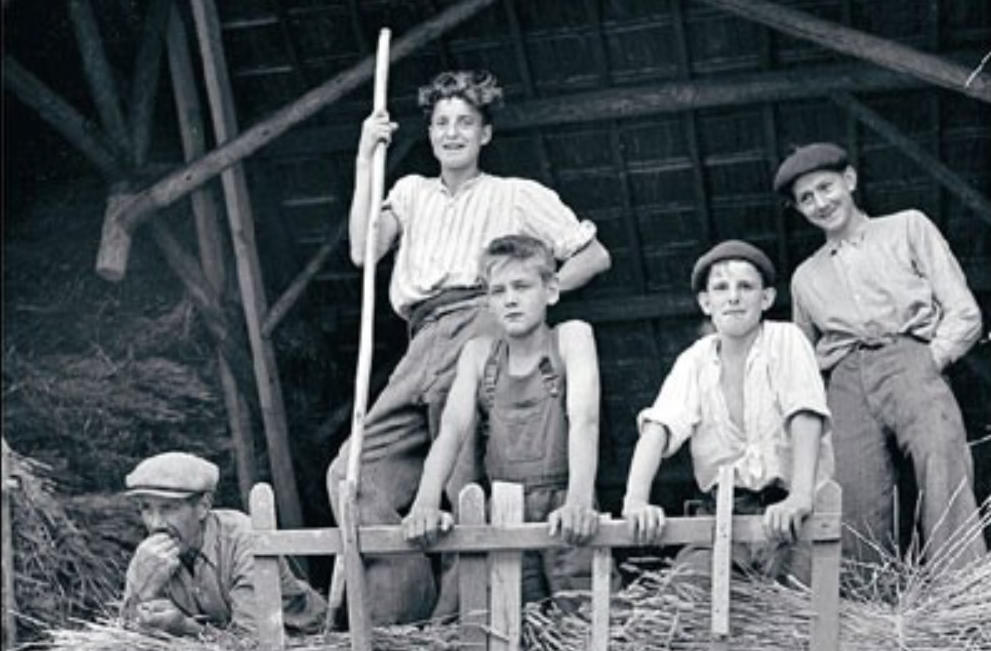
There was a large proportion of fallow land, “insignificant” yields per hectare, a large proportion of meadows but poorly maintained, “miserable” soil cultivation, few machines which were also “neglected”, and only a few farm buildings in good condition, thus preventing “rational feeding of the herds”. [17]
Ever since the days of the Invisible College, and the start of the industrial era, we have been told that our lives must become more “rational”. [18]
Lyautey adds: “In brief, Ostland wanted to improve French and Polish agriculture by putting into place ‘new socialist methods, applied with such success in Germany’, in the words of Secretary of State [Herbert] Backe”. [19]
In a 1942 circular, Wermke urged Ostland executives to read his book Um die Nahrungsfreiheit Europas ‘For European Food Freedom’). His methods would be a “motor of progress” for French farmers. [20]
There’s another tell-tale phrase.
Lyautey explains that Nazi “modernisation” of farming involved “land consolidation and the use of machinery” and “the use of chemicals, particularly synthetic fertilizers”. [21]
It seems inevitable to me that these trials would have involved the giant German chemicals firm I.G. Farben, which in 1927 had come up with Nitrophoska, proudly described by successor company BASF as “the first complete fertilizer to enter the market”. [22]
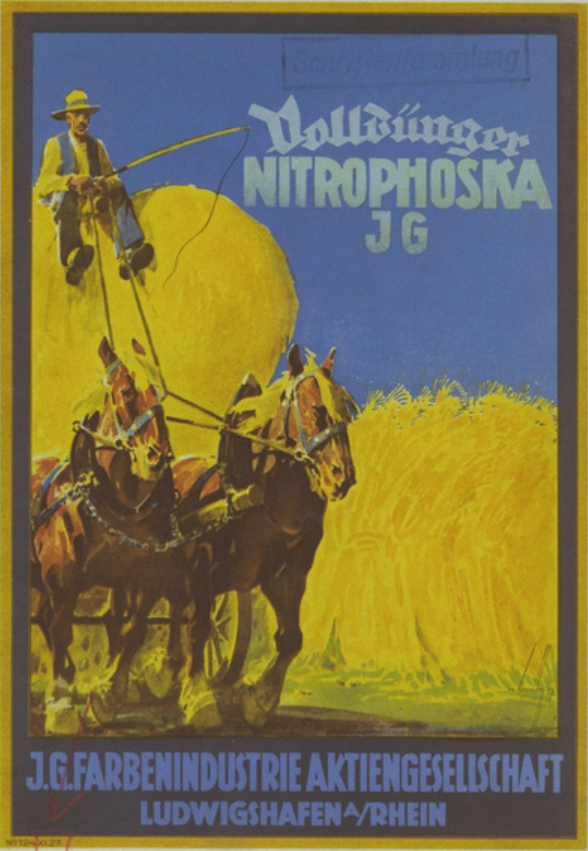
Wikipedia tells us that in the 1920s, the company had been condemned by National Socialists as an “international capitalist Jewish company” but, remarkably, “a decade later, it was a Nazi Party donor and, after the Nazi takeover of Germany in 1933, a major government contractor, providing significant material for the German war effort”. [23]
In his classic book Wall Street and the Rise of Hitler, Antony C Sutton stresses “the central role of IG Farben in Hitler’s coup d’état”. [24]
He says the chemicals business wielded “extraordinary political and economic power and influence within the Hitlerian Nazi state” and amounted, effectively, to “a state within a state”. [25]
One of its former executives, Dr George von Schnitzler, even declared that “IG is largely responsible for Hitler’s policy”. [26]
Sutton writes: “The Berlin NW7 office of IG Farben was the key Nazi overseas espionage center… The so-called statistics department of NW7 (known as VOWI) was created in 1929 and evolved into the economic intelligence arm of the Wehrmacht [army].
“At the outbreak of war in 1939 VOWI employees were ordered into the Wehrmacht but in fact continued to perform the same work as when nominally under IG Farben.
“One of the more prominent of these Farben intelligence workers in NW7 was Prince Bernhard of the Netherlands, who joined Farben in the early 1930s after completion of an 18-month period of service in the black-uniformed SS”. [27]
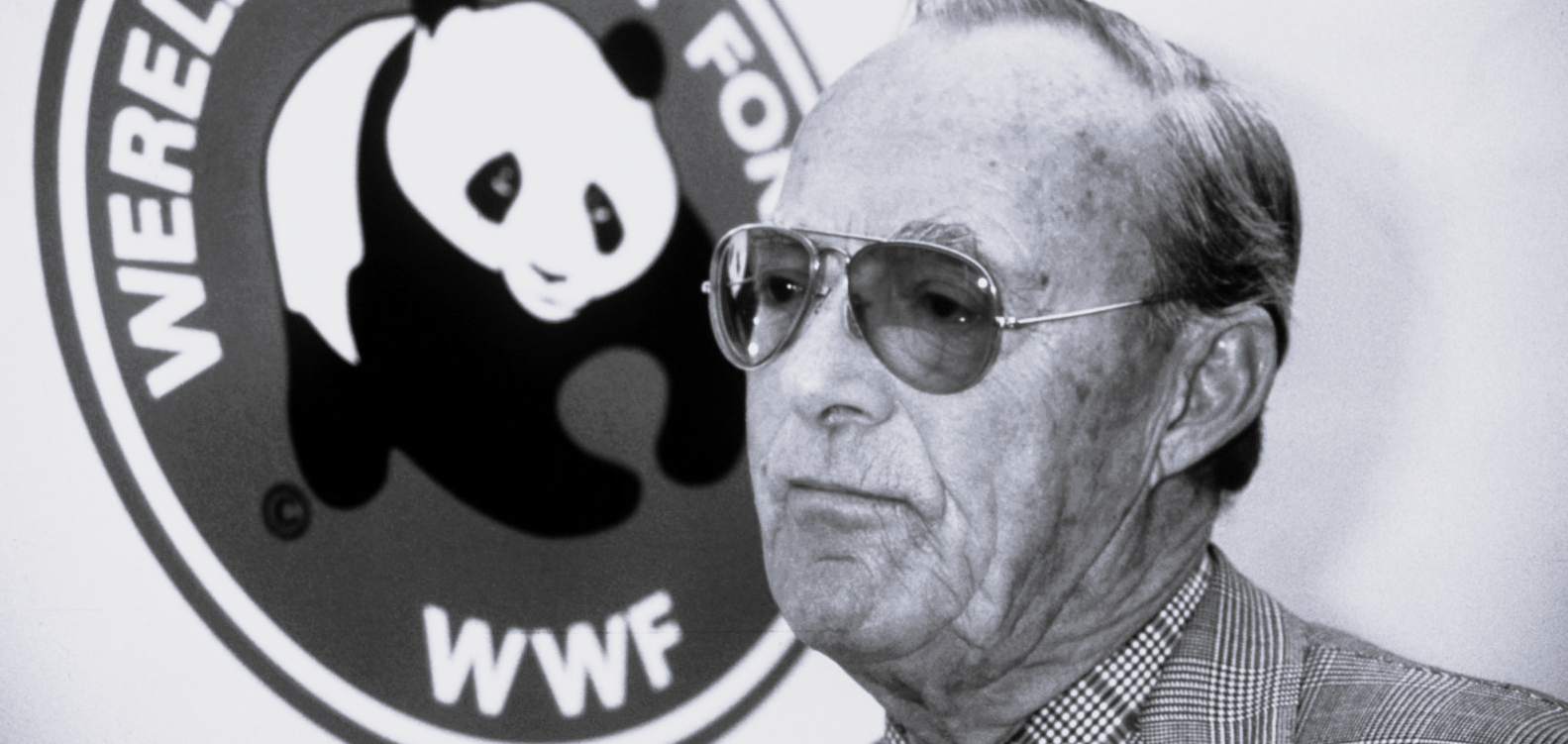
Bernhard (pictured) went on to become founder-president of the WWF, notorious for throwing indigenous people off their land on behalf of its big business friends under the false green flag of “conservation”.
He chaired the Steering Committee of the Bilderberg Group, of which WEF boss Klaus Schwab was a fellow member.
Bernhard was also honorary sponsor of Schwab’s third European Management Symposium at Davos in 1973, when the body which was to become WEF first adopted a more overtly political stance, by producing a document which became known as “the Davos manifesto”.
This “code of ethics” insists in its concluding point: “It is important to ensure the long-term existence of the enterprise. The long-term existence cannot be ensured without sufficient profitability”. [28]
Returning to Ostland’s project in occupied France, Lyautey says: “This ‘modern’ agriculture was above all planned agriculture, which claimed to be ‘rational’ and ‘intensive’, seeking high productivity per hectare”. [29]
Mechanisation was ramped up, tractors and machinery being imported from Germany to replace horses, with the clear aim of maximising production while minimising the workforce. [30]
That is what “modernisation” has always been about, in case you hadn’t noticed.
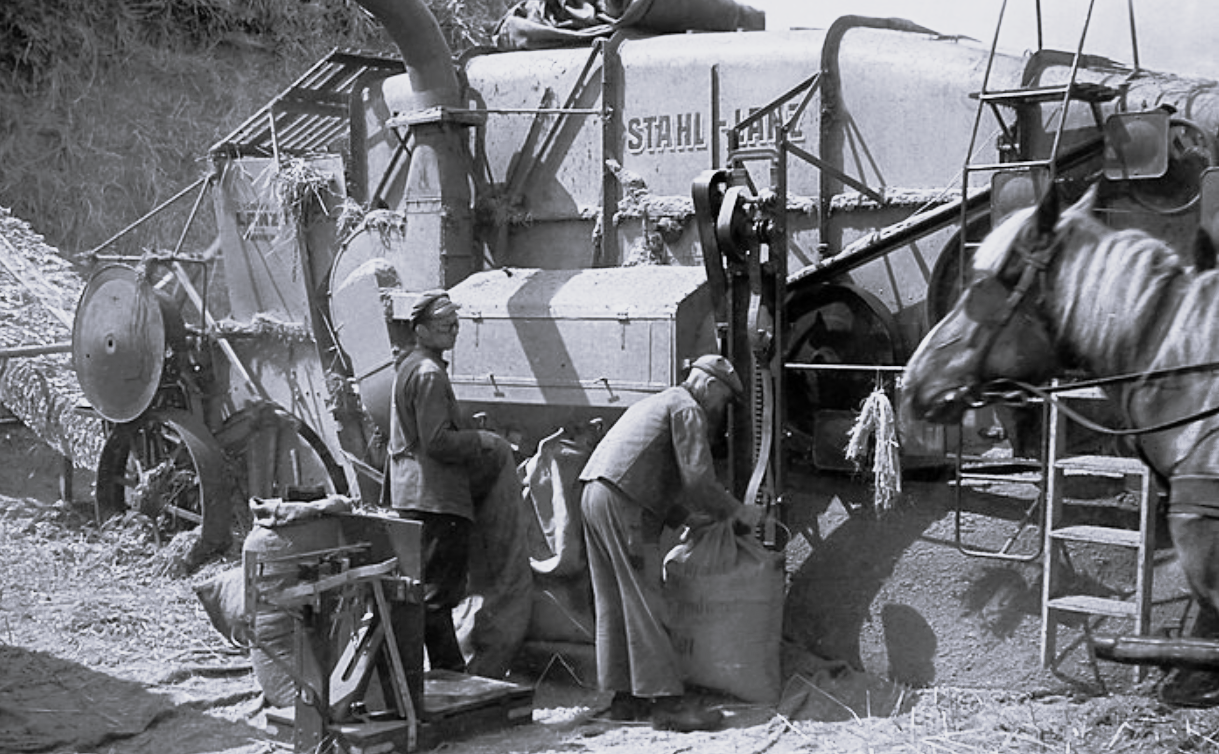
Human workers were still needed though, of course, and the first amongst these were French farmers already in place.
“If their farm had been confiscated and they wanted to stay there, they were obliged to work for Ostland… Some of them compared their situation to collectivisation in the Soviet Union”. [31]
Funny, that.
Lyautey continues: “Very early on Ostland used prisoners-of-war, a workforce that does not cost the business too much and which is readily available”. [32]
She says there were around 5,000 of these PoWs in the Ardennes but they were soon sent to work within the Reich.
Ostland’s slave labour also included thousands of prisoners from the French colonies.
Lyautey says the majority of them came from North Africa and sub-Saharan Africa, some from Madagascar and Indo-China. They “were housed in prison camps, where living conditions were deplorable”, [33] were given meagre rations and suffered from the cold climate of the Ardennes.
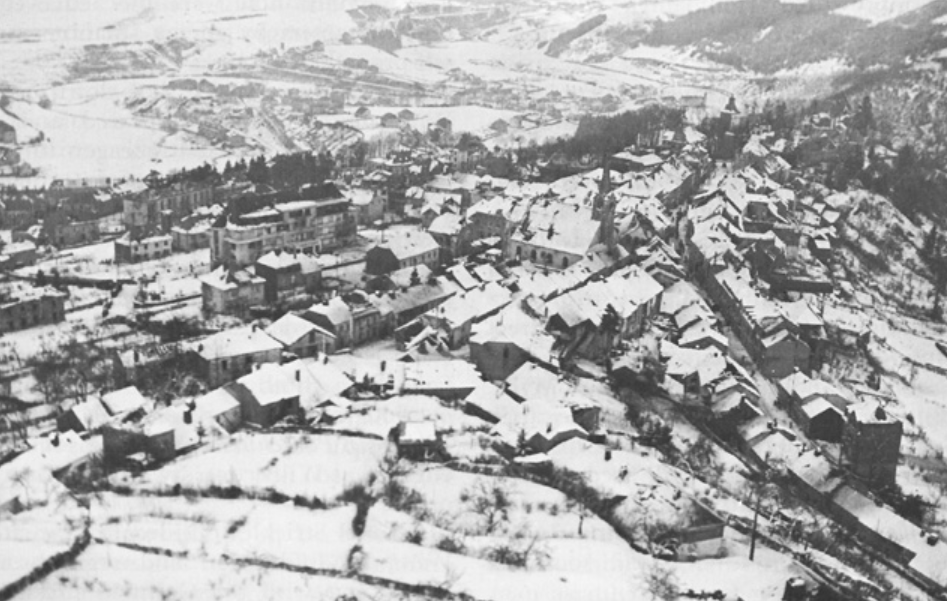
She adds that the business also used several thousand foreign farm workers from Belgium, Czechoslovakia and Poland.
“The biggest group was of more than 30,000 Poles deported in 1943 and 1944 on behalf of Ostland. Whole villages from the Lodz region, where Ostland was active, were moved into the ‘forbidden zone’ to free up farms in Poland for the German colonists.
“These were not just labourers brought to work for the French branch, but also children, babies and old people who were unable to do so. These families did not voluntarily work for Ostland and their remuneration was derisory”. [34]
Uprooting large numbers of people from their homelands and moving them to a different country to suit a profiteering agenda has always been a favoured method of the slave-mongering global mafia.
Lyautey writes: “Finally, between 1942 and 1944 Ostland employed, in the Ardennes only, members of the Parisian Jewish community (men, women and even children), with the idea of filling its labour shortage with cheap, servile labour”. [35]
The 683 Jewish workers, 234 of whom were sent off to camps in the East in 1944, were a drop in the ocean of Ostland’s 25,800-strong workforce.
But the story of how they were enticed to go and work for this Nazi business is a fascinating one.
For this I turn to Maurice Rajsfus, whose book on Jewish collaboration with the Nazis in France I recently wrote about. [36]
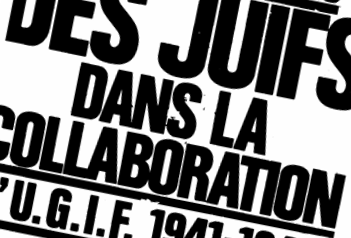
He reveals that they were recruited via the Informations juives (‘Jewish information’) newsletter issued by the Comité de coordination des Oeuvres de bienfaisance juives du Grand-Paris (‘Coordination Committee of Jewish Charitable Works of Greater Paris’), the initial Jewish body set up by the Nazis in France.
“You could read each week, from November 1941 to January 1942, on the front page, an appeal in very large type and taking up a third of the page with the heading ‘Agricultural Work'”. [37]
This appeal was aimed at unemployed Jews between the ages of 18 and 45 and began “On vous offre de travailler dans l’agriculture…” [38]
The use of the word “on” is interesting, as it identifies the newsletter as being associated with the job offer – as it clearly was, being a tool of the ZioNazi occupation.
So “we” were offering agricultural work with “good food” and “cooking, washing and mending carried out by women”.
The advert continued: “This work guarantees you a quiet life. Waste no time in signing up for the next departure”.
This signing-up was available on a daily basis at the Comité’s own offices at 29, rue de la Bienfaisance, Paris. [39]
The closeness of French Jewish bodies to Ostland was confirmed by the Comité’s successor organisation, L’Union générale des Israélites de France (UGIF) in a 1942 edition of its Bulletin.
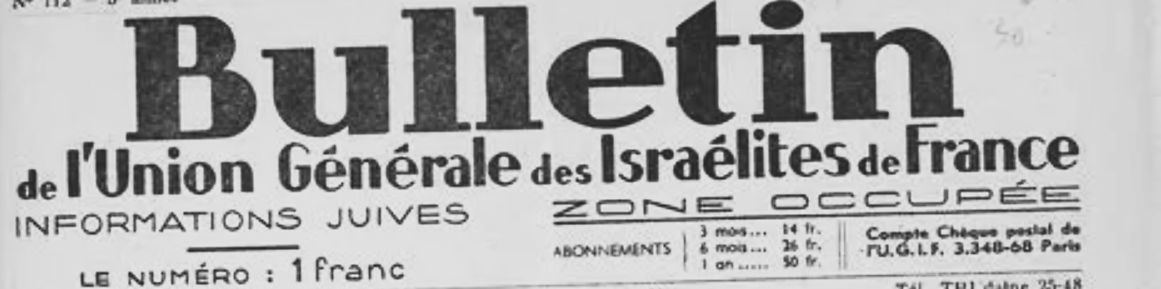
Here it boasted, with regard to the Jewish workers in the Ardennes: “We have obtained some extra wages for them”. [40]
UGIF also urged these workers to remain dutifully obedient to their Nazi employers. In May 1942 it sent a note with this message: “Workers are warned that any departure from their workplace, without authorisation, will place them in contravention of German ordinances against sabotage and if they find themselves in this position, it will be impossible for the Union to attempt the slightest move to extricate them.
“We therefore hope that all workers will understand that it is in their interest to remain faithful to the contract that they have undertaken with Ostland”. [41]
Maybe it is not so surprising that the Comité and UGIF were complicit with this Nazi labour scheme, seeing as we know that both bodies were set up by the Nazi occupation in order to control the Jewish population.
But the same certainly cannot be said of the Le Consistoire central israélite de France, which had been the main Jewish body in France for more than 100 years.
Rajsfus reveals that on April 21 1941 the Consistoire proposed to French collaborator Xavier Vallat that “in view of the deficiency in the agricultural workforce in France, foreign Jews currently unemployed or interned in camps be used to the maximum of their capacity for the national economy”. [42]
As I previously mentioned, Rajsfus explains that this body was very much dominated by the Rothschild family [43] – indeed, when war broke out the president of the central Consistoire was Édouard de Rothschild (pictured) and the president of the Paris Consistoire was his cousin Robert de Rothschild. [44]
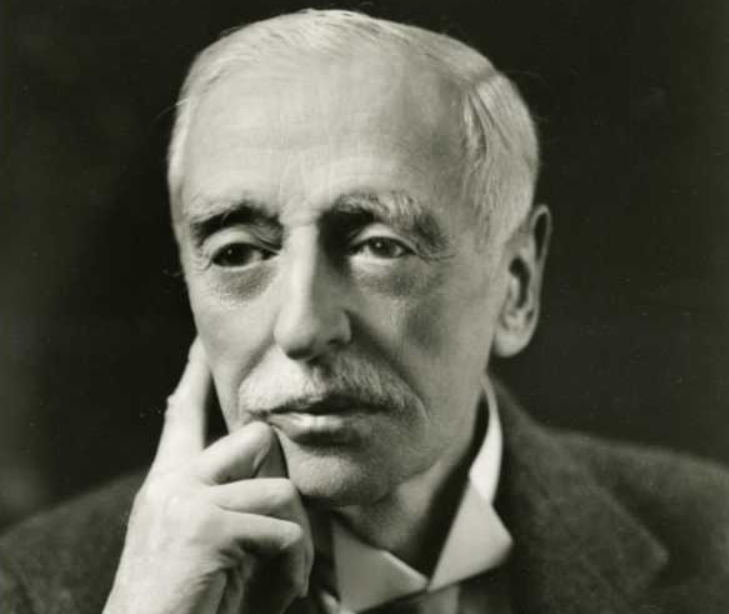
But even if I did not know this to be the case, I would certainly have suspected it, since the mindset that regards human beings as no more than labour units to fuel “the economy” is utterly typical of the Rothschilds.
And, as Lyautey writes, it was also typical of the Nazi regime, with its “technocratic vision of work” based on Arbeitswissenschaft (‘science of work’). [45]
Science and work: two more of those giveaway words.
Gerhardt Preuschen, director of the Institut für landwirtschaftliche Arbeitswissenschaft (Institute for the science of work in agriculture) expressed this clearly to Ostland executives.
He said: “The foundation of our National Socialist economic system rests on the productivity of every worker… Every person not in full-time employment must be put to use, the same as every machine”. [46]
Lyautey comments: “We might note the manner in which machines and workers are here described in the same terms, although the productivity of the latter was not (yet) measurable in terms of energy rations, which Preuschen found regrettable. Their identity and their skills were forgotten behind the sacred gauge of productivity”. [47]
I described the shared Rothschild-Nazi ideology of “Work. Order. Progress.” in a 2023 essay of that name, by the way. [48]
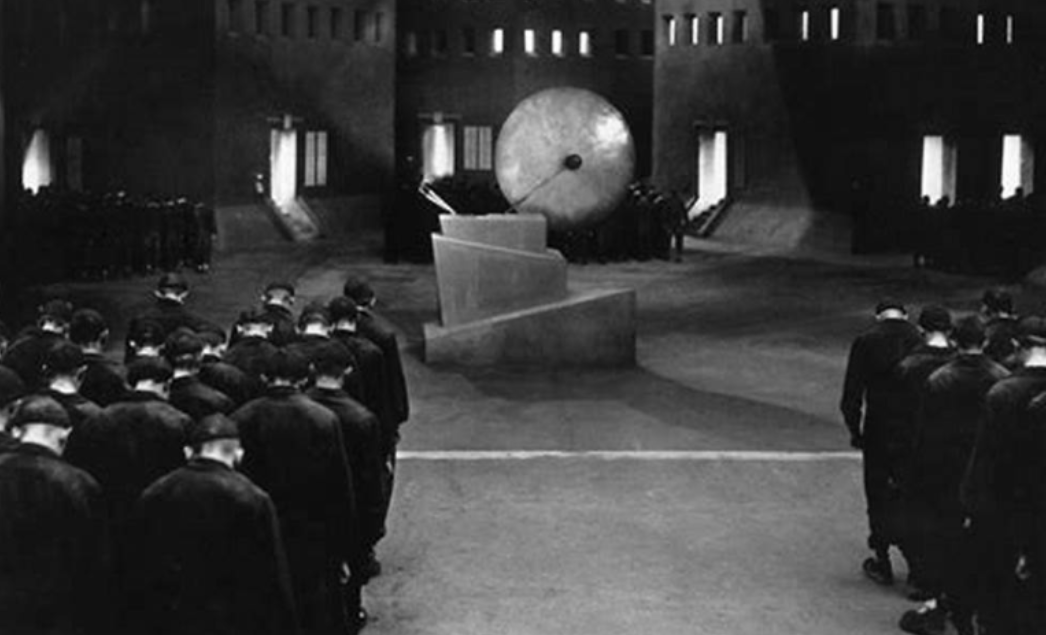
Lyautey goes on: “One unexpected consequence of Ostland’s presence in France was the development of mechanical agriculture.
“For when the Germans departed at the end of the war, they did not take with them the tractors and other machines that they had imported.
“The equipment which remained in this part of north-east France served to create the first cooperatives for using agricultural machinery”. [49]
Of course, the rhyming between Nazi and Rothschild outlooks – and the role of Zionist networks in helping Ostland – is not in the least surprising when one understands that the Nazi regime was a Zionist tool. [50]
Neither is it surprising that the hands of the Rothschilds can be seen behind the post-war intensification of the modernisation begun by the Nazi branch of their empire, as I have described. [51]
Michel Debatisse, a prominent promoter of industrial agriculture, sounded uncannily like the Ostland Nazis when he complained in 1963 that French farming was still too rooted in tradition and in the hands of “a generation faithful to economic norms very close to those of the Middle Ages”. [52]
All hail the New Normal!
[1] Paul Cudenec, ‘Benito Mussolini and the New World Order, https://winteroak.org.uk/2026/02/05/benito-mussolini-and-the-new-world-order/
[2] Paul Cudenec, Fascism rebranded: exposing the Great Reset (2021), https://winteroak.org.uk/wp-content/uploads/2023/09/fascism-rebranded23web.pdf
[3] Pierre Milza and Serge Berstein, Le fascisme italien 1919-1945 (Paris: Editions de Seuil, 1980), p. 232. cit. Cudenec, Fascism rebranded, p. 175.
[4] Paul Cudenec, The False Red Flag, (2024), p. 19. https://winteroak.org.uk/wp-content/uploads/2024/03/the-false-red-flag–1.pdf
https://en.wikipedia.org/wiki/The_Development_of_Capitalism_in_Russia
[5] V. Lénine, Le Développement du capitalisme en Russie (écrit entre 1896 et 1899), Editions en langues étrangères (Moscou) et Editions sociales (Paris), 1956, cit. Pierre Thiesset, ‘Tolstoï contre les bolcheviks’, Brasero: revue de contre-histoire, No 1, novembre 2021 (Paris: L’Échappée), p. 95, cit. Cudenec, The False Red Flag, p. 19
[6] Carroll Quigley, Tragedy and Hope: A History of The World in Our Time (New York: Macmillan, 1966. Reprint. New Millennium Edition), p. 250, cit. Cudenec, The False Red Flag, pp. 19-20.
[7] Quigley, p. 12, cit. Cudenec, The False Red Flag, p. 20.
[8] Antony C. Sutton, Wall Street and the Bolshevik Revolution (West Hoathley: Clairview, 2016), p. 54, cit. Cudenec, The False Red Flag, p. 26.
[9] Paul Cudenec, Enemies of the People: The Rothschilds and their corrupt global empire (2022), p. 89, https://winteroak.org.uk/wp-content/uploads/2024/09/enemiesofthepeopleol.pdf
[10] Margot Lyautey, Exploiter l’agriculture dans la zone interdite entre 1940 et 1944 : l’action de la société Ostland, in Guerres mondiales et conflits contemporains 2022/2 N° 286, Éditions Presses Universitaires de France, pp. 53-69.
https://shs.cairn.info/revue-guerres-mondiales-et-conflits-contemporains-2022-2-page-53?lang=fr
https://www.dhi-paris.fr/fr/institut/lequipe/equipe-scientifique/margot-lyautey-1.html
[11] Paul Cudenec, ‘The truth about Davos’, https://winteroak.org.uk/2025/01/17/the-truth-about-davos/
[12] Lyautey, p. 54.
[13] Paul Cudenec, ‘Modernisation means pillage and profit’, https://winteroak.org.uk/2025/01/31/modernisation-means-pillage-and-profit/
[14] Lyautey, p. 56.
[15] Lyautey, pp. 56-57.
[16] Lyautey, p. 59.
[17] Bundesarchiv Berlin Lichterfelde (henceforth BAL), R 82/118, report on Ostland’s activities by Bernhard Wermke, 1966, cit. Lyautey, p. 59.
[18] Paul Cudenec, ‘The Invisible College and the plan for our enslavement’, https://winteroak.org.uk/2025/08/11/the-invisible-college-and-the-plan-for-our-enslavement/
[19] Herbert Backe, La Mission de l’agriculture en Europe. Conférence faite à Paris, le 9 juillet 1941, Corbeil, impr. Crété, 1941, p. 28, cit. Lyautey, p. 59.
[20] BAL, R 82/2, circular for Wirtschaftsoberleiter and Kreislandwirte no 231, 10 juin 1942, cit. Lyautey, p. 59.
[20] BAL, R 82/118, report on the activities of Ostland by Bernhard Wermke, 1966, p. 30, cit. Lyautey, p. 59.
[21] Lyautey, pp. 59-60.
[22] https://www.basf.com/global/en/who-we-are/history/IG-Farben
[23] https://en.wikipedia.org/wiki/IG_Farben
[24] Antony C Sutton, Wall Street and the Rise of Hitler (Sudbury: Bloomfield Books, 1976), p. 163.
[25] Sutton, p. 33.
[26] Sutton, p. 42.
[27] Sutton, pp. 37-39.
[28] https://www3.weforum.org/docs/WEF_First40Years_Book_2010.pdf
[29] Lyautey, p. 60.
[30] Ibid.
[31] Lyautey, p. 62.
[32] Ibid.
[33] Ibid.
[34] Ibid.
[35] Lyautey, p. 63.
[36] Paul Cudenec, ‘Collaboration & Denial’, https://winteroak.org.uk/2026/02/02/collaboration-denial/
[37] Maurice Rajsfus, Des Juifs dans la Collaboration: L’UGIF (1941-1944) (Paris: Etudes et Documentation Internationales, 1980), p. 228.
[38] Ibid.
[39] Ibid.
[40] Bulletin, March 13 1942, cit. Rajsfus, p. 213 FN.
[41] Rajsfus, p. 217.
[42] Rajsfus, p. 209.
[43] Rajsfus, p. 31.
[44] https://fr.wikipedia.org/wiki/Consistoire_central_isra%C3%A9lite_de_France
[45] Lyautey, p. 64.
[46] First part of quotation: BAL, R 82/1, circular to Wirtschaftsoberleiter and Kreislandwirte no 124, 18 April 1941. Second part: BAL, R 82/3, circular for Wirtschaftsoberleiter and Kreislandwirte no 266, 18 January 1943, cit. Lyautey, p. 64.
[47] Lyautey, pp. 64-65.
[48] Paul Cudenec, ‘Work. Order. Progress”, https://winteroak.org.uk/2023/05/15/work-order-progress/
[49] Lyautey, pp. 66-67.
[50] Paul Cudenec, ‘The Nazi regime was a Zionist golem’, https://winteroak.org.uk/2026/01/08/the-acorn-108/#2
[51] Cudenec, ‘Modernisation means pillage and profit’.
[52] M. Debatisse, La révolution silencieuse. Le combat des paysans (Paris: Calmann-Lévy, 1963), p. 47, cit. Delphine Dulong, Moderniser la Politique: Aux origines de la Ve République (Paris: L’Harmattan, 1997), pp. 119-20, cit. Cudenec, ‘Modernisation means pillage and profit’.
 winter oak
The media were already captured before WWI!
Good book for this a.o. is ‘Two World Wars and Hitler: Who Was Responsible’ by dr. Jim Macgregor and dr. Jim O’Dowd.
Bought the book ‘Israel in Palestine: Jewish Rejection of zionism’ by Yakov Rabkin. The review which I read on your website and brought me to buy it (which I usually don’t do so fast) was excellent and spot-on, also in the sparse criticism of the book.
Greetings,
Abigail Buitenkant
Sent with Proton Mail secure email.
LikeLike