
by W.D. James
I’m obviously an American, so I ought to at least know what that is, right?
Yet it’s a question I’ve struggled to come to adequate terms with for a very long time. Americans, and America itself, have always had something of an identity crisis.
I think we do constitute an ethnos, a people, but that is something that developed, not something we are rooted in; an accomplishment, not a starting point. It may also prove to be fragile.
From the time the continent was first colonized it was English, Scottish, Welsh and Irish people who came here. In New York there was a strong Dutch element that formed the knickerbocker aristocracy. In Pennsylvania there was a large German component, mostly of anabaptist sects which fit well with the older Quaker population.
While predominantly Protestant, there were Catholics (especially in Maryland) and Jews (especially in Rhode Island) in noticeable numbers from very early on.
Then there were the ‘Others.’ The Africans who came primarily as slaves and the various peoples who were already here and were being displaced. On the peripheries there were the French and Spanish.
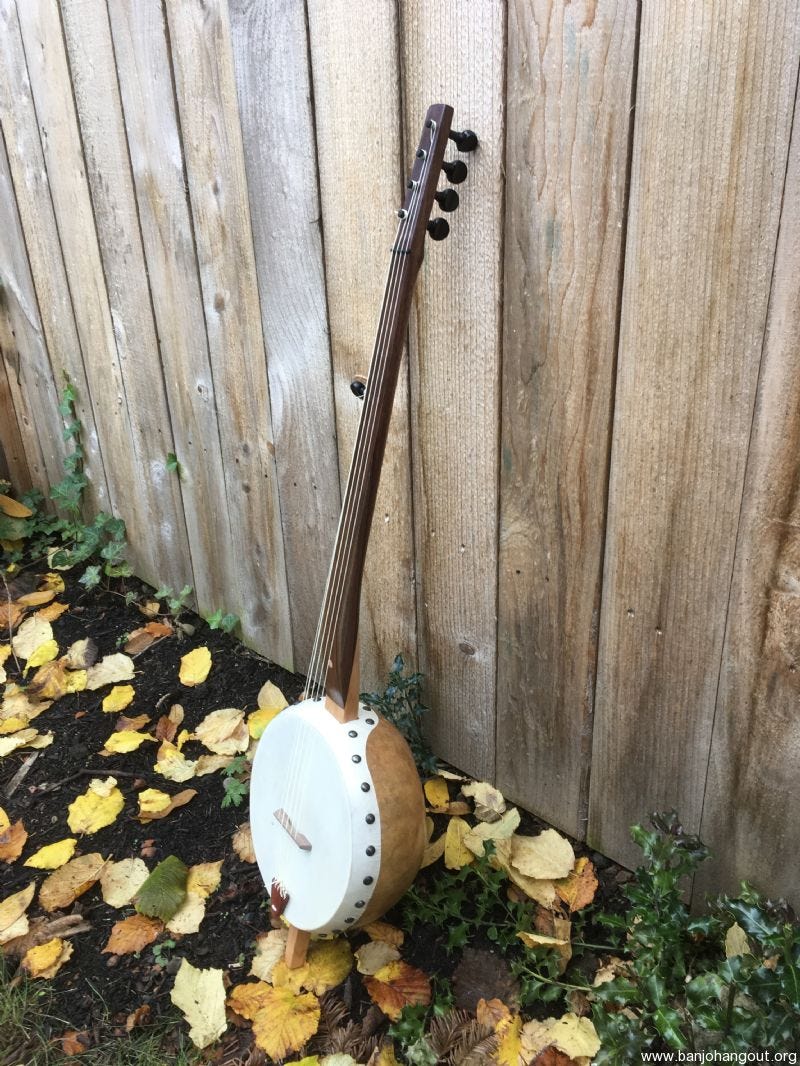
Even the geography of what constituted America was far from fixed.
The ‘founders’ who had to develop a national consciousness during and following the American Revolution felt these issues acutely. How was ‘American’ different from ‘English’? What would our literature, science, and culture be? People like Noah Webster set about working that out, in his case by developing an American dictionary that would codify an American language and by writing elementary school textbooks that would teach in an American idiom and highlight American values: the creation of a national mythos where there was not much of a national history as yet.
Hence, it became common to define America in terms of its openness or newness or as an ideal. More something yet to be, or to be realized, than an established fact.
I self-consciously took up some of these questions when I worked on my dissertation years ago and decided to write it in the field of American political theory. I can’t say that the outcome was particularly satisfactory in terms of settling the big issues in my own mind; actually, more questions and conundrums arose. Further, I’ve found the more deeply rooted pre-modern traditions of classical Greece and medieval Europe more satisfying in some regards.
Hence, I’ve been hesitant to launch into a focus on America and to take it up as any sort of research project. I’ve even avoided teaching American political thought or philosophy. I’ve mostly explored it in my ‘musical interlude’ posts on Substack, though I never stopped pondering on it during the intervening years between my dissertation and now.
However, I feel the subject calling again. I’m not bringing to the project any fixed theory I’m going to try to make the facts conform to. Nor am I really interested in a definition. More of an interpretation.
With the political and cultural disruptions and divisions of the past decade, the question does seem to be a pressing one again; as it recurrently is.
However, there are certain threads of the story that have occupied my mind for a long time, and those will become apparent as we move along and are reflected in my choice of a title to the series.
I’m conceiving of this as an open-ended exploration, not a tight set of essays of fixed duration. It will be more like starting with my overarching, though rather vague, sense of what America is, then microscoping in on discreet thinkers, ideas, texts, songs, movies, etc…, then using that specificity to adjust the overarching conception. To start with, it will be my focus for the remainder of this year and into the next. Then we’ll see what comes.
I’m also starting rather impressionistically and poetically.
It’s in our jeans 1
If I had to pick one material object to symbolize America, I think I could do worse than choose a pair of blue jeans (one of the original pairs is shown at top). Supposedly a tailor named Jacob Davis, in Reno, Nevada, in the 1870s, was asked to design a pair of trousers that could stand up to the hard wear and tear that mining work exerted on clothing. He settled on the denim cloth we are familiar with and added extra stitching and, most significantly, metal rivets to the stress points. Realizing he had hit on quite the product, but lacking the financial resources to copyright and market it, he partnered up with a German immigrant in San Francisco named Levi Strauss and, as they say, the rest is history.
The ability of blue jeans to reference our rugged past and our resilience, and yet provide comfort and familiarity is, well, iconic.
Though rooted firmly in working-class conditions, they transcend class boundaries and, for decades now, national boundaries.
Further, a good old faded pair of jeans is almost a living thing. They shape to the body over time, get more comfortable the more worn they get, and their faded colors and distressed texture speak of a personal history and long familiarity.
Thinking on the unique nature of jeans suggested the idea of ‘the faded republic’ to my mind. Not something pristine, all shiny and new. A thing that is rooted and substantive and also weathered and more than a bit tarnished. Reflecting new and old ideals, venerable but evolving (when not breaking) institutions, and most importantly folkways and thought patterns – how a people goes about being the people they are.
Also, like a favorite pair of old dungarees, perhaps overlooked at the bottom of the drawer or the back of the closet for a long time, a thing rediscovered, patched up, put to use once again, and valued all the more because of the tattered condition but fundamental integrity of the thing.
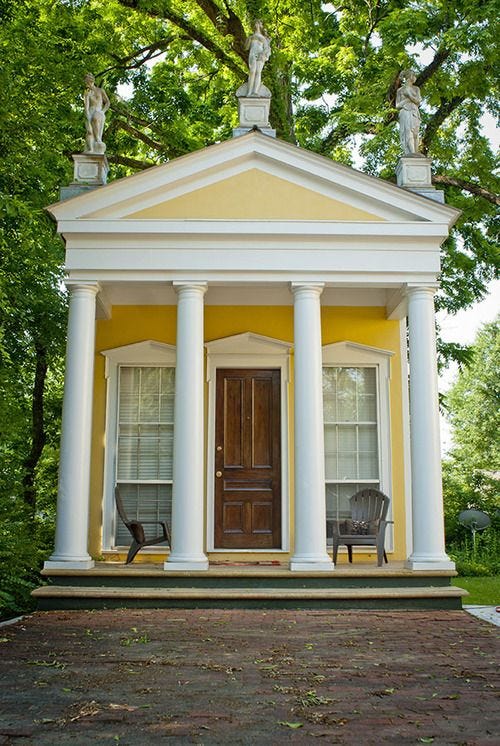
Why faded republic though? For several reasons, most of which will need to await further articulation and development as we progress. For one thing, this is the ancient or classical ideal that most fascinated early generations of Americans. They didn’t think of America as something completely new. They thought of it as reviving something very old, but which had fallen into disuse through centuries of Empire and monarchism. The Novus Ordo Seclorum, the new order of the ages, was rooted in old things – that’s why they built their homes and public buildings on Greek and Roman models (as with the above example). For an anti-modern guy who is also American, like me, that has to be super intriguing. For another thing, ‘republic’ refers to res publica, the ‘public thing.’ It represents the idea of a polity that we all build together. Additionally, it encapsulates a moral ideal: the idea that freedom rests on virtue. And, finally, and most importantly in how I will look for signs of the Faded Republic in our history, it involves a conception of liberty as ‘non-domination.’ While this may encompass liberal negative rights, it adds something positive to the conception: ideally, at least, it envisions a citizenry which to a large degree possesses independence, whose members are not dependent on others to the extent that that would entail them being in a condition of domination.
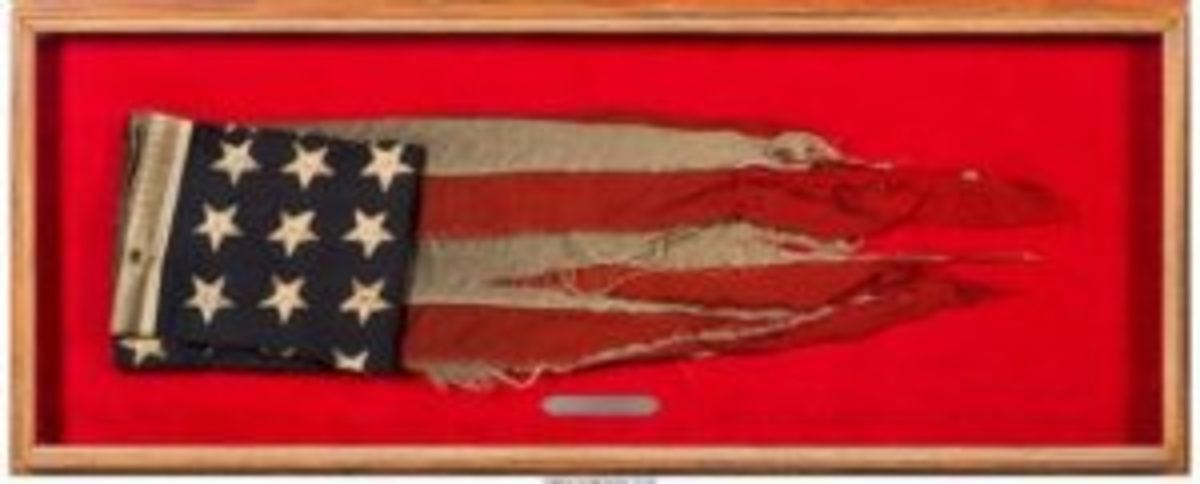
As a final prefatory reflection, I’ll note that I feel rather proud to be an American.
That can be considered a moral failing by some. There are those who only want to emphasize America’s history of racial bigotry and exploitation, the attempted biological and cultural genocide of the native peoples who were here before the rest of us, and our neo-colonial role in the modern world. On the other hand, there are those who want to whitewash all of that and talk only of our ideals, triumphs, and accomplishments, as if all that other stuff were merely incidental. I don’t find that either of those approaches are very honest, or even helpful. It’s a complex world and Americans may be one of the most complex peoples to ever inhabit it.
I think our music is one of the best things about us. Take the Blues as an example. You don’t get the Blues without the history of slavery, lynchings, economic exploitation etc…. However, the Blues are good. That does not justify any of the hardships they were born out of; as if slavery became ok because you eventually got Robert Johnson. Yet, America includes the Blues and eventually Americans of all sorts came to appreciate them, if not directly then through their incorporation into Rock music. America is better with the Blues woven into the cloth that makes up our culture. Both things can be true: slavery was bad, the Blues are good.
A lot of America has to be viewed like that. It is an idealistic place and we are an idealistic people, sometimes at least. Historically, those ideals are always, always, entangled with less ideal, disreputable facts. Both things can be true. If these reflections are to have much merit, if I’m going to make any progress in figuring out what it is to be American (to my own satisfaction, if no one else’s), I won’t be able to afford to ignore either truth – that would be to falsify who we are.
Something like this is probably true of all peoples and all individuals. They’re guided by some set of ideals or aspirations which they quite often fail to live up to, and their actual history or life story is the drama of how that plays out. They have some victories, they bear some scars, they have things they regret, but we all hope to get to the point where we can at least accept the facts of the situation, make amends where we need to, and find things to celebrate in it. This makes it genuinely our story.
In these essays I’ll be trying to discern some of the American ideals and aspirations, recognize how they are often compromised, but ultimately I want to identify things we can legitimately celebrate and make use of now and going forward. I’ll be doing that largely by looking at how previous Americans thought about what it is to be American.
Too uncomplicated a picture would be like a brand-new pair of stiff, scratchy jeans. Not very appealing.
I’m looking for the faded republic.
And, really finally, these will be reflections born of affection; what the classic Italian republicans called amor patriae.
(Not that I agree with everything in that guy’s intro, but I like the kids and their denim, and I love the song they decided to bookend Johnny with – though I do rather like the idea of a promise or pledge; that has some mileage left in it – rather like a covenant, rather Puritan that; way more umph than a contract – nasty things).
1 I wrote this essay in the late winter, before the recent bruh ha ha over the American Eagle ad came up.
 winter oak