
by our special correspondent Najm Al-Dīn
As we enter 2024, here are my predictions for what I anticipate will be an incredibly tempestuous year:
1
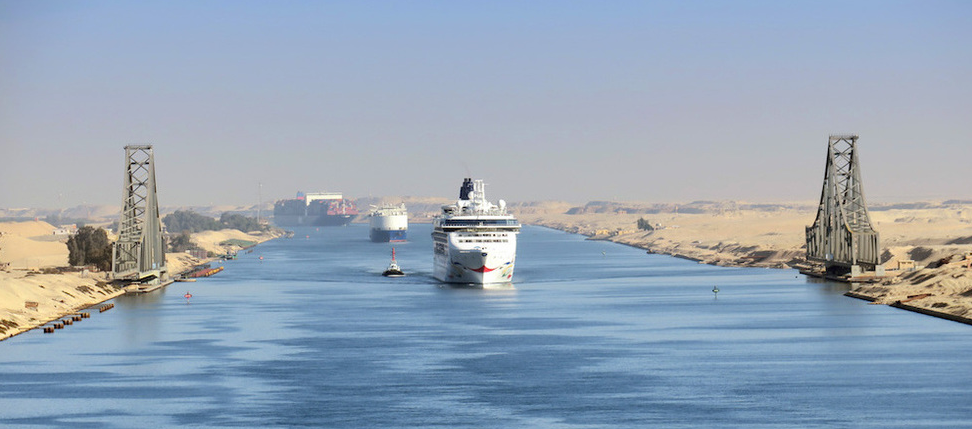
Depending on how far the conflict in the Middle East escalates, the sabotage of shipments in key chokepoints like the Red Sea, Suez Canal and possibly the Strait of Hormuz will heighten inflationary pressures, contributing to the next cost of living crisis, with domestic energy consumers in Europe bearing a significant brunt of the damage.
Unless stability can be restored to these waterways, the recent downward trend in consumer price inflation will be short lived and any hopes of a V-shaped recovery dashed.
2

With Israel intensifying its attacks in Gaza, West Bank and further afield, this will likely trigger a mass exodus of Palestinian refugees to Europe, similar to 2015 when almost a million migrants and refugees arrived on European shores.
The new wave of migration, coupled with an ailing European economy, could lead to major outbreaks of civic unrest in Europe, with a far more rabid form of Islamophobia taking hold of the continent compared to the War on Terror years.
3
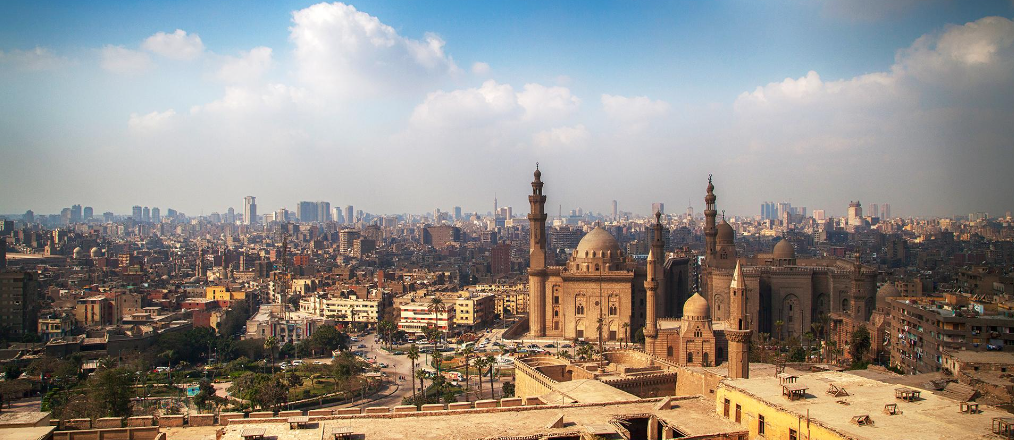
Egypt will be faced with various crises.
Firstly, as more freight companies reroute or pause operations in the Red Sea, Egypt will be most adversely impacted by the threats to international maritime security.
The Suez Canal is its main source of foreign currency but conflict in the Red Sea could imperil this strategic waterway, taking a wrecking ball to Egypt’s already vulnerable economy and potentially fuelling unrest that may lead to an Arab Spring 2.0
Secondly, the crisis in Sudan will have serious implications on neighbouring states, particularly Egypt which is a primary destination for those fleeing the violence. If there is no pause to the conflict, hundreds of thousands may cross over to the country, which will overstretch Egypt’s resources and aggravate the humanitarian crisis on its border, especially as more than a million Gazans are expected to seek refuge in Egypt’s Sinai desert.
This is not the only problem facing the country. The relationship between Egypt and Ethiopia has been strained since the construction of the Grand Ethiopian Renaissance Dam which Egypt sees as an existential threat as it impacts the share of waters of downstream nations.
Can Egypt afford to idly stand by or will it commit to a military campaign to safeguard its economic interests? 2024 could well witness a major water war and if so, Egypt may have to act unilaterally as its relationship with Sudan – another major downstream country – is impaired, in light of the strong ties between Ethiopia and Sudan’s Rapid Support Forces.
4

Contrary to popular opinion, Houthi operations in the Red Sea will increase Israel’s economic leverage by incentivising the building of new trade routes such as the India–Middle East–Europe Economic Corridor (IMEC).
This ‘New Middle East’- which Netanyahu was recently gushing about at a UN meeting – will not only break Egypt’s monopoly over the Eurasian trade route (Suez Canal) but will catapult Israel into the nucleus of the world’s newest and most strategic international shipping lane.
5
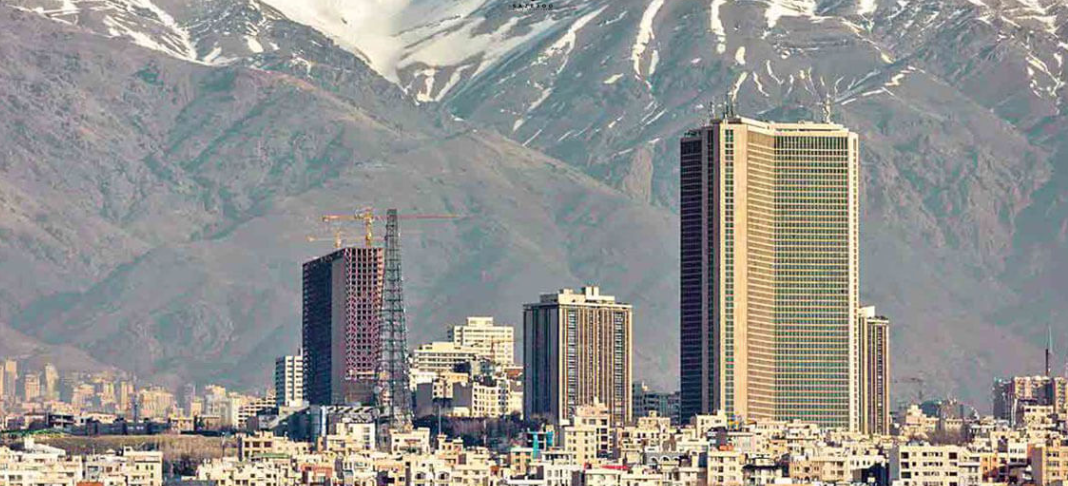
As tensions between NATO and Iran show no sign of abating, the US may deploy military assets to assist Israel’s expansionist wars across Lebanon and Syria in order to weaken Tehran’s sphere of influence.
We can expect attacks on key Iranian installations all across the Levant and precision strikes on senior Hamas leaders in places like Iran, Qatar and Turkey.
This may encourage the Iran-led axis of resistance to target US bases in retaliation, granting all sides a casus belli for unrestricted warfare.
Given the disillusionment of many shias towards the Iran-aligned status quo and widespread protests in Lebanon and Iraq against the disproportionate power yielded by Iran in those countries, NATO attacks on Iran’s military apparatus and proxies may leave Tehran with no choice but to reconsolidate power among Shia constituencies throughout the region.
Therefore, in addition to ‘Greater Israel’, one of the main outcomes which I envisage from this renewed phase of conflict in the Middle East is the consolidation of a Shia Crescent which will have ominous implications for the Sunni populations in Iraq, Lebanon and Syria.
This is the only means by which Iran can continue to project power in the Middle East and generate domestic sympathy for its foreign policy, but it is by no means an easy task and will balkanise the region further along sectarian lines.
6
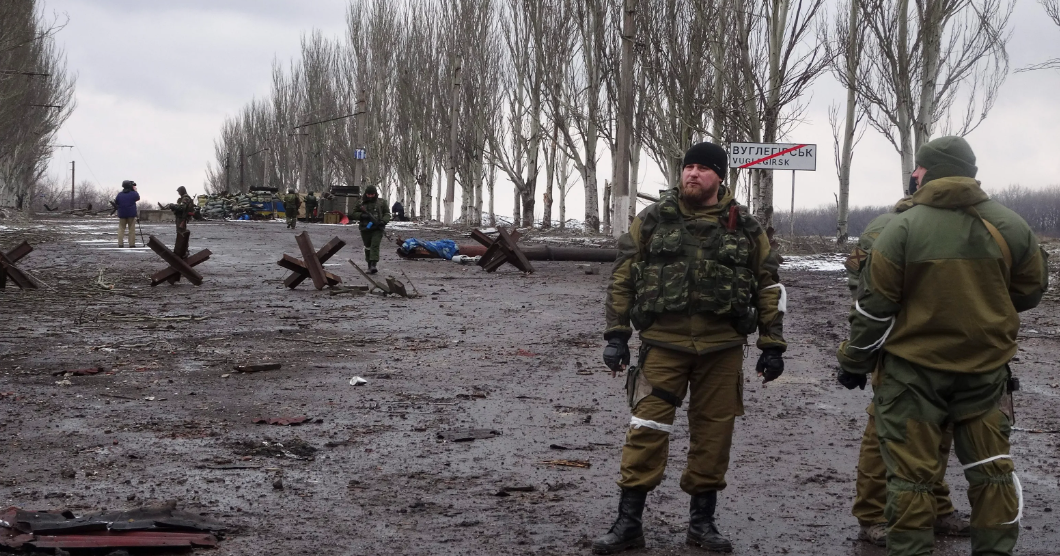
A strategic retreat from Ukraine is possible.
Depending on how the US elections pan out, America could be entangled in another Middle Eastern quagmire. In fact, there’s a chance that congress will authorise some level of military action prior to the elections.
In light of current tensions in the Middle East and Washington’s desire to avoid uncontrolled escalation with Moscow whilst keeping its powder dry for China, the US may decide to retrench itself from the Russia-Ukraine conflict and continue its policy of withholding critical assistance to Kiev.
This may embolden Putin and shift the momentum in Russia’s favour as Ukraine cannot mount a successful and sustained military campaign in the long term without sufficient US airpower and long range ammunitions.
Of course, the US may decide to raise the stakes with Russia, especially if Putin ups the ante with Baltic states which will initiate US involvement given its NATO treaty obligations.
7

In the run-up to the US elections, America could be careering towards public disorder of unprecedented levels.
Over the past decade and especially since Trump’s political ascent, the country has degenerated into a bubbling cauldron of internecine conflicts. Intractable culture wars between blacks and whites, conservatives and liberals and the left and the right have reached a crescendo and polarising attitudes on human rights and justice have torn away at the social fabric.
Not only are Americans more polarised today than ever before, but most polls show they are also more supportive of political violence at home.
In the past, violence would be associated with the far right Republicans. Today, there is a significant contingent of woke leftists who are aligned with the Democrats and are equally as likely to either endorse or resort to violence for political ends. So there is no telling what may transpire ahead of the 2024 elections, given the increasing penchant for violence amongst the left and the threats made to election officials, judges and grand juries by both Trump and his supporters who feel they were cheated out of a second term.
America is beginning to resemble an anocracy, dangerously hovering between a democracy and autocracy. Mired in every conceivable tension, it may be teetering on the brink of implosion.
8

US-China sabre-rattling may go up a notch.
Seeing as it’s highly likely that the US masterminded the sabotage of the Nordstream pipeline which was a vital energy lifeline for Europe, a similar strategy will likely be adopted to decouple Europe-China supply chains.
Just as the Nordstream explosion blocked Russia from western markets, I’m expecting a similar explosion at a Central Asian chokepoint to hinder the critical rail corridors that link Beijing to Europe, with the objective of isolating China from western markets.
The US perceives any thriving transcontinental trade zone which brings prosperity to nations other than America as a significant threat to Washington’s distribution of global power and something which must be hindered as much as possible.
Remember, the war in Ukraine and EU import bans on Russia has already presented an obstacle for China-Europe rail freight, as Ukraine was supposed to function as a gateway for Beijing’s ambitious Belt and Road Initiative (BRI) to Europe. Many of the New Silk Road traders are bypassing Russia and using the Middle Corridor which links Chinese and European markets via Central Asia and the Caucasus.
So keep your eyes peeled on this Middle Corridor. Will there be another Nordstream-like explosion in this Trans-Caspian international transport route?
Of course, this is not the only option to stymie China’s economic strength.
Most of China’s energy imports from the Middle East are shipped via the Strait of Hormuz which will undoubtedly be on the Pentagon’s radar, especially now that the fans are being flamed with Iran.
Or might the US decide to stoke hostilities between China and Taiwan, in an attempt to provoke Chinese aggression before seizing China’s foreign reserves and imposing sanctions against Chinese investments in western markets?
9
As America’s global footprint begins to recede, the BRICS alliance will fill the power vacuum and emerge as a new contender for global economic power.
BRICS refers to a group of five countries (Brazil, Russia, India, China and South Africa) whose demographic and economic potential will see them rank among the most influential economies in the coming decade.
FDI inflows to the bloc quadrupled from 2001 to 2021 and having overtaken the G7 in GDP based on Purchasing Power Parities, the alliance is expected to exert a greater political influence with over a dozen new countries applying for membership.
With the BRICS New Development Bank offering alternative loan mechanisms from the IMF and talks of de-dollarization gaining ground, this new financial architecture could fast-track the transition to multipolarity.
However, before anyone gets too excited over the demise of the dollar and a multipolar world order, there’s something we must keep in mind.
In the short term, the alternative currency arrangement may be a pan Asian basket of currencies to settle cross-border international payments. However, in the long term, dedollarisation will accelerate the shift towards Central Bank Digital Currencies (CBDCs) and two leading members of BRICS (Russia and China) are on board with this project.
Russia has already started testing digital ruble for real-world use cases with several banks and clients and will issue the digital currency for broad use cases if the pilot projects are successful. As for China, it has already partnered with Alipay and WeChat – the country’s two big payment platforms – to enable the use of the digital yuan.
It’s now just a matter of when the next manufactured crisis will ensure that CBDCs reach market dominance for adoption by a critical mass of the population in both BRICS nations and the G7 and its allies.
 winter oak