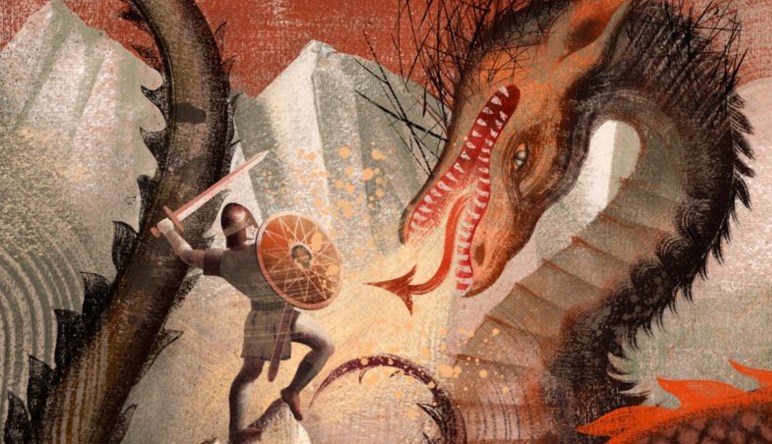
Monsters (The Myth of Philosophy 2)

by W.D. James Heroes fight monsters. The protagonist of Beowulf must defeat Grendel and then his mother who threaten the mead-hall of a Danish king. The mead-hall essentially represents homeliness and the monsters are those who threaten that. Further, monsters are unnatural; this is reflected in their physiology but also in their perverse values and … Continue reading Monsters (The Myth of Philosophy 2)

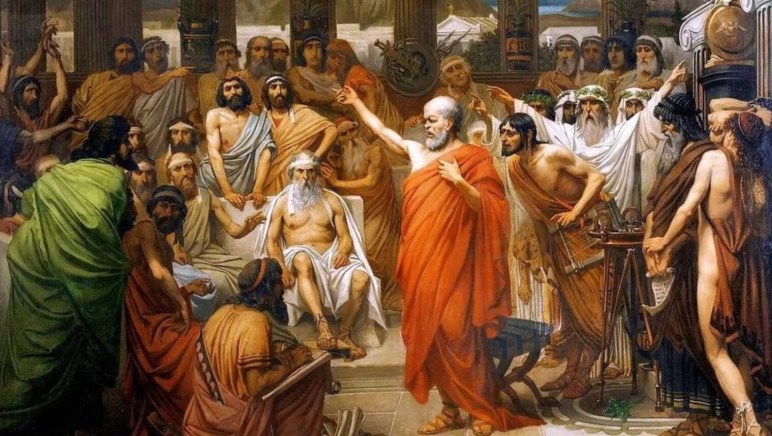
Socrates as Hero (The Myth of Philosophy 1)

by W.D. James In 399 BC, an Athenian court condemned and then executed a stonemason who had served honorably in several of her wars. The man, like most condemned criminals throughout history, left no written record of his life and doings. His father had likewise been a stonemason and his mother a midwife. Though 70 … Continue reading Socrates as Hero (The Myth of Philosophy 1)

Renewed Humanism (Politics of the Heart, Part 5)

by W.D. James In light of our reflections thus far, ‘humanism’ takes on a new significance. Previously, humanism indicated viewing the world from the perspective of human needs, human values, and human nature. It still does, but the very existence of the human reality is in question. Further, the concept was rather watered down over … Continue reading Renewed Humanism (Politics of the Heart, Part 5)

Post-humanism and the Regime of the Heartless (Politics of the Heart, Part 4)

by W.D. James C.S. Lewis was a realist in a double sense: he understood the reality of power and he understood the reality of morality. In 1944, writing in The Abolition of Man, he saw that we already stood on the far side of the precipice of a post-human (his term) or transhuman future. He … Continue reading Post-humanism and the Regime of the Heartless (Politics of the Heart, Part 4)

Written on the Heart (Politics of the Heart, Part 3)

by W.D. James Our hearts know things. Several times in the New Testament, the Apostle Paul states that the natural law is ‘written on the heart.’ That formulation itself is significant in light of the central role of the ‘heart’ in classical psychology as we have explored it in the first two essays of this … Continue reading Written on the Heart (Politics of the Heart, Part 3)

The Assault on the Heart (Politics of the Heart, Part 2)

by W.D. James C.S. Lewis (1898-1963) was a dinosaur. In 1954, he took up the newly founded chair in Medieval and Renaissance Literature at Cambridge University. The 56-year-old Lewis presented himself as a “dinosaur” to his audience; a representative of what he called “Old Western Culture” (Lewis 1969, 13). Lewis, an Ulster-born Irish Protestant, is … Continue reading The Assault on the Heart (Politics of the Heart, Part 2)

The Order of the Soul (Politics of the Heart, Part 1)

by W.D. James Totalitarianism is different from despotism, dictatorship, or tyranny. It does not only command the body but it colonizes the soul. Totalitarianism is interested in the psyches of its subjects to a greater degree than traditional authoritarianism is. It seeks to remake the human psyche in its own image. Theorists from Hannah Arendt … Continue reading The Order of the Soul (Politics of the Heart, Part 1)

Unnatural Economics

by W.D. James We like to dislike financiers (and usually lawyers). In a sense, this is odd. Personally, my interactions with bankers have mainly been positive; then again, I’ve never had anything I own foreclosed upon or repossessed. That’s largely because I’m very conservative financially: the only things I have ever financed were vehicles (to … Continue reading Unnatural Economics

W.E.B. Du Bois and the Power of People’s Music: Why We Need Another Folk Music Revival

by W.D. James Where did the folk music go? Popular resistance continues to manifest itself around the world. Even nascent movements have developed. However, one senses that for the most part these movements are still lacking in whatever would provide the inner cohesion and dynamic energy that would make them powerful and successful agents of … Continue reading W.E.B. Du Bois and the Power of People’s Music: Why We Need Another Folk Music Revival