by Paul Cudenec (who reads the article here)
I have always found that physical and spiritual heights go hand in hand.
As a boy, in the grey London suburbs, I had to make do with the top floor of the multi-storey car park over the road from my grandmother’s house in order to experience this heady sensation.
But since then there has fortunately always been some kind of green hill at hand for me to walk up.
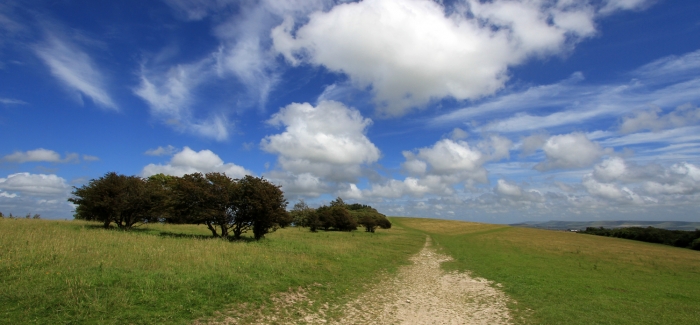
On the South Downs in Sussex I often experienced the kind of moments described by the nature mystic Richard Jefferies (1848-1887), who is in fact buried very close to where I lived.
When visiting his grave alone, I could sometimes feel the same connection to him as he did with a man much more separated by time than I from him.
He writes in The Story of My Heart (1883): “Resting by the tumulus, the spirit of the man who had been interred there was to me really alive, and very close.
“This was quite natural, as natural and simple as the grass waving in the wind, the bees humming, and the larks’ songs.
“Only by the strongest effort of the mind could I understand the idea of extinction; that was supernatural, requiring a miracle; the immortality of the soul natural, like the earth.
“Listening to the sighing of the grass I felt immortality as I felt the beauty of the summer morning, and I thought beyond immortality, of other conditions, more beautiful than existence, higher than immortality”. [1]
A similar sensation of a downland connection to the beyond is expressed by the Scots-born author Kenneth Grahame (1859-1932) – best known for The Wind in the Willows – in his first book, Pagan Papers, published in 1893.
And I should confess that the motivation behind his re-descent from the hills also often formed part of my own excursions.
He writes:
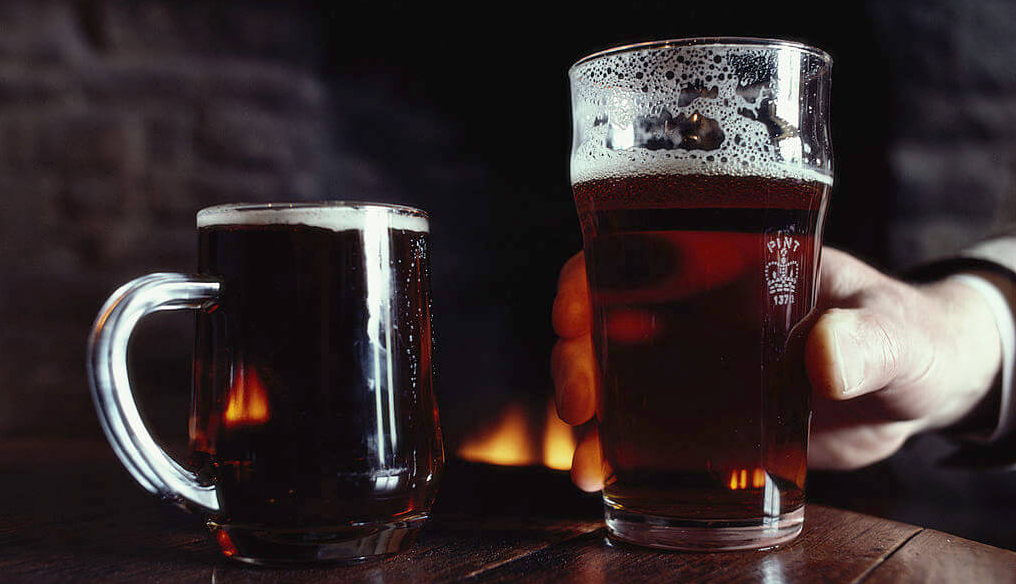
Up here all vestiges of a sordid humanity disappear. The Loafer is alone with the south-west wind and the blue sky. Only a carolling of larks and a tinkling from distant flocks break the brooding noonday stillness; above, the wind-hover hangs motionless, a black dot on the blue. Prone on his back on the springy turf, gazing up into the sky, his fleshy integument seems to drop away, and the spirit ranges at will along the tranquil clouds. This way Nirvana nearest lies. Earth no longer obtrudes herself; possibly somewhere a thousand miles or so below him the thing still “spins like a fretful midge”. The Loafer knows not nor cares. His is now an astral body, and through golden spaces of imagination his soul is winging her untrammelled flight. And there he really might remain for ever, but that his vagrom spirit is called back to earth by a gentle but resistless, very human summons, – a gradual, consuming, Pantagruelian, god-like, thirst: a thirst to thank Heaven on. So, with a sigh half of regret, half of anticipation, he bends his solitary steps towards the nearest inn… beer is a thing of deity – beer is divine. [2]
I recognise Grahame as a kindred undomesticated spirit, who felt caged and stifled by so many aspects of this sterile modern existence – not least, I imagine, his career at the Bank of England before he became a full-time writer. [3]
He declares, for example: “For myself, public libraries possess a special horror, as of lonely wastes and dragon-haunted fens.
“The stillness and the heavy air; the feeling of restriction and surveillance, the mute presence of these other readers, ‘all silent and all damned’, combine to set up a nervous irritation fatal to quiet study”. [4]
The particular walk up the hills he describes was preceded by the annoyance of a cyclist on the road below – “dusty, sweating, a piteous thing to look upon” – who had shattered his daydreaming with “the snappish ‘ting’ of a bellkin”. [5]
Today the downland tracks in the south of England are chock-full of cyclists with their all-terrain mountain bikes and, sadly, the modern mess that they, and the ramblers, are trying to escape has become significantly worse since the end of the 19th century.
But Grahame still felt able to state at that time that “the iron tetter that surfs the face of our island has killed out the pleasant life of the road”. [6]
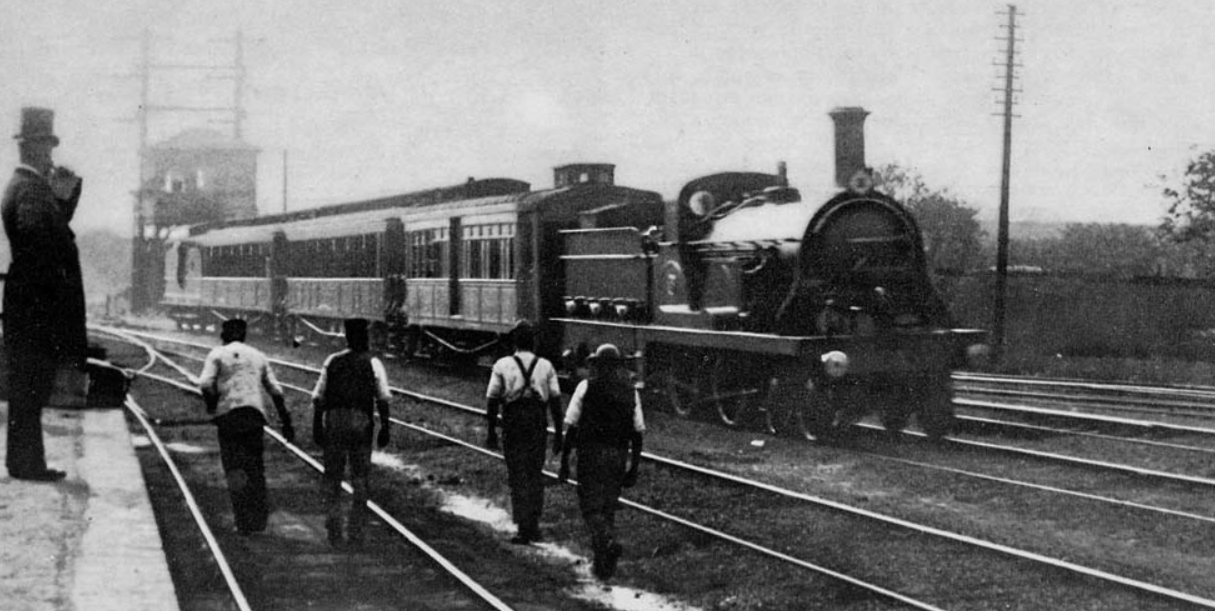
He says: “In these iron days of the dominance of steam, the crowning wrong that is wrought us of furnace and piston-rod lies in their annihilation of the steadfast mystery of the horizon, so that the imagination no longer begins to work at the point vision ceases”. [7]
“The desolate suburbs creep ever farther into the retreating fields; and when you reach the windy moorland, lo! it is all staked out into building-lots”. [8]
“Many a century has passed since the plough first sped a conqueror east and west, clearing forest and draining fen; policing the valleys with barbed-wires and Sunday schools, with the chains that are forged of pace, the irking fetters of plenty: driving also the whole lot of us, these to sweat at its tail, those to plod with the patient team, but all to march in a great chain-gang, the convicts of peace and order and law”. [9]
If Grahame was dismayed by what Britain was becoming 130 years ago, I shudder to think what he would make of the place now.
Although the industrial cancer was already well advanced, it had not yet brought Old England to its deathbed with its motorways, housing estates, hypermarkets, pylons, phone masts, wind turbines and solar panel “farms”.
Grahame could still glory in “the old country road, evolved out of the primitive prehistoric track, developing according to the needs of the land it passes through and serves: with a language, accordingly, and a meaning of its own”. [10]
He took pleasure in travelling on foot and thus really feeling the expanse of the landscape through his movement in it – “a man’s stride remains the true standard of distance; an eternal and unalterable scale”. [11]
“To all these natural bounds and limitations it is good to get back now and again, from a life assisted and smooth by artificialities”. [12]
He could still taste the timelessness of a rural English life that seems now to have been swept out of reach by the toxic tide of development, and he enjoyed the “dallying”, “strolling” and “holy calm” of a village in which “loafing may be pushed to high perfection”. [13]
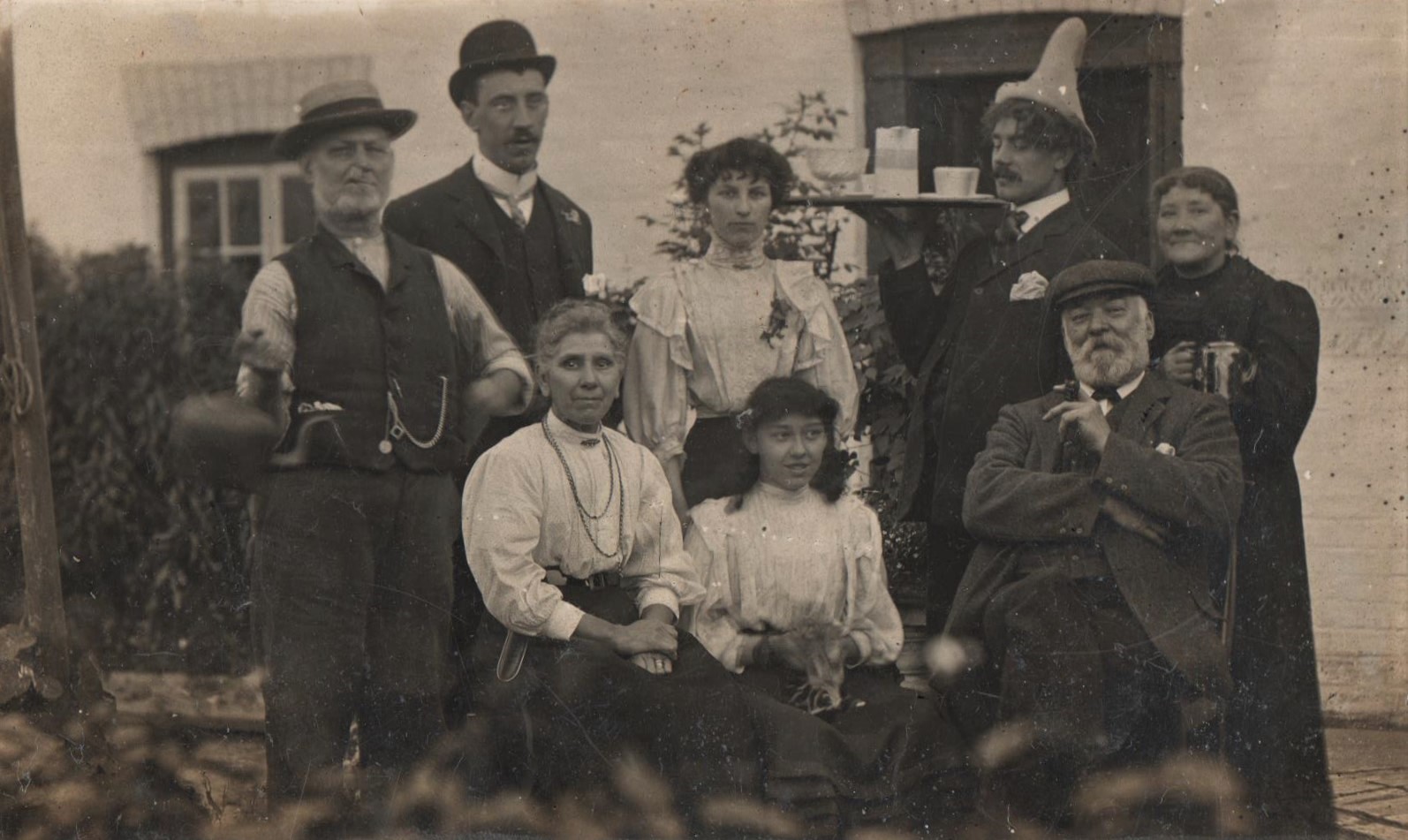
Grahame muses: “The old road-life still lingered on in places, it seemed, once one got well away from the railway: there were two Englands existing together, the one fringing the great iron highways wherever they might go – the England under the eyes of most of us.
“The other, unguessed at by many, at whatever places were still vacant of shriek and rattle, drowsed on as old: the England of heath and common and windy sheep down, of by-lanes and village-greens”. [14]
But his enjoyment of the remnants of the Old Ways was tinged with his realisation that “the useless race of poets is fast dying out”. [15]
Even when the woods and hills remained intact, our mystical sense of oneness with them had been destroyed by the “rational” and “scientific” thinking imposed by the industrial empire.
He reflects: “The sylvan glories of yonder stretch of woodland renew themselves each autumn, regal as ever. It is only the old enchantment that is gone, banished by the matter-of-fact deity”. [16]
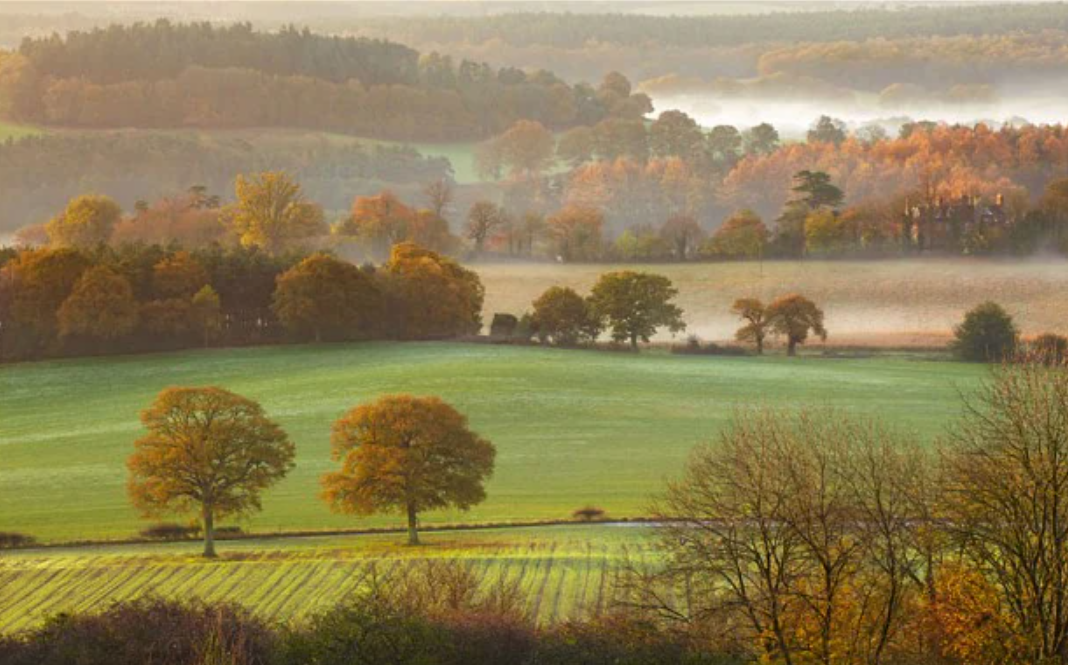
Grahame is haunted by a “forlorn sense of a vanished heritage” [17] and places the blame on “the material generation that so deliberately turned its back on the gap into Elf-land – that first stage to the Beyond”. [18]
This deep critique of modernity, and all the separation it brings with it, is reflected in the words Grahame places in the mouth of Great Pan, the god of nature, addressing humanity.
“Was it really necessary, after all, that we two should part company so early? May you not have taken a wrong turn somewhere, in your long race after your so-called progress, after the perfection of this be-lauded species of yours?” [19]
And he understood what lay behind this deliberate desecration, this callous and calculating war on the gods of nature that had been at humankind’s side since its birth.
“Yes: to-day the iron horse has searched the country through – east and west, north and south – bringing with it Commercialism, whose god is Jerry, and who studs the hills with stucco and garrotes the streams with the girder.
“Bringing, too, into every nook and corner fashion and chatter, the tailor-made gown and the eyeglass.
“Happily a great part is still spared – how great these others fortunately do not know – in which the rural Pan and his following may hide their heads for yet a little longer, until the growing tyranny has invaded the last common, spinney and sheep-down, and driven the kindly god, the well-wisher to man – whither?” [20]
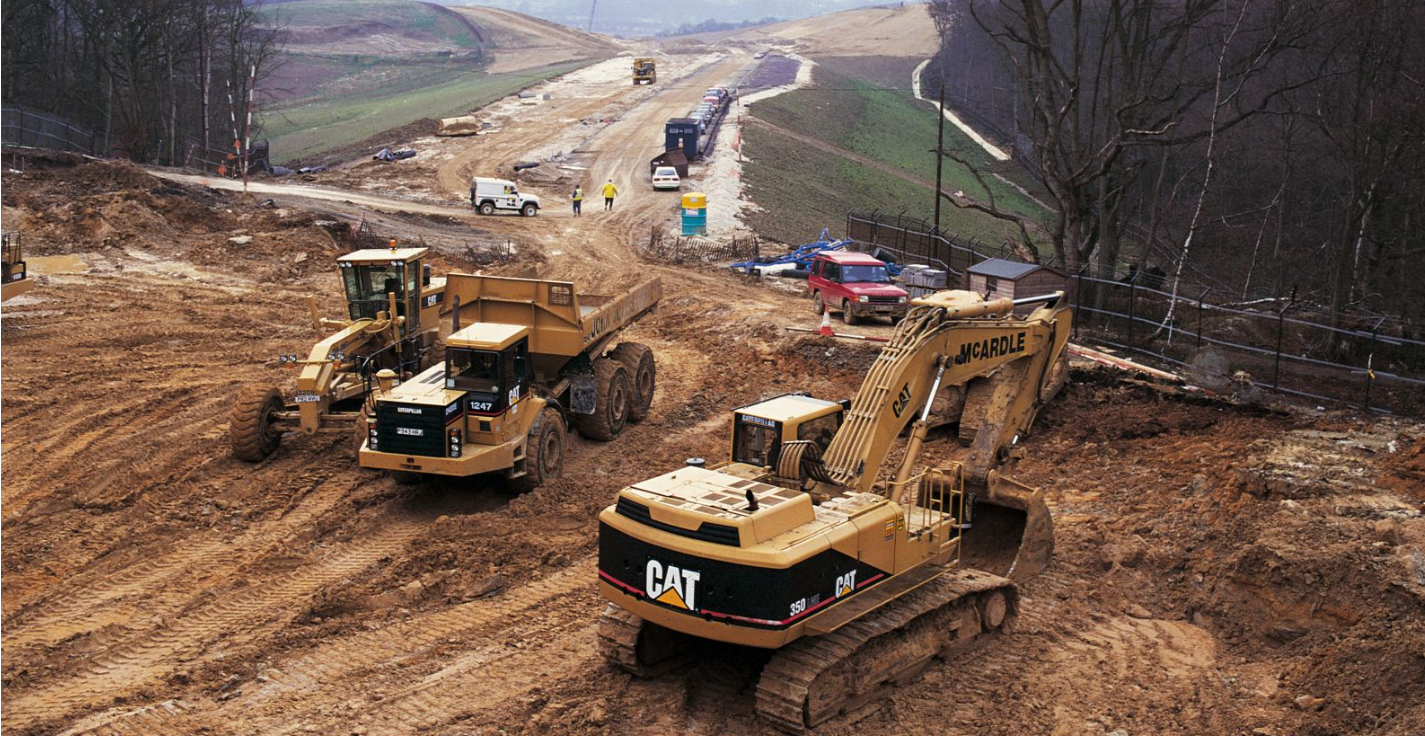
In Pagan Papers, Grahame uses the name of this “kindly god” to invoke a certain type of person, or perhaps a certain way of being which is inspired by him.
“Both iron road and level highway are shunned by the rural Pan, who chooses rather to foot it along the sheep track on the limitless downs or the thwart-leading footpath through copse and spinney, not without pleasant fellowship with feather and fir”. [21]
I was pleased to read that he had caught sight of, or maybe embodied, this phenomenon in a corner of the Surrey countryside in which my late mother used to stage family picnics to celebrate her Maytime birthday.
“Out of hearing of all the clamour, the rural Pan may be found stretched on Ranmore Common, loitering under Abinger pines, or prone by the secluded stream of the sinuous Mole, abounding in friendly greetings for his foster-brothers the dab-chick and water-rat”. [22]
And you never know – or rather knew, in Grahame’s era – when you might come across a manifestation.
He assures us: “When the pelting storm drives the wayfarers to the sheltering inn, among the little group on bench and settle Pan has been known to appear at times, in homely guise of hedger-and-ditcher or weather-beaten shepherd from the downs.
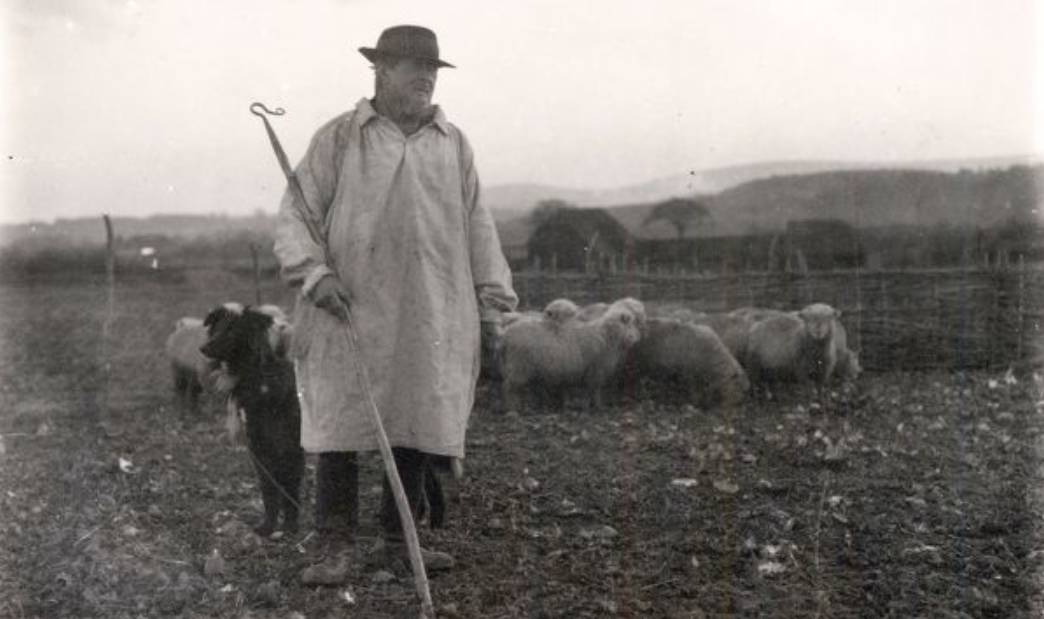
“Strange lore and quaint fancy he will then impart, in the musical Wessex or Mercian he has learned to speak so naturally; though it may not be till many a mile away that you begin to suspect that you have unwittingly talked with him who chased the flying Syrinx in Arcady and turned the tide of flight at Marathon”. [23]
Pan also makes a cameo appearance in Grahame’s much-loved 1908 children’s classic, The Wind in the Willows.
Here is the passage in question, describing Mole’s experience:
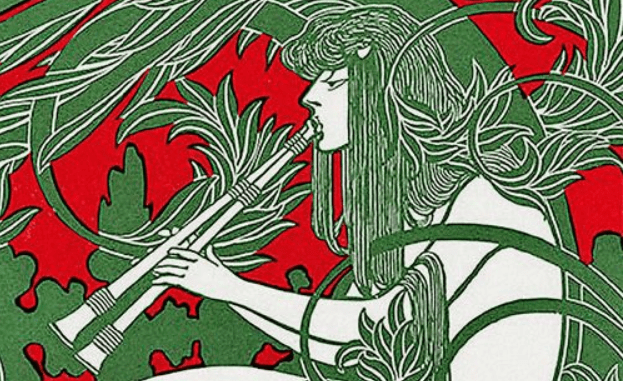
In that utter clearness of the imminent dawn, while Nature, flushed with fullness of incredible colour, seemed to hold her breath for the event, he looked in the very eyes of the Friend and Helper; saw the backward sweep of the curved horns, gleaming in the growing daylight; saw the stern, hooked nose between the kindly eyes that were looking down on them humourously, while the bearded mouth broke into a half-smile at the corners; saw the rippling muscles on the arm that lay across the broad chest, the long supple hand still holding the pan-pipes only just fallen away from the parted lips; saw the splendid curves of the shaggy limbs disposed in majestic ease on the sward; saw, last of all, nestling between his very hooves, sleeping soundly in entire peace and contentment, the little, round, podgy, childish form of the baby otter. All this he saw, for one moment breathless and intense, vivid on the morning sky; and still, as he looked, he lived; and still, as he lived, he wondered.
“Rat!” he found breath to whisper, shaking. “Are you afraid?”
“Afraid?” murmured the Rat, his eyes shining with unutterable love. “Afraid! Of Him? O, never, never! And yet—and yet—O, Mole, I am afraid!”
Then the two animals, crouching to the earth, bowed their heads and did worship.
Sudden and magnificent, the sun’s broad golden disc showed itself over the horizon facing them; and the first rays, shooting across the level water-meadows, took the animals full in the eyes and dazzled them. When they were able to look once more, the Vision had vanished, and the air was full of the carol of birds that hailed the dawn. [24]
This is a marvellous passage, but the whole chapter in which it appears is “often excluded from newer editions of the novel”. [25]
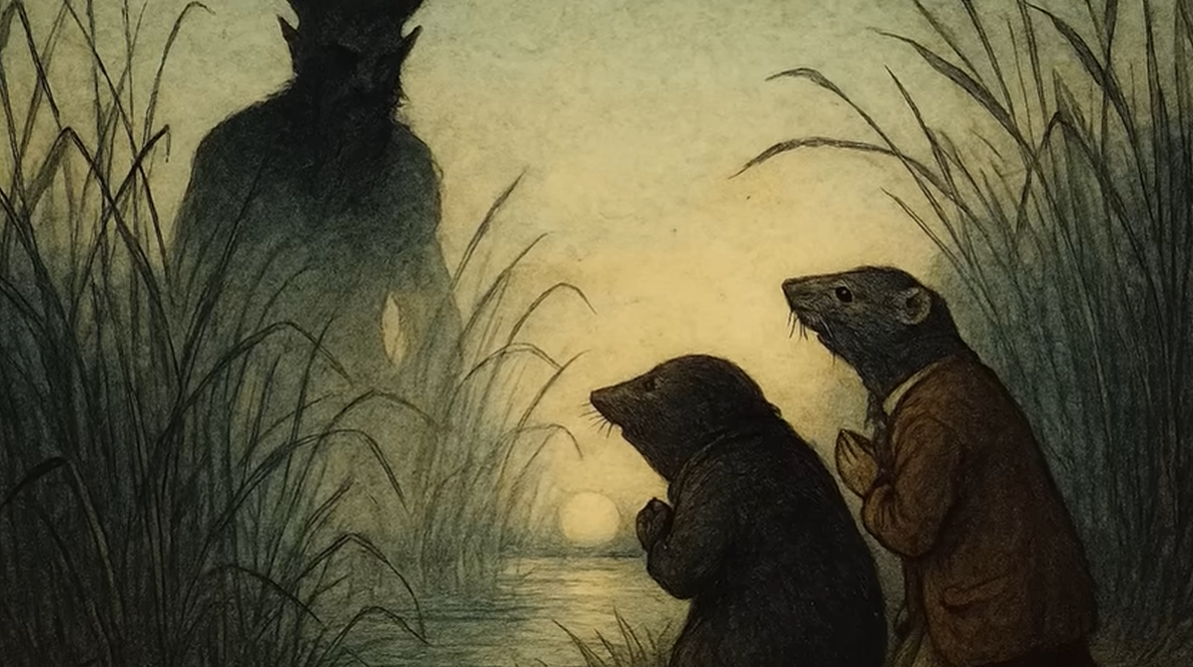
The reason for this crass censorship is that this personification of nature is regarded as being evil by a certain “judeo-christian” mindset.
The “kindly god” is interpreted as being the Devil!
Nature, including goats, is only labelled a “dark force” by those who would like to strip her of her divinity in order to be able to pillage and desecrate her, as I explain in Our Sacred World. [26]
Grahame shows that he is aware of this connection, when he equates Pan with the strange Christian belief that we are all born “sinners” because of an act of disobedience in the Garden of Eden.
He writes in Pagan Papers: “Of pulpiteers and parents it is called Original Sin: a term wherewith they brand whatever frisks and butts with rude goatish horns against accepted maxims and trim theories of education”. [27]
But while Pan may have been banished – from modern editions of Grahame’s book as from this modern world as a whole – reports of his death have been exaggerated.
Pan is nothing but nature, including human nature, and happily, as Grahame remarks, “so full of human nature are we all – still”. [28]
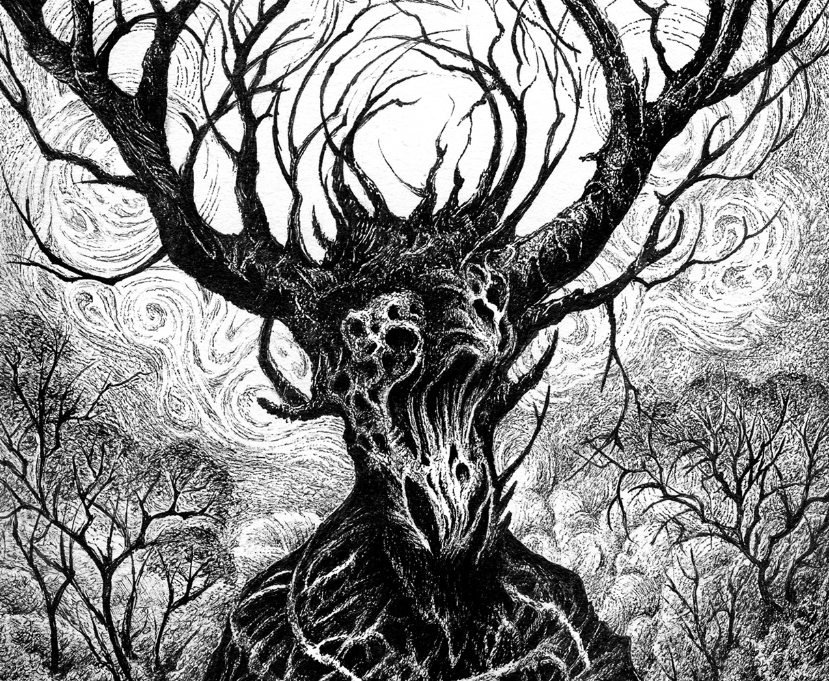
Caged and crushed though it has been by the great machineries of industrial destruction and enslavement, the heart of true humanity lives on and is waiting to find “the gap in Elf-land” that will take it out of the wretched concrete prison of modernity.
Grahame writes: “When old Pan was dead and Apollo’s bow broken, there were many faithful pagans who would worship at no new shrines, but went out to the hills and caves, truer to the old gods in their discrowned desolation than in their pomp and power”. [29]
The yearning to find our freedom in nature, to soar up to the spiritual heights, beyond even immortality, is something we are all born with – this is our real “original sin” in the eyes of those who would flatten us down into craven and guilt-ridden obedience.
It is the spirit of life itself that calls out to us like “warm and soft” March air through an open window.
“The first magic suggestion of spring was abroad, with its whispered hints of daffodils and budding hawthorns; and one’s blood danced to imagined pipings of Pan from happy fields far distant”. [30]
Grahame says that “what we have now first to note is that this original Waft from the Garden asserts itself most vigorously in the Child”. [31]
He pictures her “hearing naught save the faint, far bugle-summons to the pre-historic little savage that thrills and answers in the tingling blood of her”. [32]
Her call, and ours, is to “that shining highway to the dim land east o’ the sun and west o’ the moon: where freedom is, and you can wander and breathe, and at night tame street lamps there are none – only the hunter’s fires, and the eyes of lions, and the mysterious stars.
“In later years it is stifled and gagged – buried deep, a green turf at the head of it, and on its heart a stone; but it lives, it breathes, it lurks, it will up and out when ’tis looked for least”. [33]

[1] Richard Jefferies, The Story of My Heart: My Autobiography, with preface by Paul Cudenec (Sussex: Winter Oak, 2015), pp. 25-26. See also https://orgrad.wordpress.com/a-z-of-thinkers/richard-jefferies/
[2] Kenneth Grahame, Pagan Papers, p. 13. I am quoting from a very rudimentary reprint of the text that I bought on the internet, with none of the usual publishing details. Subsequent page references are to this work, unless otherwise stated.
[3] https://en.wikipedia.org/wiki/Kenneth_Grahame
[4] p. 14.
[5] p. 13.
[6] p. 21.
[7] pp. 6-7.
[8] p. 43.
[9] p. 42.
[10] p. 4.
[11] p. 7.
[12] Ibid.
[13] p. 12.
[14] p. 32.
[15] p. 23.
[16] p. 22.
[17] p. 40.
[18] p. 36.
[19] p. 41.
[20] p. 17.
[21] Ibid.
[22] pp. 16-17.
[23] p. 17.
[24] Kenneth Grahame, Chapter VII, ‘The Piper at the Gates of Dawn’, The Wind in the Willows (1908), https://www.gutenberg.org/files/289/289-h/289-h.htm#chap07
[25] https://www.gradesaver.com/the-wind-in-the-willows/study-guide/summary-chapters-7-and-8
[26] Paul Cudenec, Our Sacred World: Enjoyed, denied and found again (2025), https://winteroak.org.uk/wp-content/uploads/2025/09/our-sacred-worldonline.pdf
[27] p. 42.
[28] p. 14.
[29] p. 30.
[30] p. 33.
[31] p. 42.
[32] Ibid.
[33] pp. 42-43.
 winter oak
Thank you!
I needed that breath of fresh air.
xxx
LikeLike
My pleasure!
LikeLiked by 1 person