
by W.D. James
“To be attached to the subdivision, to love the little platoon we belong to in society, is the first principle (the germ as it were) of public affections. It is the first link in the series by which we proceed towards a love to our country, and to mankind.” – Edmund Burke
[Photo: Wendell Berry plowing his field in Henry County, Kentucky.]
How is it that things come to belong to us and how is it that we come to have a sense of belonging? Those are, I believe, intricately related questions.
On April 25, 2012, the Kentucky farmer, poet, novelist, and essayist Wendell Berry gave the 41st Annual Jefferson Lecture. His talk was entitled “It All Turns on Affection.”
Affection, a form of feeling, has a hard time getting a say in important matters. Hardheaded ‘realists’ don’t like it. Yet, going way back to 1746 with Jonathan Edwards’ A Treatise Concerning Religious Affections, some Americans have tried to give it its due. In that work, Edwards had sought to defend the sort of religious affections manifesting themselves in ‘the First Great Awakening’ as it came to be called, the basis of American Evangelical and plebian religious experience.
Amongst the great political thinkers, it is probably Edmund Burke (1729-1797) who most readily comes to mind as placing the affections near the heart of his thinking. Burke is usually considered the father of modern conservatism. It has always struck me as rather ironic that the father of conservatism was a member of the progressive party in the English Parliament: he was a Whig, not a Tory. Also, Burke was an early champion of the cause of the American colonies in the years leading up the American Revolution. Further, he was Irish, not English.
However, Burke was no friend of revolution. It is for his critique of the early phases of the French Revolution that he earned his standing as a conservative.
His contemporary Thomas Jefferson (1743-1826) was a great proponent of that revolution which put him in the radical camp of American politics.
In his Jefferson Lecture, I believe we can see Berry drawing together elements of the radical Jeffersonian tradition and the conservative Burkean tradition. In response to watching the French nation tear itself apart and faction after faction going after one another, Burke was very interested in what it is that makes a people like one another and what concrete factors contribute to that. As summarized by Stephen K. White in Edmund Burke: Modernity, Politics, and Aesthetics (Sage, 1994):
“The real ‘cement’ is the sharing of particularities that ‘second nature’ makes possible and that in turn continually reproduce that nature. The sharing of particular memories, institutions, privileges, interests, and opinions – in short, ‘the spirit of English communion’ – is the soil in which ‘close affection’ thrives.”
Likewise, Berry is very interested in how our affections are related to particular places and communities, but in a way that would satisfy the Jeffersonian ideals of equality and independence.
Boomers
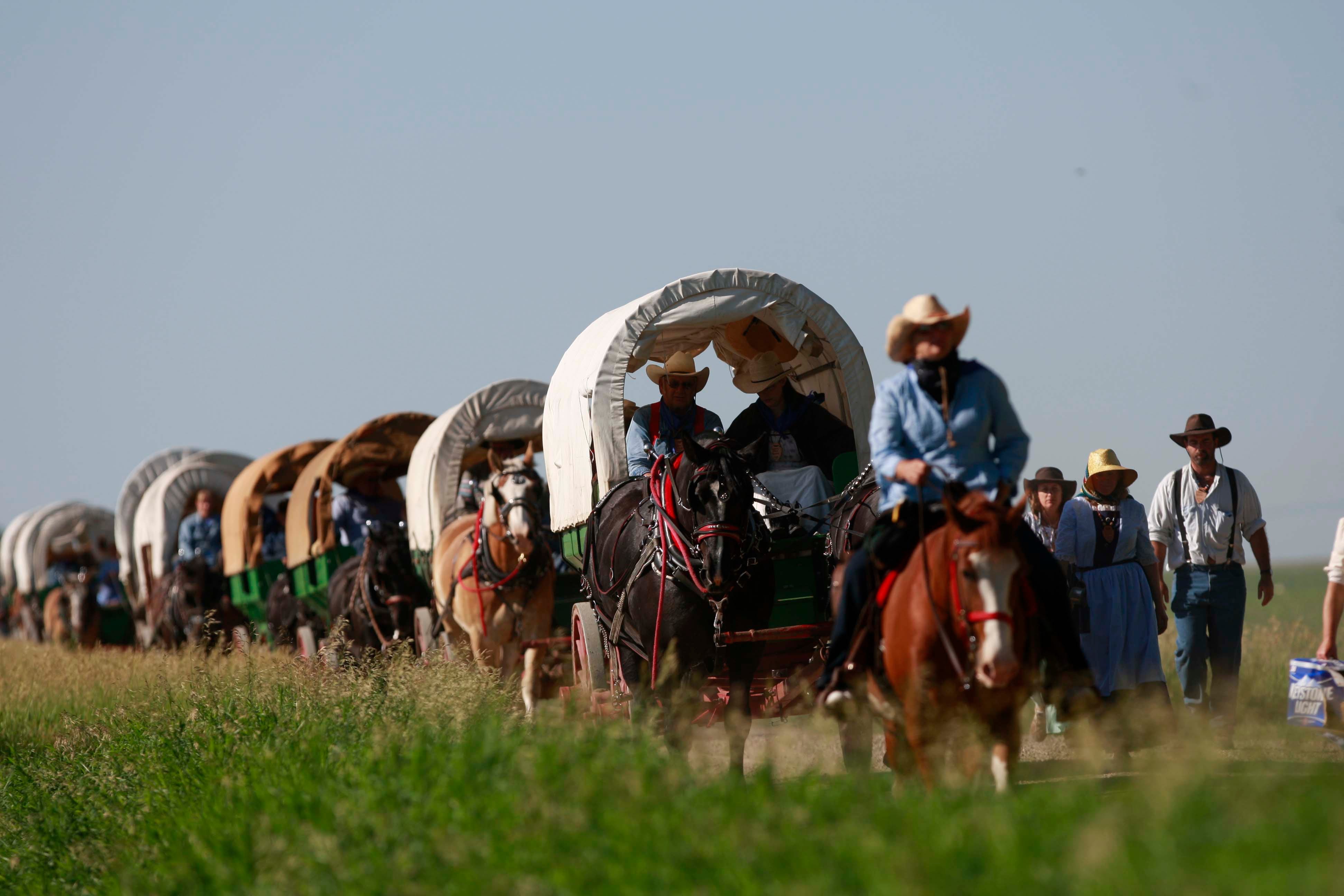
Borrowing from his teacher, the poet Wallace Stegner, he draws attention to what he thinks is the primary distinction between different sorts of Americans. On the one hand, Stegner had talked about ‘boomers’ (not referring to a particular generation of Americans, but a particular sort of American) “those who pillage and run” (Berry, 10).
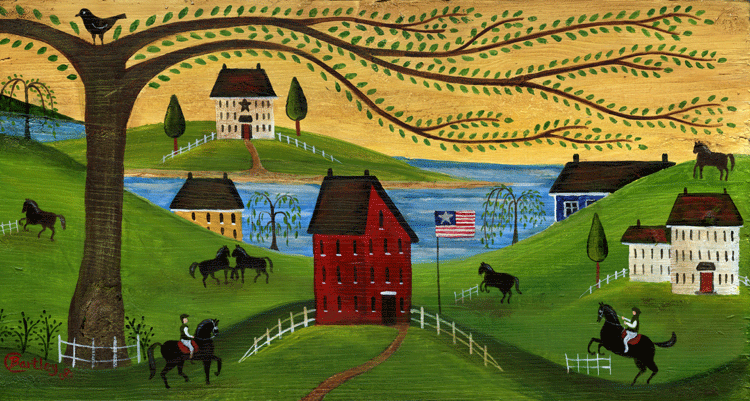
Contrariwise, there are ‘stickers,’ “those who settle, and love the life they have made and the place they have made it” (Berry, 10).
The boomer, Berry says, is motivated by “greed” and deals “efficiently” with the world turned into quantities (Berry, 16). He or she does this by relating to the world, both natural and social, primarily statistically: as resources to be used profitably. Hence, “this is an impersonal, abstract selfishness, limitlessly acquisitive, but unable to look far enough ahead as to preserve its own sources and supplies” (Berry, 16). As a multigenerational farmer, Berry can discern the fault in a purely economic rationality. The economy needs resources like coal for energy, quality soil for food production, and functioning human communities to keep working, however, it will exhaust its natural resources, waste its soil, and plunder the communities that it depends on. It is literally not sustainable (to use that much maligned word).
Berry does not think this is a problem in the boomer way that can be fixed; it’s essential to that way. “Now,” he observes, “the two great aims of industrialism – replacement of people by technology and concentration of wealth into the hands of a small plutocracy – seem close to fulfillment” (Berry, 22). “No amount of fiddling with capitalism to regulate and humanize it,” he says, can change its fundamental logic (Berry, 22).
Stickers
As noted above, the sticker sort of American settles down somewhere and can come to love that place and its people. What does this require? “To have a place, to live and belong in a place, to live from a place without destroying it,” Berry says, “we must imagine it. By imagination we see it illuminated by its own unique character and by our love for it” (Berry, 14).
Whereas the boomer relates to the world primarily abstractly and ‘statistically,’ the sticker does so by dwelling on the particularities of the local and through imagination. I think by this term Berry means something very much like what others have called ‘love’s knowledge.’ When we love something, we see it differently, or perhaps it is better to say, it reveals itself to us differently. Through love we can discern the particular beauties, virtues, and potentialities of a particular thing.
Think of the difference between contemplating some abstract child and contemplating your child. Even if well intentioned, your understanding of the abstract child (just a child in general) will be very limited. They need food, clothing, shelter, and love. Yes. But of what kind? And what else do they need? However, with your child, as a particular beloved, you will know much more intimately and accurately what they need to thrive and how to provide that to them. Berry is saying that if we inhabit and love a particular place and people, we will similarly have this nuanced and appropriate appreciation for them. Affection really makes a practical difference.
Applying this lesson politically, Berry articulates his angle on the Jeffersonian ideal: “In such modes joy in a modest holding is the promise of a stable, democratic society, a promise not to be found in ‘mobility…’” (Berry, 17). Such a way of life must turn its back on the boomer way and its “incomplete accounting” “to espouse the cause of stable, restorative, locally adapted economies of mostly family-sized farms, ranches, shops, and trades” (Berry, 19).
This vision allows Berry to conceive of a different sort of property to that conceived by the boomer. He terms this “effective ownership.” He says, “effective ownership of a small property is personal and therefore can, at least possibly, be intimate, familial, and affectionate. If, on the contrary, a person owns a small property of stock in a large corporation, then that person has surrendered control of the property to larger shareholders [losing effective ownership of it]” (Berry, 20).
A way forward
Berry says that human knowledge just is not comprehensive enough to deal with the world statistically, at a global scale, and not botch the world up.
Artificial Intelligence promises to solve this problem by perfecting statistical knowledge, forecasting, and planning. Following Berry, we can expect it to screw up the world more systematically than ever before.
But how are we to know the way forward toward the sort of local, human scale setup he recommends?
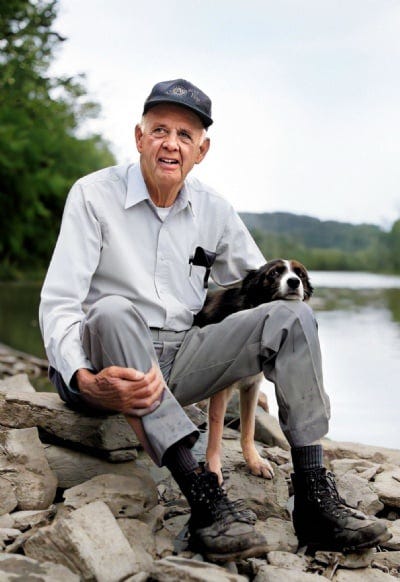
He doesn’t rule out “inspiration.” God, the Spirit, or whatever, might show us. The more reliable method he suggests is to become humble enough to listen to Nature. “[B]y failing badly enough to deal affectionately and responsibly with our land and our neighbors, truth will retaliate with ugliness, poverty, and disease” (Berry, 27). That is, if we listen, Nature will tell us, by punishing us, when we are screwing up and we can adjust course.
Additionally, he thinks there are two “authentic” forces already operative in our situation that will instruct us. The first he says is “scarcity.” When we can no longer grow enough food, generate enough energy, etc… to keep the current economy of greed running, we will necessarily learn some lessons from that. Further, he discerns an already growing effort to re-establish local food economies (Berry, 30).
Finally, affection itself will teach us, if we again allow it to be a legitimate motive (vs profit only), of how we should live.
If we are fortunate, these forces may again teach the art of economy, “the making of the human household upon the earth” (Berry, 37).
Ownership beyond property
I think Berry’s exploration of the importance of ‘affection’ and how it relates to such practical things as getting along in the world, property, and sustainable flourishing opens up additional insights he does not explicitly develop.
There are two ways that we can come to own something. These correspond to two ways of being in the world. I might speak of ‘my bank account.’ In this case my ownership of the funds stored there reflects my having gone out and laid claim to resources (through production or acquisition). We are correct in calling what is owned in this way property.
I can also speak of ‘my wife.’ The ownership alluded to here is not a property relationship. What is it that makes ‘my wife’ mine (and me her husband of course)? Essentially, she becomes mine through my having given myself to her. That seems contradictory or backwards given our usual understanding of ownership. But it is this sort of relationship that is pointed to in many situations in which we speak of ‘my’ or ‘mine:’ my neighborhood, my church, my child. In these cases, there is a form of ownership proclaimed (or better, belonging) but it is not a property relationship. These relationships are established in a completely opposite way from that of taking. Here it is a matter of having given oneself to someone or something out of love.
When I speak of ‘my home,’ which mode am I eliciting? I think in this case it can go either way. For someone like Wendell Berry a lot will turn on how we answer that question in particular. Is my ‘home’ primarily a piece of real estate or capital that I possess and use or is it more of a qualitative thing I love?
To start with, it has to be something like a mere economic good – I need to purchase it, its economic value will largely be determined by a market rationality, etc…. But, then, what do I make of it? Do I settle down, come to care for and take care of the place, appreciate it as the place where I can raise my family, get to know and appreciate my neighbors, and pass along not just a commodity with value but a genuine qualitative inheritance? I think affection can perform a transformative role whereby the merely material becomes the qualitative.
But it requires something of us. We must give up something: our ‘options’ on its use, our labor and love in nurturing it; in short, we must give up something of ourselves. Affection requires sacrifice. Berry had not really drawn that conclusion (in this lecture anyway; he does elsewhere).
Is this realistic?
If this question means are we all going to spontaneously give up our current way of existence and become small-scale farmers and craftspeople operating out of affection, I would say ‘absolutely not, it’s not even possible under current circumstances for us all to do this.’
But let’s note that this is not what Berry is saying either. Berry is not a dreamer (except in the small way that his ‘imagination’ entails) nor a utopian. Actual famers seldom are: they are too closely enmeshed with reality.
His point is that we aren’t going to have any other good alternatives. It seems pretty clear that the path of industrialism, technology, and capitalism we have pursued in the past two centuries has largely despoiled and exhausted our shared home (making much of it ugly in the process). That is a very short timeframe in the larger span of human habitation of the planet. Berry thinks this way of operating just does not work, for very long.
I don’t think he thinks we will all listen to him and just choose to operate in ways more born of affection. But Nature will, with increasing force, teach us that we must change. Until we get back to ‘a human scale,’ Nature will continue to knock us toward such a scale – ultimately each thing (species, etc…) stays in ‘its place,’ or it gets rejected. How thick our collective skull is will largely determine how much suffering that process requires.
It really All turns on affection.
Kentucky mountain balladeer Jean Ritchie.
Wendell Berry, It All Turns on Affection: The Jefferson Lecture and Other Essays, Counterpoint, 2012.
 winter oak
Beautiful thoughts and beautifully explained… Thank you.
Affections, these were “les noeuds invisibles qui relient les choses” (the invisible knots that connect things)
“Je sauve celui-là seul qui aime ce qui est et que l’on peut rasassier”. (I save only he who loves what is and who can be satisfied…)
(Saint-Exupery, Citadelle).
Jose María Gómez Palacios, Madrid-Spain
LikeLike
It is hard to tell what came first the Berry or the plant. Old dreamers, old ways, old crows that have flown away. Chase the dollar till ya holler and try and find peace and so many of us cannot sit still and enjoy what we worked are butts off to accomplish. I love where this man is coming from and feel deep down it may be lost forever when his generation and some in touch with nature boomers pass. The cities have turned into jungles and corruption is strangling the land, we are being watched and we don’t understand. Those of us that dig roots of love, get dirty fingers and pick our meals out of the dirt may try and hide in the country but I feel this technocracy and AI infested world has other plans and I will push love of fellow man and nature and continuation of my tribe till the day they take me. As Patti Smith said, they can all go take a fkin walk.
LikeLike