by Paul Cudenec (who reads the article here)
There can hardly be a more blatant and ubiquitous symbol of the industrial-imperialist domination of our world than the roads it keeps on building and enlarging.
They scar the landscape both natural and human, cutting through forests, hillsides and communities, as well as allowing the extraction of resources and the imposition of central control.
Philosopher Jean-Marc Ghitti takes a deep look at their role, and the broader phenomenon of which they are part, in his 2025 book La Terre confisquée (‘The Confiscated Land’).
Roads and power go hand in hand, he says, noting that die Autobahn and l’autostrada were the pride and joy of Adolf Hitler and Benito Mussolini’s 20th century industrialist dictatorships. [1]
The construction of a new road is partly physical propaganda aimed at boosting the prestige of any regime.
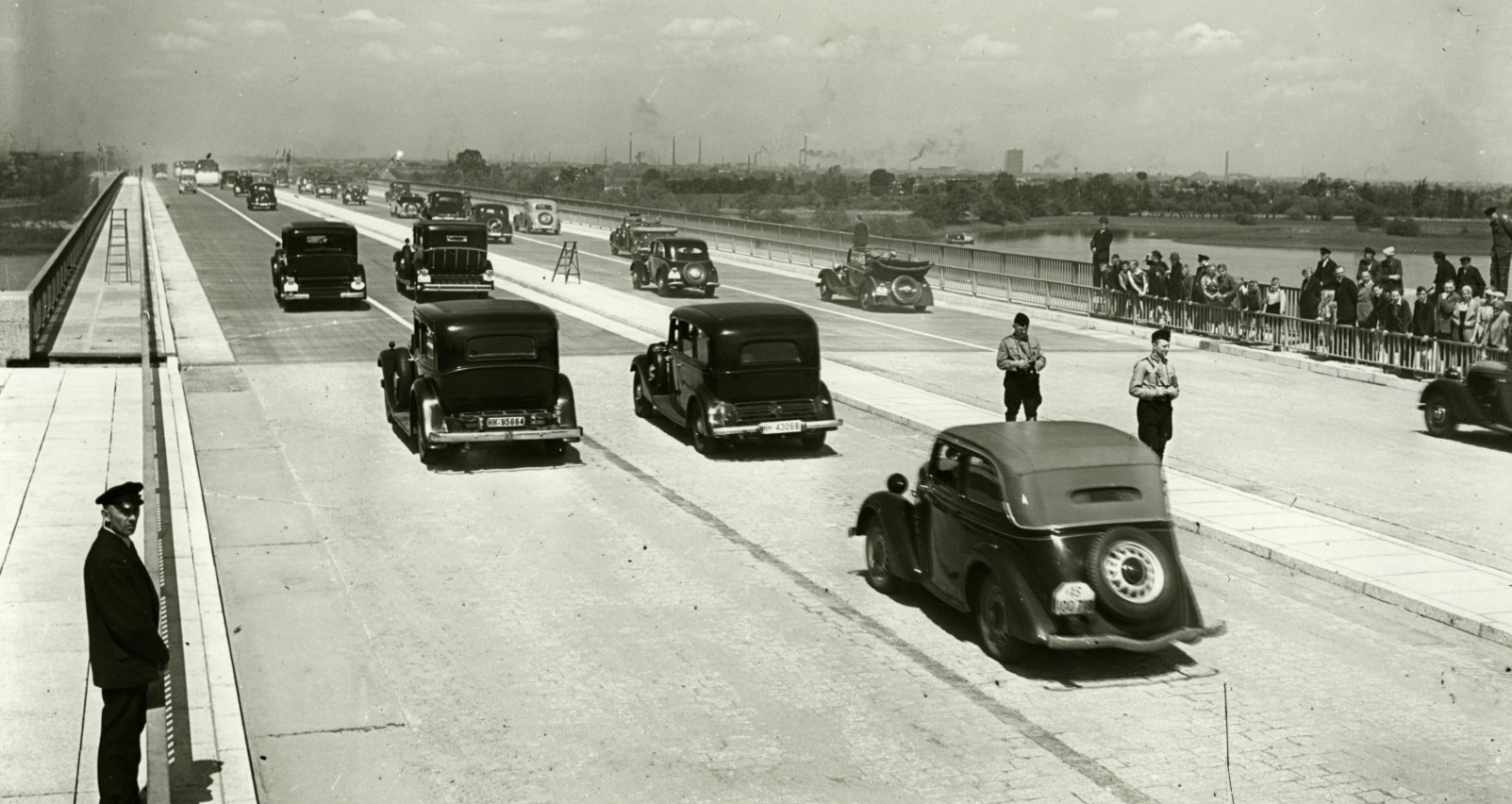
Ghitti says: “Today’s ‘beautiful roads’ are like any other commodities: they give to the users the impression of being part of something, of belonging to an advancing world, to modern life”. [2]
This effect is increasingly backed up with signs proudly announcing how much money has been put into new or expanded roads or other public works.
He says the French authorities’ spending on this self-publicity has gone through the roof in recent years.
“The not inconsiderable financial cost of these signs shows the importance given to them by politicians”. [3]
Behind the self-congratulation lies a massive sleight of hand, he points out.
A new road, or other project, is presented as a gift to the public from the authority in question, in return for which its political leaders implicitly invite a gift from the public, in the form of their continued support and votes.
But the money to build a road in fact comes from the pockets of the taxpayers themselves, as does the money that pays the politicians’ wages and expenses, and indeed pays for all the signs telling everyone how generous they have been!

Ghitti (pictured) says the population is also misled about the reasons for which roads are built or widened.
He details how, since the Second World War, a language has been deployed which regards people in rural areas, like the Massif Central mountains where he lives, as being “cut off” from the rest of the country.
The fact that there are people living outside the industrial mainstream is presented as a “problem” for which a “solution” must be found.
This line, often taken up by those on the “left”, demands in the name of equality and social justice that these communities should be connected to the matrix of modernity.
But, of course, Ghitti stresses, the project is not really about improving the lives of those living on the “peripheries”, but rather about wanting to “attach them to the politico-industrial apparatus”. [4]
This is the same trick used by the likes of the WEF and the UN when they talk about the need for global “inclusivity” – it is really about swallowing everybody up, bringing us all inside their cage of exploitation and control.
Once an area is “opened up”, there is no going back. The road brings with it new industrial estates, supermarkets, housing developments and lots more lorries and cars.
“Traffic calls for new roads, but new roads draw in more traffic in a never-ending process”, writes Ghitti. [5]
The ideology used to push all this through is based on the supposed need for never-ending “economic growth” and “modernisation”, [6] spun to us as an inevitable and desirable evolution of human existence, a progress in some kind of useful direction.
This ideology trumps any values held by the population under occupation. Your opinion is simply deemed not to be valid if it does not reflect the official agenda – you are a “reactionary”, a “Luddite”, a “blocker” or some other kind of social nuisance.
All the virtue-signalling of the industrial system is a deceptive façade.
Ghitti warns of “a decoy that makes people think that the rulers are integrating the population into the great march of progress and modernisation, while it serves to ensure, by this means, the government’s domination of the territory at the expense of those dominated and to the benefit of the capitalist dynamic”. [7]

“This ‘modernisation’ is, in fact, an adaptation of the whole of society to the demands of an ever-advancing capitalism which needs technological innovations and new markets to sell its merchandise”. [8]
He says a new road, as an investment, is supposed to make money even when there are no tolls “because it opens markets, reduces transport costs, contributes to economic growth.
“This way of thinking means that the state, with taxpayers’ money, is boosting the capital of the businesses benefiting from the roads, who can use them to transport their merchandise, to move their lorries around.
“The state provides businesses with the infrastructure they need”. [9]
By pushing the ideology of consumption and obedience, the state also “produces adapted subjects whose desires conform to what industry is offering them”. [10]
But what are the origins of this all-powerful state/system that confiscates our land in the interests of Mammon?
How did it come to take control of our societies and set itself up as the Great Global God of Governance to which we are all supposed to kneel?
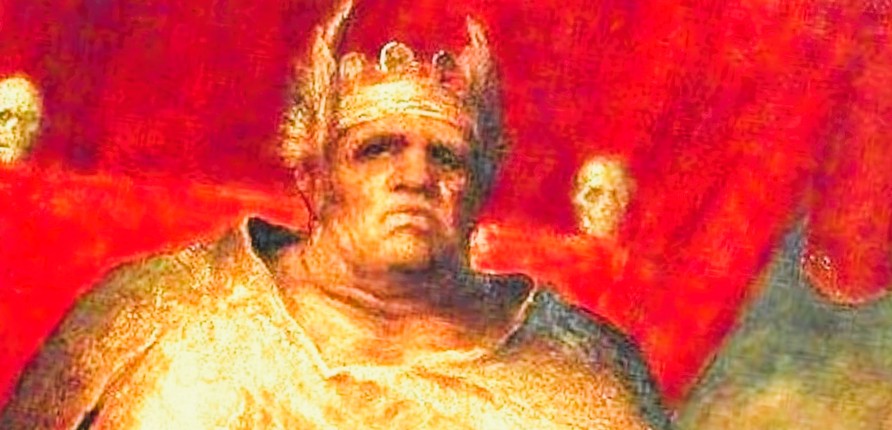
Ghitti looks at the way in which this absolute power was exerted by the road-building Roman Empire but faded away in the Middle Ages, when spiritual hierarchy and morality were regarded as more important than the merely temporal and pragmatic.
He identifies the legacy of English philosopher Thomas Hobbes (1588-1679) as an important factor in establishing modern absolutism.
Hobbes, he says, regarded the right to rule as belonging to secular princes, with the tacit approval of God. [11]
His influence paved the way to the modern state and an expansion of its power which “has hardly been contested, other than by anarchist movements”. [12]
My Winter Oak colleague W.D. James wrote about Hobbes’ philosophy in his important 2023 essay ‘The Mortal God Drops His Mask’. [13]
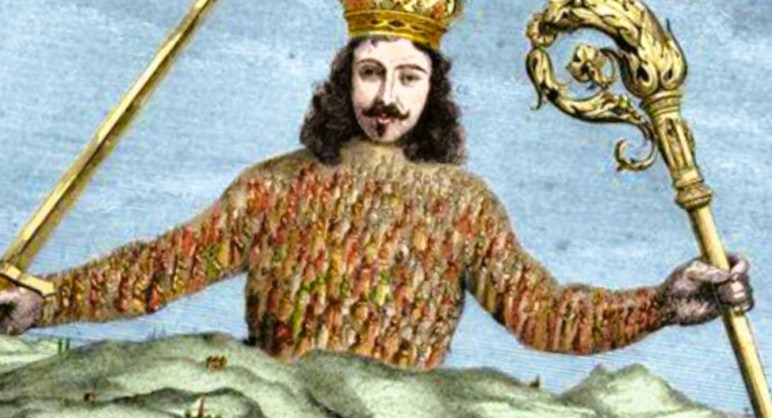
Here he explains that Hobbes (pictured) “most accurately described what a modern state was before any of them actually existed”.
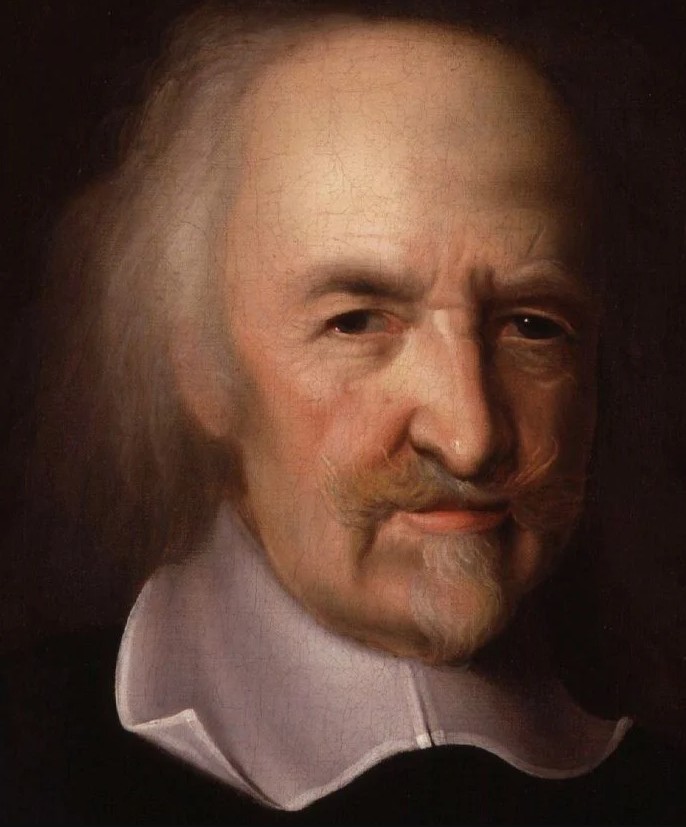
“He famously names the State ‘Leviathan’ (in the book of that name) and ‘Mortal God’. The State is an ‘artificial animal’, a technology, which exists to reduce the wills of the many people living under it to ‘one will’ (ie, to conform to a unified will).
“It will govern through ‘reward and punishment’. The key factor is that the State possesses absolutely overawing power so that it can impose stability and order over a population occupying a given territory”.
Hobbes’ vision is the opposite of the free and organic society which many of us advocate and, James says, ignores the fact that “all actually existing traditional communities operated cooperatively and shared a moral vision”.
“Hobbes’s self-conscious modernism lies in his rejection of all pre-modern conceptions of society as a natural organism, especially the Aristotelian view”.
He rejects any idea of innate social cohesion, solidarity and mutual aid in favour of the notion that people are necessarily hostile and uncooperative towards one another and hence in a perpetual “state of war”, of “every man against every man” – life is “solitary, poor, nasty, brutish, and short”.
This false evaluation of humanity opens the door to the false “need” for Authority to step in and impose a state of affairs that is a reversal of natural justice and self-determination.

This illegitimate entity’s claims to “total power” include, says James, “the right to appoint magistrates, officers, and counselors (note that these are ultimately officials of the State, not representatives of the people)”.
“The State must have authority over thought and opinion because these lead to action which could lead to challenging the State; no one and nothing can be thought to lie outside the State’s authority”.
What, we might wonder, was the inspiration behind Hobbes’ outline of an all-powerful modern state?
My personal suspicions in this respect were aroused by the convergence of two factors.
Firstly, Hobbes’ vision of authority is generally regarded as an extrapolation of his mechanistic understanding of nature into the social and political realm. [14]
As James puts it in a recent article describing Hobbes’ position: “Authoritarian rule is rational and is what is required to get us out of the state of nature”. [15]
The second element leapt out at me when I was reading Ghitti’s book.
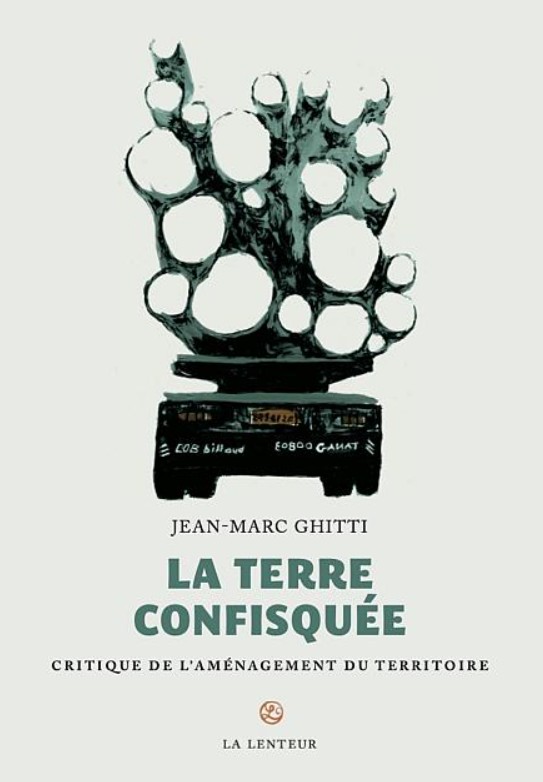
He explains that one aspect of Hobbes’ philosophy “consists of despiritualising understanding of the Bible so as to project on to it – in an often anachronistic, but always politically orientated manner – principles of civic organisation.
“He justifies his interpretation by referring to Moses, in whom Hobbes sees a sovereign who legitimately grants himself the right of exegesis”. [16]
This is not the first time that I have come across this connection between “rational” thought and Judaic tradition.
In Our Sacred World, I write about the emergence in 17th century England of a school of “scientific” philosophy which set out to sweep away traditional and organic ways of thinking and living. [17]
I look at Francis Bacon (1561-1626), his lifetime debts to persons unknown and the allegations of corruption and “Qabalistic” connections that surrounded him.
I further highlight the role of René Descartes (1596-1650), who was also linked to secret societies and worked for the Dutch state, which was, at the time, leading the push for imperialism through the likes of its “multinational” East India Company.

And I describe a letter to Oliver Cromwell from Rabbi Menasseh Ben Israel bragging about “the great influence of the Jews in the Dutch colonial and financial projects” and explain that civil war victor Cromwell set in motion the official return of Jews to England.
An important figure in all this manoeuvring was French polymath Marin Mersenne (1588-1648), who, says Morris Berman, was its “virtual nerve center”.
“Proponents of mechanism, such as Galileo, were translated or explicated. Contacts were made with men who would later be key figures in the Royal Society of London, and these ties were strengthened when a number of them went into exile in Paris during the Civil War”. [18]
And in London the “Hartlib Circle” or “Invisible College” was also busy constructing this new philosophy, essentially sourcing its “rational” and “scientific” basis from Judaism.
I extensively quote, in explaining this phenomenon, an essay by Professor Yosef Kaplan of the Hebrew University of Jerusalem entitled “Jews and Judaism in the Hartlib Circle”.
He writes of “the connections that Hartlib and his partners formed with Jews from Holland and other places, from at least 1650”. [19]
Kaplan says the Invisible College’s aims were “to help people become more rational” while teaching that “the revelation of the true worship and religion was transmitted to humanity by means of Judaism”. [20]
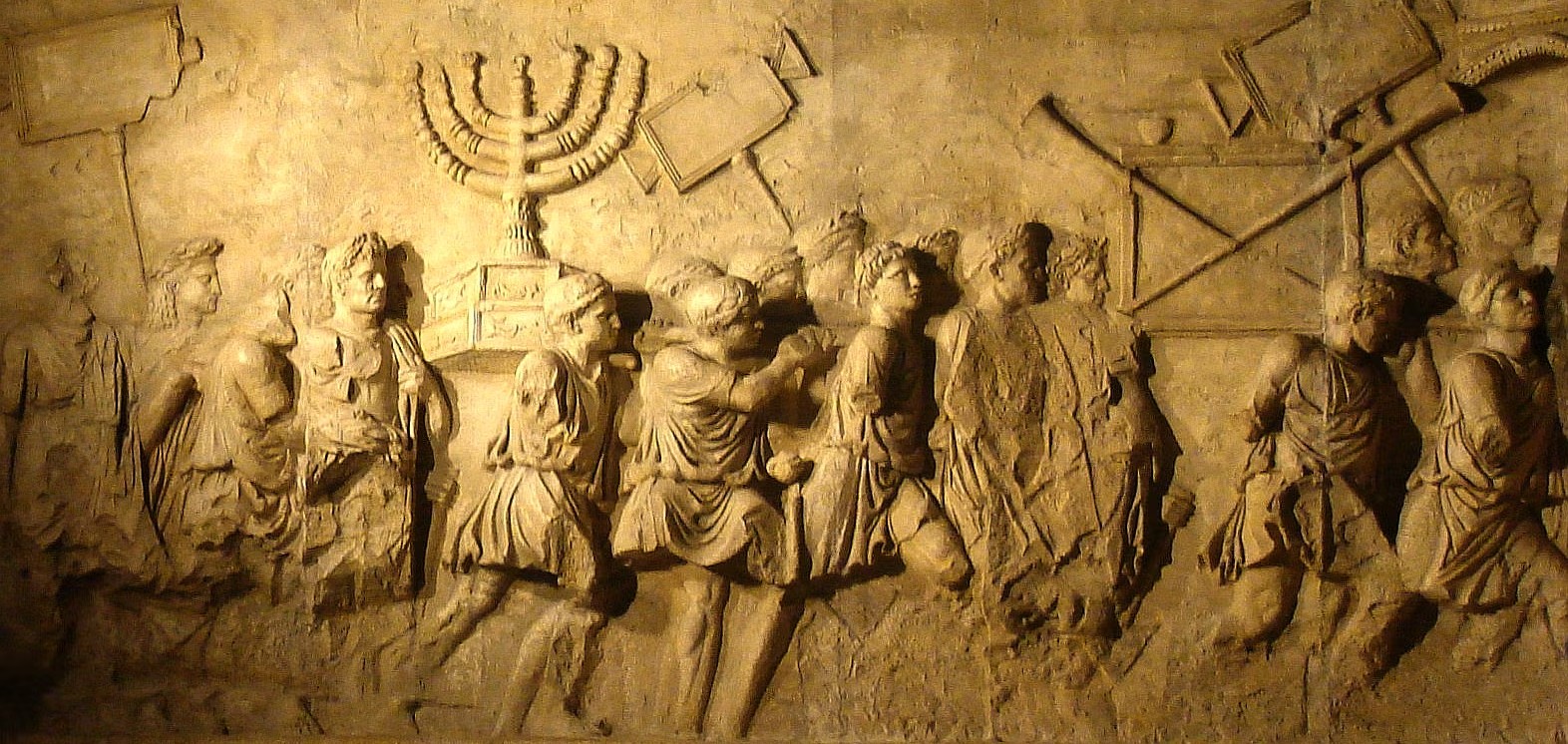
I cite Alain Daniélou’s reference to “a Judaism which had become monotheistic, dry, ritualistic, puritan, Pharisee and inhuman”. [21]
I refer to John Lamb Lash’s view that the ancient Jews were not interested in conscience, and the power to choose what is right, but “merely introduced a set of rules purporting to dictate what is right”. [22]
And I recall that Max Weber says Judaism has a “particular historical importance in the blooming of the economic ethics of the modern West”. [23]
The aim of all this, I conclude, was to provide the socio-cultural foundation for Britain’s Industrial Revolution and its accompanying global commercial imperialism.
Cromwell, after all, “foresaw the importance for English commerce of the participation of the Jewish merchant princes, some of whom had already made their way to London”. [24]
I am going through all this again here, because it is now clear to me that Hobbes was very much part of this conspiratorial network.
- He “was in relation with Bacon, translated some of his essays into Latin and took down his thoughts from his dictation”. [25]
- He made several journeys to the Continent and met Galileo, Descartes and Mersenne [26] – indeed he spent years in Paris and was “a regular debater in philosophic groups” organised by Mersenne. [27]
- His book De Cive was republished and more widely distributed by the Elsevier press in Amsterdam, that early zio-imperialist hub. [28]
- After upsetting French Catholics and English Royalist refugees in Paris with his religious stance, he sought protection from Cromwell’s regime and fled back to London. [29]
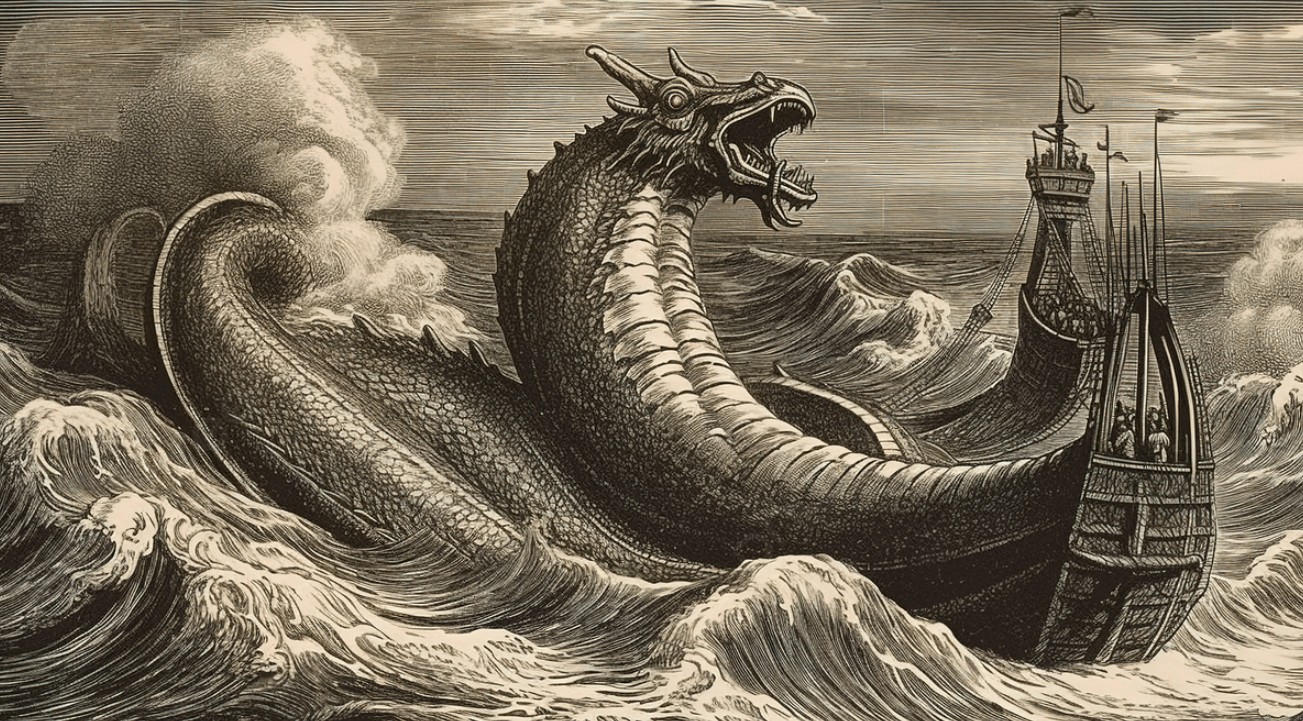
Even the title of Hobbes’ principal work points at a connection to Judaic thinking – The Oxford Companion to English Literature tells us that Leviathan is “a Hebrew word of uncertain origin, the name of some aquatic animal (real or imaginary) frequently mentioned in Hebrew poetry”. [30]
The word has subsequently been used by Fredy Perlman [31] to describe what he terms “a single world system” [32] – “a single Leviathan which holds all Earth in its entrails”. [33]
He writes: “The Leviathan is a thing, and from its standpoint, humanity as well as nature are also things, objects, either obstacles or potential instruments”. [34]
“The liquidation of free beings is in fact Leviathan’s central project, and communities that nurture free beings are its greatest enemy”. [35]
Perlman judges one of its distinguishing features to be “the repression of the natural and the devotion to the artificial” [36] and calls Leviathan “the almighty artifice”. [37]
He writes: “Usurers are the greatest Lords and princes of the realm. Greatness comes, not to those who serve the gods, but to those who serve the devil…
“The exalted are the unprincipled devotees of the fourth beast of the Book of Daniel, the servants of Leviathan”. [38]
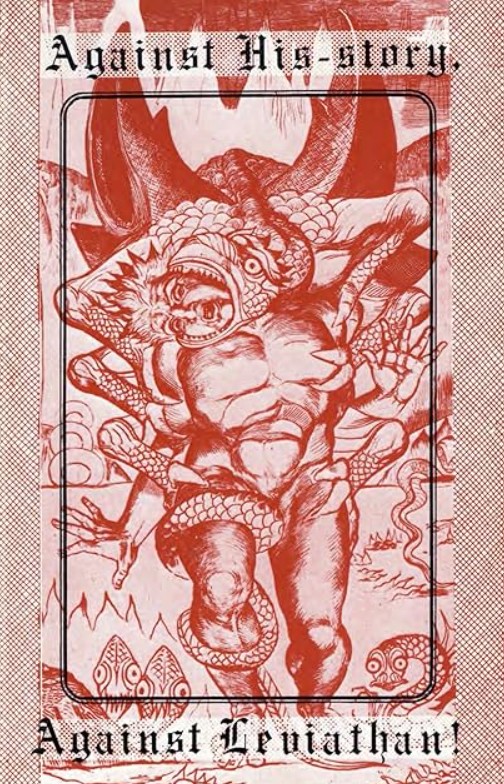
There is a fascinating in-depth analysis of Hobbes’ philosophical foundations in a 2019 essay by Polish academics Tomasz Tulejski and Arnold Zawadzki, entitled ‘Golem and Leviathan: Judaic Sources of Thomas Hobbes’s Political Theology’.
They place Hobbes’ thought in the broader phenomenon of philosemitism in England, leading up to the official re-admission of the Jews.
“In a country without Jews, Christianity became Judaized, which is understood not as the adoption of the Mosaic religion by Christians, but as the adoption of practices and ways of thinking characteristic of Jews.
“Therefore, in England, which in the Middle Ages was openly hostile towards Jews, there was, as on the Continent, a sudden surge of interest in Jewish tradition, the Talmud, and Kabbalah, as a consequence of contacts with European intellectual centres”. [39]
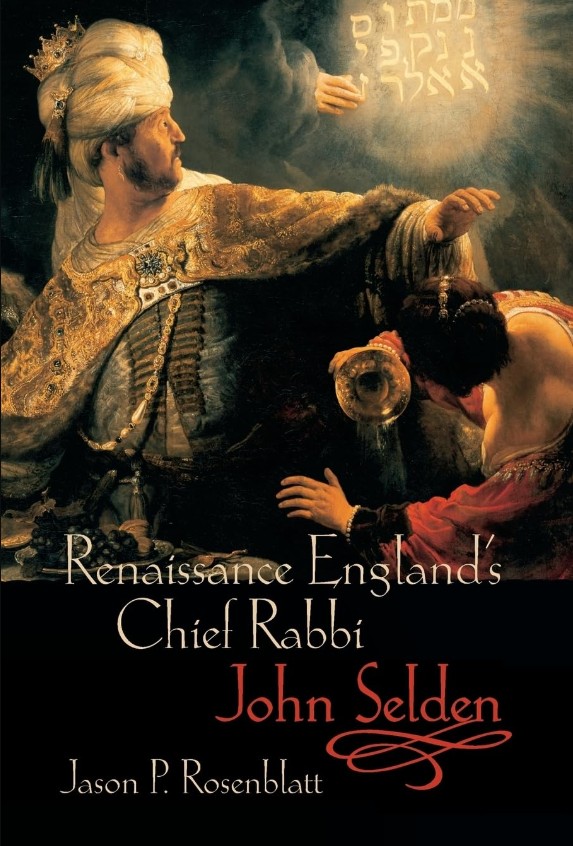
Leading the way in this process was John Selden (1584-1654), hailed in a book by Jason P. Rosenblatt as “Renaissance England’s Chief Rabbi“. [40]
Tulejski and Zawadzki write of Selden: “He acquired a thorough knowledge of the Hebrew language, history, the Talmud, the Mishnah, and Jewish exegesis during his studies with Reuchlin and Beza.
“From Grotius, he learned much about post-biblical Jewish history, Talmudic literature, and law. He further developed and deepened his knowledge by maintaining regular contacts with European rabbis. Ultimately, he created his own brand of Reform Judaism”. [41]
“The political philosophy (and indeed theology) of Hobbes, who was influenced in this matter by his friend Selden and acquainted with rabbinic literature during his European travels, is, in its heterodox layer, inspired not only by Judeo-Christianity, but also by rabbinic Judaism, mediated precisely by Selden’s thought”. [42]
“The interpretation of Holy Scripture in Hobbes’s thought finds inspiration in clearly Judaizing concepts”. [43]
At the core of Hobbes’ Judaic-sourced outlook is the rejection of morality in favour of obedience to The Law.
Tulejski and Zawadzki stress: “For Jews, its observance is all that Yahweh requires of them; therefore, Judaism is essentially not so much a revealed religion as revealed law”. [44]
“Law is the command of the sovereign who is, let us emphasize once again, a mortal god… Thus, the state opposes Truth with its own truth, that the virtue of its subjects consists entirely in obedience to the law of the state (commonwealth), that nothing is unjust or unfair except what is contrary to the law, and that the rules of what is good and evil, just and unjust, honest and unfair, are matters of state”. [45]
They argue that Hobbes’ beliefs were fundamentally incompatible with the Christian faith he claimed as his own.
“Just as the Pentateuch encompasses almost all areas of the chosen people’s existence, including those not directly related to worship, Leviathan’s law also knows no barriers, demanding obedience in every matter.
“It is Leviathan’s command, not an individual judgment or one stemming from a source other than the will of the state, that determines obligations to the Creator and, therefore, the path to salvation”. [46]
With this emphasis on obedience to earthly power, they say, “his Christianity becomes, in essence, Judaism” [47] or “an attempt at a unique synthesis of Judaism and Christianity”. [48]
If Hobbes’ philosophy is drawn from Jewish religious sources, its purpose is severely pragmatic, the scholars explain: “Sacred history provides Hobbes with a significant justification for his origins of the state”. [49]

The man who has himself been called “The Monster of Malmesbury” [50] helped conjure up the all-too real monster of the contemporary System and its agenda of total global control.
Tulejski and Zawadzki explain that his Leviathan “exercises absolute power in both secular and religious matters”. [51]
They liken it to a golem, a soulless artificial entity under which “humans become cogs in a vast mechanism”. [52]
It is clear to me that Hobbes, along with Selden, Bacon, Descartes, Mersenne and the Invisible College, were earlier agents of the judeo-supremacist entity whose current form I call the zio-satanic imperialist mafia, ZIM.
It is only by understanding the reality of The Occupation [53] of our societies by ZIM that we can make any sense of what we have endured in the past and what is threatening us today.
We can grasp more easily, for instance, why it is that Ghitti sees the “opening up” of territories with new roads as “a sort of colonialisation, the inhabitants being submitted to a technocratic power and culture which imposes itself on them”. [54]
Or why he might come to the conclusion that planned development is “a territorial conquest not of a neighbouring state, as in a war, but of its own population, its inhabitants”. [55]
We can appreciate the bitter truth behind his statement that people are witnessing “the confiscation of their homelands”. [56]
We can see why it is that the supposed “need” for “economic growth” (of the imperial mafia’s wealth and reach) is written into planning law, with no real possibility for political challenge. [57]
It becomes more obvious why our societies have been progressively centralised, first by all-powerful nation-states, then by the likes of the EU, “a supra-state project steered by swaggering neoliberal capitalism”. [58]
As Cornelius Castoriadis points out, the modern state’s goal is “to organise the whole of the economy and people’s lives around the interests of a dominant imperialist group”. [59]

In Ghitti’s words, the political governance of his country (and others) has “put itself more than ever at the service of globalised capitalism”. [60]
The result is that we find ourselves strangers in our own countries, no longer able to find a natural belonging, no longer able to live according to our own shared values.
The fact that the majority believe something to be right or wrong is of no political consequence, because all the power, of every kind, is in the hands of The Occupation.
Truth, morality and reality elude us as we wander in a fog of lies and manipulation.
Discussing Guy Debord’s notion that we are living inside The Spectacle, [61] Ghitti states: “It is a projection in which life thinks it can recognise itself, but which is subtly manipulated, inscribed in codes that are not their own and finally stolen from those living it”. [62]
We are reduced to units of production or consumption, our humanity drowned in a dead sea of statistical sterility.
“In every domain”, says Ghitti, “it is about quietly integrating human beings into systems regulated by quantitative abstraction”. [63]

He says people have lost what I call our withness: “In our developed territories, in our well-equipped lives, many are those who have lost the sense of place, the desire for beauty, the consciousness of living on Earth”. [64]
Not only do we not know where we are, but we often do not know who we really are, who we were born to be, before we were thwarted in our natural becoming by the iron imperialist heel of Leviathan’s Law.
Remarks Ghitti: “Those who developed, following Sartre, the idea that a human being can adapt to anything, telling us all that there is no such thing as ‘human nature’, bear a heavy responsibility for having enabled all kinds of totalitarianism”. [65]
Looking back in time, we can identify parallels, if not necessarily continuity, between one imperialism and another.
Ghitti observes: “To read Caesar, it seems that, for the Romans, war was principally about ethnic domination, submitting peoples to the will of the conqueror”. [66]

[1] Jean-Marc Ghitti, La Terre confisquée: Critique de l’aménagement du territoire (St Michel-de-Vax: La Lenteur, 2025), p. 86. Translations are my own.
[2] Ghitti, p. 32.
[3] Ghitti, p. 38.
[4] Ghitti, p. 34.
[5] Ghitti, p. 16.
[6] See Paul Cudenec, ‘Modernisation means pillage and profit’, https://winteroak.org.uk/2025/01/31/modernisation-means-pillage-and-profit/
[7] Ghitti, p. 37.
[8] Ghitti, p. 56.
[9] Ghitti, p. 28.
[10] Ghitti, p. 32.
[11] Ghitti, p. 129.
[12] Ibid.
[13] W.D. James, ‘The Mortal God Drops Its Mask’, https://winteroak.org.uk/2023/07/25/the-mortal-gods-drops-its-mask/
[14] https://en.wikipedia.org/wiki/Thomas_Hobbes
[15] W.D. James, ‘Hobbes, Zombies and the Sheriff’, https://winteroak.org.uk/2025/10/29/hobbes-zombies-and-the-sheriff/
[16] Ghitti, p. 128.
[17] Paul Cudenec, Our Sacred World: Enjoyed, denied and found again (2025), pp. 81-100,
https://winteroak.org.uk/wp-content/uploads/2025/09/our-sacred-worldonline.pdf
[18] Morris Berman, The Reenchantment of the World (Ithaca and London: Cornell University Press, 1981), p. 111, cit. Cudenec, Our Sacred World, p. 90.
[19] Yosef Kaplan, ‘Jews and Judaism in the Hartlib Circle’, Studia Rosenthaliana, 2006, pp. 186-215. https://pluto.huji.ac.il/~kaplany/hartlib.pdf, p. 190, cit. Cudenec, Our Sacred World, p. 91.
[20] Kaplan, p. 195, cit. Cudenec, Our Sacred World, p. 94.
[21] Alain Daniélou, Shiva et Dionysos: La Religion de la Nature et de l’Eros de la préhistoire à l’avenir (Paris: Fayard, 1979), p. 287, cit. Cudenec, Our Sacred World, p. 94.
[22] John Lamb Lash, Not In His Image: Gnostic Vision, Sacred Ecology, and the Future of Belief (White River Junction, Vermont: Chelsea Green, 2006), pdf version, p. 228, cit. Cudenec, Our Sacred World, pp. 94-95.
[23] Max Weber, *Sociologies des religions, choix d’extraits et traduction Jean-Pierre Grossein (Paris: Gallimard, 1996), p. 331, cit. Max Weber, *Sociologie de la religion (‘Economie et société’), traduction de l’allemand, introduction et notes par Isabelle Kalinowski* (Paris: Flammarion, 2006), pp. 285-86 FN, cit. Cudenec, Our Sacred World, p. 95.
[24] https://en.wikipedia.org/wiki/Menasseh_Ben_Israel, cit. Cudenec, Our Sacred World, p. 97.
[25] The Oxford Companion to English Literature, edited by Sir Paul Harvey, Fourth Edition revised by Dorothy Eagle (Oxford: Clarendon Press, 1967), p. 391.
[26] Ibid.
[27] https://en.wikisource.org/wiki/1911_Encyclop%C3%A6dia_Britannica/Hobbes,_Thomas
[28] https://en.wikipedia.org/wiki/Thomas_Hobbes
[29] Ibid.
[30] The Oxford Companion to English Literature, p. 475.
[31] https://orgrad.wordpress.com/a-z-of-thinkers/fredy-perlman/
[32] Fredy Perlman, ‘Anything Can Happen’, 1968, Anything Can Happen (London: Phoenix Press, 1992), p. 9.
[33] Fredy Perlman, Against His-story, Against Leviathan! (Detroit: Black & Red, 1983), p. 43.
[34] Perlman, Against His-story, Against Leviathan!, p. 232.
[35] Perlman, Against His-story, Against Leviathan!, p. 254.
[36] Perlman, Against His-story, Against Leviathan!, p. 155.
[37] Perlman, Against His-story, Against Leviathan!, p. 238.
[38] Perlman, Against His-story, Against Leviathan!, p. 232.
[39] Tomasz Tulejski, Arnold Zawadzki, ‘Golem i Lewiatan. Judaistyczne źródła teologii politycznej Thomasa Hobbesa’, 2019, Politeja, № 2(59), p. 207-232,
Ksiegarnia Akademicka Sp. z.o.o., p. 209.
https://journals.akademicka.pl/politeja/article/view/1147/990 I am using a machine translation here, I’m afraid.
[40] https://books.google.fr/books/about/Renaissance_England_s_Chief_Rabbi_John_S.html?id=51EVDAAAQBAJ
[41] Ibid.
[42] Tulejski & Zawadzki, p. 210.
[43] Tulejski & Zawadzki, p. 211.
[44] Tulejski & Zawadzki, p. 216.
[45] Tulejski & Zawadzki, p. 217.
[46] Ibid.
[47] Ibid.
[48] Tulejski & Zawadzki, p. 218.
[49] Tulejski & Zawadzki, p. 213.
[50] https://podcasts.ox.ac.uk/22-thomas-hobbes-monster-malmesbury
[51] Tulejski & Zawadzki p. 221.
[52] Tulejski & Zawadzki, p. 229.
[53] Paul Cudenec, ‘The Occupation’, The Acorn 106, https://winteroak.org.uk/2025/10/07/the-acorn-106/
[54] Ghitti, p. 110.
[55] Ghitti, p. 114.
[56] Ghitti, p. 60.
[57] Ghitti, p. 58.
[58] Ghitti, p. 57.
[59] Cornelius Castoriadis, La Société bureaucratique (Paris: Christian Bourgois, 1990), p. 41, cit. Ghitti, p. 60.
[60] p. 64.
[61] https://orgrad.wordpress.com/a-z-of-thinkers/guy-debord/
[62] Ghitti, p. 97.
[63] Ghitti, p. 153.
[64] Ghitti, p. 151.
[65] Ghitti, p. 152.
[66] Ghitti, p. 130.
 winter oak
Hi, I love your work.
The situation is actually simpler and the corruption even more pervasive. The entire Western system of governance is based on Judaism. The words judge, judicial etc. derive from Juda, and the judicial system is inspired by Judaism.
The word Brit has Hebrew roots. There is a stone from the supposed “Temple of Solomon” (which was never a grandiose structure as there never was an advanced Israel civilisation) under the British throne.
Christianity and Islam worship the same entity (Yahweh=Yaldabaoth=Satan) are Judaism repackaged for global domination.
The sight of muslims worshipping a huge black box in Mecca (which includes a meteorite fragment) or Jews kissing a wall , or Christians worshipping an instrument of torture (crucifix) are good examples of the alien and inhuman, anti- nature character of this cult. All three cultures promote child abuse (circumcision and more), the devastation of nature and the degradation of women, and ultimately men.
The Archons are ETs that emerged as byproducts of the singularity which was the birth of life on Earth which is the body of the Goddess ( Sophia), and our “solar system” is their abode
Eastern Orthodox priests still bear Hebrew names. The Byzantine empire was a Judaic project.
It is interesting to see John Lamb Lash mentioned here. His interpetation of certain Nag Hammadi texts is the key to understanding the roots of this problem.
The entire Judaic edifice is infromed by non-human intelligences aka Archons or Annunaki with the futile aim of permanently altering the human “genome” (trauma, institutionalised child abuse such as circumcision, vaccines, drugs, brainwashing) so as to create a slave race, while achieving immortality for the overlords. through technology and occult methods. This is the fantasy that drives the human shells to do the work of the Archons.
Complex bureaucratic and tehcnocratic hierarchic , totalitarian state structures beginning with Babylon are the result of the influence of the Archons on human mids.
The only way to resist this influence is to cultivate consciousness and inner power through meditation and shamanic practices (including kundalini yoga and Qi Gong) and understand the workings of the human mind and the deceptions of the Archonic mind , becoming a warrior while remaining a compassionate human being.
Back to Jonh Lash. I studied his work deeply until he turned to racialism around 2011-2015. He revised his magnum opus (Not In His Image) to include the racialist angle and is now openly pushing the white supremacy narrative. I met JLL in person just before that, and he was suffering from loneliness and lack of female company.
I suspect the man was hijacked by the forces he was trying to combat, through a female asset that seduced him and encouraged him to gut his metahistory.org website, removing most content and putting it behind a paywall on another site, where nobody will see it.
As a result JLL is now lost in obscurity and his extremely vital work on the messages in the Nag Hamadi books already distorted and buried…
LikeLike
Just to add my two pence worth: “Strong Hebrew” website also gives a very revealing meaning to Leviathan – “3. also as a symbol of Babylon”. What a coincidence! (sarc)
LikeLike
The author’s reference to road-building as an essential tool for increased control of the world’s people reminds one of an alignment with the late, great Japanese scientist Michio Kushi’s teaching/prediction about the future existential choice humanity will face between two roads or paths: One leading down toward artificial people and the end of humanity, and the other road leading upward to higher consciousness and “highest quality body, mind and spirit”.
His remarkable 1984 lecture, titled “The Rise of the New Human Race”, is extraordinary, and remains profoundly relevant today, in that Michio Kushi knew then about technological “advances” which would eventually lead to today’s science fiction horror-made-real global push toward a technocratic/transhumanist dystopia.
Winter Oak readers will find Michio Kushi’s 1984 lecture a valuable addition to the intellectual arsenal needed to succeed in the ultimate fight for human freedom.
See: https://onenessofhumanity.wordpress.com/2025/11/03/japanese-scientist-michio-kushi-1926-2014-predicted-the-transhumanist-future-in-1984/
Peace.
LikeLike
Thanks for that Jerry.
LikeLike
Extremely interesting. I shall go away and think about the points raised in this article and hopefully come back with sone pertinent observations of my own!
LikeLike
OK, look forward to hearing your thoughts!
LikeLike
A very important insight into the state of our existence. ZIM is indeed the Leviathan and its weakness resides within the reductionist epistemology necessary for it to display its parasitic evolution.
Thank you for shining an important light on this, as the war is well under way.
LikeLike
Cheers. Yes, we are finally realising what it is that we have always been up against.
LikeLiked by 1 person
Thanks for your insights as I also think that the Leviathan is the ZIM and the war has been going on for a long time. Their epistemological reductionist habits is their downfall as the interconnectedness of Universal Laws of Nature cannot be destroyed.
LikeLike