
[Reposted from the organic radicals site]
“We must be governed by the guide within rather than by the opinions of men”
Sri Aurobindo (1872-1950) was in many ways the epitome of an organic radical inspiration.
On the one hand, he was a fiercely determined opponent of the global imperialist system, like Mohandas Gandhi, Bharatan Kumarappa and J.C. Kumarappa serving time in prison for his resistance to the British occupation of India.
On the other hand, he was a fine metaphysician, whose teaching did not steer people away from engagement with the world, as is too often the case, but instead stressed the spiritual imperative of using our physical existence for higher good.
Aurobindo played an important role in the struggle for swaraj, self-rule, and, before being imprisoned for a year in 1908, he edited a daily nationalist newspaper, Bande Mataram, which has been said to have “changed the political thought of India”. [1]

Mocking his “moderate” opponents, who referred to his own movement as “extremist”, he wrote: “To wish for our eternal serfdom is prudence and peacefulness. To think ourselves irremediably unfit is wisdom and moderation. To imagine ourselves a nation is madness. To love our country is superstition. To work for its emancipation is treason. To harbour any such sentiment is sedition”. [2]
The servile mental condition of so many educated Indians appalled him: “There is no longer any room in the Government schools for any but slaves and the sons of slaves”. [3]
And he declared: “If we are indeed to renovate our country, we must no longer hold out supplicating hands to the English Parliament, like an infant crying to its nurse for a toy, but must recognise the hard truth that every nation must beat out its own path to salvation with pain and difficulty, and not rely on the tutelage of another”. [4]
The sheer brutality of the British occupation angered him: “The Romans created a desert and called the result peace; the British in India have destroyed the spirit and manhood of the people and call the result law and order”. [5]
But his call for “popular freedom” [6] for Indians was also born of his keen awareness that the occupiers were operating on behalf of commercial interests and “employ Indian labour, not out of desire for India’s good, but because it is cheap”. [7]

He added that “exploitation of India by the British merchant” was the principal reason for bureaucratic colonial control. [8]
He identified a “a radical and congenital evil” at work: “The huge price India has to pay England for the inestimable privilege of being ruled by Englishmen is a small thing compared with the murderous drain by which we purchase the more exquisite privilege of being exploited by British capital”. [9]
Having grown up in industrial capitalist England, Aurobindo had there experienced at first hand “social degradation and an entire absence of the cohesive principle”. [10]
He approvingly referred to English poet and cultural critic Matthew Arnold’s description of this “modernised” and thus debased society as consisting of an aristocracy materialized, a middle class vulgarised and a lower class brutalized. [11]
Aurobindo then expanded on this analysis, at eloquent length.
“We may perhaps realize the nature of that unsounder aspect, if we amplify Matthew Arnold’s phrase: — an aristocracy no longer possessed of the imposing nobility of mind, the proud sense of honour, the striking preeminence of faculty, which are the saving graces — nay, which are the very life-breath of an aristocracy; debased moreover by the pursuit, through concession to all that is gross and ignoble in the English mind, of gross and ignoble ends: — a middle class inaccessible to the influence of high and refining ideas, and prone to rate everything even in the noblest departments of life, at a commercial valuation: — and a lower class equally without any germ of high ideas, nay, without any ideas high or low; degraded in their worst failure to the crudest forms of vice, pauperism and crime, and in their highest attainment restricted to a life of unintelligent work relieved by brutalising pleasures”. [12]

In contrast to this lowness at the rotten heart of the empire of greed, Aurobindo wrote of the lofty values represented by India’s ancient civilization.
“India cannot perish, our race cannot become extinct, because among all the divisions of mankind it is to India that is reserved the highest and the most splendid destiny, the most essential to the future of the human race”. [13]
“Ours is the eternal land, the eternal people, the eternal religion, whose strength, greatness, holiness, may be overclouded but never, even for a moment, utterly cease”. [14]
In order to free India from the dark forces of the global money-power, Aurobindo urged India’s traditional spiritual warriors to come to the fore.
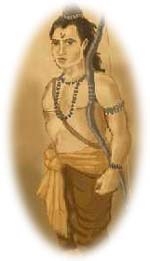
He said: “It is high time we abandoned the fat and comfortable selfish middle-class training we give to our youth and make a nearer approach to the physical and moral education of our old Kshatriyas or the Japanese Samurai”. [15]
“Politics is the work of the Kshatriya and it is the virtues of the Kshatriya we must develop if we are to be morally fit for freedom.
“But the first virtue of the Kshatriya is not to bow his neck to an unjust yoke but to protect his weak and suffering countrymen against the oppressor and welcome death in a just and righteous battle”. [16]
Although Aurobindo supported boycotts and parallel structures as a tactic, [17] he rejected the fetichisation of any particular form of resistance and favoured a flexible approach.
“Resistance may be of many kinds, — armed revolt, or aggressive resistance short of
armed revolt, or defensive resistance whether passive or active: the circumstances of the country and the nature of the despotism from which it seeks to escape must determine what form of resistance is best justified and most likely to be effective at the time or finally successful”. [18]
There were limits to passive resistance, he said, and the moment that physical coercion of the people was attempted, “active resistance becomes a duty”.

He continued: “If the instruments of the executive choose to disperse our meeting by breaking the heads of those present, the right of self-defence entitles us not merely to defend our heads but to retaliate on those of the head-breakers.
“For the myrmidons of the law have ceased then to be guardians of the peace and become breakers of the peace, rioters and not instruments of authority, and their uniform is no longer a bar to the right of self-defence”. [19]
Aurobindo continued to convey this outlook through the philosophy of Yoga which he developed in French-controlled Pondicherry during the second half of his life, alongside Mirra Alfassa (referred to as “The Mother”).
Spiritual warriors, he said, can become “the channel in our mind and body for a divine action poured out freely upon the world”. [20]
Although this involved shedding the ego to become aware of universal belonging, the individual remained crucial, not just eventually as a physical tool for divine action but also as the means by which this gnosis might first be accessed.
“We must be governed by the guide within rather than by the opinions of men”, Aurobindo wrote. [21]
“Individualism is as necessary to the final perfection as the power behind the group-spirit; the stifling of the individual may well be the stifling of the god in man”, he warned.

“There is continually a danger that the exaggerated social pressure of the social mass by its heavy unenlightened mechanical weight may suppress or unduly discourage the free development of the individual spirit.
“For man in the individual can be more easily enlightened, conscious, open to clear influences; man in the mass is still obscure, half-conscious, ruled by universal forces that escape its mastery and its knowledge”. [22]
When the individual realised his power to channel and express the light of the universe, he could allow the life force which had always animated him to take on a new meaning as “an indispensable intermediary” [23] between above and below, said Aurobindo.
This was a way of enabling the highest truth to become present and active in the physical world.
Rather than suggesting that when we have become aware of our cosmic belonging we should withdraw from the “illusion” of the physical reality we have previously experienced, Aurobindo insisted that, on the contrary, we should return to the fray in a renewed form.
This was the very essence of his “integral and synthetic” form of Yoga, he said.
“An absolute liberty of experience and of the restatement of knowledge in new terms and new combinations is the condition of its self-formation.
“Seeking to embrace all life in itself, it is in the position not of a pilgrim following the highroad to his destination, but, to that extent at least, of a path-finder hewing his way through a virgin forest”. [24]

Video links: Sri Aurobindo: A New Dawn. An Inspirational Hand Painted Animation Film (28 mins), The Transformation: a documentary film on Sri Aurobindo (54 mins).

[1] https://web.archive.org/web/20150311184542/http://www.sriaurobindoashram.org/ashram/sriauro/life_sketch.php
[2] Bande Mataram, The Complete Works of Sri Aurobindo (Pondicherry: Sri Aurobindo Ashram Trust, 2002), p. 485.
[3] Bande Mataram, p. 113.
[4] Bande Mataram, p. 10.
[5] Bande Mataram, pp. 219-20.
[6] Bande Mataram, p. 140.
[7] Bande Mataram, p. 133.
[8] Bande Mataram, p. 222.
[9] Bande Mataram, p. 271.
[10] Bande Mataram, p. 42.
[11] Bande Mataram, pp. 32-33.
[12] Bande Mataram, p. 43.
[13] Bande Mataram, p. 84.
[14] Bande Mataram, p. 315.
[15] Bande Mataram, p. 223.
[16] Bande Mataram, p. 238.
[17] Bande Mataram, p. 300.
[18] Bande Mataram, p. 299.
[19] Bande Mataram, pp. 294-95.
[20] Sri Aurobindo, The Synthesis of Yoga (Pondicherrry, India: Sri Aurobindo Ashram Trust, 1973), p. 43.
[21] Aurobindo, The Synthesis of Yoga, p. 316.
[22] Aurobindo, The Synthesis of Yoga, p. 185.
[23] Aurobindo, The Synthesis of Yoga, p. 162.
[24] Aurobindo, The Synthesis of Yoga, p. 50.
 winter oak
Interesting article, which allowed me to learn about some writings that I missed from Sri Aurobindo’s “revolutionary and youthful” period. Sri Aurobindo was a Total Revolutionary and the purpose of his life was centered on the Work of creating and allowing the necessary premises so that a New Humanity could finally be born (‘hewing his way through a virgin forest’). This point, perhaps, for many people is not enough clear. And in fact, the real scope of this very audacious ambition, is difficult to understand and/or accept… even only as simple mental hypothesis.
It would be a very long discussion… but for brevity I will immediately write it in clear letters: the New Humanity that Sri Aurobindo refers to is not “simply” a humanity capable of a new way of living and therefore of a life that is based on social and “spiritual” relationships that are finally “right” and worthy of man (‘return to the fray in a renewed form’); but instead it would be a question of giving birth, at the end of a long evolutionary process (which would necessarily occur gradually, and moreover, at least initially, would not concern the great mass of men), a new type of Homo Sapiens… who then, in effect, you couldn’t even call it Homo Sapiens anymore… but you should call him… first: Homo semi-Deus, and then: HOMO DEUS.
The change would be RADICAL. The very structure of cellular organic matter would be altered (but, it is necessary to specify – NOT through an arbitrary and pretentious artificial procedure of a techno-scientific type such as mRNA, or CRISPR, or other vain devilry; instead, here, the transformation process would take place “from within” in an exclusively “natural” [it would be more correct to say supernatural] and evolutionary sense), and the mind of these superhuman beings will have the ability to connect with the highest degree of Consciousness that manifests itself in the universe, and which Sri Aurobindo called Supermind. Again, for brevity, I will simply say that the Supermind is the mind of the Ishvara, that is, the Mind of God. Namely: when the Absolute (the Brahman Nirguna of Hindu philosophy) “facingt” (emerges) on the Universe of Space-Time, also appears His Mind-Consciousness – the I AM – and so “becomes” the Absolute-Brahman Saguna: i.e the Ishvara. [And it could also be formulated/described in this way: when the Absolute-Brahman Nirguna becomes fully aware of itself within Space-Time created by Himself, thus “breaking” Its infinite and inconceivable original Unitarity non-dual, it transforms into the Absolute-Brahman Saguna: i.e. the Ishvara]. Then, through the Power of His Mind (the Supermind) the Ishvara gives rise to the “project” of His Great Universe, with all its laws and with all its various mutually supporting cosmoses. Project which will then be “performed”, that is materially put into action, by means of the Supreme Power of the Shakti or Divine Energy (sometimes described as Goddess Parvati: The Mother of the Worlds).
This whole description (by the way extremely succinct and therefore inevitably unsatisfactory), is to clarify the fact that the new “human beings” referred to by Sri Aurobindo, being able to connect with such a level of Consciousness and Power, can no longer be considered Homo Sapiens… but they would actually be real Gods, a new class of terrestrial beings (which will no longer even be mammals, since it is assumed that they will be asexual beings!) Equipped with a physical terrestrial body, body that will be made up of a new type of cellular matter, a matter capable of self-regeneration (which, probably, could be defined as “semiphysical matter” or “semi-astral matter” or “an astral quarter matter”… this point, logically, for the moment is unclear). Furthermore, in all likelihood, they will be endowed with some, or all, of the classical Siddhis (supernatural faculties, or wonderful Powers) of which traditional Yoga speaks. Another notable characteristic is that the total mastery of the organism, by the consciousness embodied in these bodies, will be such as to expand and apply to the complete control of all bodily functions and, as a consequence of this power victory over death will finally be achieved. In other words, death, the process of dying, will become a voluntary act, a choice, and no longer an an inevitable constriction to which the embodied soul must invariably undergo.
In a nutshell: no longer men but Divinities.
This all sounds like science fiction… but it must be taken in the overall context of Sri Aurobindo’s Work (and Mirra Alfassa); A work from which it is difficult to “extrapolate”, because everything and every concept is admirably inserted within a grandiose and very coherent integral philosophical and metaphysical framework, where everything is balanced and interconnected.
So, it is best for the reader who may be interested in the topic to do his own research…
but it won’t be a “cheap” job.
Raffaele Ferilli
LikeLike
Sri Aurobindo has fascinated me the past few years, and this last trip in India, I went to places in Pondicherry and Calcutta where he was during his life. Especially while in prison, and shortly thereafter. I picked up ten pounds of books while there about him, and his early letters, hoping to spend time with it. Thank you for this summary.
LikeLiked by 1 person
Thanks for posting this bio on one of my earliest influences in contemplating the All That Is or Could Be. Aurobindo has been lost in the spiritual whirl, and I’m pleased to see his work featured here.
LikeLiked by 1 person