by Paul Cudenec, who reads the article here
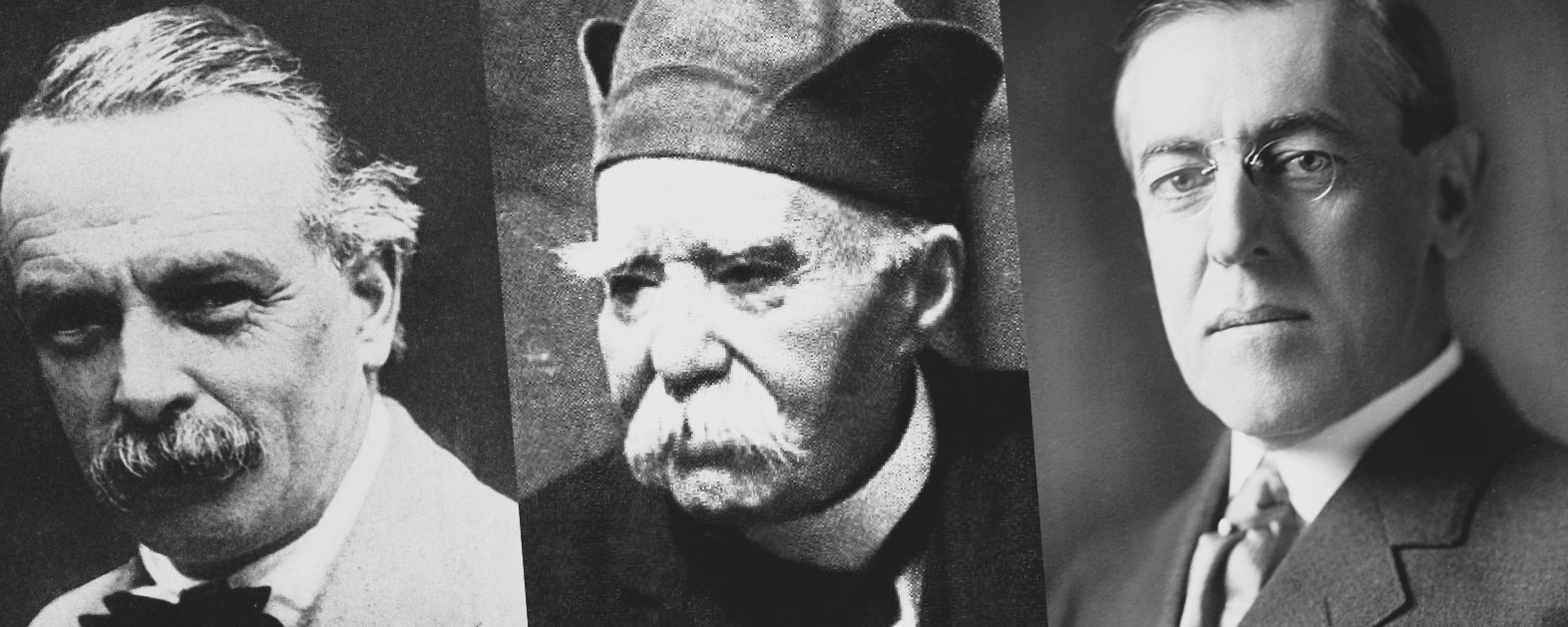
In the first half of this two-part essay I provided some background information on the Big Three who dominated the post-WW1 Peace Conference in Paris – David Lloyd George, Georges Clemenceau and Woodrow Wilson.
My aim was to set the scene for this examination of a 1929 book by Nathan Feinberg, entitled La question des minorités à la Conférence de la paix (1919-1920) et l’action juive en faveur de la protection internationale des minorités (‘The question of minorities at the Peace Conference (1919-1920) and Jewish action in favour of the international protection of minorities’). [44]
This 170-page work is included, in its entirety, in Pierre Hillard’s 2019 Archives du mondialisme (‘Globalist archives’). [45]
Feinberg’s work shows that the First World War fed the Zionist agenda in more ways than simply prompting the Balfour Declaration that pointed to the future creation of the state of Israel.
And it describes the beginnings of an international system, based on what looked like high-minded ethical principles, which was already becoming a structure for top-down globalist control.
Having seen the political backgrounds of the three “leaders” heading the Paris operation, the very strong Zionist involvement in the treaties on minority rights revealed by Feinberg should come as no surprise.
This involvement was not some kind of afterthought but had, as he says, been under preparation “since the first days of the war”. [46]
Feinberg writes: “In August 1915, Max Nordau [a leading Zionist] had already published his well-known agenda of Jewish claims and proposed to convoke a global Jewish congress to propose it to the Peace Conference. [47]
“In Poland and in Czechoslovakia, in Russia and in Ukraine, in Transylvania and in Bukovina, in Austria and in Hungary, in Lithuania and in Latvia, in the Crimea and in Galicia, in White Russia and in Turkey, everywhere Jewish congresses, national assemblies, constituent assemblies, community congresses, etc, were held, which drew up Jewish claims and called for guarantees of Jewish rights”. [48]
In 1916 there was a Jewish congress for South Africa and in 1917 one for Canada, he adds. [49]
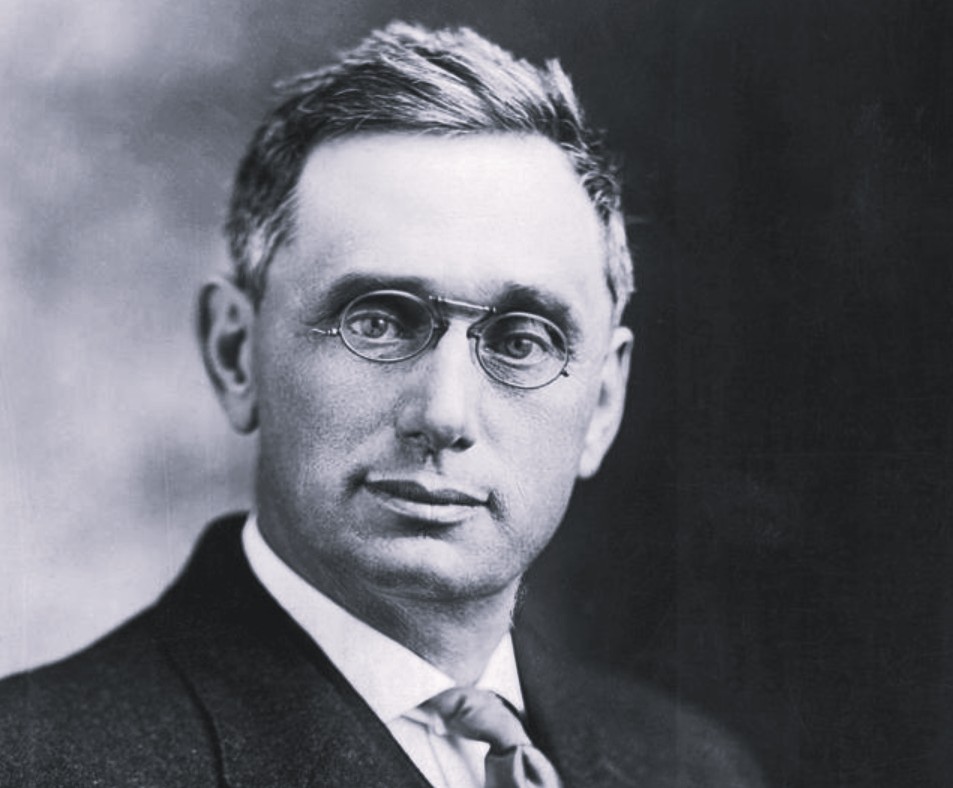
In the USA the idea of a war-related national Jewish congress had been planned since 1915 under the leadership of Jewish Supreme Court judge Louis Brandeis (pictured) who, as we saw in the first part of this account, was also involved in drawing up the Balfour Declaration.
Feinberg relates: “The congress took place in Philadelphia in the autumn of 1918, immediately after the signing of the Armistice. Representing three million Jews, it took on the character of a grandiose demonstration of Jewish unity and solidarity.
“The delegation that it elected to go to the Peace Conference was predestined, thanks to its very particular relationship with the US delegation and with President Wilson himself, to play a very important role in the Committee of Jewish Delegations at the Peace Conference”. [50]
And so it turned out, as recorded by The New International Yearbook: A Compendium of the World’s Progress for the Year 1919 in its report on the “influential delegation of prominent American Jews” who went to France.
It states: “The influence of the American delegates was greatly felt, due to the sympathetic attitude towards the Jewish claims of President Wilson and other American delegates to the Conference”. [51]
Feinberg records that six days before he set off to the Paris talks for the first time, Wilson had met with representatives of B’nai B’rith, the notorious Zionist masonic entity. [52]
And he remained in close touch with US Zionists once in Europe, says Feinberg: “On January 14 1919, Dr Stephen Wise, one of the most active promoters of the movement in support of the American Jewish Congress, who was then in Paris, telegraphed to the Congress’s delegation about to head to the Peace Conference that he had had two meetings with Wilson”. [53]
On March 2 1919, back in the USA, Wilson met American Jewish Congress representatives, including Wise again, who “gave him a detailed memorandum containing all the resolutions adopted in Philadelphia as well as the reasons and the supporting arguments. Wilson declared himself to be completely in agreement with the Congress’s agenda”. [54]
Well fancy that!
Joining in this concerted initiative were Jewish groups within the “Social Democratic” left and Feinberg credits the Poale Zion organisation [55] with “awakening the interest of the ‘International’ in the Jewish question and, along with that, the whole problem of minorities”. [56]
The 1919 International Socialist Conference in Amsterdam subsequently addressed the issue, he explains.
“Declaring that the Jews had the right to self-determination, it demanded that they had equal civil and political rights in every country, national autonomy in the countries where they lived in compact masses, the creation of a national homeland in Palestine and the admission of the Jewish people into the League of Nations”. [57]
Feinberg says Poale Zion’s success in ensuring this stance was crucial “when one considers that socialist public opinion was an important factor during the peace negotiations”. [58]
The result of all this prescient political manoeuvring, during years when most minds were still fixed on the terrible unfolding slaughter, was that the world’s organised Jewish communities were able to present a united front.
This appears to have been coordinated by, or through, the World Zionist Organization, which established an office in Copenhagen, Denmark, and issued a manifesto in October 1918 with the peace conference in mind. [59]
Relates Feinberg: “All the congresses and assemblies, whether in Western and Central Europe or overseas, were dominated by one single identical spirit; all put forward the same claims, almost all of them formulated the Jewish agenda in the same way”. [60]
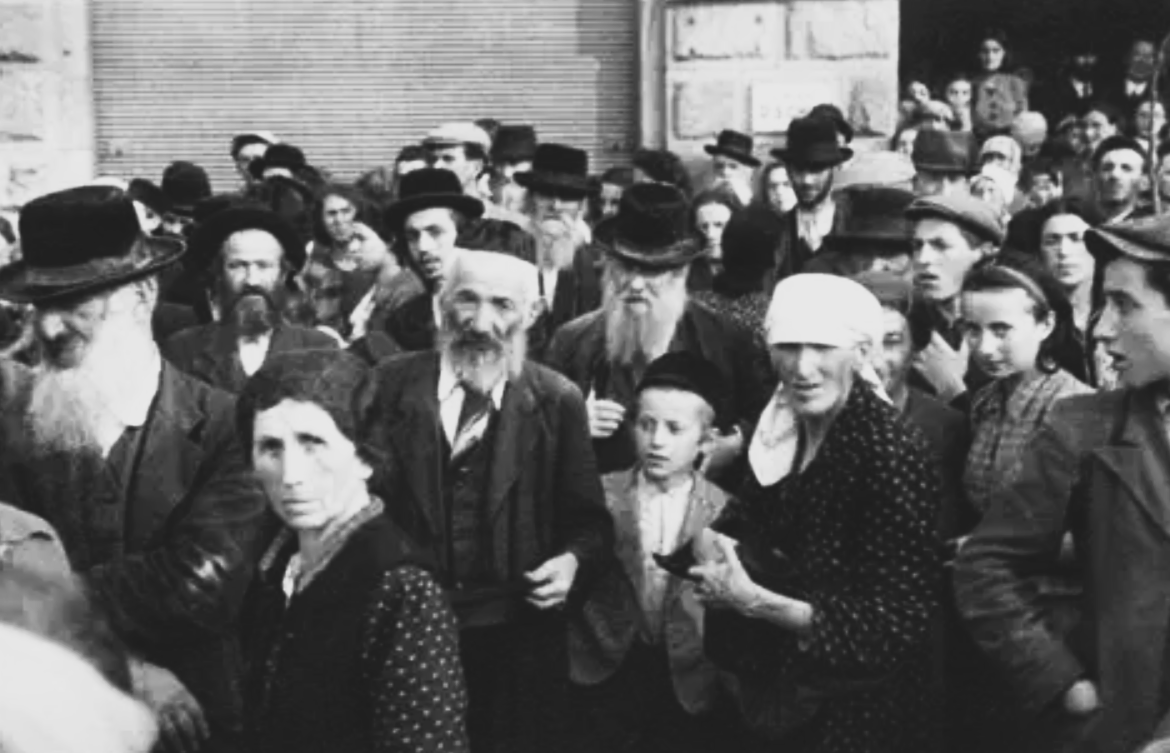
As with the socialist declaration from Amsterdam, this involved the triple demand for equal rights everywhere, recognition as a specific national group in certain countries and the recognition of Palestine as the Jewish people’s national home.
There are obvious contradictions between these demands. How can one be treated as a citizen like any other and, at the same time, insist on belonging not so much to the nation as a whole but rather to one’s own specific group?
Furthermore, if Palestine was the Jewish homeland, did this mean that the lands in which Jews currently lived were not so, but were merely temporary resting places to which they were not deeply attached? Did that, in itself, not set them apart from other citizens with whom they sought equal status?
It seems to me that these Zionists wanted their bread buttered on three sides!
Two months after the end of the war, in January 1919, Jewish delegations from across the world turned up in Paris to stake their claims. [61]
Following a Zionist conference across the Channel in London in February 1919, a Committee of Jewish Delegations to the Peace Conference was formed.
Feinberg tells us: “The committee was made up of Jewish delegates from Eastern and Southern Europe, as well as representatives of the Jews of the USA, Canada, Italy and Palestine, plus the World Zionist Organization, the American Jewish Committee and the B’nai B’rith order”. [62]
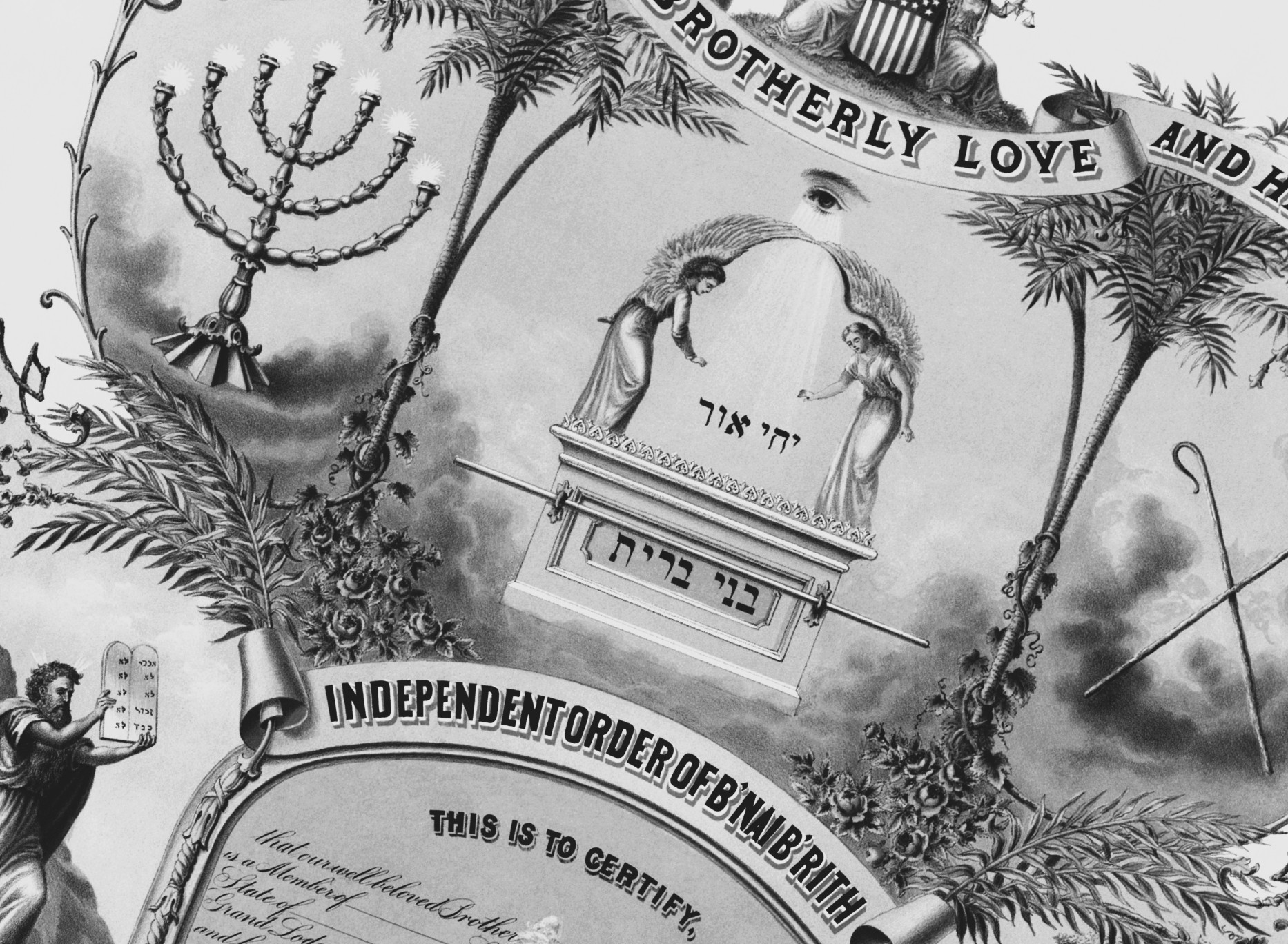
For whatever reason, the British and French Jewish groups preferred to represent themselves separately.
The way in which the “Jewish” – in fact Zionist – agenda was presented is interesting. Initially the question was openly about Jewish rights but, as Feinberg details, it was increasingly hidden within more general talk about “minority rights”. [63]
But it is notable that Wilson’s shadowy minder, Edward Mandell House, made it known that the president “attached a very particular importance to the insertion of the item concerning religious liberty and equality”. [64]
And, as in George Orwell’s formulation in his satire Animal Farm, it is clear that while all minorities might have been equal, some were more equal than others.
In his 1921 book A History of the Peace Conference of Paris, Harold Temperley writes: “Even if the claims from the other races might be overlooked, for they chiefly belonged to enemy States and there were not at the moment many to support the demands of Germans or Magyars or Bulgarians, and even if the almost unknown peoples, such as the White Russians and Ruthenians, might have been disregarded, there was one race which had ardent, persistent, and influential friends.
“The Jews of Western Europe and America had never ceased to award their sympathy to the sufferings of their co-religionists in Russia and in the other Eastern States; for many years the Jewish societies of Great Britain and the United States had been in correspondence with the Foreign Offices and Chancelleries of Europe, striving to bring about a better state of things”. [65]
And Feinberg is in no doubt that when Wilson raised the question of minority rights at the Supreme Council of the Peace Conference on May 1 1919, “above all else, at this time, he had in sight the protection of the Jews”. [66]
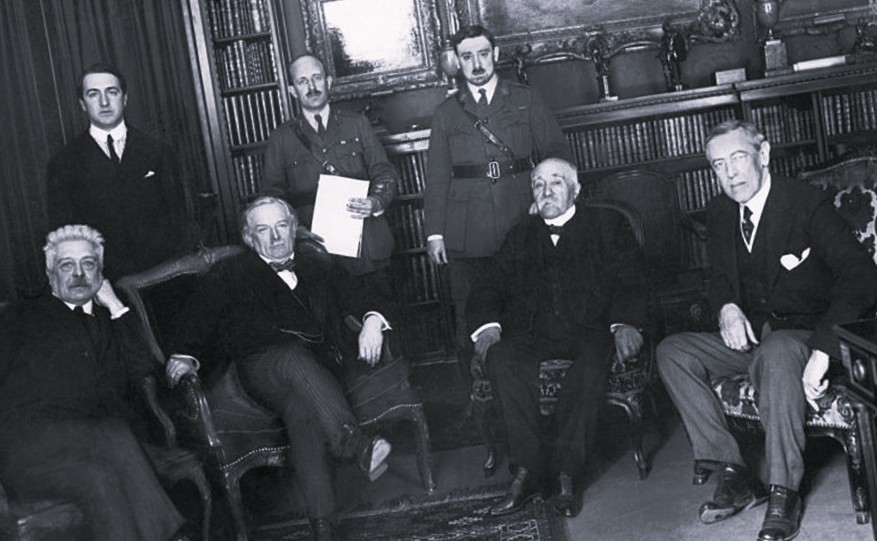
“Wilson drew his colleagues’ attention to the fact that persecutions against the Jews had always been an element which could disturb the peace and that, for this reason, it would be good to now especially guarantee the rights of Jews in Poland and Romania. Moreover, a measure should also be introduced into treaties with other states.
“On Mr Lloyd George’s remark that the Poles were complaining that during the war the Jews were on the side either of Russia, or of Austria, or of Germany, but not of Poland, Wilson replied that this was merely a consequence of persecution and that in the USA the Jews were good citizens.
“Mr Lloyd George hastened to declare that in Britain the Jews were likewise loyal citizens and Mr Clemenceau also felt the need to make the same declaration regarding the French Jews”. [67]
The Jewish committee worked frantically behind the scenes, “day and night” it seems, [68] and on May 10 1919 officially presented its memorandum to the Peace Conference.
This insisted that “minorities” should not only have the right to run their own specific schools, charities and other institutions but that these should be funded by the national state concerned. It also said minority community leaders should have the right to directly tax their own people.
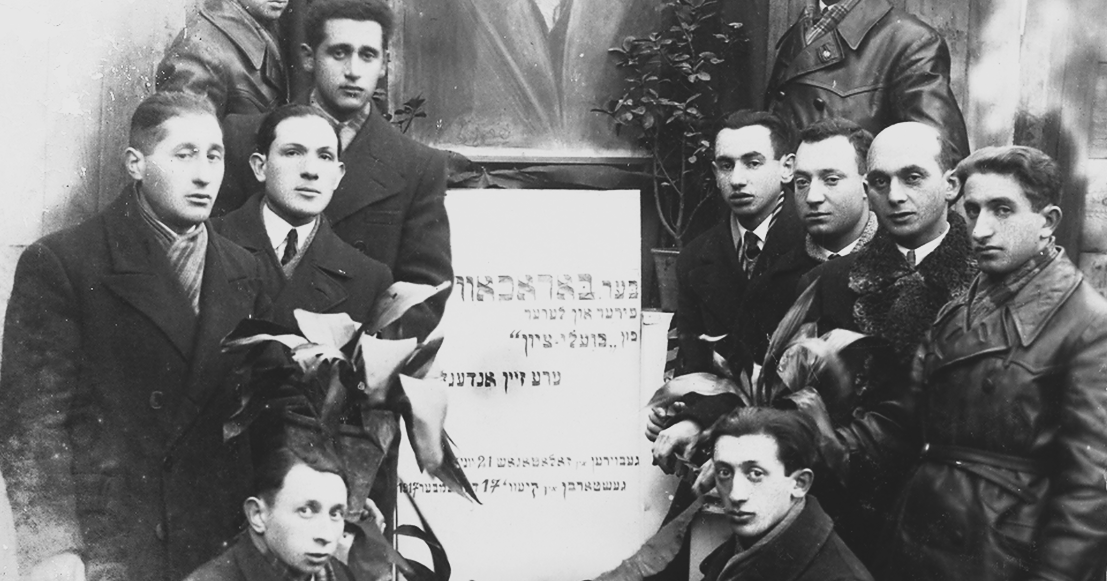
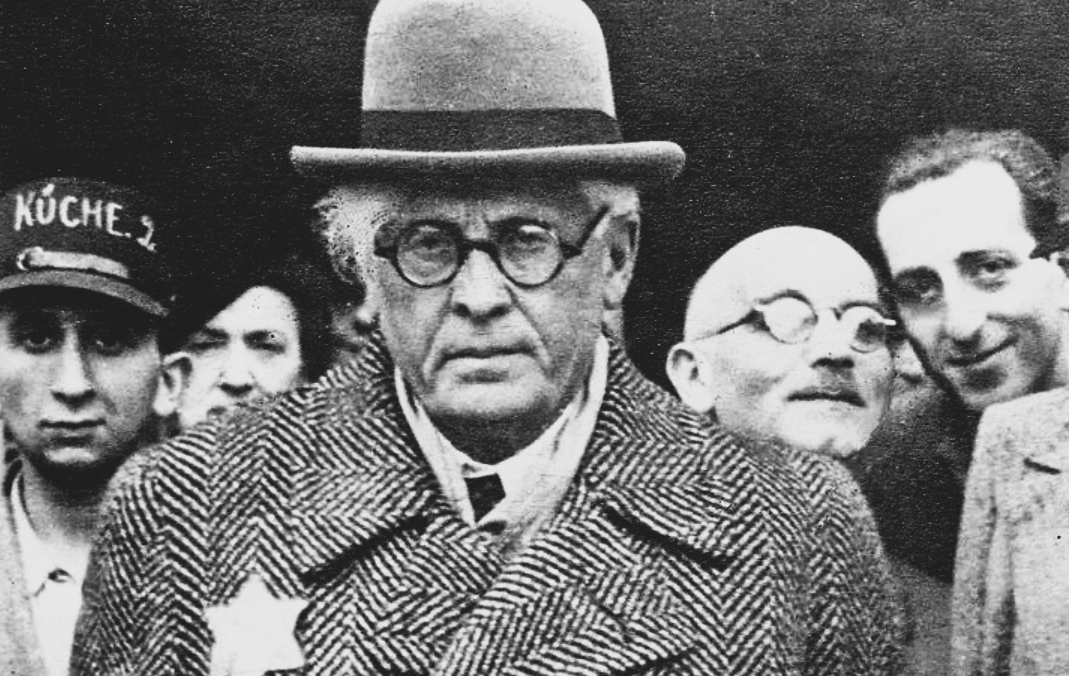
This was the path that was to lead to the semi-autonomous Jewish “leadership”, of the kind pictured here, which went on to collaborate with the Nazis in the next world war, notably in Poland, as I have previously described. [69]
The Jewish memorandum also insisted that “minorities”, obviously Jewish ones in this instance, should be allowed to recognise their own Sabbath and be required neither to work on Saturdays nor to rest on Sundays. [70]
Feinberg shows how this memorandum not only proved highly influential in the drawing up of various treaties, but how in many instances, its exact wording was included in the final document. [71]
He says: “We can say, as a general rule, that the measures in all the treaties were pretty well identical. This was not by chance, but the result of a deliberate policy that the Peace Conference had adopted on this point”. [72]
One outrageous demand that was not accepted was that states should be forced to pay “damages” to the Jewish victims of “pogroms” that had allegedly taken place on their territory during the war as well as to the victims of any further “pogroms” that might occur in the future. [73]
Feinberg says he found that very little information was available on the discussions over minority rights, in contrast to those of the Peace Conference as a whole, [74] and, to me, their exact implications appear a little murky.
There was talk of “the guarantee of economic development” [75] and of the inviolable right to “social and industrial development”. [76]
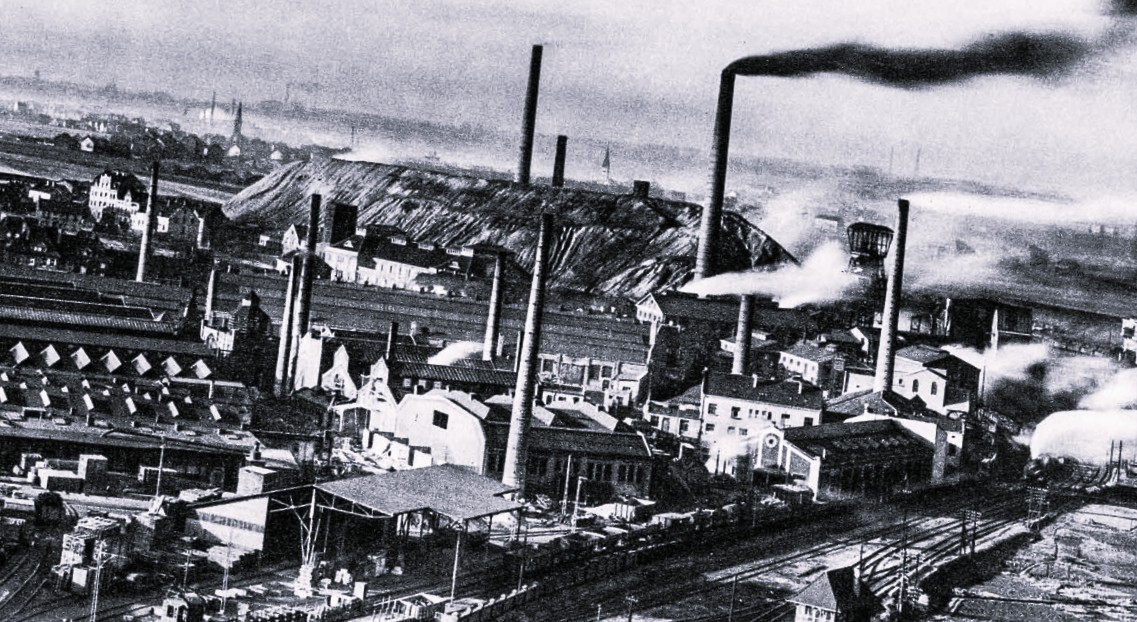
Feinberg points out that at the same time that Wilson was stressing the importance of Jewish rights, the economic section of the British delegation was drawing the Peace Conference’s attention to the fact that they had so far completely neglected the question of obligations that should be placed on nation states regarding international conventions on issues such as postal services and telegraphy, industrial property and authors’ rights and “in general, the equitable treatment of foreign trade”. [77]
And he adds that this economic section stressed that “as long as peace with enemy countries had not yet been signed and the new states had not yet definitively been recognised, it was possible to impose such obligations upon them, whereas later it would be very difficult, if not impossible”. [78]
Is there a thematic connection here with the bulletin issued at the start of 1918 by the Zionistische Vereinigung für Deutschland (Zionist Union for Germany) in Berlin, also featured in Hillard’s Archives?
This boasted: “The means of which Zionism disposes to attain its objectives are increasing to a level never previously reached. The annual takings of the Jewish National Fund are far higher, in these times of war, than those in times of peace”. [79]
As we can see, the war, and the subsequent redrawing of the map of Europe, provided a golden opportunity not just to make vast amounts of money but also to impose top-down external control on nations’ internal affairs.
Because the Peace Conference created or restored nation-states that had not existed before the conflict, and awarded extra territories to others, it was in a position to impose conditions on them and embed its own terms into national constitutions.

The Jewish memorandum, the template for these conditions, specifically said that each state concerned should be made to agree “that the foregoing obligations are hereby embodied in her fundamental law as a bill of rights, with which no law, regulation, or official action shall conflict or interfere and as against which no law, regulation, or official action shall have validity or effect”. [80]
There was some precedent for all this, as Clemenceau was at pains to point out.
The Congress of Berlin after the Russo-Turkish War of 1877–1878 had granted independence to Serbia on the condition that it recognised “the principles of religious freedom… the principles that are the basis of social organisation in all the states of Europe”. [81]
And, even further back, he said “the United Provinces of the Netherlands had to sign up in 1814 to formal commitments concerning the Belgian provinces which were, at that juncture, annexed to the Kingdom. This constituted an important restriction on the unlimited exercise of Dutch sovereignty.
“When its Kingdom was established, Greece had to accept a particular form of government: it had to be at the same time monarchic and constitutional”. [82]
There are echoes there of England’s misnamed “Glorious Revolution” of 1688. Globalism has been on the march for many centuries now.
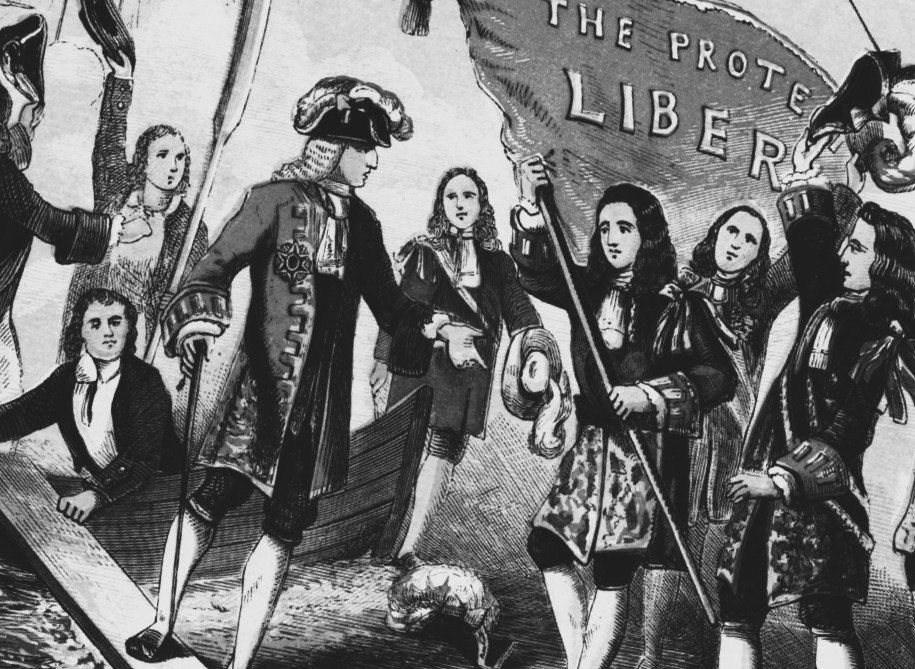
As Feinberg sets out with some enthusiasm, the 1919 agreements nevertheless represented a significant step forward from previous treaties, such as by specifically referring to “lingustic and racial minorities” rather than simply religious ones.
Furthermore, he says: “The content of the rights accorded to minorities took the form not of a brief statement of principle but was clearly and precisely detailed in a series of stipulations.
“And, last but not least, these rights were placed under the guarantee of the League of Nations and the Permanent Court of International Justice, which put an end to the anarchic state of the international community and made it possible to entrust the protection of these rights not to individual states or some group of states but to the supreme organs of organised humanity”. [83]
The pejorative use here of the term “anarchic”, in contrast to the power of the “supreme organs of organised humanity” is a useful reminder that authentic anarchism embraces the principle of freedom from external imposed power at every level of human life, including the national one, and is thus the sworn enemy of globalism and all other forms of imperialism.
Some of the countries involved in the Paris Peace Conference were suspicious about the real agenda being pushed, with a Polish spokesman referring to a treaty “drawn up by Jewish Zionists and Poles involved in finance and business”. [84] That same country specifically objected to the idea that the content of its national constitution could be imposed from the outside. [85]
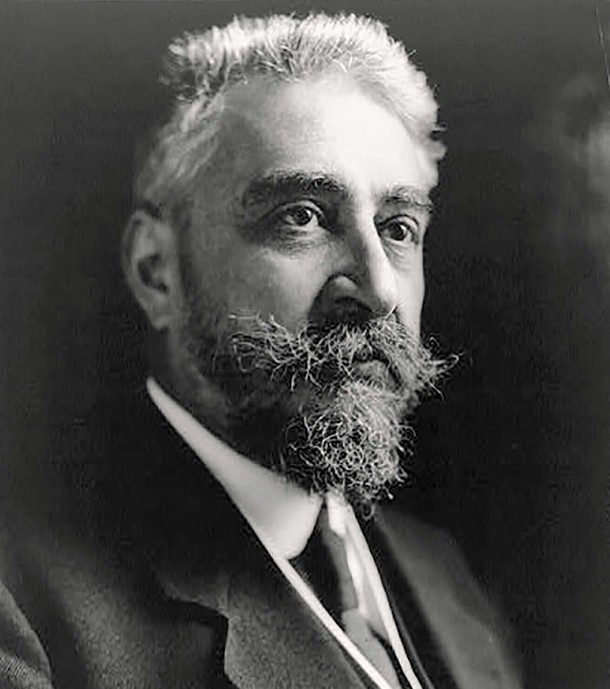
And Romanian prime minister Ion I. C. Brătianu (pictured) objected to any restriction on his nation’s sovereignty. He said the right for international intervention to protect minority rights meant “we would create a category of citizens who would be led to seek protection outside the borders of their state”. [86]
But, as Wilson made quite clear in his reply, the matter was not actually up for discussion.
He insisted on “the expectation on the part, for example, of Rumania, and of Czecho-Slovakia and of Serbia, that if any covenants of this settlement are not observed, the United States will send her armies and her navies to see that they are observed.
“In those circumstances, is it unreasonable that the United States should insist upon being satisfied that the settlements are correct?
“Observe, Mr Bratiano [Brătianu] – and I speak of his suggestions with the utmost respect – suggested that we could not, so to say, invade the sovereignty of Rumania, an ancient sovereignty, and make certain prescriptions with regard to the rights of minorities.
“But I beg him to observe that he is overlooking the fact that he is asking for the sanction of the allied and associated powers for great additions of territory which come to Rumania by the common victory of arms and that, therefore, we are entitled to say: ‘If we agree to these additions of territory we have the right to insist upon certain guarantees of peace”. [87]
And, on a rather sinister note, Wilson added: “Where the great force lies there must be the sanction of peace”. [88]
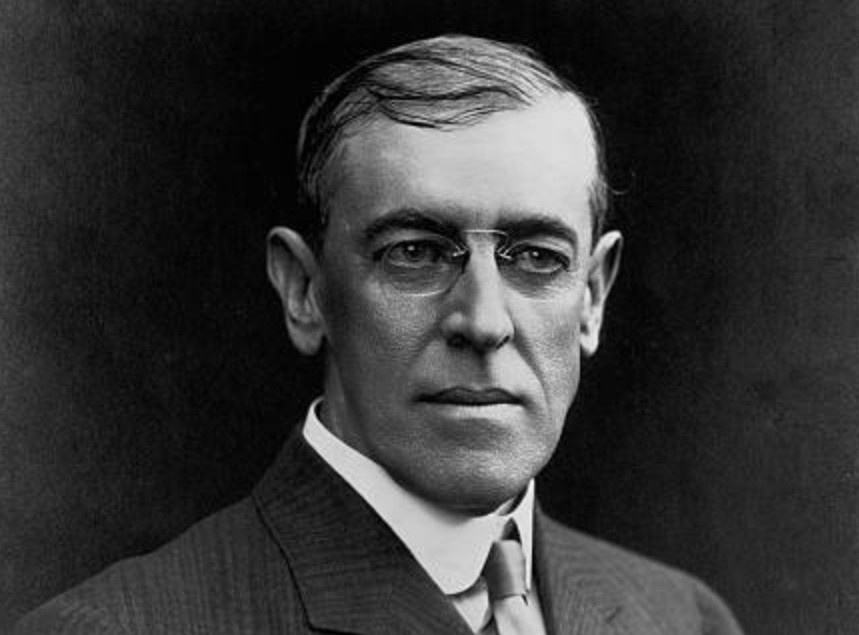
It is clear that the USA’s role was to be a global bully imposing the domination of what was, in truth, not so much Pax Americana as Pax Judaica.
Feinberg describes in detail the treaty with Poland, which served as the model for subsequent treaties and two of whose clauses about minorities referred specifically to Jewish matters.
He comments: “There could certainly be no doubt as to whether the Jews would enjoy all the rights guaranteed by the treaty to all minorities.
“But the authors of the treaty were not content with that and they judged it useful to, in addition, specifically assure the right of the Jewish communities to an equitable portion of the public funds allocated to education, as well to guarantee Jews the possibility of observing their Sabbath”. [89]
Ray Stannard Baker, for his part, writes that a certain Article XI, which Wilson described as his favourite, “would enable a Lithuanian or Jugoslav state to bring before the League questions affecting the treatment of its racial kinsmen in Poland or Italy — and the United States to bring up questions of the treatment of the Jews anywhere”. [90]
I think that what we are looking at here is a twofold intervention.
Firstly, it was an assault on democracy – by prioritising rather than merely protecting minority rights, such as by bestowing simultaneously equal status and special additional rights, it destroys any idea that governance should reflect the views, values and best interests of the majority of the country concerned.
Secondly, it was obviously the installation of an unprecedented mechanism for supranational control, imposed, by deceit, on the back of the trauma created by a manufactured world war.
It was what Clemenceau hailed as a “new system of international relations now inaugurated by the establishment of the League of Nations” [91] which was identified at the time as “the systemisation of civil and political rights”. [92]
Feinberg judges: “In the evolutionary process of International Law, an ongoing process leading – albeit slowly and in zigzags – to the recognition of the supremacy of International Law over national law, the treaties on minorities of 1919-1920 played one of the most important roles.
“They broke, in a manner considerably more categorical than any other modern human rights institution, with the traditional concept of absolute and unassailable sovereignty”. [93]
He sees, in 1929, that the various international bodies being set up to protect minorities were establishing “the ideological principles which will lead to the development and then the gradual perfectioning of this system”. [94]
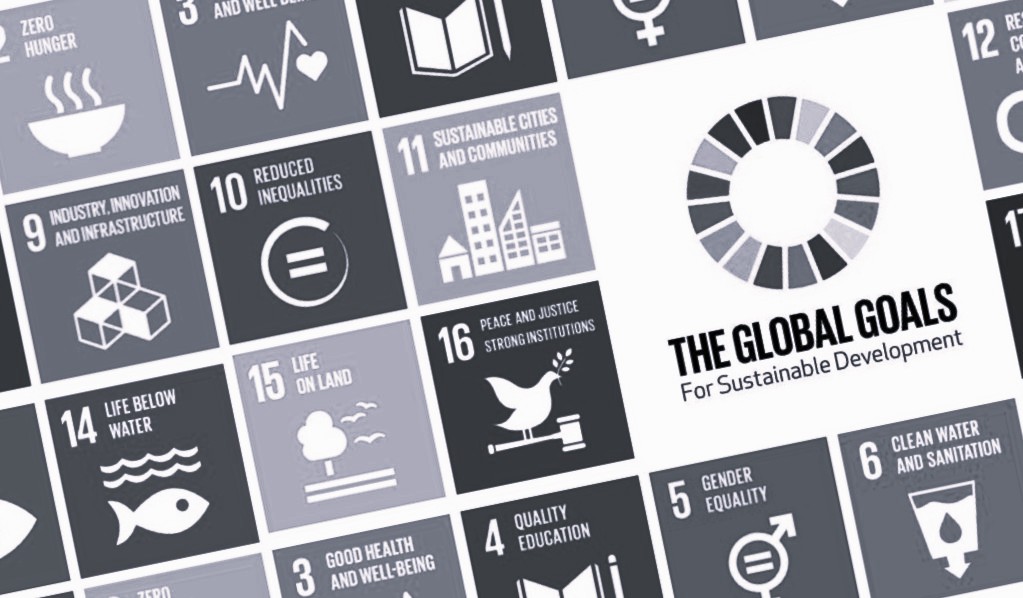
It is this “perfectioning” that has, a century on, delivered us the United Nations Sustainable Development Goals, the infrastructure currently being used to impose the globalist agenda under the same false flag of ethics and good intentions.
The kind of hypocritical language with which are so familiar today was already being used back in 1919, with the warmongering Clemenceau waxing lyrical about “the progress of civilization”, “peace and general harmony” and “freedom and justice”. [95] This “peace” was to be both “equitable” and “sustainable”! [96]
Looking proudly back, the United Nations website tells us: “The Treaty of Versailles was signed in the Palace of Versailles Hall of Mirrors on 28 June 1919. The Covenant of the League of Nations was integrated into the Treaty and all other peace settlements signed in Paris after World War I.
“The Covenant constituted of a preamble and 26 articles. It defined the main function of the League: to ‘promote international co-operation and to achieve international peace and security'”. [97]
Given the very strong Zionist involvement which, as we have seen, characterised the Peace Conference and its “minority rights” agenda, I suspect that behind the term “Covenant” lurks the Noahic Covenant, the so-called laws through which certain arrogant Jewish racists think they have the right to impose their version of “peace” on the whole of humankind and which are unfortunately accepted without question by too many Gentiles who do not understand what they really involve. [98]
Has “international peace and security” always been a euphemism for violently-imposed judeo-supremacist global control?

[44] Nathan Feinberg, La question des minorités à la Conférence de la paix (1919-1920) et l’action juive en faveur de la protection internationale des minorités (Paris: Rousseau & Co, 1929).
[45] Pierre Hillard, Archives du mondialisme: De la guerre contre l’Ancien et le Nouveau Testament (Lopérec: Editions Nouvelle Terre, 2019), pp. 507-678.
[46] Feinberg, p. 33/541. The double reference indicates the page in Feinberg’s original book and then that within Hillard’s Archives. All translations are my own.
[47] Feinberg, p. 33/541 FN.
[48] Feinberg, p. 34/542.
[49] Ibid.
[50] Feinberg, p. 34/542.
[51] The New International Yearbook: A Compendium of the World’s Progress for the Year 1919, ed. Frank Moore Colby (New York: Dodd, Mead & Co, 1920), p. 367,
https://archive.org/details/NewInternationalYearBookFor1919/page/n395/mode/2up, cit. Feinberg, p. 42/550.
[52] Feinberg, p. 42/550.
[53] Feinberg, pp. 42-43/550-51.
[54] Feinberg, p. 43/551.
[55] https://jewishplock.eu/en/poale-zion-party/
[56] Feinberg, p. 24/532.
[57] Feinberg, p. 26/534.
[58] Ibid.
[59] https://en.wikipedia.org/wiki/History_of_the_Jews_in_Denmark
[60] Feinberg, p. 35/543.
[61] Ibid.
[62] Feinberg, p. 36/544.
[63] Feinberg, p. 41/549.
[64] Feinberg p. 55/563.
[65] Harold William Vazeille Temperley, A History of the Peace Conference of Paris Vol 5 (London: Hodder & Stoughton, 1921), p. 122,
https://archive.org/details/historyofpeaceco05tempuoft/page/122/mode/2up, cit. Feinberg, pp. 68-69/576-77.
[66] Feinberg, p. 70/578.
[67] Feinberg pp. 70-71/578-79.
[68] Feinberg, p. 76/584.
[69] Paul Cudenec, ‘The gangsters and the ghetto’, https://winteroak.org.uk/2026/01/23/the-gangsters-and-the-ghetto/
[70] Feinberg, pp. 78-79/586-87.
[71] Feinberg, p. 81/589.
[72] Feinberg, p. 126/634.
[73] Feinberg, p. 93/601.
[74] Feinberg, p. 7/515.
[75] Feinberg, p. 26/534.
[76] Feinberg, p. 29/537.
[77] Feinberg, p. 71/579.
[78] Ibid.
[79] Hillard, p. 481.
[80] Feinberg, p. 82/590.
[81] Feinberg, p. 115/623.
[82] Feinberg, p. 117/625.
[83] Feinberg p. 138/646.
[84] Laust Moltesen, La Société des Nations et la Protection des Minorités, cit. Feinberg, p. 96/604.
[85] Feinberg, p. 111/619.
[86] Feinberg, p. 97/605.
[87] Woodrow Wilson, 8th plenary session of the Peace Conference, May 31 1919, cit. Feinberg, pp. 165-66/673-74.
[88] Wilson, cit. Feinberg, p. 167/675.
[89] Feinberg, p. 128/636.
[90] Ray Stannard Baker, Woodrow Wilson and World Settlement: Written from his unpublished and personal material, London, 1923, vol 1, p. 227, https://archive.org/details/woodrowwilsonwor01bake/page/228/mode/2up, cit. Feinberg, p. 108/616 FN.
[91] Feinberg, p. 116/624.
[92] Message du Conseil Fédéral à l’Assembléé Fédérale concernant la question de l’accession de la Suisse à la Société des Nations (Berne, 1919), p. 247, cit. Feinberg, p. 65/573.
[93] Feinberg, p. 138-39/646-47.
[94] Feinberg, p. 139/647.
[95] Feinberg, p. 119/627.
[96] Feinberg, p. 22/530.
[97] https://www.ungeneva.org/en/about/league-of-nations/covenant
[98] https://www.christianity.com/wiki/bible/what-is-the-noahic-covenant.html
Paul Cudenec, ‘Hate, supremacism and the satanic world order’, https://winteroak.org.uk/2026/01/05/hate-supremacism-and-the-satanic-world-order/
 winter oak
Dear Paul,
I liked your mention of the 1688 palace coup, I think it is the first time I have seen it in print noted as a Globalist event.
Over the years, I’ve studied the Jacobite period of history extensively, and it was a post of Alex Krainer’s that led me to realise the above. His post – https://alexkrainer.substack.com/p/history-of-western-malignancy-john provided the final bit of a puzzle I’d been working around for two decades or so – why did the Jacobites fail?
I had seen glimspes of it in Marlborough’s actions, notably when he fled to the continent in 1712, but also that he had a clearly better intelligence on the big picture. What Krainer’s piece provided for me, and which is missing from nearly accounts of our history are the powers above national governments, the finanical powers – that determine events. William of Orange succeeded because, as Stadholder, loans to him were sovereign debt; once exiled, James II could not raise such and they continued to finance William alone. The best chance of James III coming to restoration was the 1708 expedition which was superbly and secretly planned by the Scots, and financed by Louis XIV, but Fourbin would not allow James III to land in the Firth of Forth despite his pleas. If one digs into that, there is some excellent work which essentially indicates that the French Minister of the Navy gave Fourbin secret instructions to that effect – to spite the Minister of the Army (& Finance), which Fourbin tantalisingly tried to confirm with Louis XIV but failed. I realise looking at the picture above that it was likely the Mephistophelian Venetian banksters who instructed the Minister of the Navy, with his well-known emnity for the other minister as a back-up story – the simplest way to stop it was to prevent the landing; again better intelligence, and the highest power delivered at the most effective level.
I think the Venitian bankers (in 1688) wanted to be back financing both sides of big wars, which they certainly got with the War of the Spanish Succession (and which built the rapacious Marlborough’s insane fortune), but also, I think now, the opportunity to place one of their bloodline on the British throne in 1714. From there we have a shape-shifting Globalist Empire and endless wars and exploitation through to today and beyond; only the actors and the backdrop change.
In 1715, the Jacobites never stood (much of) a chance.
Wigo
LikeLike
Very interesting. Thanks!
LikeLike