by Paul Cudenec, who reads the article here
I have previously described how the Great War of 1914-1918 was essentially the Great Reset of its time, a shock-and-awe event manufactured in order to push us further along the dispossession and enslavement process known as “modernisation” or “progress”. [1]
More recently, I have taken a look at the real meaning of the term “peace” when uttered by globalists and concluded that it refers to the so-called “peace” proclaimed to Gentiles by judeo-supremacists when they feel they have the upper hand, involving compulsory obedience to their Noahide Laws, on pain of death. [2]
I have now read a book which brings these two insights together in a rather satisfying way and I will look at its contents in the second half of this two-part essay.
But first I need to provide some context for its subject matter, which is the Peace Conference in Paris at the end of World War I.
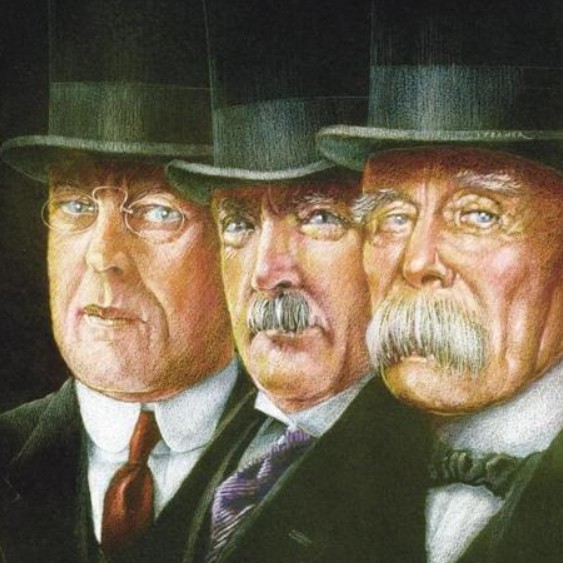
The figureheads at the talks which led to the signing of the various treaties were supposedly a Big Four but were in practice the Big Three because of the much lesser role played by Italian prime minister Vittorio Emanuele Orlando, who even left the talks before the end.
By looking at the careers of these three men I will hopefully shed some light on the driving agenda behind the discussions – particularly on the issue of ensuring “minority rights”.
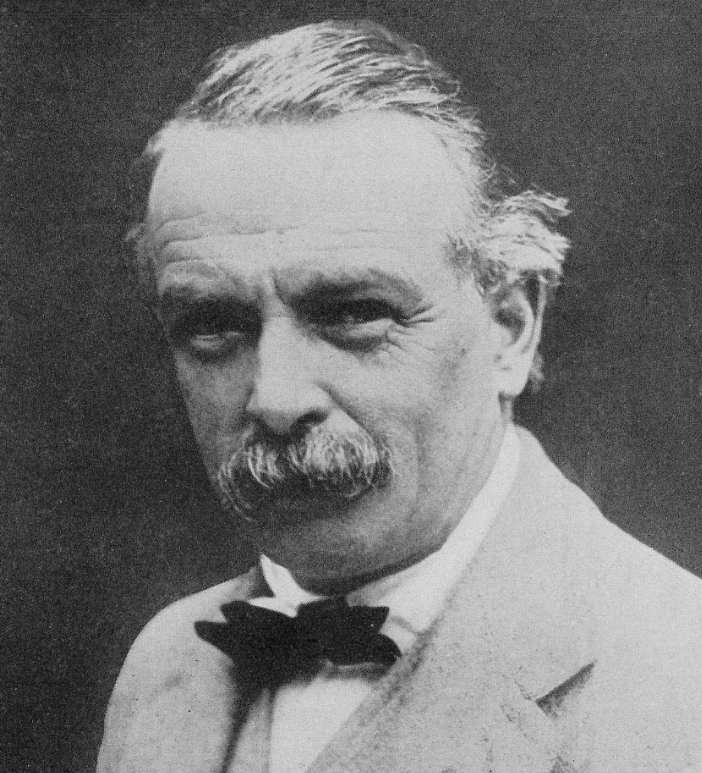
David Lloyd George (1863-1945) was prime minister of the United Kingdom from 1916 to 1922.
From a working-class Welsh background, he made his political name as a fiery orator and defender of the people.
He was a key figure in the Liberal Party, whose 1908 re-election to power on an anti-war ticket could have presented a problem for the shadowy network already planning WWI behind the scenes.
Gerry Docherty and Jim Macgregor write: “An anti-war Liberal group headed by him would have represented the Secret Elite’s gravest nightmare. The damage he could have caused was literally boundless. A splinter Cabinet led by a national figure, a rallying point for the Liberals and the Labour Party in Parliament, would have spelled disaster for the warmongers”. [3]
But Lloyd George was not what he seemed, as the authors explain: “The Secret Elite were constantly on the lookout for rising stars in politics and the diplomatic corps who might serve them well as agents. They would nurture, groom and fete them, and, if considered sufficiently malleable, draw them into the orbit of the group…
“David Lloyd George was a politician identified, nurtured and drawn into the Secret Elite fold for several very important reasons. They considered him a potential asset unmatched by anyone else in the Liberal and Conservative parties.
“With his talent for skilful negotiation, the brilliant orator and audacious radical held sway over the working classes. He talked their language such that even militant trade union leaders accepted him”. [4]
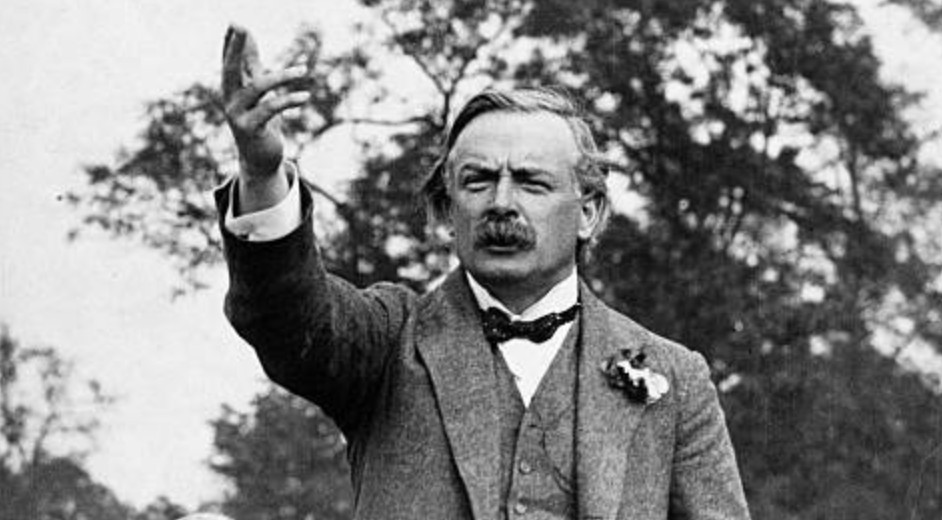
“As early as 1886 he had written to Margaret Owen, later his long-suffering wife, that ‘my supreme idea is to get on… I am prepared to thrust even love itself under the wheels of my juggernaut if it obstructs the way'”. [5]
“Detractors have called him ‘a man without conviction’, claiming that he was shallow and opportunistic in most of his actions and at all times ‘a man who did deals'”. [6]
Together with his ambition, Lloyd George’s taste for a luxurious lifestyle beyond his means and his insatiable sexual interest in women rendered him particularly vulnerable to manipulation. His career could have been ended several times over had the powers-that-be chosen to destroy him.
Docherty and Macgregor describe the peculiar course of events surrounding rumours circulating in 1908 linking Lloyd George and Lady Julia Henry, wife of Sir Charles Henry MP, a Liberal colleague and millionaire merchant. [7]
Lloyd George sued the Sunday People newspaper: “He was represented in court by a team of legal colossi: Rufus Isaacs, the future Lord Reading and Lord Chief Justice; F.E. Smith, the future Lord Birkenhead; and Raymond Asquith, the prime minister’s son. Ranged against this venerable trio was one of the most formidable advocates of the time, the Right Honourable Sir Edward Carson, KC MP…
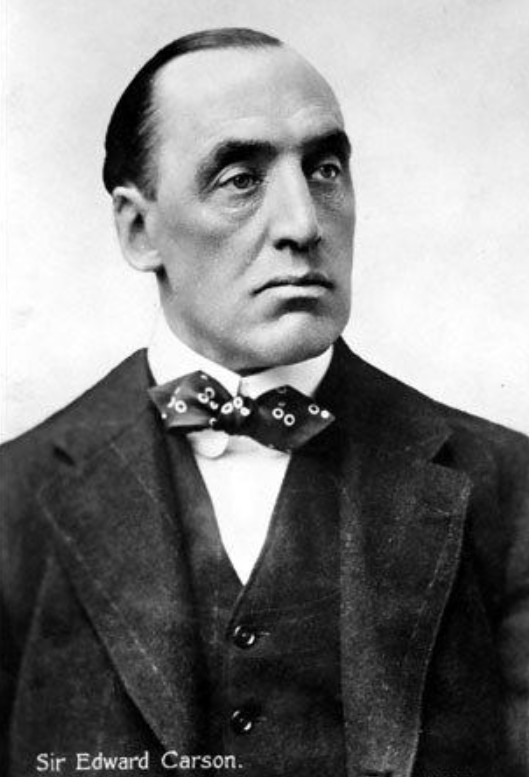
“What happened next gave rise to one of the greatest mysteries that ever surrounded the unscrupulous Welshman. Once Lloyd George had categorically denied the People‘s allegations, Sir Edward Carson, representing the newspaper, did nothing more than ask a few meaningless questions. There was no cross-examination. No witnesses were called. The trial was over.
“Lloyd George had been raised from the edge of the abyss and retained his parliamentary office. Miraculously, he was deemed blameless.
“He had been grossly over-represented by the top legal brains in England, but to whom was Lloyd George forever indebted? The People had retained Edward Carson, the most expensive King’s Counsel in the land, yet he failed to present their case. Why? What powerful strings had been pulled inside the hidden chambers of the legal profession?” [8]
Lloyd George had sold his soul and everything he did or said, from that point on, has to be seen in that context, not least the enthusiastic support for war that suddenly came over him.
Once the conflict was launched, he helped the warmongers keep it going. He effectively wrote a blank cheque for the arms industry and its friends, promising that the British tax payer would cover any cost of extending production lines or constructing new factories, irrespective of how long the war lasted.
Docherty and Macgregor remark: “He committed the government to compensate them and any of their sub-contractors for any subsequent loss. The War Office protocols to protect the public purse were torn to shreds”. [9]
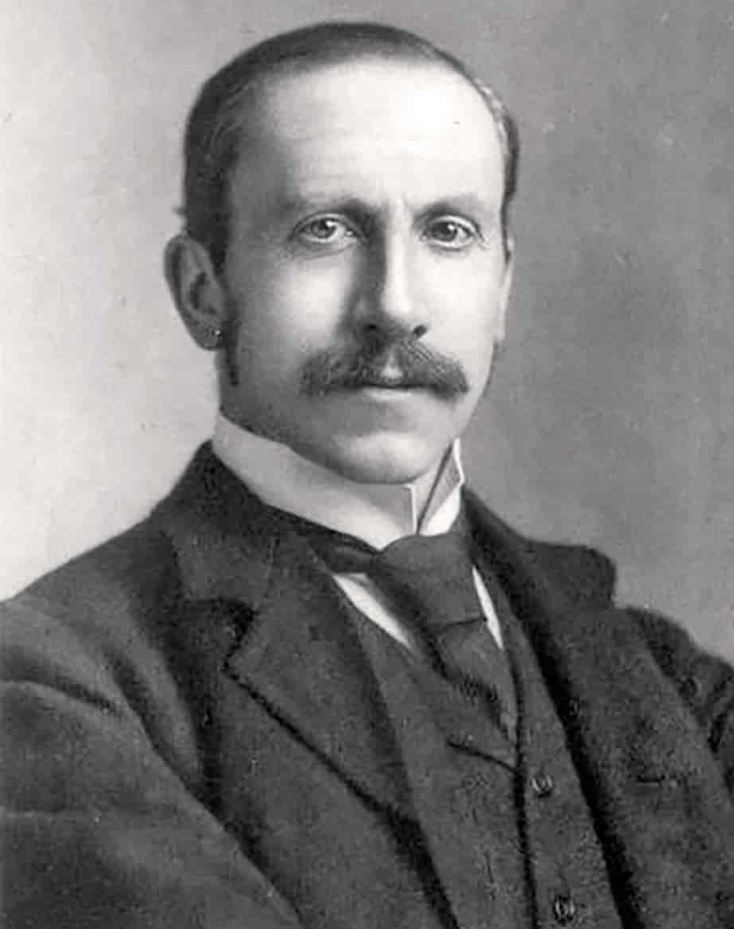
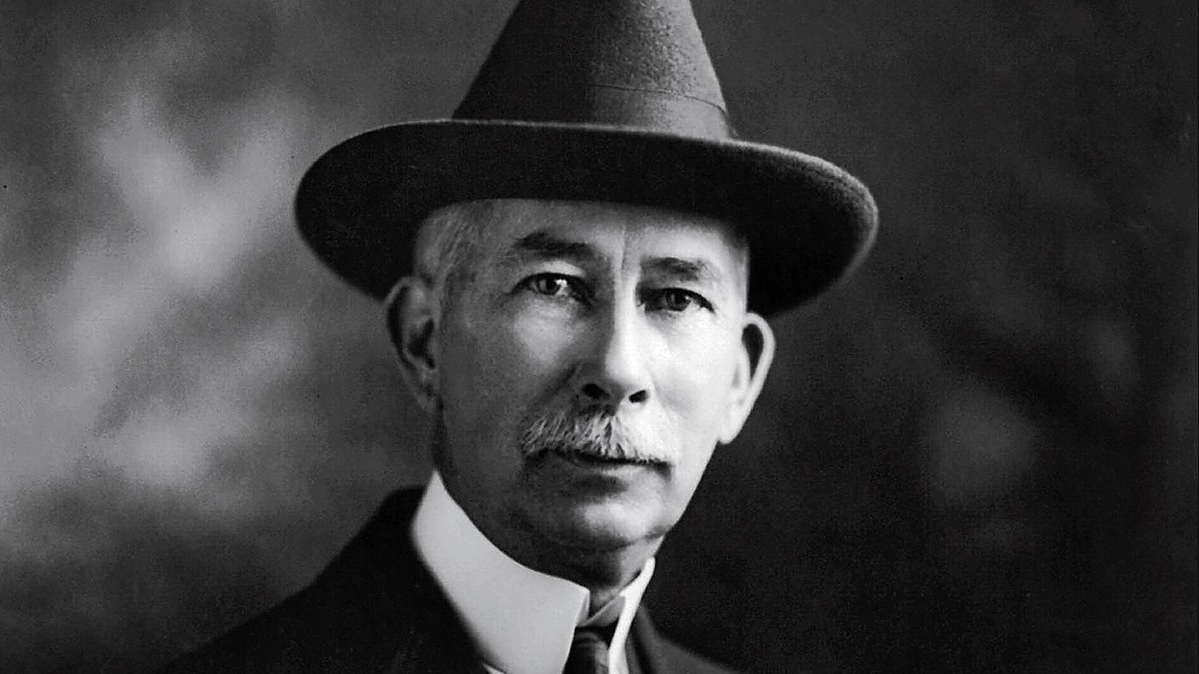
The unelected Alfred Milner [10], pictured, part of the Rothschilds’ secret network of influence since the 1890s, was appointed directly to the inner sanctum of Britain’s war planning and Lloyd George “revolutionized government control of production by bringing businessmen into political office”. [11]
Lloyd George himself records in his War Memoirs that his decision to choose Rothschild front JP Morgan as the sole US wartime purchasing agent for Britain followed personal “advice” from Lord Nathaniel Rothschild in London. [12]
It was, of course, during his premiership that the British government issued the notorious Balfour Declaration of 1917, which paved the way for the creation of the murderous state of Israel and with which the Rothschilds and their Zionist friends were very closely involved.
Say Docherty and Macgregor: “Lloyd George’s government, through the war cabinet, colluded with the Zionist Federation to concoct a statement of intent that met their (Zionist) approval”. [13]
In later years, Lloyd George remained a big fan of the zio-satanic imperialist mafia (ZIM) and its grotesque global puppet show.
Ernst “Putzi” Hanfstaengl, the main ZIM agent who groomed Adolf Hitler, [14] relates in his memoir that, while in London, he visited Lloyd George, who gave him a signed photograph of himself to take back to Germany, inscribed “To Chancellor Hitler, in admiration of his courage, determination and leadership”. [15]
* * *
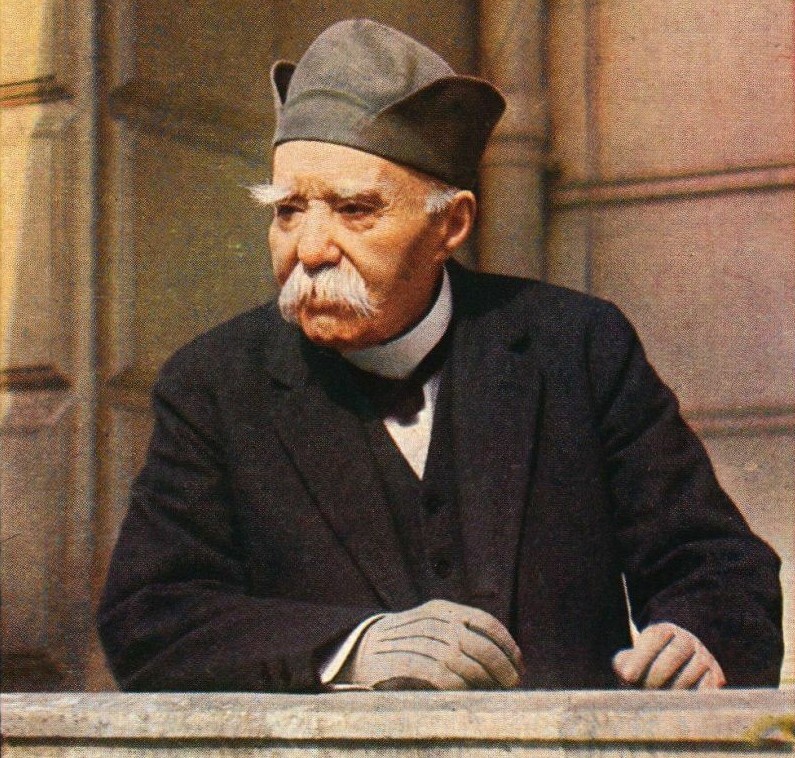
Georges Clemenceau (1841-1929) headed the French government on two occasions – from 1906 to 1909 and then from 1917 to 1920. [16]
Like Lloyd George, he started out with a reputation as a radical on the “left”, particularly on the basis of his opposition to the influence of the Roman Catholic Church on French society.
But he ended up being regarded as an enemy of the working class because of the brutality with which, when in power, he repressed the French population.
When he became Minister of the Interior in 1906, he declared himself France’s “top cop” and set about crushing resistance to plutocratic industrial domination.
Within a week of taking up his post, he sent in the army against a miners’ strike prompted by an horrific event at Courrières, where more than a thousand men had been killed in the worst mining disaster in European history. [17]
The strike spread to other professions and hopes of revolution filled the Spring air – Clemenceau banned the traditional May Day procession in Paris and sent in no fewer than 45,000 soldiers to brutally attack protesters.
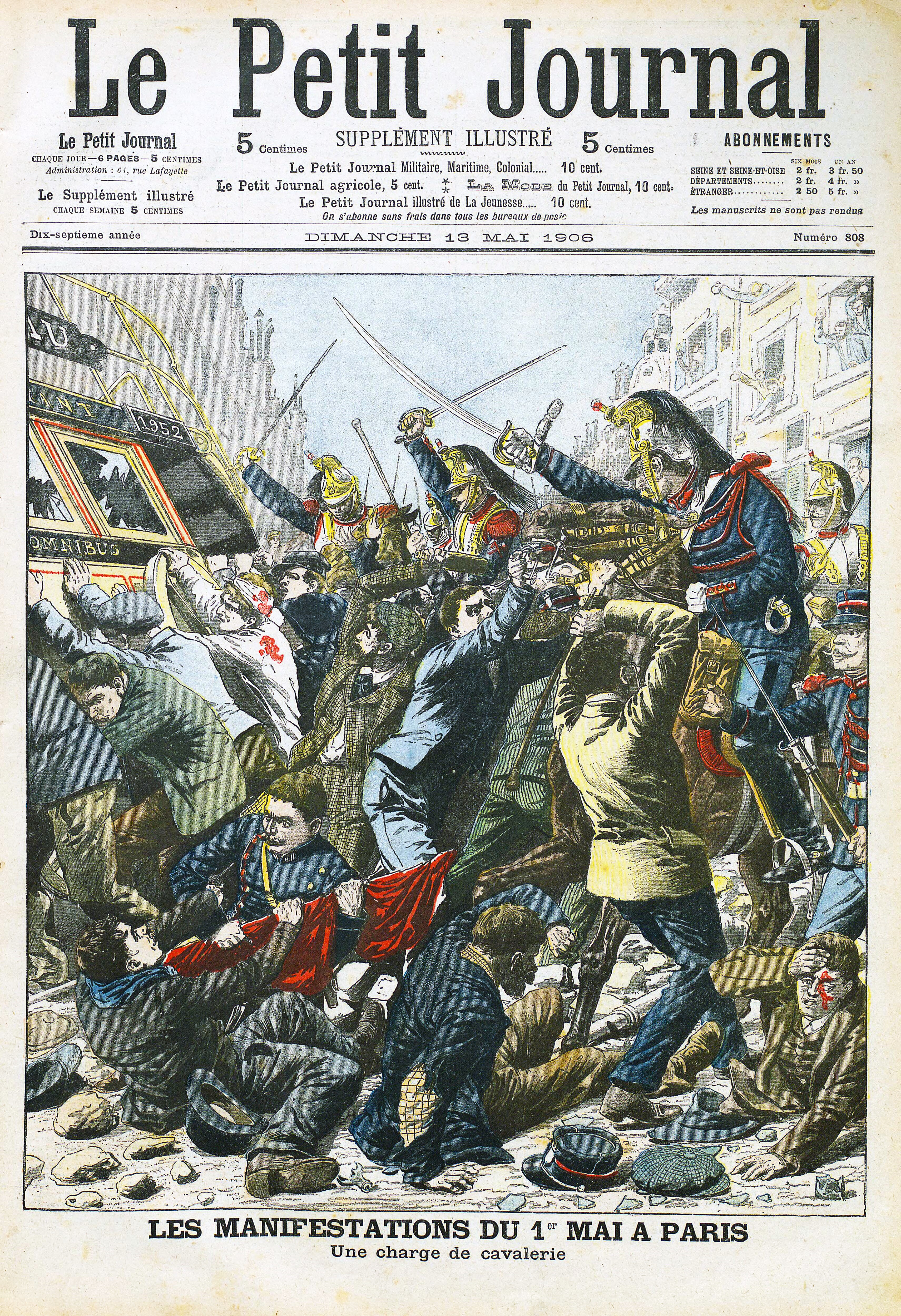
As the uprising continued, Clemenceau’s militia killed two strikers at Raon-l’Étape in July 1907 and, in June 1908, two more at Vigneux – “police fired point blank into a room against unarmed workers accompanied by women and children”. [18]
The regime’s unpopularity with the French people reached the point where the “right-wing” royalist Action Française led by Charles Maurras was seeking a provisional alliance with the “far left” so as to unite the resistance.
Clemenceau’s reaction of pre-emptive mass arrests was in the finest tradition of tyrants and their lackeys.
He was still up to the same tricks after WWI, when his government banned all protests in the run-up to May Day in 1919. Protesters took to the streets of Paris anyway, but were attacked by the police, leaving two of them dead and 300 injured.
Clemenceau appears to have been a psychopath, delighting in the bestial ferocity that earned him the nickname “The Tiger”. The writer Julien Gracq has written of his “pure, gratuitous, incongruous aggression”. [19]
He was a fervent warmonger with a visceral hatred of Germany and, as Docherty and Macgregor relate, he visited Britain in April 1907 and tried to persuade the anti-war Liberal government “to introduce conscription and create a great army that would ‘take the field’ along with France against Germany”. [20]
Clemenceau himself boasted in 1918: “My foreign policy and my domestic policy has been one and the same. Domestic policy? I wage war. Foreign policy? I wage war. I always wage war”. [21]
Involved, early in his career, in the reconstruction of Paris after the Franco-Prussian war and the crushing of the Paris Commune, Clemenceau was caught up in some controversial business matters and was increasingly accused of working for foreign interests, particularly British ones.
In 1892, he was implicated in the Panama corruption scandal and publications such as Le Petit Journal drew attention to his close links with Cornelius Herz, one of the men at the centre of the affair.
Herz, a Jewish French-American businessman, had previously invested in Clemenceau’s newspaper, La Justice. [22]
The anarchist Bernard Lazare (also Jewish, in fact) wrote of him: “Cornelius Herz has never had a home country, although he has served several; he seems to have only ever had one passion: gold”. [23]
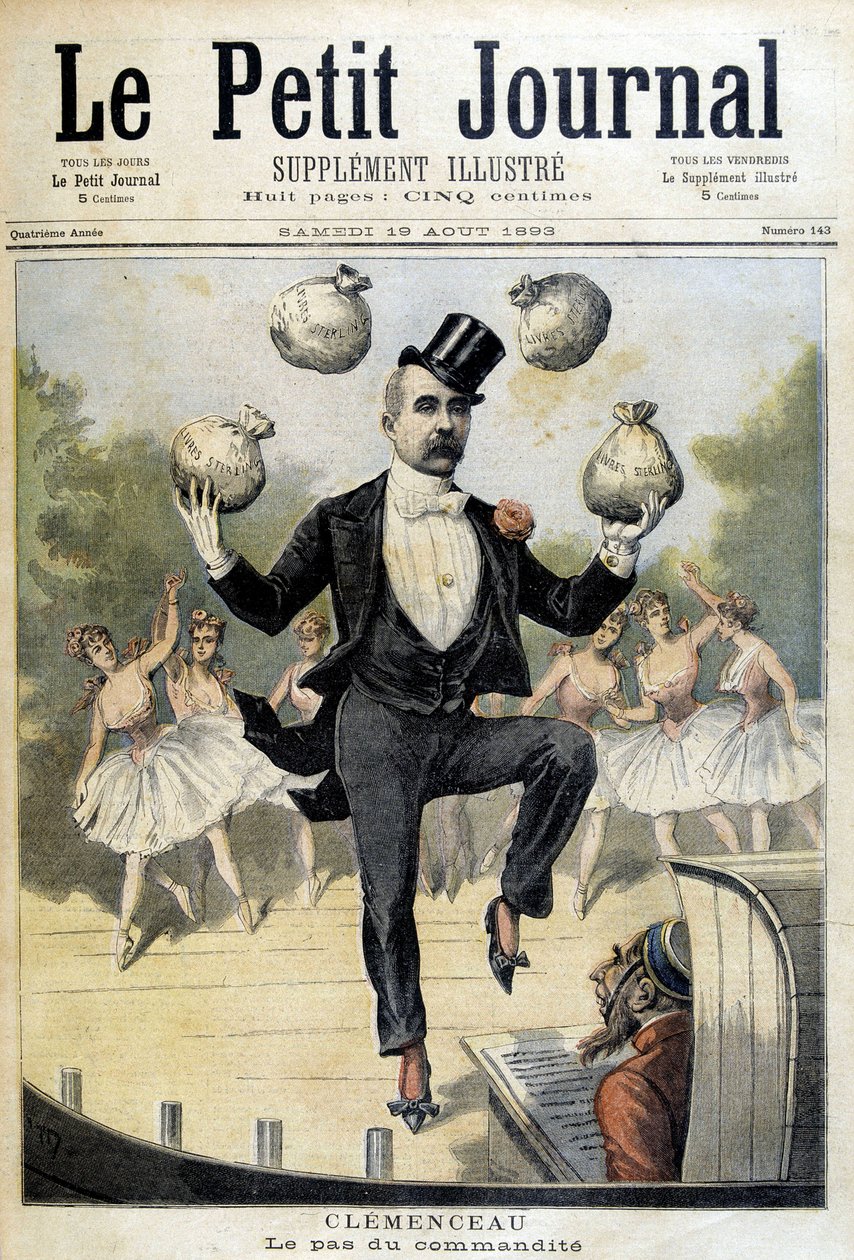
Clemenceau turned to condemning anti-semitism, particularly among Catholics, and wrote more than 700 articles supporting Captain Alfred Dreyfus, a Jewish military man famously accused of treason. [24]
Among his friends was the influential Austrian-Jewish journalist and editor Moritz Szeps, who was “considered a symbol of the links between the intellectual Jewish elite and economic life”. [25]
He and Clemenceau visited each other on several occasions and Clemenceau is said to have been “close” to Szeps’ daughter Berta. His younger brother Paul married Szeps’ other daughter, Sophie. [26]
When, at the age of 76, Clemenceau became prime minister for the second time, his government “was essentially made up of close associates and figures who would defer to him”. [27]
His cabinet included Georges Wormser (1888-1978), a Jewish banker and historian who would go on to be his biographer and whose uncle was secretary to Baron Edmond de Rothschild. [28]
And it was headed by Clemenceau’s “faithful collaborator” Georges Mandel (1885-1944), a Jewish journalist and politician whose real name was Louis Rothschild. [29]
* * *
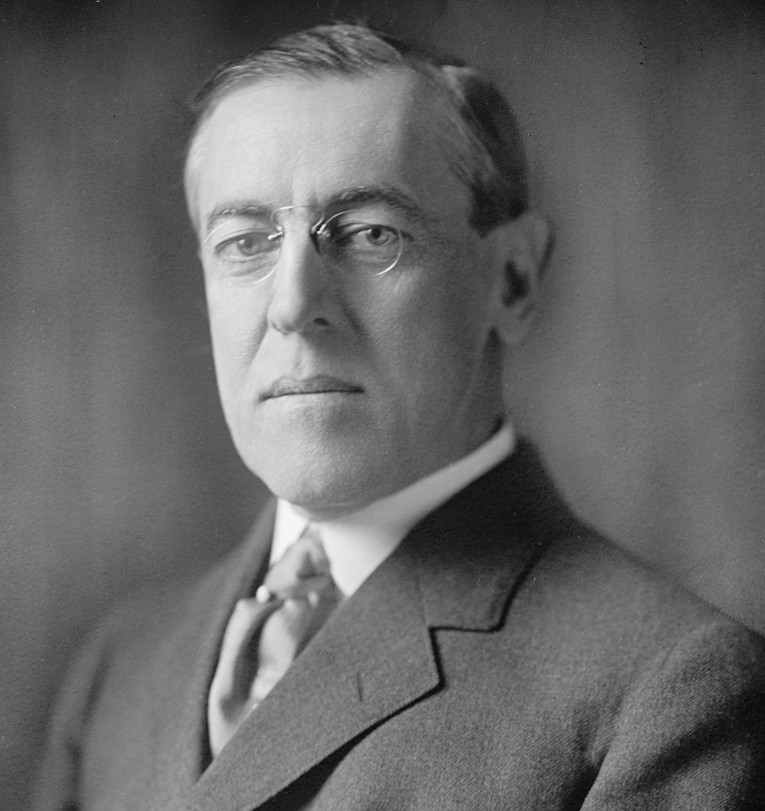
Woodrow Wilson (1856–1924) was the 28th president of the United States, serving from 1913 to 1921.
The Democratic Party politician gained the post in a somewhat surprising manner, at a time when Republicans dominated the presidency.
President William Taft was refusing to support a bill to introduce the Federal Reserve system, on the grounds that it would not impose sufficient government control of the banks.
Write Docherty and Macgregor: “The money power decided that Taft had to go. Their support in the 1912 presidential election swung behind the little-known Democrat candidate Woodrow Wilson”. [30]
They note the astonishing speed with which “Wilson was bounced from his post at Princeton University in 1910 to governor of New Jersey in 1911, then Democratic Party nominee for the presidency in 1912”. [31]
“Grass-roots Democrats in New Jersey were opposed to having Wilson imposed on them by ‘the big interests in New York’. [32]
“Rarely has there ever been such a concerted and focused effort to remove a Republican president from office and replace him with a Democrat party-puppet.
“Sponsored by Cleveland H. Dodge, director at Rockefeller’s National City Bank, and a friend of both Rockefeller and [JP] Morgan, Woodrow Wilson was thrust into the presidential race in 1912.
“The money power opened a campaign office for him at 42 Broadway and over two-thirds of his campaign funds came directly from Wall Street”. [33]
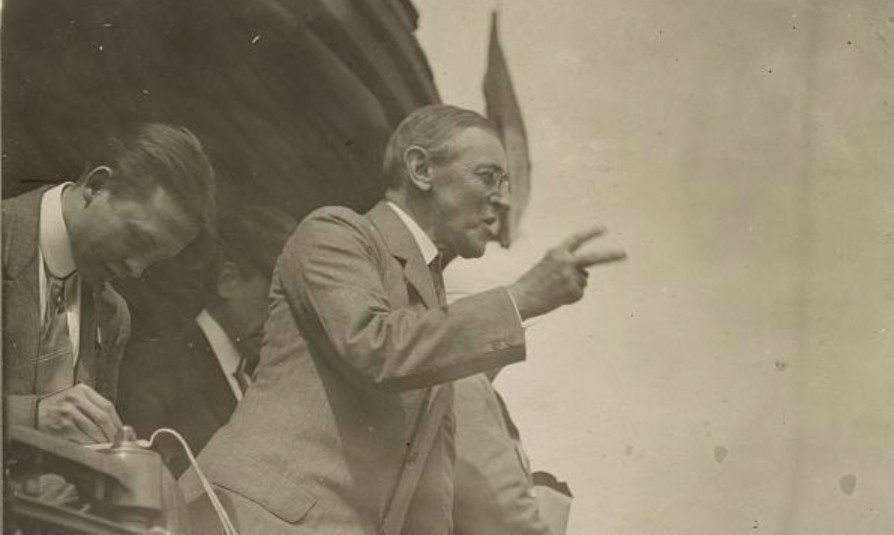
Just like Lloyd George and Clemenceau, Wilson got into office on false pretences, passing himself off as someone that he was not and never would be.
Docherty and Macgregor write: “Wilson lied about his politics during the campaign and betrayed the Democratic heritage of Presidents Jefferson and Jackson by courting the bankers and representing their interests.
“His public utterances were a masterclass in hypocrisy. He campaigned in 1912 under the banner of ‘New Freedoms’ and opposition to monopoly powers, yet within a year had given the banks exactly that”. [34]
They also point to the entry into the race with Taft of a second Republican, former president Theodore Roosevelt.
“Financed by Morgan’s associates in Wall Street, Roosevelt created a third force, the ‘Bull-Moose’ Party, from thin air and effectively split the Republican vote.
“While the Morgan team were destroying Taft’s chance of victory, Paul Warburg and Jacob Schiff [Rothschild-linked bankers] completed the pincer movement by backing Wilson and ensuring his election”. [35]
Wilson had to be steered into power so that the globalist banksters could have their Federal Reserve, which was a key element in the manufactured Great War.
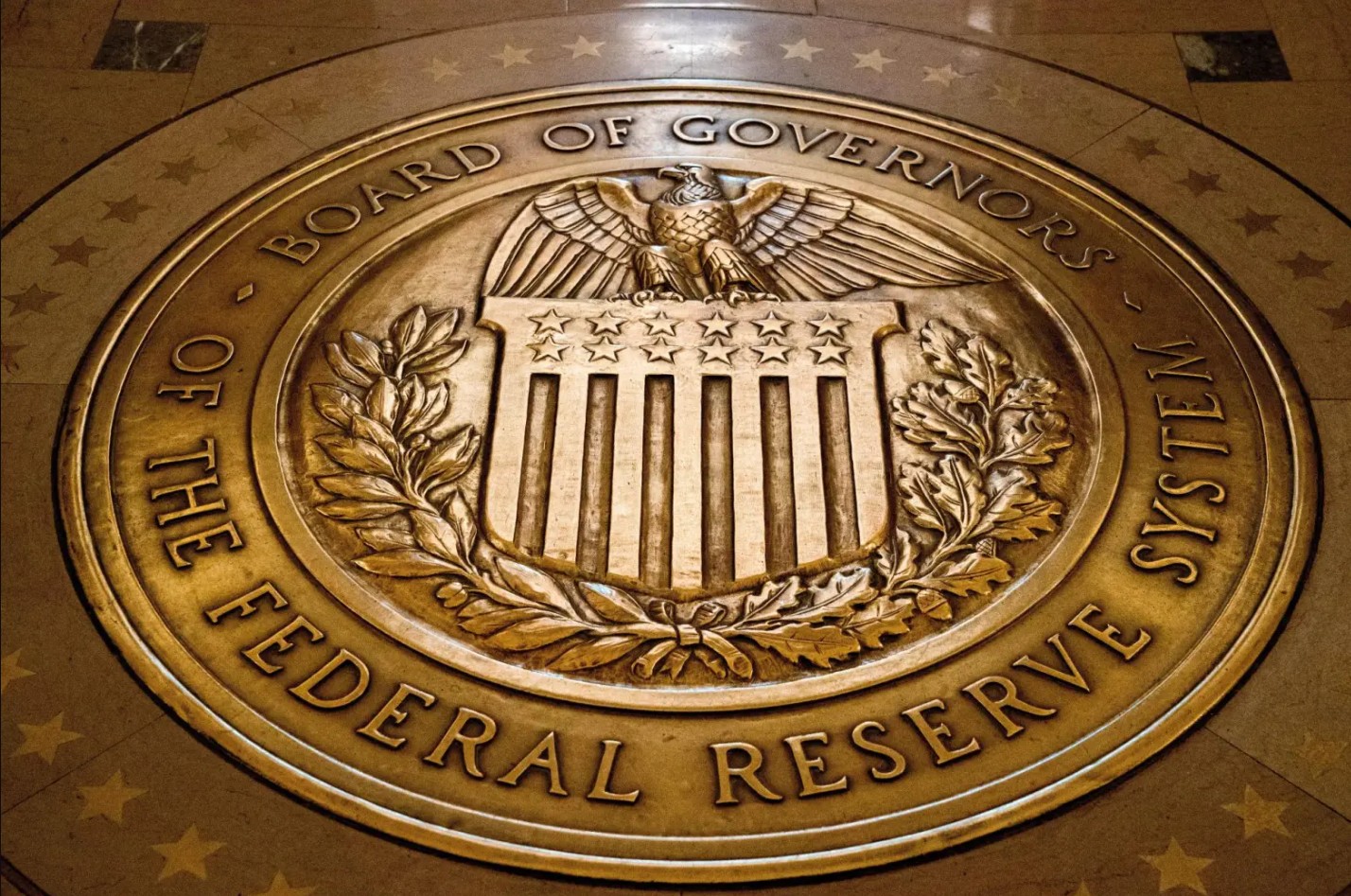
Docherty and Macgregor explain: “Wars require to be financed and cost immense sums of money. In Britain, France, Russia and Germany the national coffers were almost bare. Outrageous spending on armaments and growing indebtedness had left virtually every treasury in Europe dangerously close to empty.
“A new source of funding was required, a supply of money that could expand in line with the demand of desperate nations willing to pay handsomely for massive loans.
“Now that was something that a US central bank, unfettered by government control, responding to unlimited demand, could do”. [36]
The deceit and hypocrisy surrounding Wilson and his backers continued after the Federal Reserve system was set up and the lucrative slaughter launched in Europe.
The championing of “minority rights” in Europe which he was to promote at the peace talks in 1919 – in particular the right of some groups to maintain a distinct cultural identity within an overall national context – sits uneasily alongside his rhetoric just three years previously.
His obvious bias in favour of Britain and its allies was alienating both German-American and Irish-American voters, who were threatening to switch to the Republicans in the 1916 election.
These groups came under sustained attack for what the president termed ‘disloyalty’. In his annual Message to Congress on December 7 1915, Woodrow Wilson ranted against those, born under foreign flags, who had been welcomed “under our general naturalization laws to the full freedom and opportunity of America, who have poured the poison of disloyalty into the very arteries of our national life… who seek to make this proud country once more a hotbed of European passion”. [37]
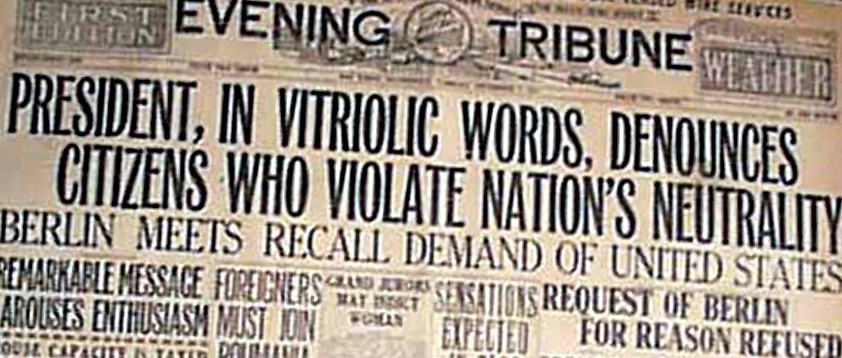
Add Docherty and Macgregor: “He expressed contempt for those who held fast to their original national identities because they did not put American interests first. These he termed ‘hyphenated Americans'”. [38]
Today, of course, it is a quite different group of “hyphenated Americans” whose ultimate loyalty is increasingly being called into question...
Wilson did win the 1916 election, although suspicions of election fraud prompted his opponents to file legal protests.
He did so “on the proud boast that he had kept America out of the war”, remark Docherty and Macgregor, a few short months before leading the USA into that same bloodbath. [39]
It is not possible to write about Wilson without mentioning Edward Mandell House, a “British-trained political operative” [40] who essentially acted as his handler.
“This shadowy figure stood by his side, controlling his every move”, say Docherty and Macgregor, and “preferred to influence politics from behind the scenes; rather than take public office. He had been part-educated in England and was credited with swinging the Democratic Convention in Baltimore in 1912 behind Wilson.
“He was also in direct, sometimes daily, contact with JP Morgan Jr, Schiff, Warburg and Democratic senators who sponsored the Federal Reserve bill.
“House (pictured) guided the president in every aspect of foreign and domestic policy, chose his cabinet and formulated the first policies of his new administration.
“He was the prime intermediary between the president and his Wall Street backers. The president was not to be left to his own devices. The governance of America fell, step by step, under the juggernaut of investment bankers closely linked to the Rothschilds”. [41]
It turns out, via the minutes of the 245th meeting of the War Cabinet in London, that Wilson was even directly involved in the final draft of the Balfour Declaration cooked up by Lord Walter Rothschild and Lloyd George’s government. So too were House and Jewish US Supreme Court judge Louis Brandeis. [42]
Anyone who has read my aforementioned article about what the global cabal really means by the term “peace” will probably feel the same chill as I did when reading that in a “barnstorming speech” in January 1917 looking ahead to the post-war future, Wilson declared that “the shining centerpiece of his dazzling new utopia was to be a League of Nations which could enforce peace”. [43]
We will learn more about the Paris peace talks in the second half of this essay.

[1] Paul Cudenec, ‘A crime against humanity: the Great Reset of 1914-1918, https://winteroak.org.uk/2022/10/14/a-crime-against-humanity-the-great-reset-of-1914-1918/
[2] Paul Cudenec, ‘Peace of the lips of Demons’,
https://winteroak.org.uk/2026/02/18/peace-on-the-lips-of-demons/
[3] Gerry Docherty and Jim Macgregor, Hidden History: The Secret Origins of the First World War (Edinburgh & London: Mainstream Publishing, 2013), p. 329.
[4] Hidden History, p. 161.
[5] Richard Toye, Lloyd George and Churchill: Rivals for Greatness (London: Pan Books, 2007), p. 17, cit. Hidden History, p. 162.
[6] D.R. Daniel, unpublished memoir, cit. Roy Hattersley, David Lloyd George: The Great Outsider (London: Abacus, 2010), p. 13, Hattersley, p. 245, cit. Hidden History, p. 162.
[7] Hidden History, p. 164.
[8] Ibid.
[9] Jim Macgregor and Gerry Docherty, Prolonging the Agony: How the Anglo-American Establishment Deliberately Extended WWI by Three-and-a-Half Years (Walterville, OR: Trine Day, 2018), p. 316.
[10] See Paul Cudenec, The Great Racket (2023), pp. 144-45, https://winteroak.org.uk/wp-content/uploads/2024/09/the-great-racket–1.pdf
[11] Prolonging the Agony, p. 375.
[12] David Lloyd George, War Memoir, p. 70, Prolonging the Agony, p. 391.
[13] Macgregor and Docherty, Prolonging the Agon, p. 401.
[14] See Paul Cudenec, ‘Adolf Hitler and the zio-imperialist mafia’, https://winteroak.org.uk/2025/05/08/adolf-hitler-and-the-zio-imperialist-mafia/
[15] Ernst Hanfstaengl, Hitler: The Missing Years, p. 212, cit. Dr Jim Macgregor & Dr John O’Dowd, Two World Wars and
Hitler: Who Was Responsible? Anglo-American Money, Foreign Agents and Geopolitics (Walterville, Oregon: Tine Day, 2025). p. 520.
[16] https://fr.wikipedia.org/wiki/Georges_Clemenceau
[17] https://fr.wikipedia.org/wiki/Catastrophe_de_Courri%C3%A8res
[18] https://fr.wikipedia.org/wiki/Georges_Clemenceau
[19] Ibid.
[20] Major-General Sir Frederick Maurice, Haldane 1856-1915 (London: Faber & Faber, 1937), p. 228, cit. Gerry Docherty and Jim Macgregor, Hidden History: The Secret Origins of the First World War (Edinburgh & London: Mainstream Publishing, 2013), p. 116.
[21] https://fr.wikipedia.org/wiki/Georges_Clemenceau
[22] https://fr.wikipedia.org/wiki/Cornelius_Herz
[23] Bernard Lazare, Juifs et antisémites, rééd. 1992, éditions Allia, p. 47.
[24] https://fr.wikipedia.org/wiki/Georges_Clemenceau
[25] https://fr.wikipedia.org/wiki/Moritz_Szeps
[26] https://fr.wikipedia.org/wiki/Georges_Clemenceau
[27] Ibid.
[28] https://fr.wikipedia.org/wiki/Georges_Wormser
[29] https://fr.wikipedia.org/wiki/Georges_Clemenceau
https://fr.wikipedia.org/wiki/Georges_Mandel
[30] Hidden History, p. 221.
[31] Ibid.
[32] Joseph Patrick Tumulty, Woodrow Wilson as I Know Him (Garden City: Doubleday Publishing Company, 1927), p. 10, cit. Hidden History, p. 221.
[33] See Antony C. Sutton, The Federal Reserve Conspiracy (Oregon: CPA Book Publishers, 1995), pp. 82-83, cit. Hidden History, p. 221.
[34] Hidden History, p. 221.
[35] See Edward G. Griffin, The Creature from Jeckyll Island: A Second Look at the Federal Reserve (California: American Media, 1994), p. 453, Hidden History, pp. 221-22.
[36] Hidden History, p. 223.
[37] Albert Shaw, President Wilson’s State Papers and Addresses, p. 150, cit. Prolonging the Agony, pp. 377-78.
[38] Hans P Vought, The Bully Pulpit and the Melting Pot: American Presidents and the Immigrant, 1897-1933, p. 96, Prolonging the Agony, p. 378.
[39] Prolonging the Agony, pp. 383-84.
[40] Edward Mandell House and Charles Seymour, The Intimate Papers of Colonel House (Boston: Houghton Mifflin, 1926), p. 5, cit. Hidden History, p. 222.
[41] Hidden History, p. 222.
[42] National Archives, War Cabinet Memorandum, Prolonging the Agony, p. 400.
[43] Prolonging the Agony, p. 381.
 winter oak
Another eye-opening history lesson by the Withway man who never shy’s away from the reality of our manipulated world. It seems the little guy really never had a chance no matter what phase of history is explored, and we have been used as pawns to gain sympathy amongst ourselves as the elites couldn’t care less. Thanks Paul.
LikeLiked by 1 person
Cheers
LikeLike