by Paul Cudenec, who reads the article here
The conflict between Israel/USA and Iran is not “real total war”, argues Mads Palsvig, the Danish former executive at Morgan Stanley, Credit Suisse and Barclays who has now turned whistleblower and dissident.
He writes: “You saw the Ayatollah getting the Covid jabs… They are all assets in the staged plan towards Pax Silica, the AI control grid future of 15 minute smart cities – and AI targeted individuals will be arrested and taken out.
“You thought the subsequent inflation from Covid quantitative easing is hard, well wait for the inflation from this war caused by massively increased gas and oil prices, all getting us accelerated to Zero 2030.
“You thought the migration flows from [the] Syrian war was bad, get ready for more. This war will burn the unstable Europe and assist in the long-prepared Israeli pivot to Communist China”.
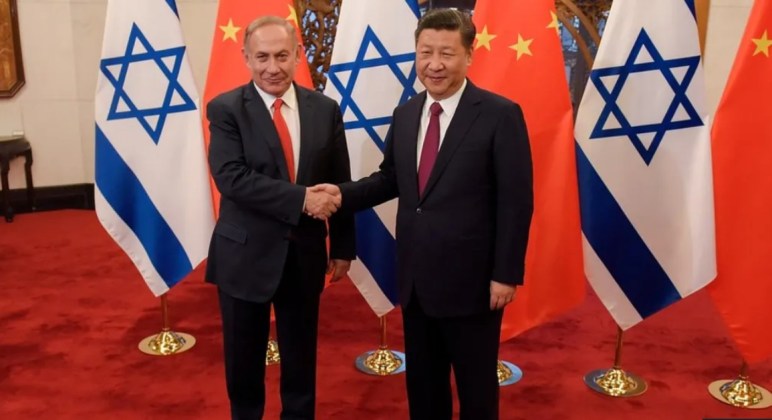
This last point fits in very well with the historical involvement of the zio-globalist mafia with the Beijing regime which I explored in a recent essay.
The murky links between China and the global mafia – which Meeuwis T. Baaijen terms “Glafia” – are buried deep within the worlds not only of finance and industry but also of organized crime – trafficking in drugs, weapons, animals, organs, people…
As Baaijen writes in The Predators versus The People, the criminal Triads, who had a role akin to Freemasons in the West, have since long been in cahoots with the Hong Kong tycoons and the Chinese Communist Party, together forming a “Glafia-subordinate gangster elite”.
Those activities are not readily visible or verifiable, but, on the other hand, we can very easily inform ourselves about the Zionist state’s relationship with China.
In the light of some people’s refusal to recognise the reality of these connections, I draw here from some helpful articles published on the issue over the last decade.
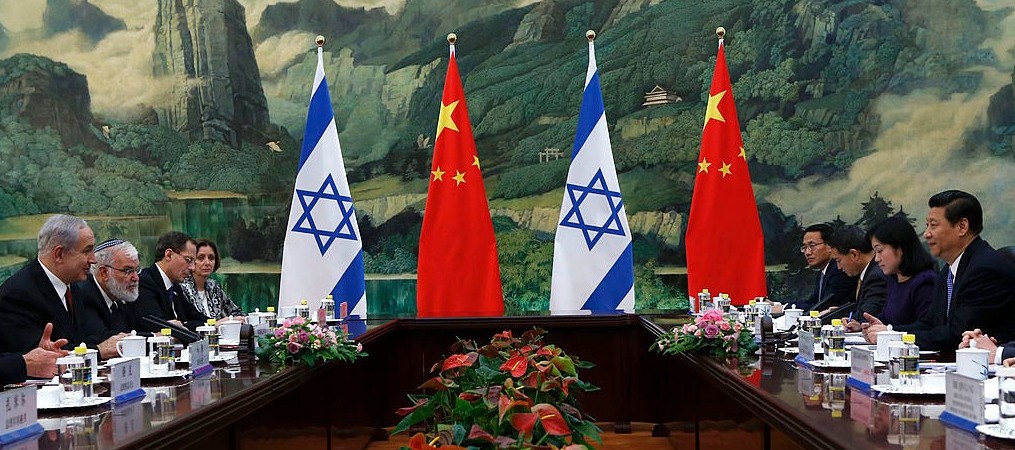
On March 20 2017 the South China Morning Post ran a piece entitled “China and Israel vow to deepen relations: Visit to Beijing by Prime Minster Benjamin Netanyahu sees both sides talk of tighter bonds, including a possible bilateral trade agreement”.
Chinese premier Li Keqiang “said the two nations should aim at deepening their political trust” and insisted that China was “friends to both Israel and Palestine” – an improbable balancing act that it is still indulging in after the Gaza Genocide.
We learn: “On the second day of his three-day trip to China, Netanyahu told a meeting of more than 600 Israeli and Chinese businesspeople that Israel was well positioned to help China upgrade its products and utilities with better technology”.
Liu Naiya, an observer from the Chinese Academy of Social Sciences, said China and Israel were exploring ways to deepen relations amid uncertainties about US foreign policy.
“Israel is a leading country in the Middle East and with immense influence. China can learn from Israel’s high-tech industry, and counter US and European influence in the Middle East by levelling up relations with Israel”, Liu said.
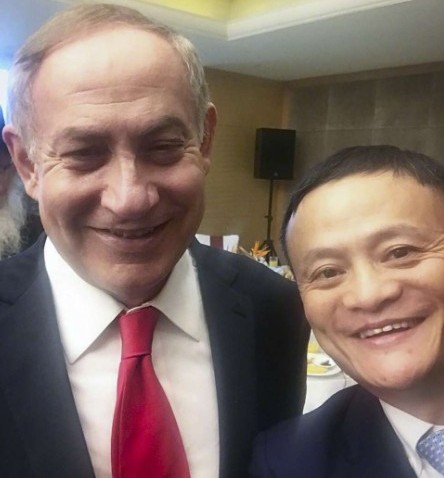
Netanyahu also met the heads of large Chinese corporations, including Dalian Wanda Group and Alibaba Group and even posed posed for a selfie with Jack Ma Yun, the latter company’s then executive chairman.
As I wrote in 2021, Ma Yun is a one-time member of the Foundation Board of the World Economic Forum’s “Global Shapers Community”, alongside the likes of WEF managing director Adrian Monck, David M Rubenstein of the Carlyle Group and, of course, the zio-globalist entity’s founder Klaus Schwab.
I noted that he was one of the wealthiest people in China: “His net worth, according to Forbes, is $58.4 billion”.
Another informative article from the South China Morning Post, on November 26 2017, explained “Why Israel is the new promised land for Chinese investors”.
It described “a growing number of Chinese investors who view Israeli businesses as the next smart buy, fuelled by China’s soaring demand for advanced technologies and the warming relations between Beijing and Israel”.
And it added: “China’s total investment in Israel almost tripled last year to US$16 billion (HK$125 million), largely driven by a surge in funding in Israel’s hi-tech industry, according to ZAG-S&W, a Tel Aviv-based law firm specialising in cross-border transactions.
“Meanwhile, the number of deals involving at least one Chinese investor in Israel’s hi-tech sector also increased by 16 per cent year-on-year, shown in data from Israel’s IVC Research Centre.
“Although China’s interest in Israeli tech start-ups is not entirely new – Horizons, a venture fund backed by Hong Kong tycoon Li Ka-shing, invested in the navigation software Waze as early as 2011 – industry players say it is new to see Chinese investors flocking to Israel in such a large scale.
“Sino Israel Technology Innovations is now in talks with 50 Israeli start-ups, according to Michael Ruan, chief representative of the Shanghai-based start-up accelerator and venture capital firm. The company has poured US$3 million into three early-stage Israeli smart-device makers this year”.
Ruan said his firm was planning to invest in at least 20 more Israeli companies in the year to come and he revealed that about a third of Sino Israel Technology Innovations’ US$50 million funding came from the Chinese state.
So that’s China’s Communist regime investing in Israeli businesses.
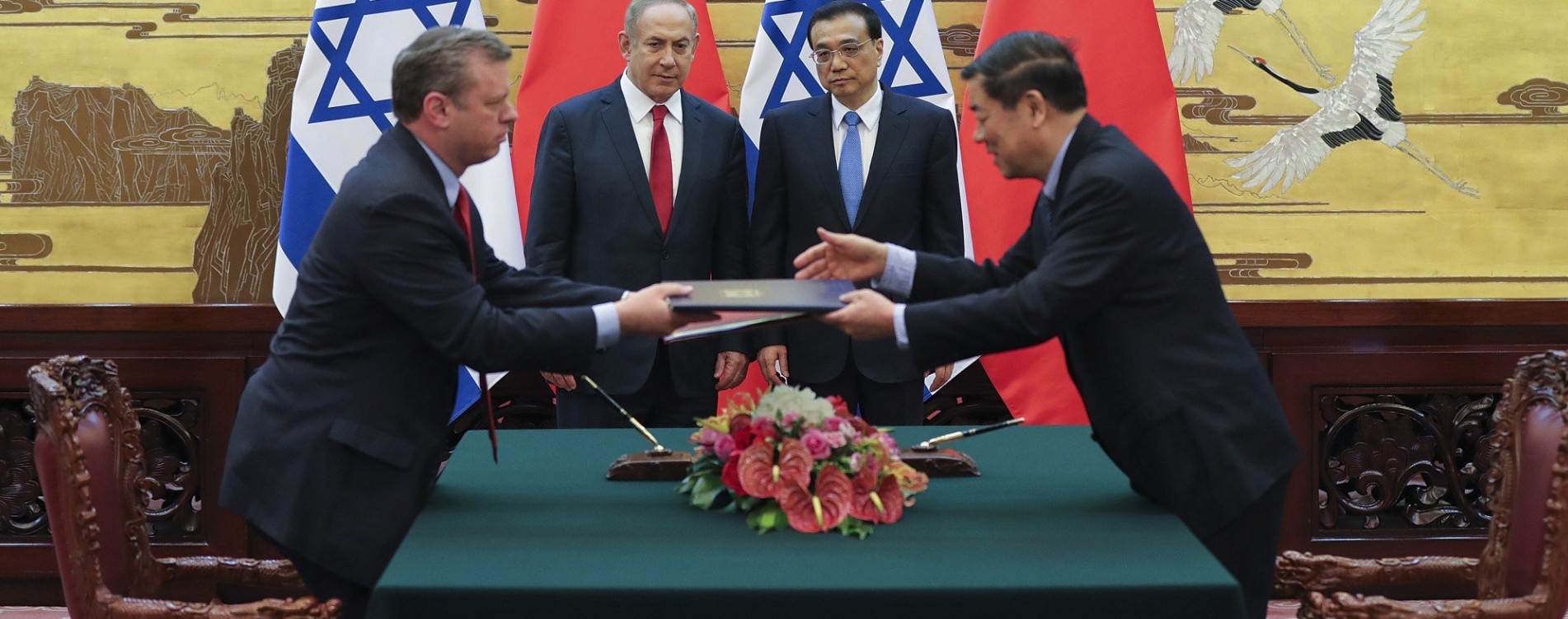
The article notes: “Since President Xi Jinping inked an agreement with Israeli Prime Minister Benjamin Netanyahu in 2015 to boost cooperation on technology, government-backed programmes devoted to investing in Israeli tech start-ups have mushroomed”.
Cao Xueling, a director of Peakview Capital in Beijing, “said her interest in Israeli start-ups was partly fuelled by Israel’s status as a member state of the ‘Belt and Road Initiative’, a development strategy under Xi to revive the ancient Silk Road and boost global trade”.

On December 20 2017, this growing economic rapprochement was confirmed by the Jerusalem Post in Israel.
It wrote: “Chinese money is increasingly flowing into Israeli hi-tech companies and is likely to overtake the US as the number one source of foreign investment for the Jewish state.
“Chinese investors are increasingly shopping for Israeli technologies amid growing awareness of Israel’s ‘Start-up Nation’ brand and philosemitic sentiment”.
It quoted French-Israeli businessman Edouard Cukierman (pictured), chairman of Cukierman Investments House and managing partner at Catalyst-CEL.
He was evidently very proud of the fact that a book he had co-authored was translated into Mandarin in 2014 and he was said to be “focusing evermore on Chinese investment into Israel”.
Cukierman explained that for many years, the Israeli hi-tech industry had been supported and led by American investors.
But, he said, that would now change: “We believe that China will be the largest investor in the Israeli market in the technology sector. It will surpass the US”.
It was revealed that Cukierman helped plan the annual GoforIsrael conference “where Chinese investors visit and meet for a one-minute speed dating start-up pitch with dozens of bio-tech, fin-tech, ag-tech and life sciences companies”.
“One speaker at GoforIsrael is Ronnie Chan, chairman of Hang Lung Properties, who has brought some 100 Chinese billionaires and heads of billion-dollar companies to Israel.
“Others include Antony Leung, chairman and CEO of the Nan Fung Group, Roger Cukierman, board member of Cukierman & Co and vice president of the World Jewish Congress, and Chen Shuang, executive director and CEO of China Everbright”.
On July 17 2018, The Diplomat published an article entitled “Israel-China Relations: Innovation, Infrastructure, Investment”.
This featured the insights of Alexander B. Pevzner “founder of the Chinese Media Center, an Israel-China media bridge” and “founding director of the China Program of the Israel Project”.
He said: “One important driver of Chinese interest in Israeli technology was the 12th Five-Year-Plan (adopted in March 2011), aimed at upgrading its industrial base, spurred by the global financial crisis that caused China’s export markets to dry up.
“The first significant Chinese investment in Israel was when China National Chemical Corporation (ChemChina) bought Israeli agrochemicals manufacturer Makhteshim Agan Industries (later rebranded Adama) in 2011.
“After the successful visit of Israeli Prime Minister Benjamin Netanyahu to China in May 2013, Chinese investment started pouring into Israel.
“Chinese investment in Israel from 2011 is estimated at $15 billion, and with the current friction between the United States and China, the figure may rise further.
“Huawei has already established an R&D center in Israel and in May 2018, Alibaba founder Jack Ma visited Israel, and touted plans to invest in the Start-Up Nation”.
The Davos Connection strikes again!
Discussing the political difficulties around China’s relations with the USA and Iran, Pevzner reassured The Diplomat‘s readers that “the increasingly multipolar global architecture allows countries like Israel to maintain diverse bilateral relationships”.
Ah, so is that what “multipolarity” is really all about?
He also explained the Zionist entity’s key role in China’s Belt and Road Initiative.
“Israel is situated between Europe and Asia, between the Middle East and Africa. As such, its strategic positioning for China’s Belt and Road Initiative is obvious.
“In 2015 Israel became one of the founding members of the China-led Asian Infrastructure Investment Bank (AIIB) as it seeks to further explore Asian markets…
“Chinese companies are increasingly active in the infrastructure sector in Israel, earning [an] excellent reputation for already completed projects.
“One Chinese company (China Harbor) is building a new port in Ashdod, while another – Shanghai International Port Group – won a 25-year concession to operate a new port in Haifa.
“The Belt and Road Initiative is a tremendous opportunity for Israel to boost its global presence in trade and economy while increasing its geopolitical significance”.

On July 19 2018, the BBC in London acknowledged “deepening trade ties” between China and Israel, even if it considered them to be “unlikely partners”.
This was, of course, because of Israel’s well-known alliance with – or dependence on – the USA, which, in the globalists’ political puppet show, is presented as a rival or even enemy of their Chinese Communist regime.
The article said: “What many people don’t know is that Chinese investment in Israel is continuing to boom, at the same time as a growing number of Israeli firms are entering the Chinese marketplace.
“To help bring Israeli and Chinese companies together, a number of business events are now held every year, such as Silicon Dragon Israel, which took place in Tel Aviv at the start of the year, and the China-Israel Innovation Summit, which was held earlier this month in Guangdong.
“In recent years Israeli firms that have either been bought outright by Chinese companies, or sold them [a] share of their business, include medical lasers operation Alma Lasers, and medical devices group Lumenis. Others are Israeli dairy business Tnuva, image recognition firm Cortica, and gesture control group Extreme Reality.
“Spotad, an Israeli digital advertising firm, entered the Chinese market last year after securing funding from a Hong Kong-based private equity firm. The company now works with all the major Chinese online advertising exchanges.
“Other Israeli firms that are continuing to make inroads into the Chinese market include mobile marketing firm AppsFlyer, and diamond trading platform Carats”.
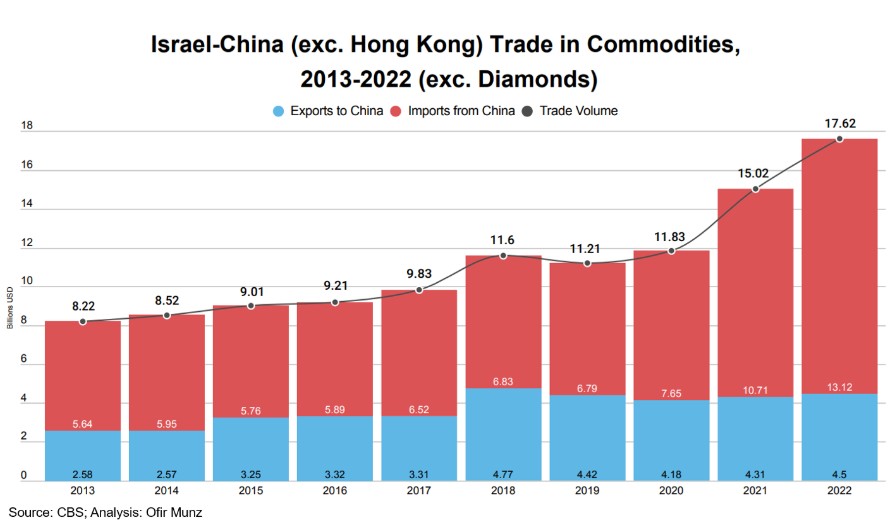
A few years later, on June 18 2023, Tomer Fadlon of The Institute for National Security Studies at Tel Aviv University, published a paper entitled “Trends in Trade Between Israel and China Over the Past Decade (2013–2022)”.
He wrote: “Especially noticeable is the significant and consistent rise in trade with Israel during those years, based mostly on the import of goods from China, which totaled $17.62 billion in 2022.
“The imports from China are diverse and include machinery for infrastructure and construction projects, consumer products ordered from Chinese websites, which to some degree has mitigated the rise in the cost of living in Israel, and for the past two years, the import of cars from China”.
WEF’s friend Jack Ma Yun crops up yet again here, as his Alibaba Group’s “Ali Express” was for several years “one of the most-visited websites among Israelis and during the period surveyed was the most popular website for Israelis to purchase merchandise from overseas”.
Additionally, a Chinese online fashion store called “Shein” was the second-most popular online shopping site among Israelis, only beaten by the Israeli supermarket chain “Shufersal”.
Fadlon stressed: “It should be noted that the volume of trade with China is greater than any individual trading partner from the European Union.
“When analyzing the imports of goods, the European Union takes the lead followed by China in second place. However, upon closer examination of individual countries, the import of goods from China surpasses any other country significantly, amounting to $13.1 billion in 2022.
“In comparison, imports from the United States accounted for $8.7 billion, and imports from Germany amounted to $7.1 billion”.
He introduced a geopolitical element by enthusing about “Israel’s eastward expansion and the variety of trade relations it enjoys”.
And he pointed to one specific outcome of the Covid scamdemic that I have to admit I have never written about, despite my vocation as a Covid-denying anti-Zionist conspiracy theorist.
“The export of business services is the most important element of Israel’s international trade and has been on a constant upward trend in recent years, thanks to high demand for Israeli computer and information technology services, as well as Israeli research and development, which gained an international reputation even before the COVID-19 pandemic.
“The pandemic gave these industries a significant boost, expanding demand for computer services from Israeli companies”.
On August 28 2023, the Arab Center Washington DC asked: “How Steady Are China-Israel Relations?”
Giorgio Cafiero mapped out how, for China, Israel had moved “from enemy to friend”, although that apparent original enmity sounds more like pragmatic posturing.
He stated: “Since the 1940s, China-Israel relations have evolved through different phases. The Chinese Communist Revolution of 1949 came one year after Israel’s founding.
“Between that revolution and China’s Economic Reform and Opening in the late 1970s, Beijing’s foreign policy in the Arab world was (mostly for revolutionary purposes) supportive of the so-called radical Arab governments (Egypt, Libya, Iraq, Syria, South Yemen, etc.) and of national liberation movements such as in Palestine.
“By 1979, however, China had begun to deal with Israel more pragmatically and less ideologically. This entailed the signing of deals to transfer Israeli defense technology to Beijing.
“And in June 1990, the two countries opened ‘de facto embassies’ – Israel’s Liaison Office of the Israel Academy of Sciences and Humanities in Beijing and the China International Travel Service office in Tel Aviv.
“By January 1992, the two countries had established full-fledged relations. Over the past 31 years, China-Israel economic relations have grown significantly.
“While bilateral trade stood at $50 million in 1992, it reached $22.8 billion in 2021, according to China’s Bureau of Statistics. In 2021–22, China replaced the United States as Israel’s top source of imports and Israel added China’s currency, the renminbi, to its foreign reserves.
“After Netanyahu returned as Israel’s prime minister in 2009, economic relations reached new heights. In March 2017, the two countries announced a comprehensive innovative partnership based on technological cooperation while Netanyahu was visiting Chinese President Xi Jinping in Beijing. What followed was soaring Chinese investment in the Israeli economy”.
Cafiero mentioned “Israel’s location in the Eastern Mediterranean” as being important in China’s Belt and Road Initiative.
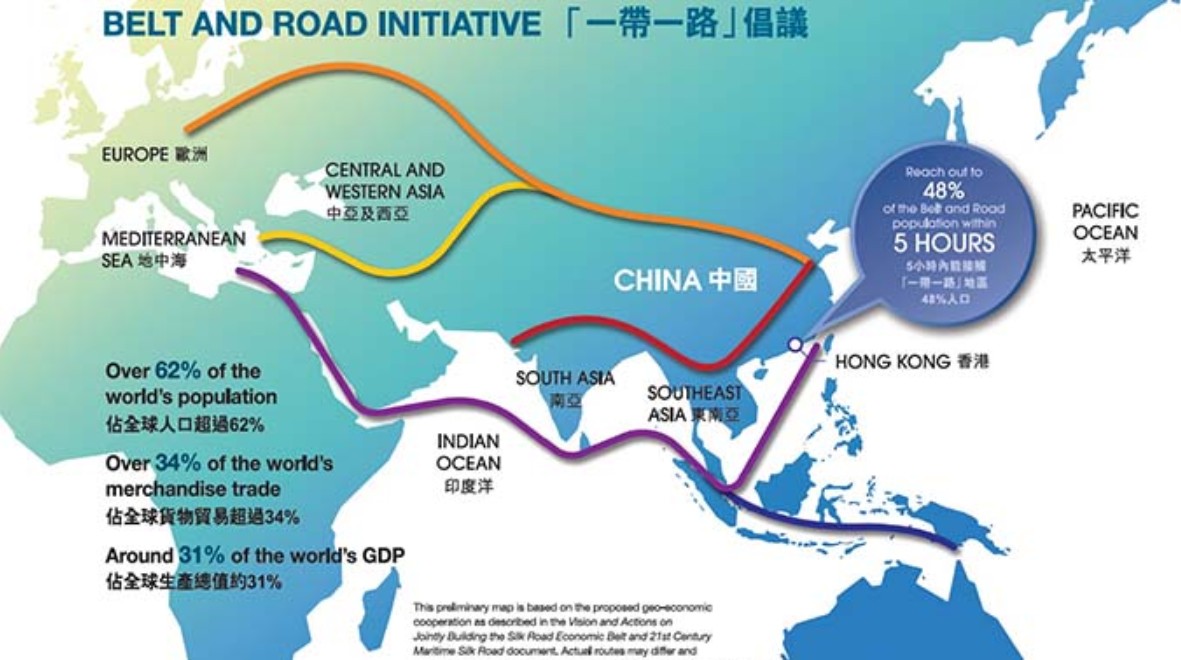
He added: “China’s attraction to Israel also has much to do with the latter’s position as a technology hub where many innovative companies are doing business.
“The government in Beijing has strongly encouraged Chinese companies to purchase, partner with, and invest in Israeli technology companies (HexaTier, Visualead, ThetaRay, Lumus, Pixellot, etc.) and become active in major infrastructure projects, including the Ashdod and Haifa ports, the Tel Aviv light rail, and the Carmel Tunnels”.
He also pretty much confirmed Palsvig’s warning of a “long-prepared Israeli pivot to Communist China”.
Cafiero wrote: “Israeli Prime Minister Benjamin Netanyahu appears to believe that a deeper relationship can serve his country’s interests.
“Netanyahu received an invitation to Beijing in June, and his plans to make his fourth official visit to the Chinese capital fit into his government’s quest to bolster Israel’s diplomatic standing on the international stage.
“Diversifying Israel’s global relationships beyond the West is one of Netanyahu’s goals as highly provocative actions and rhetoric on the part of extremists in Israel’s governing coalition fuel friction with western capitals.
“Ultimately, China and Israel are set to maintain their deep relationship, which has much potential to further expand in the future”.
An up-to-date perspective on the China-Israel situation was provided on March 3 2026 by the South China Morning Post.
If the world was the way we are told it is, China would have cut all links with Israel after the US-aided assault on its great ally Iran and the murder of Ayatollah Ali Khamenei.
Indeed: “Beijing strongly condemned the killing of Khamenei, calling it a ‘serious violation of Iran’s sovereignty and security’ and warning that the escalation risked further destabilising the region”.
But that was just words.
Chen Guangmeng, executive dean of the Academy of International and Regional Studies at Sichuan International Studies University, told the newspaper that China would not – and did not need to – abandon its long-standing “balanced diplomacy” in the Middle East, but must pursue a “strategic rebalancing” to adapt to the shock waves created by US-Israeli military action.
“On relations with Israel, China will maintain political neutrality and economic pragmatism in parallel,” Chen said. “[China] will not be drawn into US-Iran confrontation, nor compromise on its principled positions, while continuing normal economic and people-to-people cooperation”.
Lin Jing, a research fellow at the Middle East Institute of the National University of Singapore, echoed that view, saying China was unlikely to openly pivot towards any side, but would probably prioritise crisis management and the protection of economic interests.
“Beijing’s overall strategic layout will become more defensive and exposure-conscious, with greater emphasis on supply-chain security,” she added.
Li Weijian, a researcher at the Shanghai Institutes for International Studies, likewise said China was not “compelled to overhaul its Israel policy”.
“Israel will not push China into a hostile camp,” he said, noting that Israel understood its own strategic constraints and long-term economic dependence on large markets such as China in trade and technology.
Despite political strains, cooperation had persisted in what analysts describe as “low-sensitivity” sectors, the article revealed.
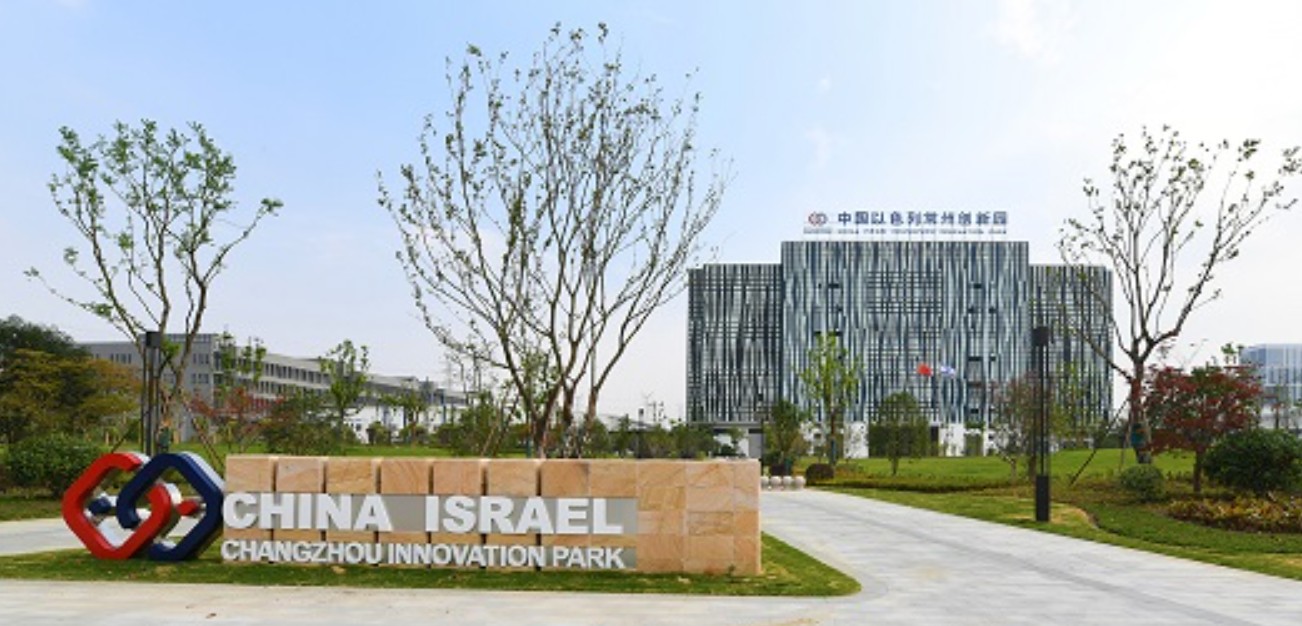
“In May, it was announced six Israeli projects would be launched at the China‑Israel Changzhou Innovation Park in the eastern province of Jiangsu, focusing on life sciences and energy management systems.
“Recent diplomatic exchanges suggest cautious attempts at stabilisation. In early January, China’s special envoy on Middle East affairs, Zhai Jun, visited Israel and met senior officials, including Israeli Foreign Minister Gideon Sa’ar, pledging to sustain mutually beneficial cooperation and traditional friendship.
“Later that month, Israel’s ambassador to China, Eli Belotserkovsky, published a rare commentary carried by state news agency Xinhua praising the historical links between Jewish and Chinese civilisations and calling for stronger socioeconomic ties”.
Let’s be clear – the planned AI-directed totalitarian New World Order under the Zio-Communist Israel-China axis is an existential threat to the people of Europe, the Americas, Africa and just about everywhere else.
The current dim stirrings of awakening and non-compliance need to take on a more concrete form if we are to have any chance of breaking free from globalist tyranny.
It is, as Palsvig says, “time to end Pax Judaica”.

 winter oak
This is all part of Israel’s Biblical agenda, and China is oblivious, naive and ignorant of the religious connotations. We are living in interesting times.
LikeLike